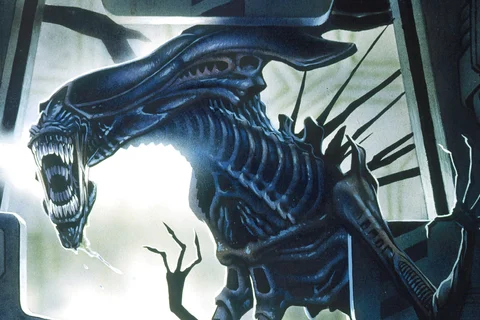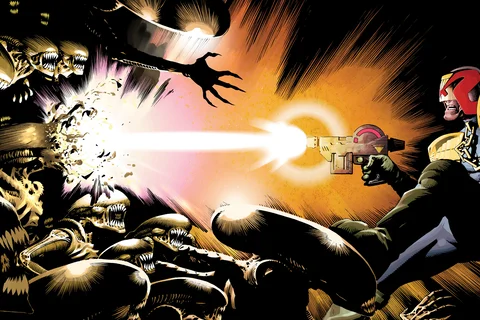

The Xenomorph has been called several things in the films, comics, and books: a generic Marine label, a Weyland-Yutani catalog code, two Latin-style binomials, and a Yautja hunting name. None of those started as a single official species title. Gorman's line in Aliens meant any unknown alien form, and the later names were added in comics, a DVD menu, and novels.
Xenomorph

The word blends Greek xenos (strange or foreign) and morphē (form). In Aliens, Lieutenant Gorman used it in the Sulaco briefing as a category for unknown alien life, not as a species name for the animal that came out of Kane. Hudson asked whether the drop was a stand-up fight or another bug hunt. Gorman's answer was that an infestation of xenomorphs was only a possibility.
The novelization kept that hedge and showed the squad did not hear a Latin binomial. Gorman told them there was a possibility, "just a possibility at this point," that a xenomorph may be involved. Wierzbowski did not know the word. Hicks leaned in and translated it as a bug hunt. Years later on Fiorina, Ripley told 85 the Company would know what "the alien" meant, then typed HAVE TRAPPED XENOMORPH because that was the technical term. It is still a category word, not a catalog code.
Xenomorph XX121
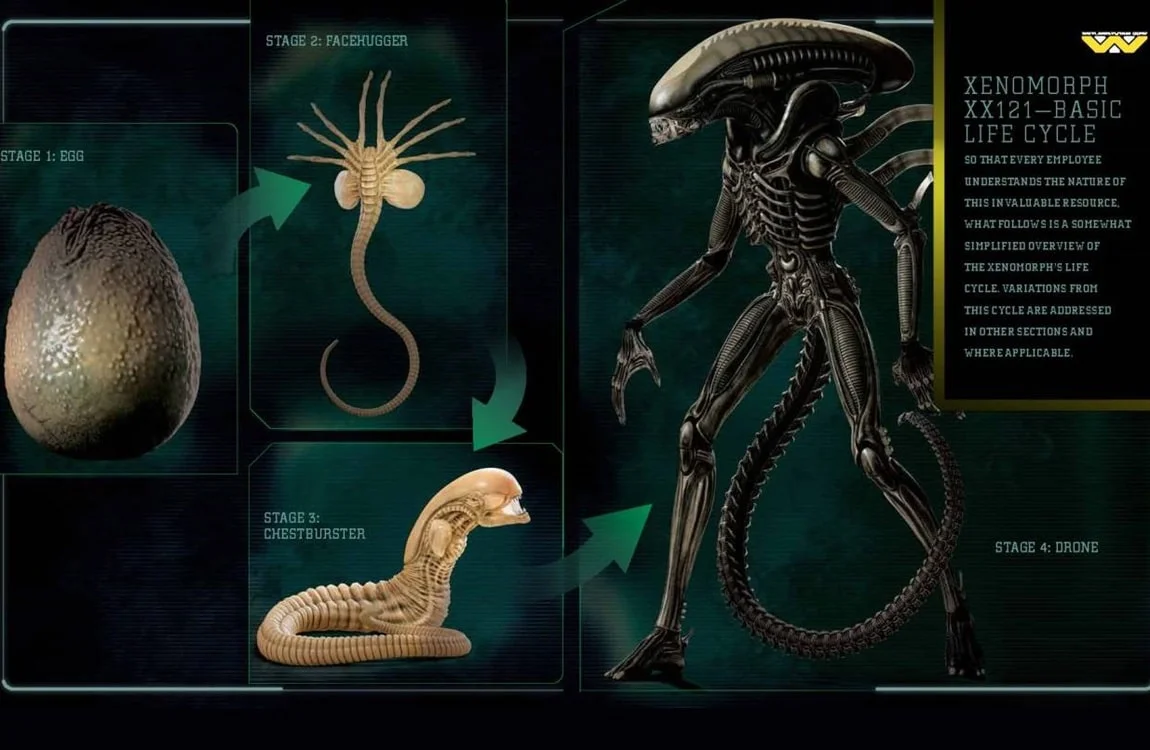
Xenomorph XX121 is the in-universe catalog tag from Alien: The Weyland-Yutani Report (2014). It points at the organism the Nostromo crew brought off the derelict, not at every later pathogen offshoot. The XX prefix reads like an unclassified slot in a Weyland-Yutani filing system, with 121 as the file number. Later books treat that string as the species code. The Romulus prequel stamps the recovered Big Chap as XX121.
One theory is that 121 is the year 2121, when the Nostromo left Thedus, a year before the 2122 landing on LV-426. The Report never says that. If the digits marked first contact, 2122 would fit the derelict better than 2121. A dummy catalog number is just as likely, and no source decodes the digits. Alien: Enemy of My Enemy later used XX121B for the biodrone, which only works if XX121 is a species prefix, not a year.
Linguafoeda Acheronsis
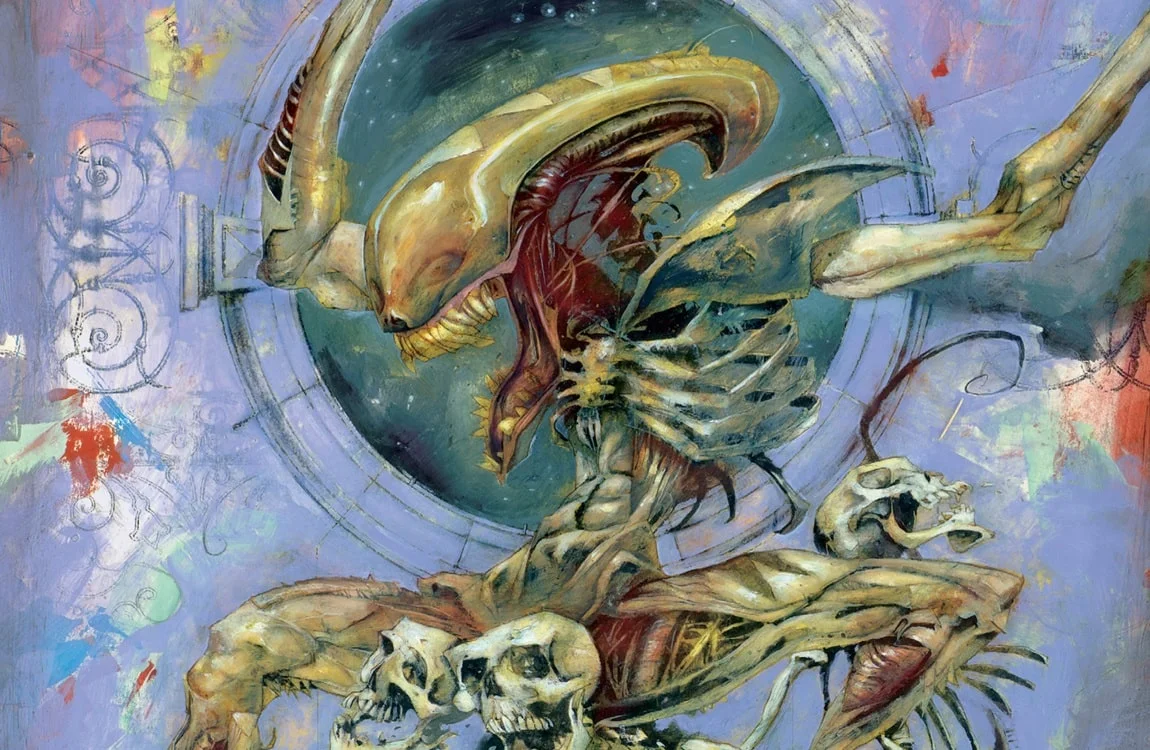
"Linguafoeda acheronsis," translating to "foul tongue from Acheron," is a fictional scientific name for the Alien species, created by writer Mark Schultz. Appearing first in the comic series Aliens: Havoc, it reflects the creature's origin on the moon Acheron. Schultz's background in biochemistry and his research into the psychoactive substances derived from the Alien's Royal Jelly shaped the name.
Internecivus Raptus

Another fictional scientific name, "Internecivus raptus" (meaning "murderous thief"), appeared in the Alien Quadrilogy DVD visual menu. Though it sounds scientifically legitimate, it doesn't adhere to the conventions of binomial nomenclature. Like "Linguafoeda acheronsis," this name is a label invented for flavor, not a real taxonomy. The term Internecivus Raptus was later used for the name of a Sideshow Collectibles Alien statue but has not met widespread adoption.
Plagiarus Praepotens

Alex White coined Plagiarus praepotens in Alien: The Cold Forge. It names the mutagen a Facehugger puts into a host, not the adult Xenomorph, and is required to grow a Chestburster. Translated as "powerful mimic," it rapidly rewrites genetic material and builds biomass, taking a host from a single cell to an adult in hours. White ties that payload to Chemical A0-3959X.91 – 15 (the Black Goo) and to the android David.
Kiande Amedha
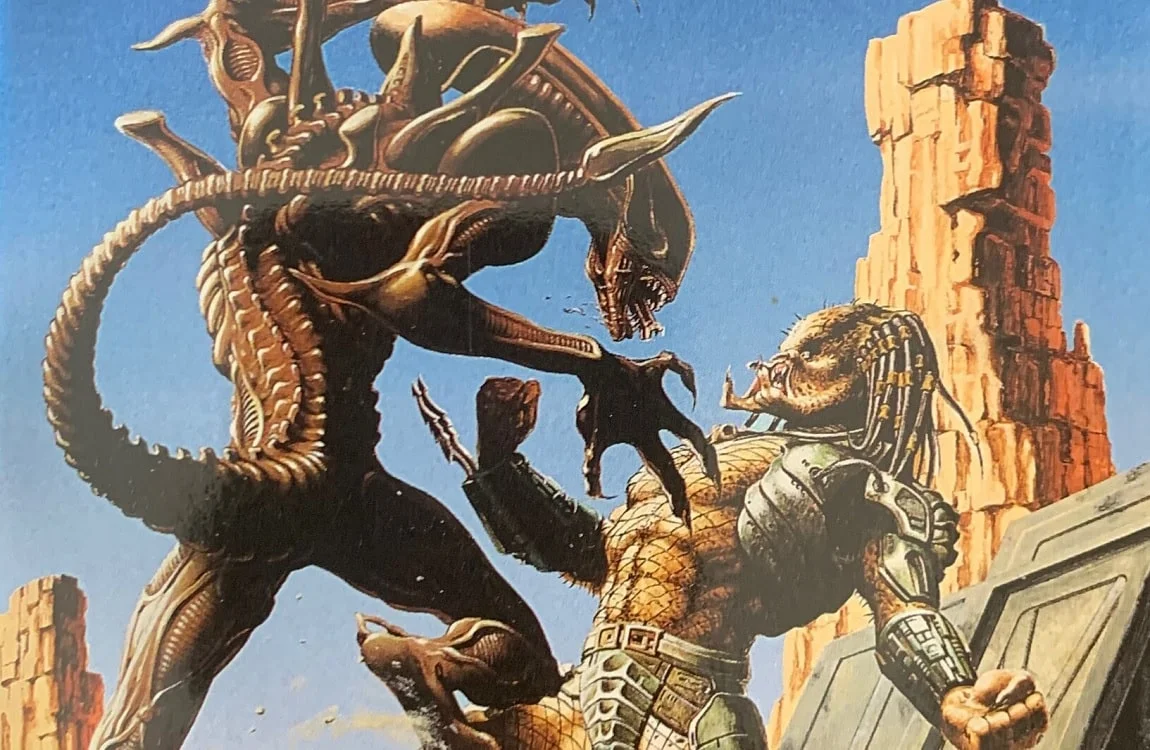
Kiande Amedha is the name the Predators use for Xenomorphs in their Yautja language, and it roughly translates to hard meat. Taken from the Aliens vs. Predator: Prey book, the term reflects both the creature's extreme physical resilience and the respect Predators hold for it as prey. "Kiande" refers to toughness or hardness, while "Amedha" means meat or flesh, together describing an organism that is extraordinarily difficult to kill and therefore worthy of the hunt. Unlike human scientific designations, Kiande Amedha is not a clinical label but a cultural one, emphasizing the Xenomorph's value as a proving adversary rather than an object of study. Defeating a Kiande Amedha is part of the Yautja's blooding ritual.
Xenomorph Nicknames
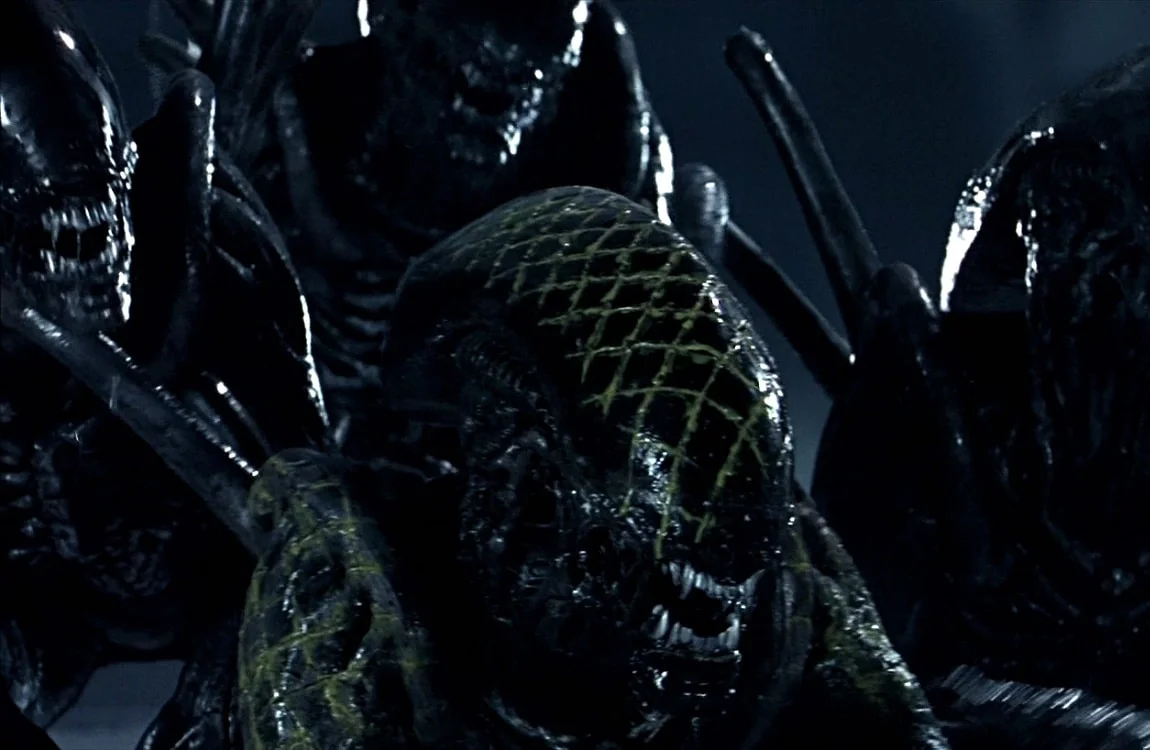
The Alien species has accumulated various nicknames over time. "Grid Alien" for instance, refers to the main Xenomorph in "Alien vs. Predator," named after a grid-like wound it received. Other informal names like "Dragon" and "Beast" from Alien 3 come from the Fiorina inmates, who treated the runner as a prison-yard monster. Most of the other nicknames are the same kind of shorthand: a wound pattern, a caste, or a single named individual.
Conclusion
In the films, the creature is usually just the Alien, or once a Xenomorph. XX121 comes from The Weyland-Yutani Report, Linguafoeda acheronsis from Aliens: Havoc, Internecivus raptus from the Quadrilogy DVD menu, and Kiande Amedha from Aliens vs. Predator: Prey. Plagiarus praepotens is the Facehugger mutagen from Alien: The Cold Forge, not a name for the adult.
Tag Categories: Alien Lore