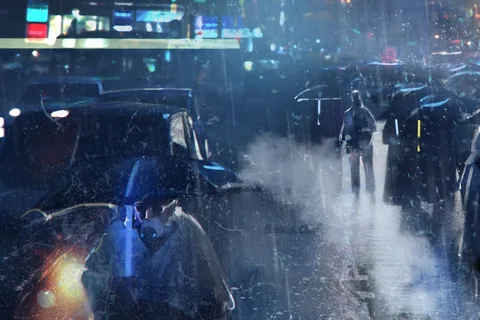
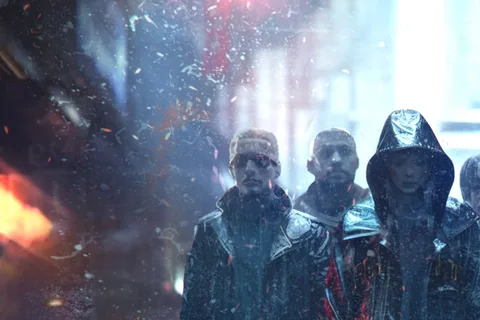
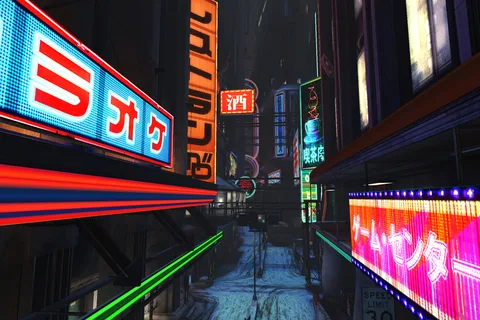
Blade Runner: Rogue was a free-to-play turn-based tactical role-playing game developed by Next Games with Alcon Entertainment for iOS and Android. Set across a neo-noir Los Angeles drawing on both Blade Runner and Blade Runner 2049, it followed an LAPD detective leading a squad against counterfeit replicants. After an Android beta in 2018 and a 2019 soft launch titled Blade Runner Nexus, the reworked game launched in the United Kingdom in April 2021 before shutting down in June 2022.
Premise And Opening Case
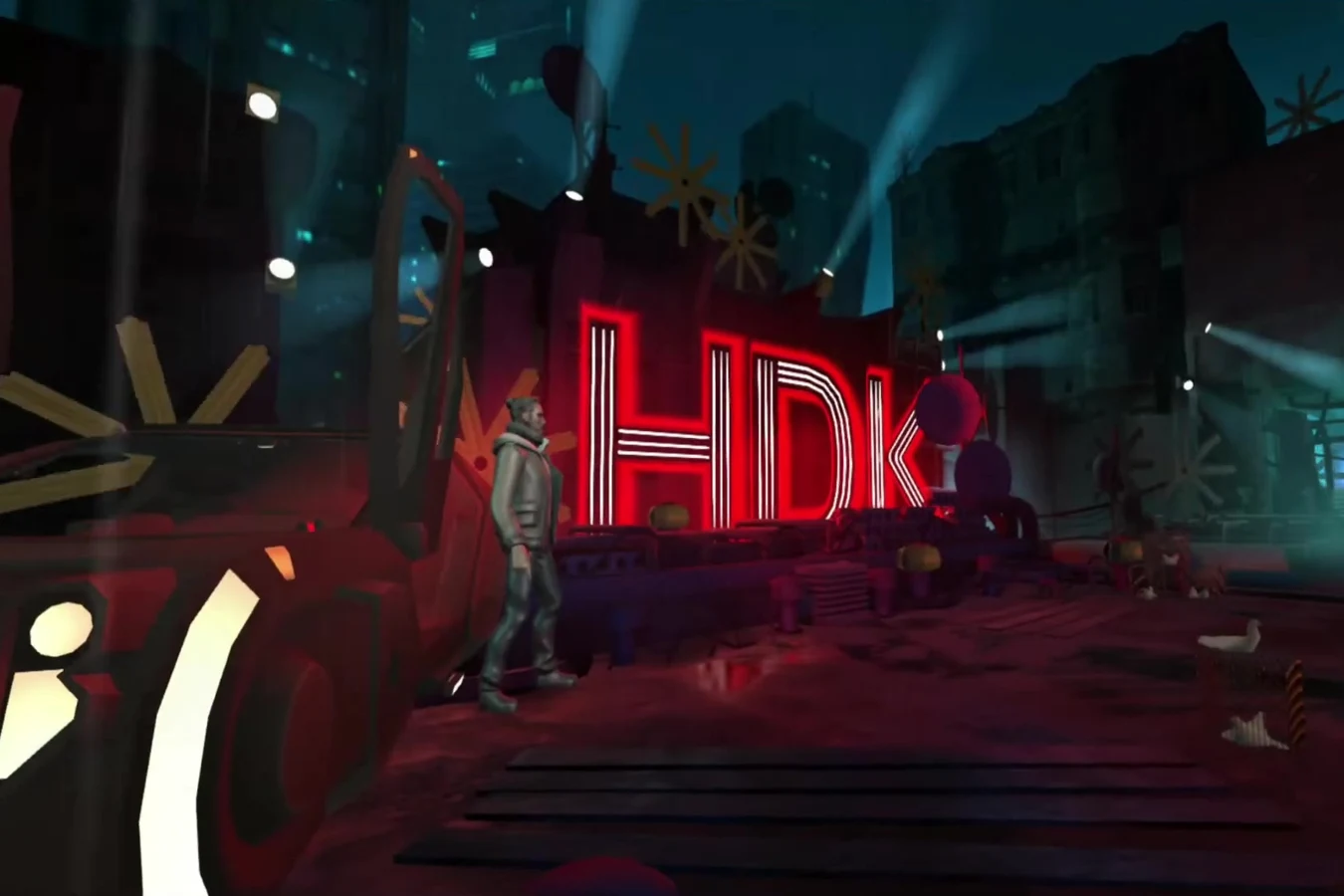
The story opened with a scrolling prologue describing 21st-century replicants engineered as off-world laborers and soldiers, followed by the blade runners tasked with retiring rebels. Players chose an appearance for protagonist Sam Hiraga inside a flying Spinner before landing in a rain-soaked alley beside a glowing HDK sign. There, Hiraga confronted an elusive birdkeeper who remarked that birdkeepers did not carry guns, prompting a brief standoff before Hiraga returned to his cockpit. As he flew out over the city skyline, his LAPD dashboard flashed an incoming voicecall.
On the line, Lieutenant Joshi rejected Hiraga's attempt to resign after his previous assignment and informed him that his transfer had already gone through. She confirmed that rumors of counterfeit replicants were true and ordered him to hunt them down while the department framed them as ordinary rogues. When Hiraga objected, Joshi reminded him that he had no choice and told him he would receive his first dossier upon landing. She assigned combat specialist Iqra Zain as his partner and put him through a live-fire rehearsal with dummy rounds.
Joachim Mina Investigation
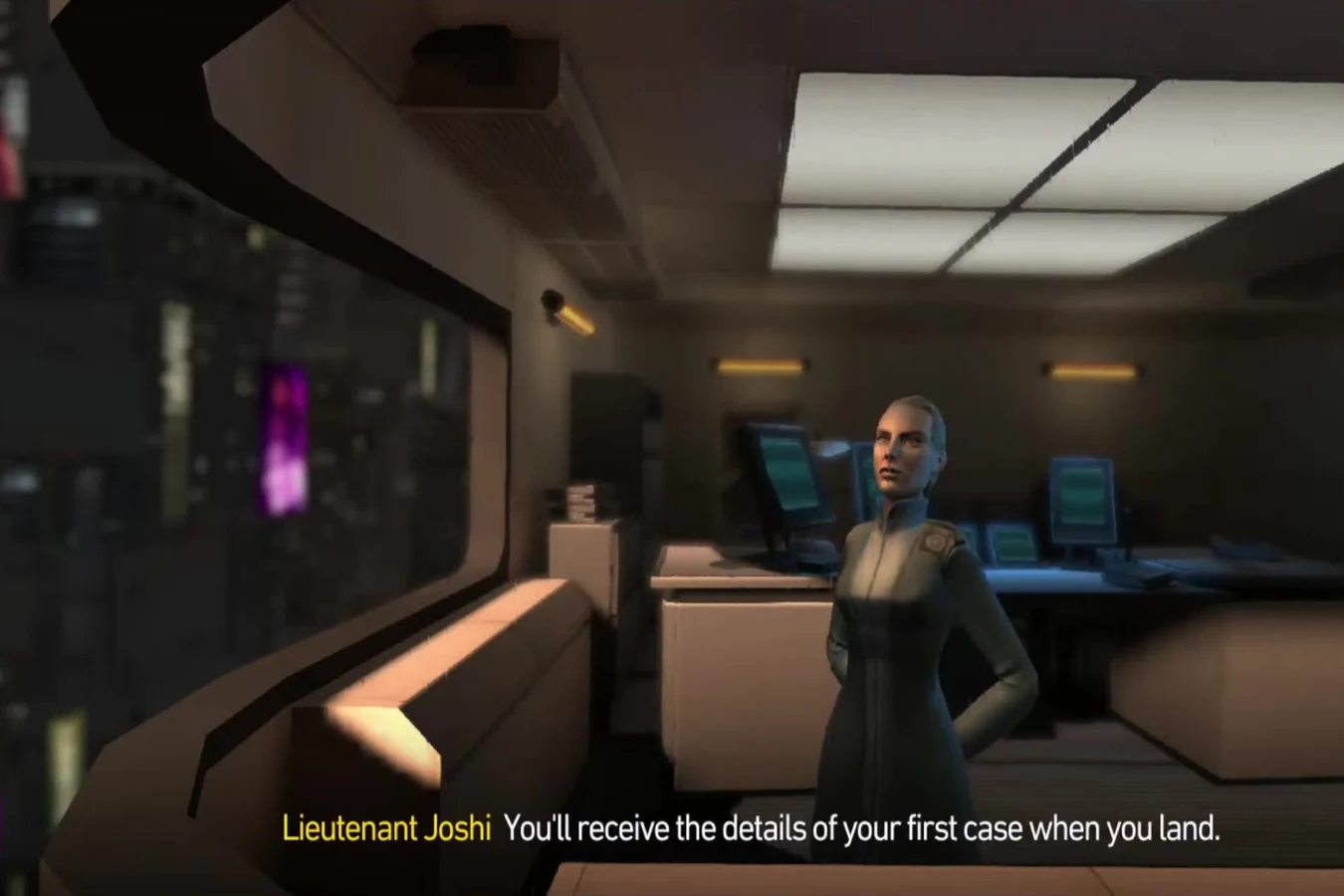
Hiraga's opening case sent him after Joachim Mina, a manual-labor replicant traced to an inter-orbital cargo transport who had reached Earth. Joshi instructed Hiraga to gather every detail about Mina's origins so the unit could track down whoever manufactured him. Before deploying, Hiraga spent an essential recruitment token to add support healer Bridget to his squad. He then headed east of Sector 5, a rough district known as The Maze where Mina had last been spotted.
Questioning a local merchant triggered an ambush by street hoodlums demanding scrip and coins, which Hiraga's team cleared alongside LAPD backup. Grateful for the rescue, the merchant revealed that Mina lived nearby at Block 2B, Floor 9. Joshi soon radioed with a Sector 5 disturbance call about a man trying to enter an apartment while ranting about a family accident. Police records matched that man to John Mina, a retired Tyrell Corporation accountant, raising suspicions that stolen human memories were being implanted into counterfeit models.
Case Files And Roguelike Structure
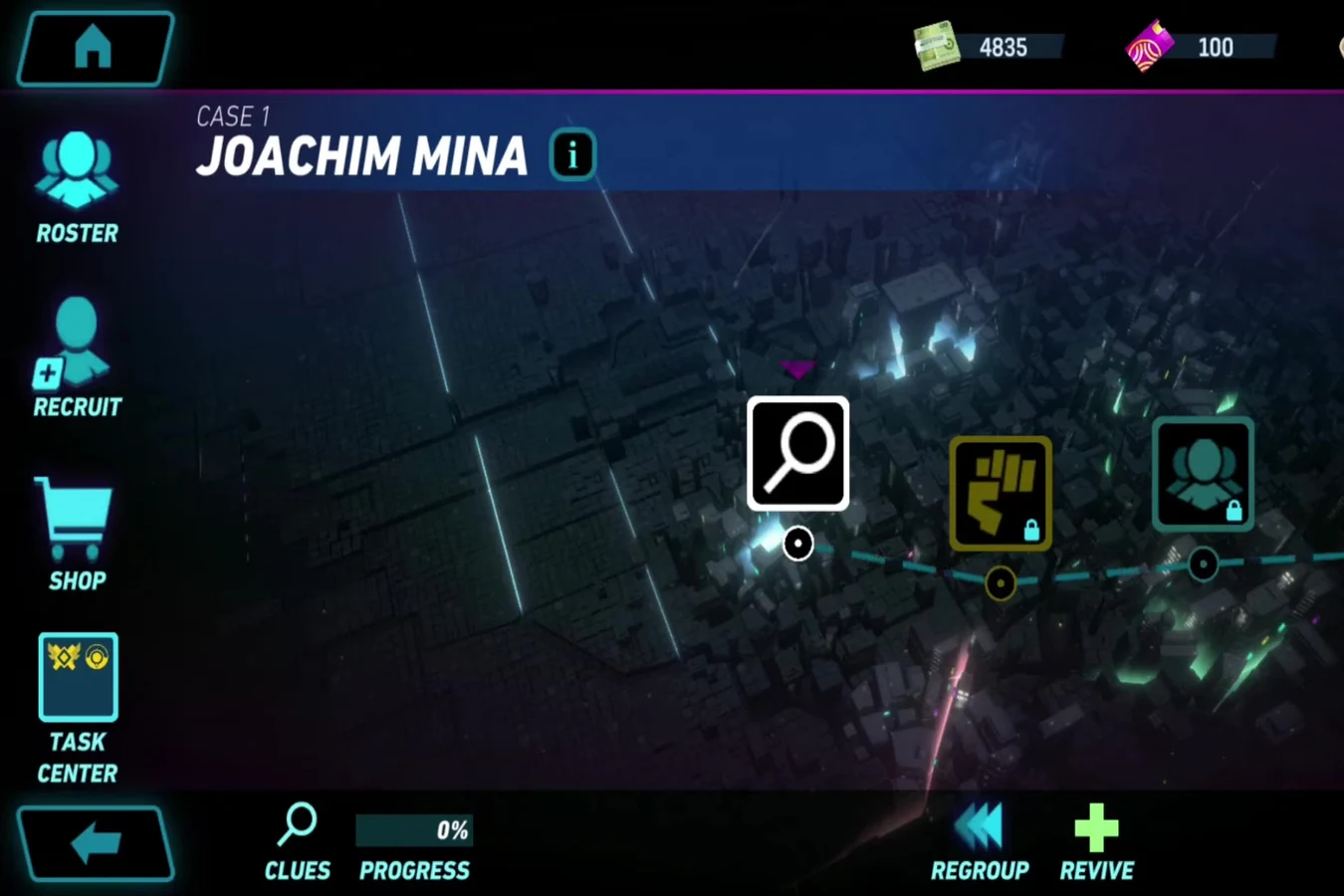
The 2019 rework rebuilt the campaign around Case Files, presenting each investigation as a branching node map overlaid on a darkened aerial grid of Los Angeles. Players charted paths between low-threat skirmishes, high-threat battles, ally recruitment stops, medical clinics, and investigation points before reaching the main target. Stopping at clue nodes offered a three-card choice of modifiers, such as a Riot Police Helmet reducing incoming damage or a Viewfinder boosting critical strikes. Defeating a boss ended the chapter with a story choice to retire the suspect or spare them, with Hiraga justifying either call.
Alongside story cases, daily rotating Patrols opened distinct Los Angeles locations each day of the week, including LAPD Tower, Club Unicorn, and Bibi's Bar. Replaying patrols raised a district's Reputation Level, unlocking stronger enemy waves alongside cash and faction recruitment tokens. Squad defeats during a tough case could be reversed once per run using the Revive option, which restored the roster at the cost of premium currency. Progression also tied into daily assignments and a 30-tier Battle Pass season track.
Combat, Factions, And Squad Building
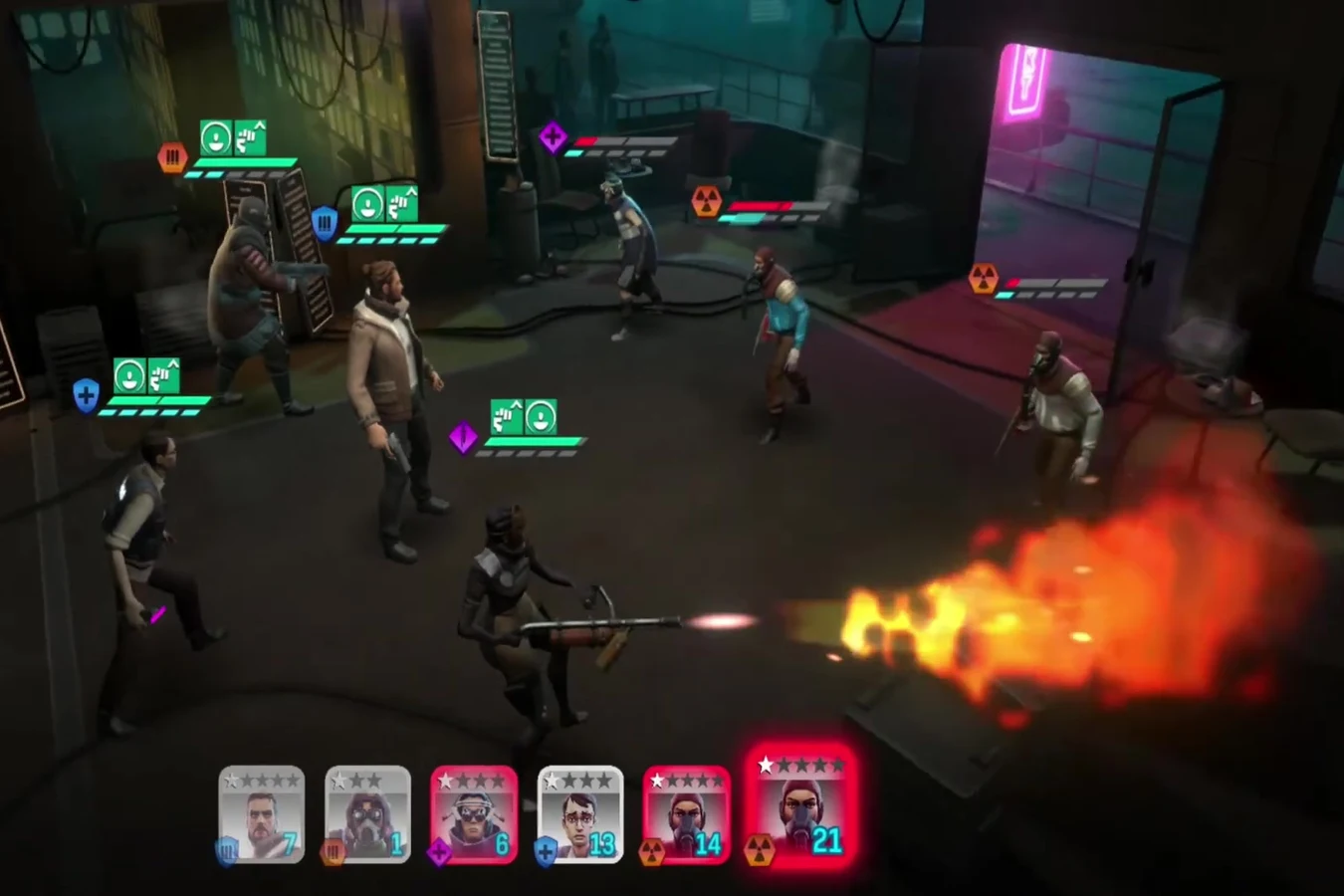
Combat played out in turn-based waves pitting up to four player operatives against enemy squads, with turn order and star rarity tracked along a bottom portrait bar. Every character belonged to one of three factions in a rock-paper-scissors triangle where Enforcers countered Underground, Underground countered Elite, and Elite countered Enforcers. Basic attacks fired every turn while skill energy built up by one point per round to trigger signature specials, such as Hiraga's Double Punch or Zain's area flamethrower blast. Players could toggle auto-battle and speed controls when grinding familiar patrol stages.
Outside missions, players collected more than 100 characters spanning Rick Deckard, Officer K, Joi, Luv, and Roy Batty alongside original LAPD agents and street rogues. Upgrades consumed Cash, Training Modules, Amplifiers, and Memories to raise level caps and star tiers, while Scrip purchased premium character pulls and Noodles acted as battle stamina. Social features included player Guilds, cooperative boss hunts in The Hunt, limited-time Most Wanted challenges, and global leaderboards. Dialogue throughout the campaign relied on text boxes rather than full voice acting.
Development, Launch, And Shutdown
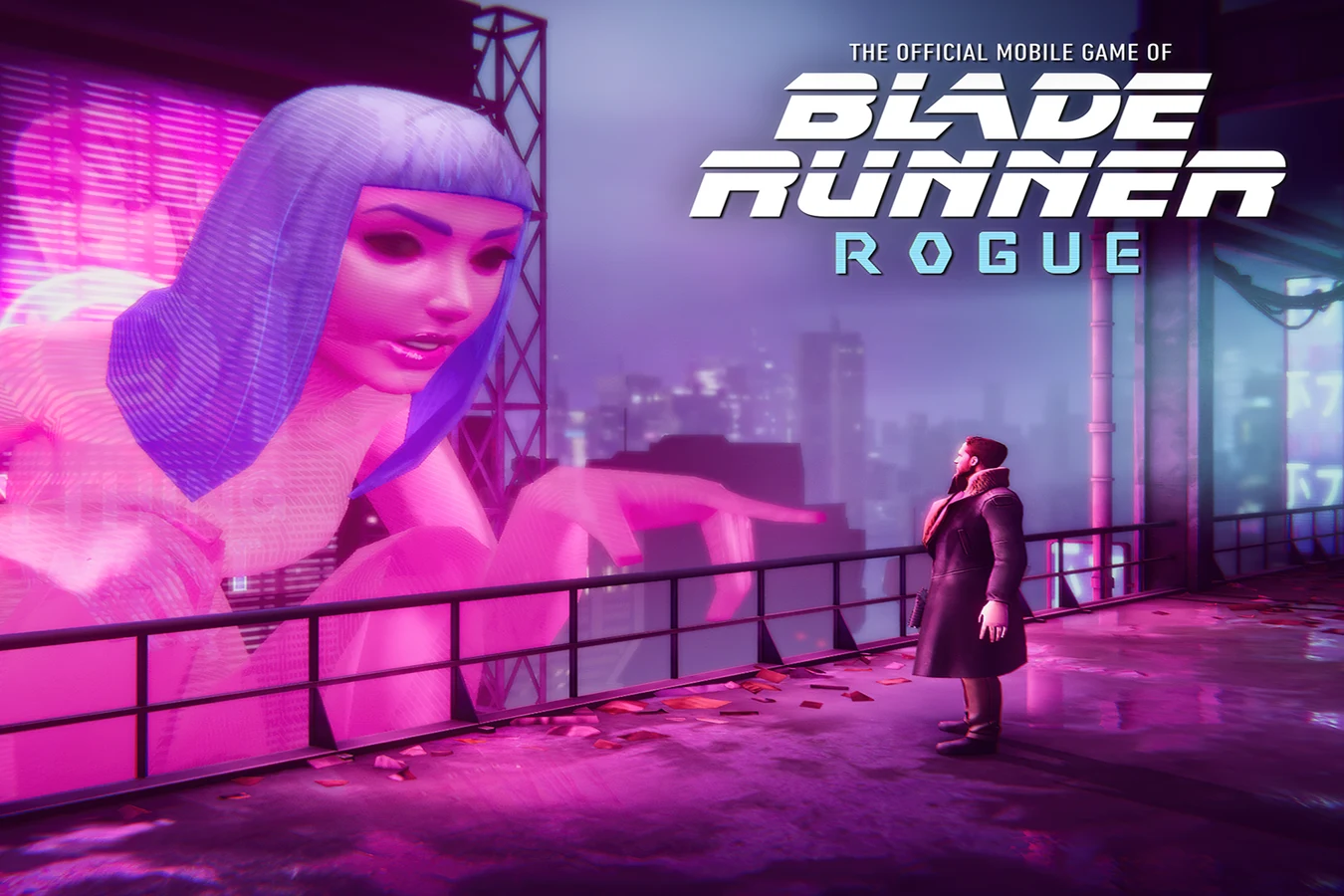
Finnish mobile studio Next Games and Alcon Entertainment first announced their licensing partnership on June 14, 2017, ahead of the theatrical release of Blade Runner 2049. Built in the Unity engine with FMOD audio and Firebase backend services, the game entered open Android beta in late 2018 under the plain title Blade Runner 2049. Next Games renamed it Blade Runner Nexus and soft-launched on iOS on January 17, 2019 across Australia, Finland, Canada, and Poland, later adding Android in 2020. At the end of 2019, the studio pulled the project back into production to add roguelike branching cases and rebrand it as Blade Runner: Rogue.
Next Games published Blade Runner: Rogue in its first major market, the United Kingdom, on April 28, 2021, where it reached top RPG download charts and earned a 4.1 user rating. Planned rollouts to the United States and Japan never materialized after the soft European launch. On March 2, 2022, Next Games reported that it and Alcon had agreed to discontinue the game after February 2022 because it failed to meet mutually agreed targets. The app was delisted from the Apple App Store and Google Play, existing servers closed in June 2022, and Netflix acquired Next Games that same year without reviving the title.
Conclusion
Blade Runner: Rogue stood apart from Westwood's 1997 adventure, Blade Runner 2049: Replicant Pursuit, and Blade Runner: Revelations as the franchise's sole conventional iOS and Android game. Players praised its moody Los Angeles environments, recognizable film locations, and text-driven detective atmosphere, even while critics noted familiar gacha upgrade bottlenecks and stiff combat animations. Its short lifespan from the 2019 Nexus soft launch to the June 2022 server shutdown left Sam Hiraga's counterfeit-replicant investigation unplayable once the online backend went dark. Because all progression required an active server connection, only press stills and gameplay captures preserve its take on 2049-era Los Angeles.
External Sources
- Next Games and Alcon Entertainment 2017 mobile game partnership announcement
- Next Games April 2021 UK launch press release for Blade Runner: Rogue
- Next Games March 2022 financial release announcing discontinuation of Blade Runner: Rogue
- Blade Runner Rogue entry on MobyGames
- Blade Runner: Rogue overview on Giant Bomb
Tag Categories: Blade Runner Lore | Blade Runner Games