Predator: Concrete Jungle: Novel Plot & Lore

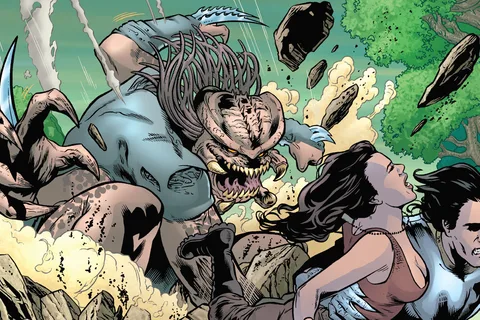
Predator: Concrete Jungle is a 1995 novel by Nathan Archer, published by Bantam Spectra in May 1995 in the Dark Horse Science Fiction Novels line. It followed NYPD detective Schaefer and his partner Rasche through an August heat wave in New York, a tagged hunt that pulled Schaefer back to a Central American crater, and a Third Avenue landing after General Philips tried to hand him over. Archer expanded Mark Verheiden's Dark Horse comic, a different story from the 2005 video game.
Plot Summary
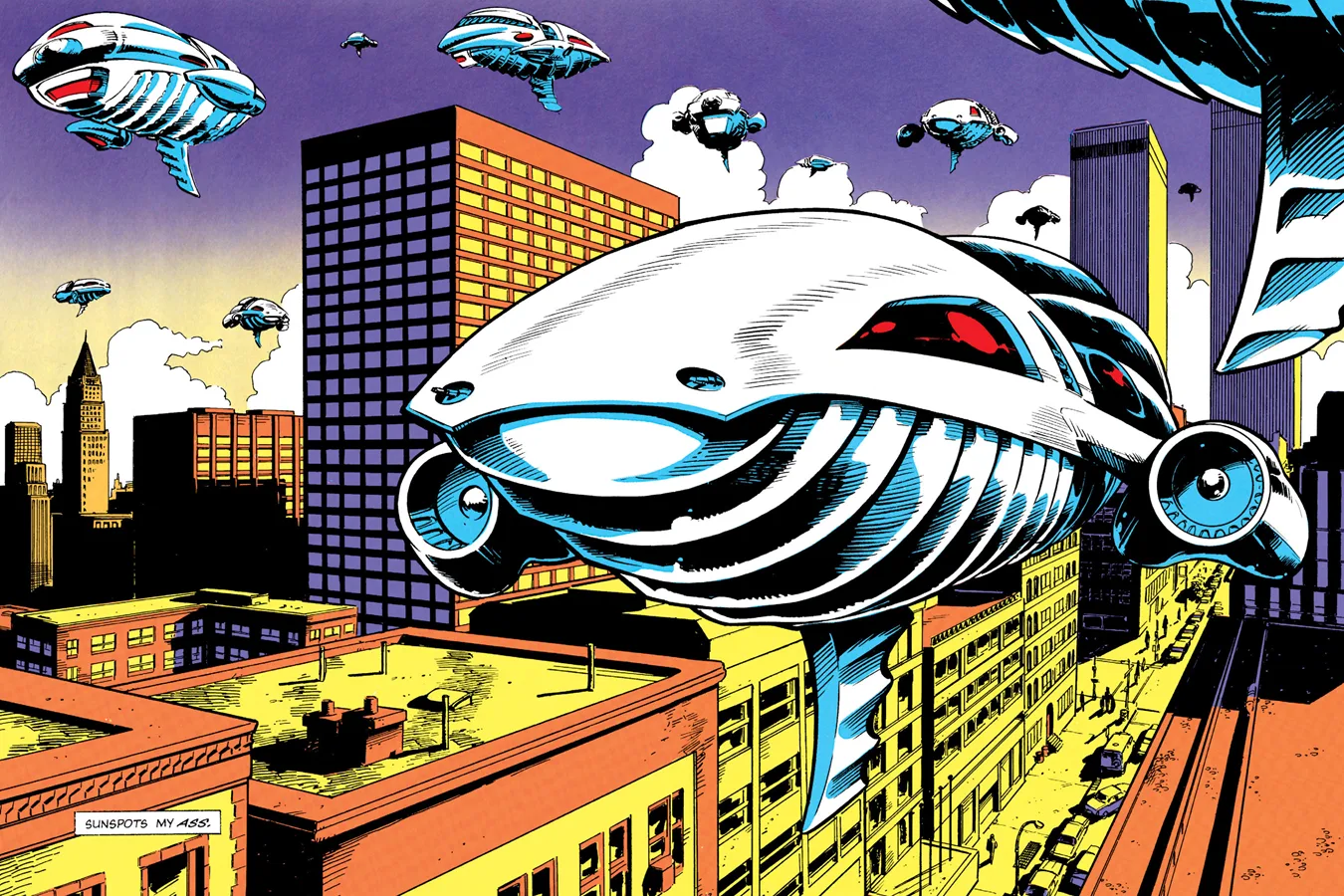
New York Heat Wave
New York sat in the worst heat wave in years, about 90°F and ninety percent humidity, in August. Detective Rasche collected Al Napolitano after Al killed his wife Rose and the television with a twelve-gauge, both barrels, because she would not change the channel from Green Acres. Partner Schaefer stayed in the car. The two detectives had spent six years together and had just been moved from Narcotics to Homicide after Schaefer threw the Cali cartel's district chief off a brownstone roof. Captain McComb made the transfer because the coke trade had put both men on hit lists.
Their old Lower East Side beat had belonged to two local bosses who had fought over market share for two years. Lamb ran his side with suits and payoffs. Carr ran his for the guns and the violence. That evening Carr walked into Lamb's fifth-floor meeting in a boarded-up tenement with four lieutenants, rejected a merger that would have kept the Colombians out, and called for winner-take-all.
Beekman And Water
Crazy Charlie sat on a radiator with his back to an open window and saw three red dots crawl onto his vest. A blue-white blast tore his chest open. Lamb's second leaned out with a rifle and was yanked upward, five floors up. Both crews emptied their guns into the wall and blew a hole about seven feet high and ten feet wide. A large yellowish hand with black nails caught the broken brick, flickered, then held. Carr fired his .357 at what he took for a Halloween glove, and the ceiling came down on him.
Schaefer heard the barrage from Bud's Deli six blocks away and treated it as thunder that sounded like an army. The radio sent them to shots fired at Beekman and Water. Four cars were on the scene before they arrived. McComb had sealed the building, then a man came out a fifth-floor window and landed on a cruiser, and Schaefer went in anyway. Eight bodies hung by the feet from a smashed joist, skinned, including Lamb, Edgie, Hatcheck, and Fiorello. Carr crawled out of the plaster, fired a sawed-off at Schaefer, missed, and ran the fire escape. McComb arrived, wanted a shooting report in triplicate by midnight, and told Schaefer the case was not his.
General Philips
At two in the morning McComb called General Philips, about two hundred and forty miles south, on orders that had come through the mayor from the White House. Eleven people were dead at Beekman. Eight had been skinned and hung, one had been thrown from a window, and two on the roof were decapitated, heads gone. Forensics said the eight inside had been killed with blades after thousands of rounds. Philips had warned McComb the day before that a massacre might come in a building without air-conditioning, against armed men, well above street level. He wanted the press kept out.
Dutch Schaefer had told Philips what happened in a jungle eight years earlier. The hunters used invisibility screens, energy cannon, and pocket nukes. Official policy was to wait them out and avoid a fight. Dutch had killed one and lived. After that pickup, Philips's people studied legends and radar and never found leftover technology. This time the Air Force picked up unfamiliar interference that stealth specialists read as a fleet over New York, farther north than any prior hunt they could prove.
The Police Academy Range
McComb banned Schaefer and Rasche from Beekman. Ordinary heat-wave jobs filled the next days, including a bad deal in TriBeCa among Jamaican dealers, Somali gunrunners, and Serbian terrorists that left a truckload of heavy weapons at the police lab on West Twentieth. Late one afternoon a hunter walked cloaked into the basement range of the police academy in the same building. Probation officer Richard K. Stillman charged in and was killed. Range clerk Joe Salvati, who had no gun, took a concussion and a broken nose and lived. The rest hung from the girders in the darkened hundred-foot range, their own casings on the floor.
Rasche was off duty at his house in Queens when Schaefer came for him. McComb tried to throw them out of the academy. A white-haired man in rumpled fatigues stopped him. If this Schaefer was like his brother Dutch, ejecting him would wreck the place. In a Fifth Avenue bar later, Philips drank bourbon, said he had never happened, and told Schaefer to drop it. Dutch had worked for him in the eighties. In two or three weeks the hunters would leave if nobody pressed them. They liked the heat, and they wanted the sport. Schaefer refused.
The Hunter's Mask And Neck Tag
Schaefer last saw Dutch seven years earlier, on a drinking stop, after a Central American rescue went wrong and Dutch lost his whole team. Dutch talked about camouflage near invisibility, guns and knives, faster reflexes, and hunting only what could fight. Then he vanished. Schaefer kicked in the chained Beekman door and found three head-sized charred holes at eye level, one pair lined up downward into the next room. A hunter appeared at arm's length, broke his jaw, and lifted him by one ankle. It wore heavy silver sandals with four taloned toes, metal greaves, black netting, and a metal mask. Claws set something into the flesh below his left ear.
Schaefer hit it with a two-by-four and tore the mask off. The face was mottled, with black snakelike locks and a layered fang mouth. It spoke in Carr's voice, amplified, and used Carr's "Trick or treat." Schaefer tripped on his own pistol and fell headfirst through the five-story hole. Rasche piled garbage bags under him from a strike on the street. Schaefer lived, ordered the fall written as an accident, and kept the mask. At the hospital a nickel-sized device sat on his neck with barbed claws in the carotid. Pulling it would shred the vessels. Schaefer left in a gown, took a cab to Rasche's door, and treated the implant as a tag, not a killing tool.
Schaefer In Central America
McComb would not produce Philips. Schaefer smashed the captain's phone, put the trip on credit cards, and flew American from Kennedy to Panama City. He told Rasche to get Shari and the boys somewhere cool. Radar later showed something peel off the New York group and follow that airliner at about six hundred miles an hour. Philips ordered an armed squad after Schaefer and told aide Perkins not to arm him. Dutch's kill had been a lone jungle hunter that then blew about a square mile of jungle. This time the screen showed a fleet. If Schaefer killed one of a group, Philips feared they might wipe humanity.
In Panama, old Special Forces friend Hanson at the DEA supplied cash and a steel case of weapons, including a full-auto shotgun that fired six rounds a second. Schaefer went north to Riosucio, a dozen palapa huts at the foot of a ridge between two unnamed states that had been close to war eight years earlier. A bearded guide in tire-tread sandals charged extra because Schaefer was a New York cop with enemies in La Costa, Medellín, and Cali, then more extra when Schaefer asked for six vanished norteamericanos and something that came with the heat. They crossed the ridge toward Mangabe, found a ruined staging camp with a burned-out helicopter, and on the fourth day reached a crater about a quarter mile across. Locals said the sun had appeared at midnight on a hot night eight years before. The trail, the guide said, ended there.
The Jungle Hunter's Self-Destruct Crater
The neck tag flared. The hunter had followed him from New York. Schaefer armed up by firelight and spiraled in on the pain. A blue-white shot dropped a tree. A grenade killed the cloak electronics and left greenish-yellow fluid on an arm. Schaefer stabbed through the mesh, then the hunter threw him at a cliff above a river. Schaefer charged it over the brink. A pointed broken branch punched through its chest. Local insects would not touch the corpse. The body wore a replacement mask, a shoulder cannon, and a string of skulls, mostly animal, with one human skull at the end.
The guide had stayed unarmed on purpose. Eight years earlier the hunter had let an unarmed woman with Dutch's team go, and the range hunter had left Salvati alive for the same reason. His English improved once Schaefer came back alive. He radioed Capa-Alpha as Decoy-Niner, planted a transponder by the corpse, and said they were a new unit formed after Dutch met one. Dutch had killed his hunter. That one lived long enough to self-destruct and make the crater. Dutch got out alive. That was all the guide would say. Philips, offshore, went to full combat alert and called the President. Most of the fleet stayed over New York. A chopper squad went for the body.
Rasche And The Ships
Rasche had moved Shari and the boys to a motel on Route 31 near Niagara Falls, then lost two of Philips's men in a rented white van and sent the family on to Shari's mother in Elmira. Back in the city, Officer Brownlow handed him files NYPD had not sent to the feds. When the hunters did not skin, they took heads and spines. The skins from Beekman had not been found either. Rafe T.G. Mako died headless on an empty street with his Uzi stolen by a boy. Tony Blue lost his head in a loft on St. Mark's. Q.Q. died at a woman's place on Avenue B. Carr stopped ordinary business and started calling muscle from all five boroughs.
Rasche took the stolen mask from a drawer at Police Plaza and held it to his face. Through one window he saw invisible ships as huge red-gold shapes, first three, then four. That also explained two weeks of wrecked television. McComb treated the mask as withheld evidence. Three men in suits took the helmet and held Rasche for days in a midtown apartment. A call from Peterson put Schaefer six hours out, by chopper, straight to the MetLife building for delivery. Rasche broke Jones's nose, rammed Smith through a door, and took the mask and a pistol. Salvati then loaded the van with leftover case guns plus the TriBeCa stash, including a Soviet shoulder-mounted antitank rocket.
Eschevera
At the crater, Doheny, Johnson, Romano, Sturgill, the pilot, and copilot Jim Wyatt found the corpse on the river side of the cliff with a five-foot limb through the chest. Four live hunters stood around it. The team died in the next minute, and a blue-white fireball hit the hovering chopper's fuel tank. Philips counted six good men gone and would not send a rescue until the hunters finished and left.
On the march to the valley rendezvous, four Cali gunmen took Schaefer and Niner. They had orders to keep the guide alive for Eschevera, then shot him anyway. Eschevera was the man Schaefer had thrown off a three-story Manhattan roof after a million-dollar offer and a switchblade. He had lived, limped, and gone home to Colombia. In camp, Paolo wired Schaefer to a chair and brought a Black & Decker circular saw with the safety shield off. Schaefer smashed Paolo with the chair, cut himself free, and reached a courtyard of more than a dozen rifles and corner towers. Hunters hit the camp from more than one direction. An antiaircraft battery came out of a falling outbuilding and exploded. Shrapnel killed about a dozen. A hunter took Eschevera's hand, then put three red dots on his forehead and fired. It mimicked his last words. Philips shot a Cali man who had Schaefer at gunpoint in the trees, then raised his own pistol in a clearing. He needed Schaefer alive to trade.
The Handoff
On the flight home Philips drew a .45 and said they would hand Schaefer over so the hunters would leave New York. A left-wrist gadget like Dutch's could destroy the city if it went off here. Schaefer disarmed him, left him unconscious, and put the pistol on the pilot. The destination was the MetLife rooftop heliport. Six military types waited there. Schaefer decked the man at the door, took an M-16, and made the rest drop their weapons. Rasche came up through the lobby at 5:45, early for a six o'clock handoff, and they tied Philips and the six, then drove south for Carr.
Carr's decaying tenement had DEATH ZONE painted on the door. A hunter was already inside. Water from a shot-up pipe shorted the cloak. The hunter picked Carr up by the throat, mimicked say bye-bye in Carr's voice, and started to twist his head off. Schaefer bent a shotgun barrel on its skull. From about thirty feet Rasche fired the Soviet rocket. The hunter died. A cloaked ship then dove on the building, cut a ten-foot hole, and on the second pass wrecked the facade so nobody could take the body. Through the mask the hull was red-gold. Naked eyes saw nothing until sparks showed the outline.
Third Avenue
The truce with Carr ran only until the aliens were gone. After midnight, in a garage a few blocks up Third, Carr brought at least a dozen hired guns loaded with the lab weapons. Schaefer briefed them: invisible except through a mask, bigger and faster than a man, and tracking the neck tag. An RPG at a ship should bring them down for sport. At dawn on Third Avenue, with the Chrysler Building a few blocks uptown, Schaefer fired. For a moment everyone saw the ship in blue sparks. The hit left an oily black stain on a white hull near the tail and did not bring it down. Then an unbroken line of blue cars filled the avenue. McComb came in a flak jacket with a bullhorn and thought about making assistant chief.
The Final Showdown
A shadow covered the full width of Third Avenue. The ship sat on the street, then it decloaked, a landing rib gouging asphalt, the hull almost touching both rows of buildings. A test shot wrecked a cruiser. The barrage tossed cars and crumbled facades, enough to clear ambush, not enough to level the city. The hatch opened. Shimmers dropped to the pavement. McComb offered to parley and heard his own voice come back. A hunter appeared over him and blew a hole through his chest.
Carr's men and the arriving olive-drab squad could not hold a fire pattern. A hunter stole the mask. A wild shot hit Rasche's shoulder and put him through a shop window. Philips arrived with M-16s and told them gunships were coming. Schaefer opened a hydrant with a fireman's wrench. Water made blue sparks, and two hunters appeared. A block away Carr blew the top off another hydrant. Half a dozen gunships came over the rooftops in a V. Then the dawn went dark. Black clouds, lightning, fat rain, and a cool wind broke the heat wave.
After The Rain
The rain ended that final showdown. The hunters stopped and looked up. One used McComb's voice to ask if that was it. The one that had cornered Schaefer slashed two red lines across his chest, then picked the homing device out of his neck without cutting the carotid.
They walked back to the ship, jumped a height no unassisted human could, and carried three of their dead from this fight. A belly fin cut a yard-wide, twenty-foot path in the asphalt before the ship rose, went invisible, and left. Schaefer told Philips the whole fleet was leaving and to call off the choppers.
The Cover-Up
He gave Carr until lunch, then walked him off west on Thirty-seventh. Rasche lay on a stretcher and meant to resign and take Shari and the boys out of New York. Philips started the cover-up as a fighter crash, scattered ammunition, and suspected terrorist sabotage. No alien kit remained on the street, not even a pocketknife. About a dozen blocks of midtown were wrecked. Schaefer refused questions, treated the hunt as something they would repeat in a city, and walked toward the nearest subway.
The Hunters
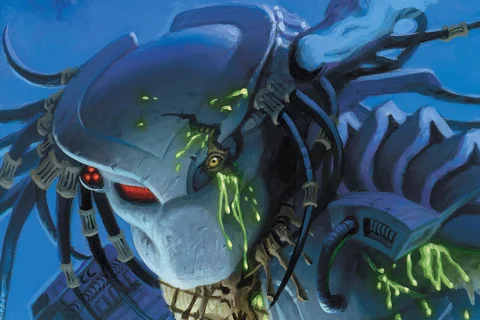
The book never uses the word Yautja. Human characters call them things, creatures, aliens, hunters, or space predators, not a species name. Philips's people have no official name. They are larger, faster, and stronger than a large man, with mottled grayish-yellow skin, four-toed taloned feet, black mesh, metal greaves, and dreadlock-like tendrils that may be metal-banded. The kit matches what Dutch described after the jungle hunt: cloak, metal mask with lenses and side tubes, twin jagged wristblades, a shoulder cannon with three red aiming dots, and voice mimicry. Greenish-yellow blood marks wounds. Water and some blasts short the cloak into blue sparks. Ships stay invisible except through a stolen mask, where they read red-gold, and show a white hull when they decloak.
They hunted armed prey for sport and left the unarmed, which is why Salvati and the woman with Dutch's team lived. Some victims were skinned and hung. Others lost heads and spines, and those trophies were never recovered. They recovered their own dead and wrecked a building rather than let humans keep a corpse. Anger at the crater and at Eschevera's camp stayed at personal scale, not orbital bombing. Rasche saw three, then four, ships from one Police Plaza window. Four hunters stood over the jungle corpse. At least four hit Eschevera's courtyard. One died at Carr's tenement, one in the jungle on the branch, and three more on Third Avenue, carried off when the landed ship left. They stopped when rain and cold took the fun out of the fight, marked Schaefer as beaten, removed the tag, and left.
Confirmed Kills
Rose Napolitano died by her husband's shotgun before the hunters arrived. The fight at Beekman and Water killed eleven of Carr and Lamb's men: eight skinned and hung, including Lamb, Edgie, Hatcheck, Fiorello, and Crazy Charlie, one thrown onto a cruiser, and two on the roof with the heads gone. The police range hung multiple officers and civilians and left only Salvati named alive. Street trophies included Mako, Tony Blue, and Q.Q. Dutch's team of six died eight years earlier, among them Billy, Hawkins, and Blain. Dutch killed that hunter, and its wrist blast made the crater.
In Central America the Cali team killed Decoy-Niner. Hunters killed Eschevera after taking his hand, wrecked his camp, and wiped Philips's six-man pickup crew. Philips shot the Cali man who had Schaefer in the trees. On Third Avenue a shoulder cannon killed McComb, at least three of Carr's hired guns died in the street fight, and more unnamed cops, soldiers, and gangsters lay along about twelve blocks. Schaefer, Rasche, Carr, Salvati, and Philips lived. The book never says what happened to Dutch after he left that jungle.
Key Characters
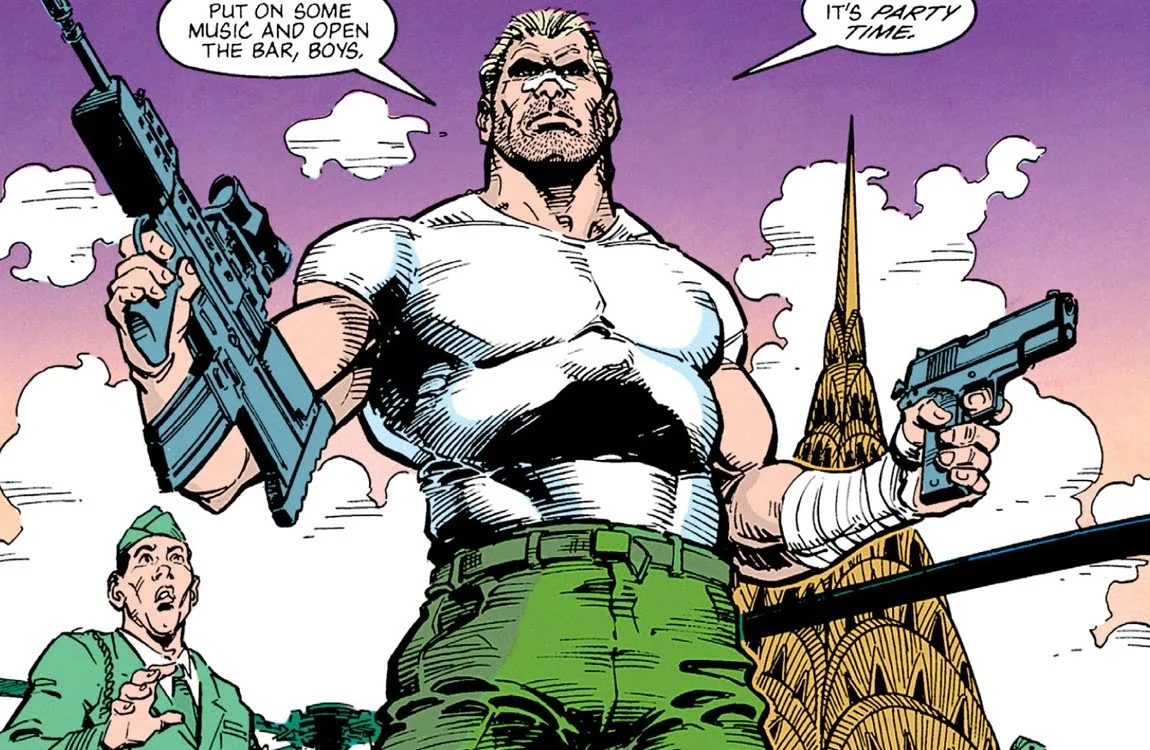
- Schaefer was an NYPD homicide detective, ex-Narcotics, Dutch's brother, with no first name in this novel. He survived a five-story fall, a neck tag, a jungle duel, Cali captivity, and Third Avenue, then walked away from Philips.
- Rasche was Schaefer's partner for six years, a Queens cop eight years from his pension, married to Shari, father of Steven and Richard. A shoulder wound ended his willingness to stay in New York.
- Dutch Schaefer was a Vietnam major who went freelance for Philips, lost a six-man rescue team in Central America, killed one hunter, and vanished after a drinking night with his brother seven years before the book.
- General Philips ran an unofficial hunter desk stitched onto Army, CIA, FBI, and NSA pieces. He tried to trade Schaefer, then joined the street fight and wrote the fighter-crash cover story.
- Captain McComb kept NYPD off the federal case, dismissed Schaefer, and died on Third Avenue when a shoulder cannon went through his chest.
- Carr was a six-foot-three drug boss who survived Beekman under fallen plaster, the Death Zone rocket, and the avenue fight, then walked west on Thirty-seventh with a machine gun.
- Lamb offered Carr a merger to keep the Colombians out and died skinned and hung in his own meeting room.
- Joe Salvati ran the range cash register, lived because he was unarmed, and later gave Rasche the arsenal.
- Decoy-Niner was Philips's unarmed guide out of Riosucio. Cali gunmen killed him after they had orders to take him alive.
- Eschevera was the Cali man Schaefer had thrown three stories in Manhattan. He limped home, wired Schaefer to a chair, and died by plasma after losing a hand.
- Shari Rasche took the boys to Niagara, then to her mother's in Elmira, and lived.
Place In The Books
Bantam sold the novel as the first of three Predator paperbacks, ahead of Archer's Cold War in 1997 and Sandy Schofield's Big Game. It is a comic expansion, not a film book. Simon Hawke's Predator 2 novelization had already appeared in 1990, and Verheiden's comic had appeared in 1989. The detective is only Schaefer here. Later Dark Horse series Predator: Hunters III gave him the first name John. The book never prints Val Verde, OWLF, Peter Keyes, radiation sickness, or a reunion with Dutch.
This novel is the New York city hunt that Predator 2 later used for the City Hunter in Los Angeles: a heat wave, gangs, and cloaked hunters in the streets. Archer cut the comic's subway attack because the film had already used trains underground, and he wrote the police academy range massacre instead. The 2005 game reused the title and is a different story. Titan later bound Concrete Jungle with Cold War and Big Game in The Complete Predator Omnibus.
Editions
Bantam Spectra released the first American mass-market paperback in May 1995 in the Dark Horse Science Fiction Novels line. The copyright page dates it as a Bantam Spectra book for that month and lists 306 pages. The painted cover is by Dave Dorman, signed on the art, though some copyright pages credit John Bolton. Millennium issued a British edition the same month, then a June 1998 reprint with a Dimitri Patelis cover and 327 pages.
Titan Books reprinted the text in The Complete Predator Omnibus on 30 January 2018, bound with Cold War and Big Game. Titan lists that paperback at 672 pages. Archer later noted that the omnibus title oversells the contents, since it is only those three novels. There is no separate modern standalone of this book.
Behind The Scenes
Nathan Archer is the science-fiction pen name of Lawrence Watt-Evans. He wanted the Predator job credited away from his fantasy brand, and Dark Horse wanted a writer with a track record, so he wrote Star Trek: Deep Space Nine: Valhalla first and came back. The original four-issue comic was titled only Predator. Kurt Busiek suggested Concrete Jungle so the paperback would not be confused with the film novelization. Watt-Evans thought the phrase was too obvious. Fox and the publisher kept it, and later comic reprints took the same subtitle.
The comic's subway attack had to go because Predator 2 had used that scene. Watt-Evans put the NYPD shooting range in its place. His editor set up a research call with Lieutenant Adam Kasanoff of the NYPD, who spent almost an afternoon on weapons, procedure, and a detailed description of the real range on Twentieth Street. The first draft, which already held everything in the comic, ran short, so he added original material, including whole chapters that are not in Verheiden. For continuity he watched VHS tapes of both films then in release and kept his children out of the den, though they watched from the stairs. He later wrote Predator: Cold War under the same name.
Conclusion
Predator: Concrete Jungle is Nathan Archer's 1995 Bantam novel of Mark Verheiden's Dark Horse comic. It covers Detective Schaefer and Rasche from an August New York heat wave through a Central American crater and a Third Avenue landing. The book ends with the hunters gone in the rain, McComb dead, Rasche quitting, Carr walking free until lunch, and Schaefer refusing Philips's cover story as he heads into the subway.
External Sources
- Concrete Jungle at the Internet Speculative Fiction Database
- Lawrence Watt-Evans on writing Concrete Jungle
- The Complete Predator Omnibus at Titan Books
Tag Categories: Predator Merchandise