

Mary was the fifth Nexus-6 replicant of the renegade group led by Roy Batty in Hampton Fancher's early drafts of Blade Runner. She was built as a nanny and housewife model for off-world colonists, with a pretty, kind face, blue eyes, and a touch of gray in her hair. After the escape to Los Angeles she stayed close to Batty and Leon Kowalski, then reached J. F. Sebastian's apartment with Pris, who introduced her as Aunt Mary. In later drafts Rick Deckard retired her there, shooting her as she hid in a closet holding a button-eyed monkey.
Biography
Earlier Life

Mary was designed as a companion who could keep house and look after children in the off-world colonies. In the July 24, 1980 draft she appears as a modest, warm woman with the look of an American dream mother, pretty, blue-eyed, and showing a little gray in her hair. She waited at a table by the window with Roy Batty while a street advertisement offered custom-tailored humanoid robots as body servants and field hands. When Leon joined them after a failed trip to recover his belongings, Batty already knew the police were involved.
The report on the escape named six replicants, three male and three female, under Batty's leadership. Mary belonged to that group with Leon, Pris, and Zhora. The same July 24, 1980 draft gave her incept date as November 1, 2017, with domestic conditioning for a day care position. One of the six died in an electrical field during a break-in at the Tyrell Corporation, leaving Mary among the survivors who went to ground in Los Angeles. Mary had no combat training, and she stayed close to Batty as the group searched the city for a way to their maker.
At Sebastian's Apartment
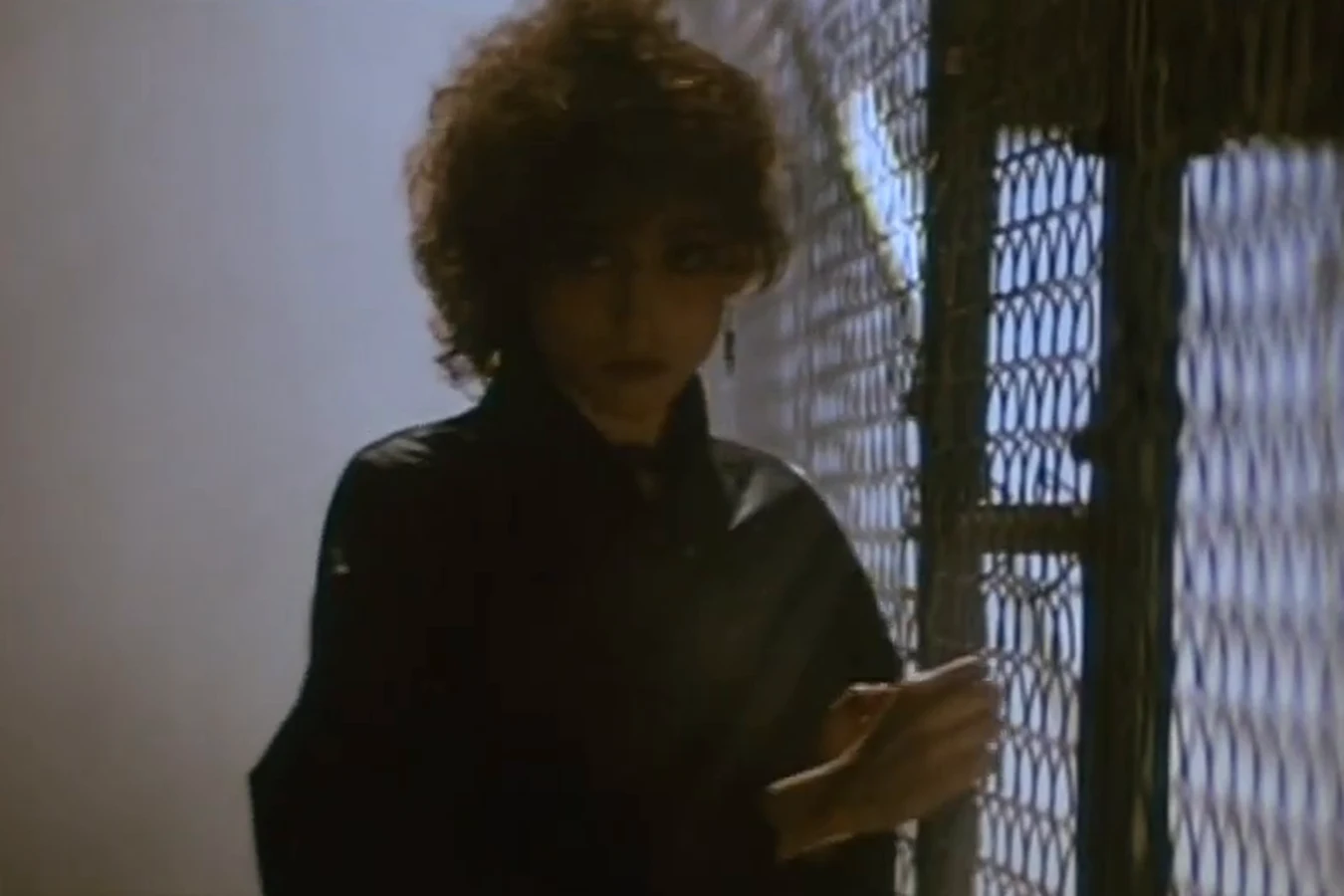
Pris brought Mary and Batty into J. F. Sebastian's apartment and introduced them as her Uncle Roy and her Aunt Mary. Sebastian stood with a bowl of eggs, bashful and excited under the little family's warm attention. Mary, modest and warm, thanked him for his kindness and said they had been worried to death. She praised his home and admitted they had not found the city easy. When he offered breakfast, she told him they were famished, and he went to the kitchen happily.
After Sebastian left the room, Batty told Pris that only three of the group were left. Mary asked what they would do if Sebastian would not cooperate, and Batty answered that a host who wanted to be appreciated would help them. Batty then asked Sebastian to take him to Eldon Tyrell, whose company had made the Nexus-6 line. When Sebastian agreed, Mary sighed in relief and said she did not think there was another human being in the whole world who would have helped them.
Retirement
In later drafts of Blade Runner, Deckard entered the apartment after retiring Pris and fired a volley of shots into a closet door. He found Mary at the back of the closet, her body already riddled with holes, one hand raised and the other clutching a button-eyed monkey. Her face was frozen in fear. Deckard shot her through the neck, and she fell to the floor like a puppet with her strings cut. Unlike Pris and Batty, Mary had no skill in a fight, and she had taken shelter rather than meet the blade runner in the open.
Irmgard Baty
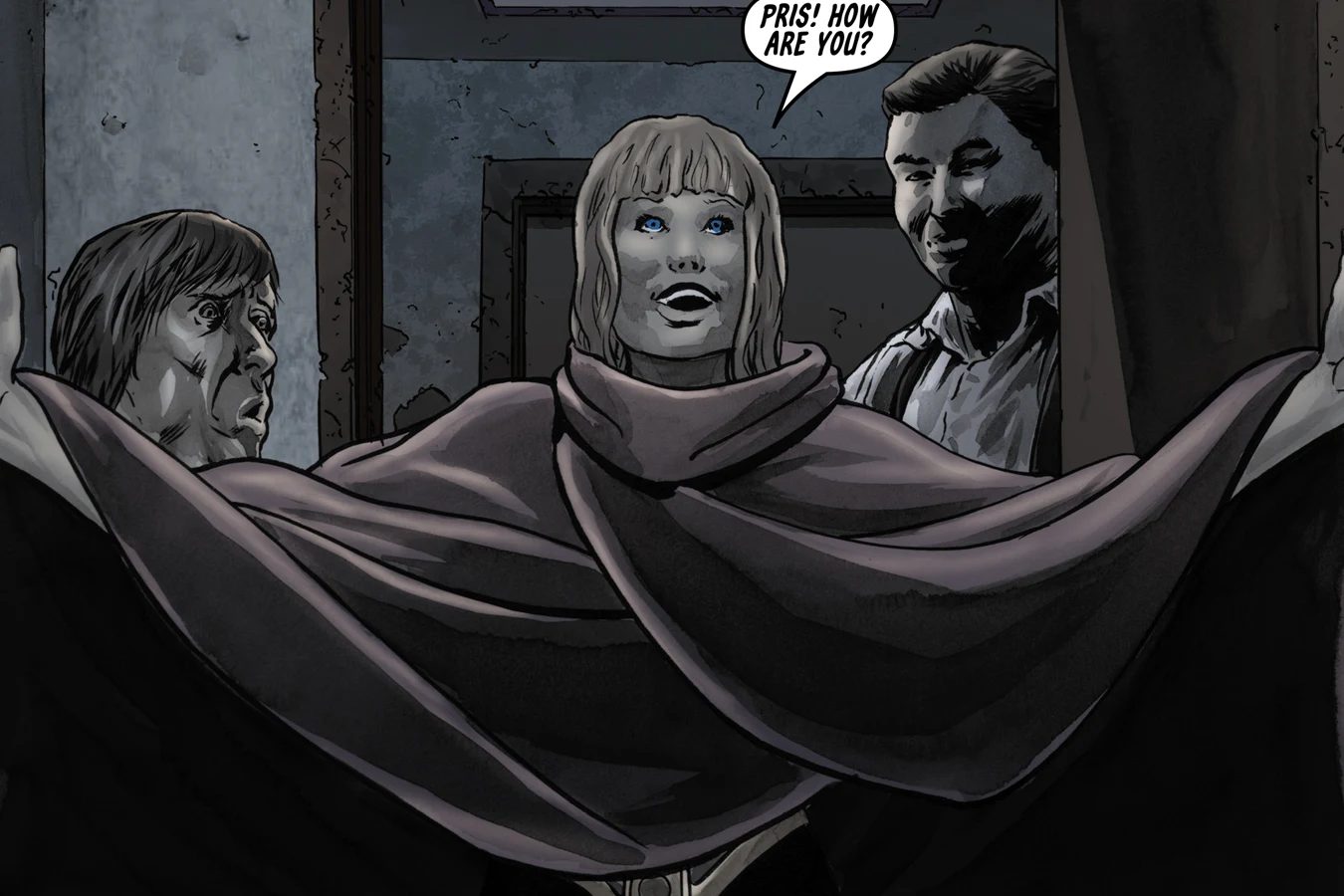
Mary filled a similar role to Irmgard Baty, Roy Baty's Nexus-6 wife in Philip K. Dick's Do Androids Dream of Electric Sheep?. In the novel Irmgard escaped from Mars with Roy, joined Pris Stratton in a nearly empty apartment building, and argued that the group should trust its human resident, John Isidore. She stood with Roy when Rick Deckard reached the apartment, and Deckard shot her during the fight. Like Mary, she was the partner who arrived with Roy and shared the last shelter with Pris before the blade runner arrived.
The Fifth Replicant In The Jeter Novels
In K. W. Jeter's 1995 novel Blade Runner 2: The Edge of Human, Sarah Tyrell hired Deckard to find a missing sixth Nexus-6 whose file Bryant had purged. Off-world traffic records confirmed six arrivals in Los Angeles, while Bryant's briefing named five: the replicant killed on the Tyrell fence, Leon Kowalski, Pris, Zhora, and Roy Batty. The human template of Roy Batty hired Dave Holden for the hunt, and the two men at times took Deckard or one another for that unit. Sarah wanted that unit found off the books, because a sixth Nexus-6 in the city would give the United Nations cause to shut Tyrell out of the colonies.
Deckard later told Sarah there had never been a sixth replicant, and she admitted she had kept the hunt alive so the United Nations would have cause to destroy the Tyrell Corporation. Sarah was the human template for Rachael, and she wanted her uncle's company brought down after he used her as the model for that replicant. By the end of The Edge of Human, the hole in Bryant's file had served that purpose. Jeter's later novels, Blade Runner 3: Replicant Night and Blade Runner 4: Eye and Talon, continue after that hunt.
Behind The Scenes
Hampton Fancher wrote Mary through his July 24, 1980 Blade Runner draft, and David Peoples retained her dialogue in the December 1980 draft. Fancher described her as an American dream mother out of Father Knows Best. Stacey Nelkin, who had tested for Pris, was then cast as Mary. The February 23, 1981 draft still named her in Captain Bryant's briefing, with shots of Leon, Pris, Mary, and Zhora on the screen. Her scenes at Sebastian's apartment and her retirement in the closet were the core of the part as Fancher wrote it.
Conclusion
Mary remains the fifth replicant of Batty's original six, the maternal Nexus-6 who reached Sebastian as Aunt Mary and met Deckard in the closet of the later drafts. In Philip K. Dick's novel a similar role belonged to Irmgard Baty, who arrived with Roy and died when Deckard entered Isidore's building. In K. W. Jeter's sequels the missing number in Bryant's file became a hunt of its own, until Deckard and Sarah Tyrell settled that there had never been a sixth. Between those versions, Mary's story is the one in which Batty's group still had its nanny, its aunt, and its fifth name.
Appearances
- Blade Runner, Hampton Fancher screenplay, July 24, 1980
- Blade Runner, David Peoples draft, December 1980
- Blade Runner, February 23, 1981 draft
Tag Categories: Blade Runner Lore | Blade Runner Characters | Replicant Characters | Female Replicants