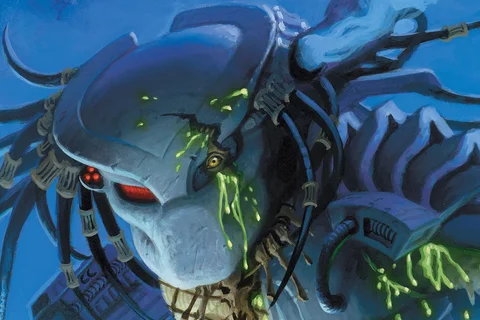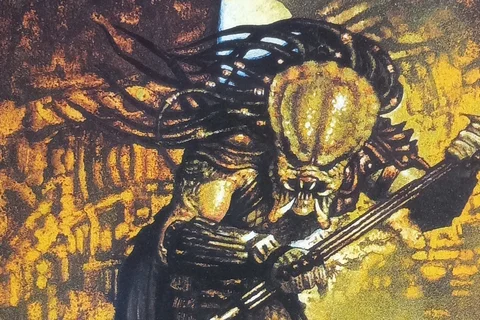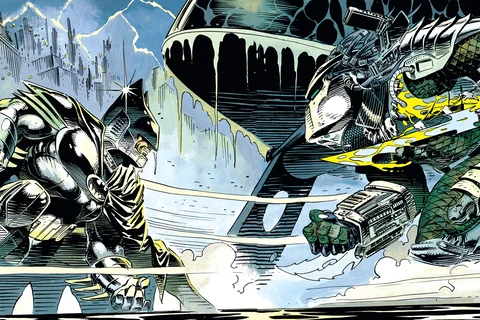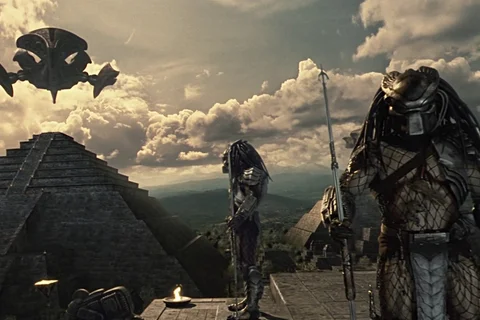

The Killer Predator Clan, also called the Killers, was a renegade Yautja faction that rejected the traditional hunting code and used overwhelming force to slaughter its opponents. Its members fought other Predator clans in Predator: Prey to the Heavens, then deployed an army of controlled Xenomorphs in Aliens vs. Predator: Three World War. Machiko Noguchi helped unite traditional Hunters and Colonial Marines against them on Caparis VII. That campaign destroyed a major Killer position, but another breeding base left the faction's wider threat unresolved.
History
The War In East Africa
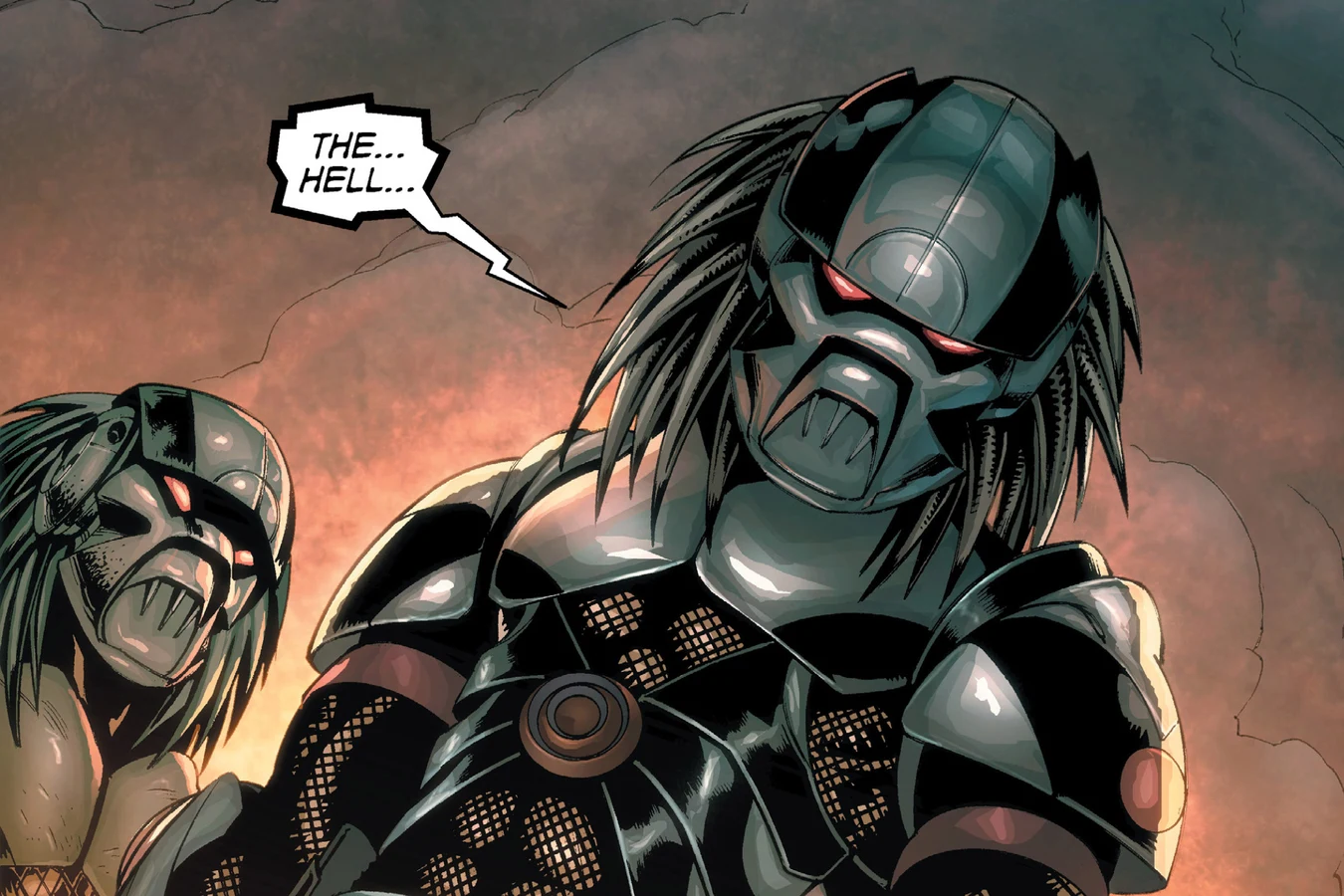
The Killers appeared in an East African city devastated by a human civil war. Their conflict with traditional Hunters ran alongside the fighting between local forces and Western contractors. In the opening encounter, a lone Predator pursued an American sniper through the ruins, only for the armoured clan to intervene. The Killers shot the human before the hunter could finish him, then gunned down the hunter when he charged them.
They were not simply another hunting party sharing the territory. They killed other Yautja openly and in numbers, using coordinated fire against warriors who challenged them at close range. Later, armoured Killers attacked rebels who had ambushed a convoy of Western executives. Their campaign added another armed force to a city in which soldiers, mercenaries and civilians already struggled to identify who controlled the streets.
The GDS Compound
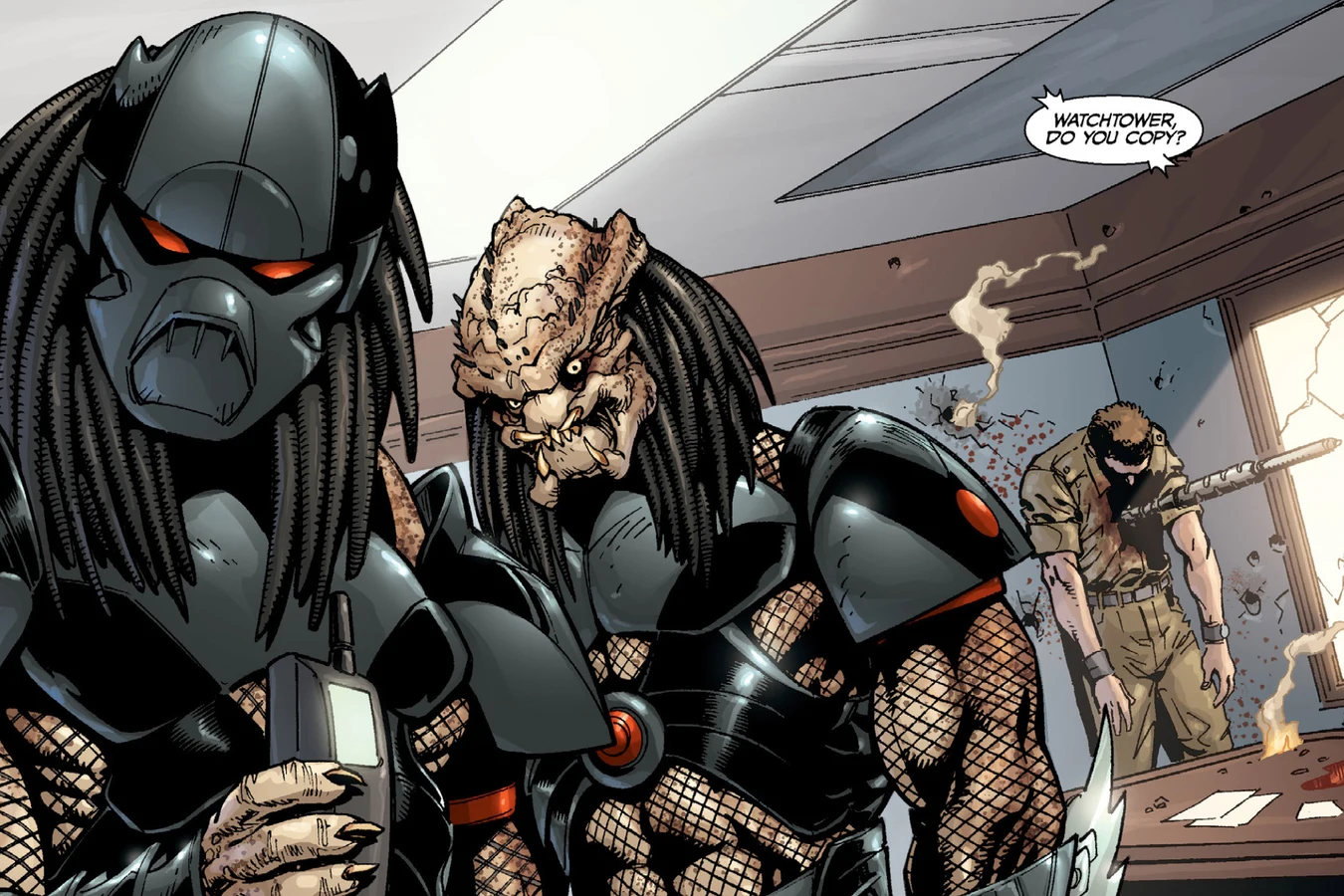
The clan targeted Graham Directive Security, the contractors commanded by Thorpe. Its members slaughtered a security team and answered a radio call from the dead men's office. They ambushed the contractors' convoy, used mortar fire to push survivors into exposed ground and closed in with energy rifles. One Killer nearly strangled Thorpe before a traditional Hunter shot it and disrupted the attack.
At the GDS compound, the Killers disabled communications and sophisticated weapons, killed personnel and destroyed the vehicles that offered a way out. Thorpe eventually shelled their jamming device, allowing the defenders to call helicopters and use heavier weapons. Major Briggs fought from a tank, but the rescue force found the compound wrecked and dead Predators among the casualties. Red eyes still watched from the jungle afterward.
The Raid On Caparis VII
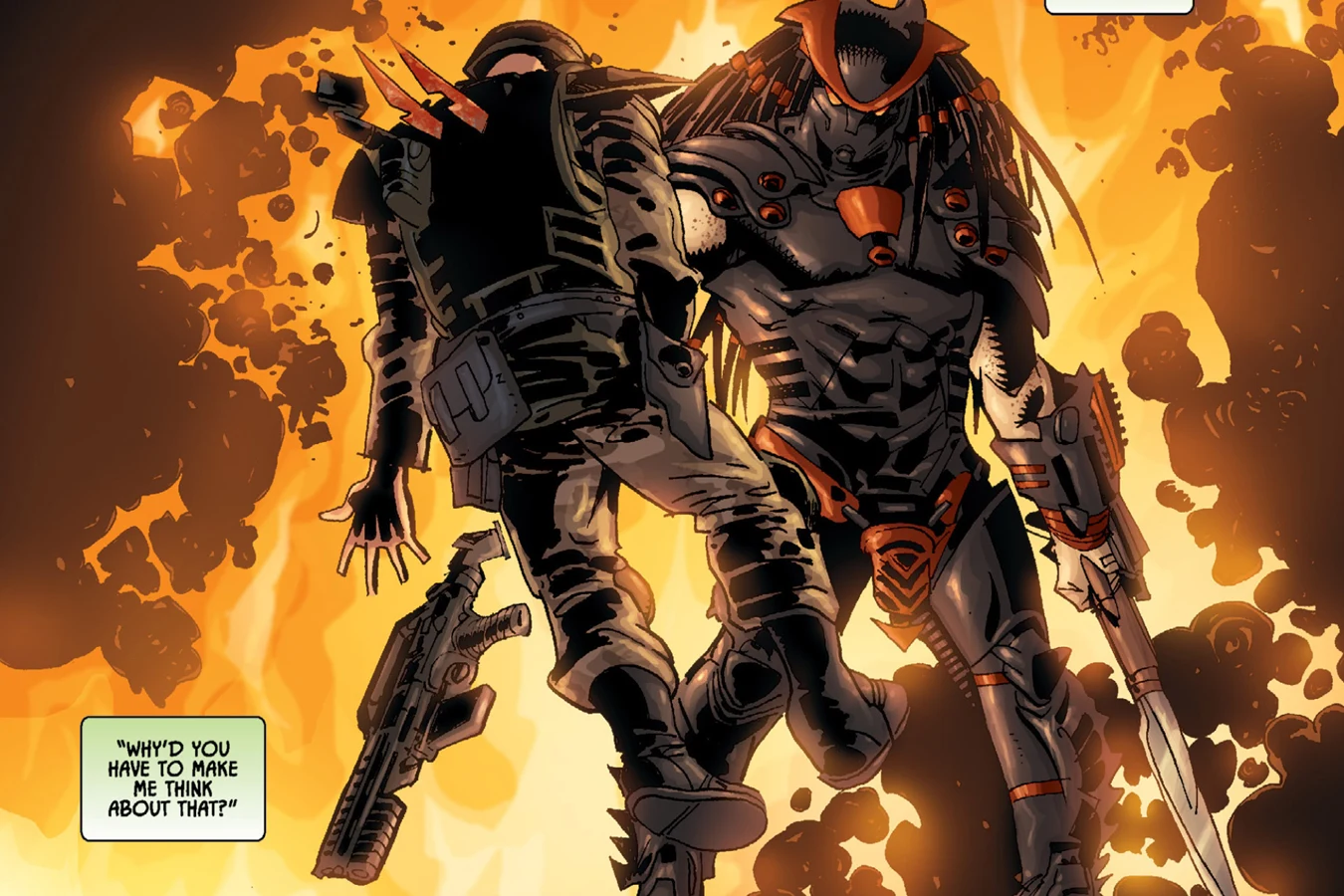
In the later campaign, the Killers attacked Chigusa Corporation's Bauxite Mine #42 on Caparis VII. Workers mistook the arriving ship for claim-jumpers and armed themselves from the mine's stores. Instead of facing only Predators, they were overrun by tusked Xenomorphs moving with the attackers. Their rifle fire wounded the creatures, but the resulting acid spray caused further casualties among the miners.
A recording showed the Killers standing among the dead with the aliens nearby. When Colonel Rast's Marines showed it to Machiko, she recognised a faction from the Hunters' accounts of renegade clans. The footage persuaded her to help despite her reluctance to return to her former life. Their use of Xenomorphs as troops made the raid a threat to human settlements as well as a continuation of the Predators' feud.
The Hunter And Marine Alliance
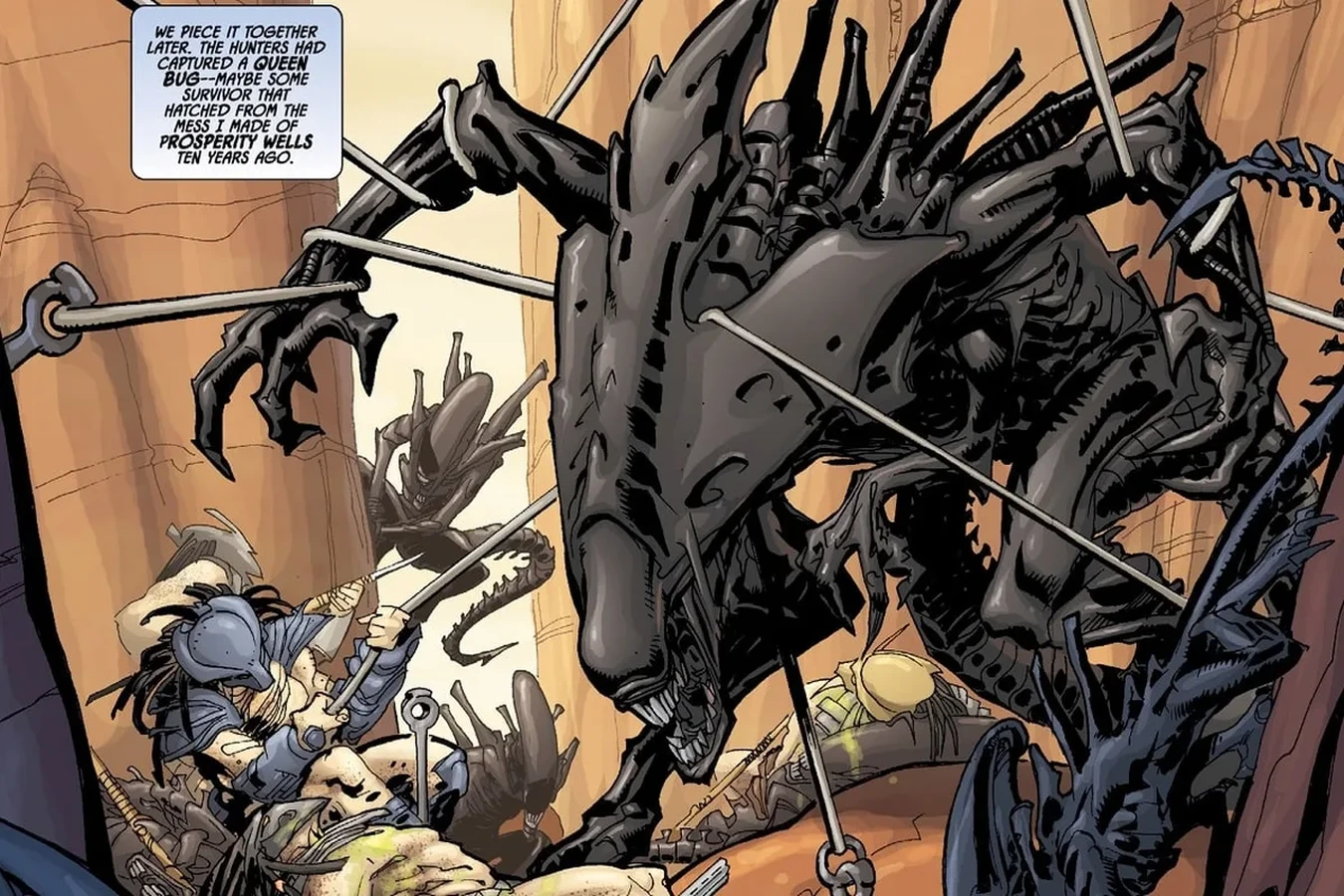
Machiko returned to Ryushi to negotiate with the Hunters and prove that she still had standing among them. Their initial cooperation involved capturing a Xenomorph Queen alive. Marines and Predators hauled together on cables while other aliens attacked, and Machiko stopped the humans from shooting the Queen they needed to secure. Ellis had brought his squad into the canyon despite her earlier instruction to remain with their ship.
The alliance brought Hunter ships together with the USS Tarawa and other Marine vessels. The Hunters wanted to eradicate their enemies and follow a Killer ship to another base, while human command also wanted alien technology captured intact. Machiko translated between the forces. The joint operation became the Three World War, with the Killers facing both rivals and humans on the ground they occupied.
The Defence Of Caparis VII
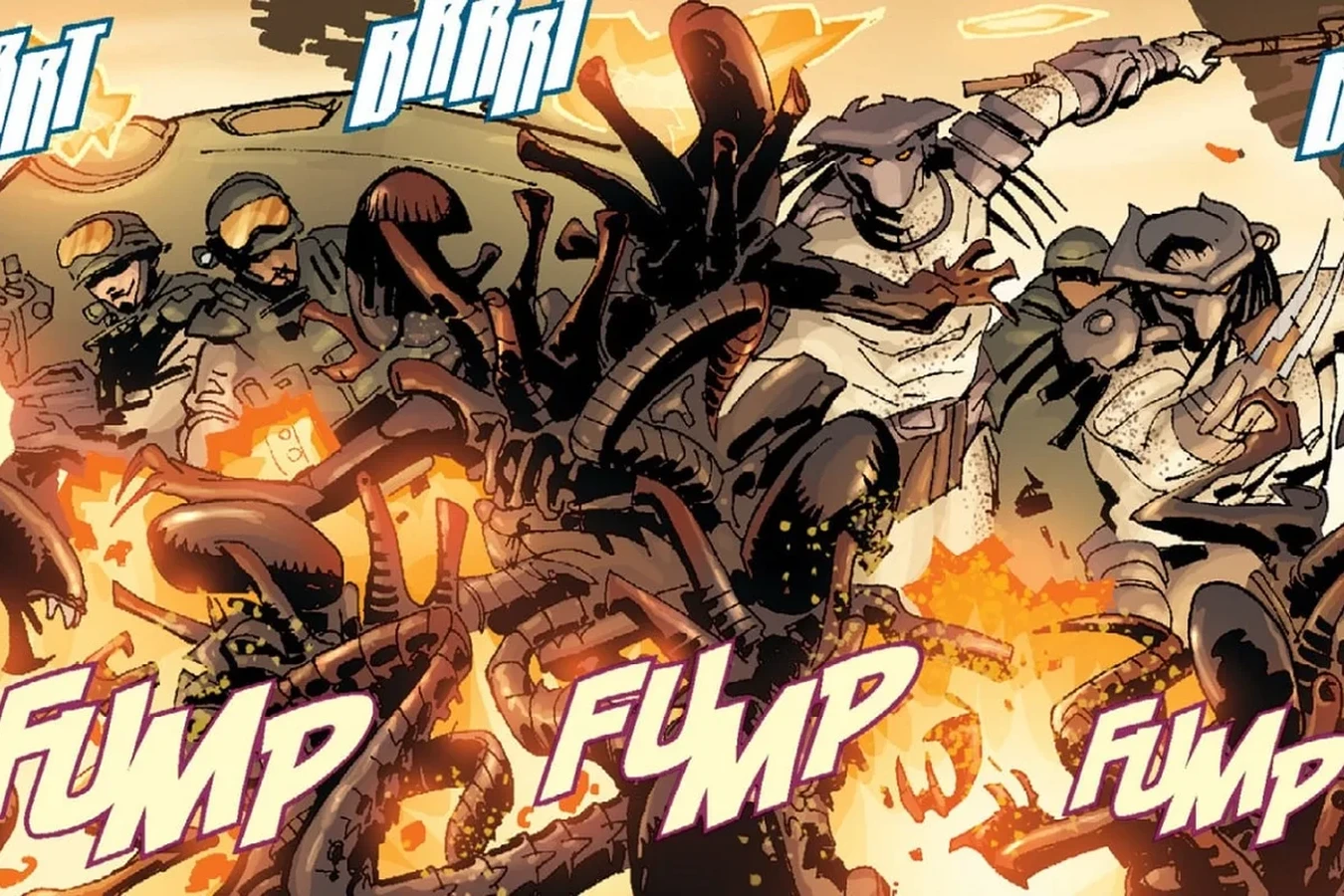
The Killers jammed the approaching fleets, disrupting communications, navigation and targeting for human and Hunter ships alike. They destroyed a Hunter vessel during the approach and met the landings with their own weapons and adult Xenomorphs. Allied troops fought their way off the ramps into open ground and shallow water while casualties were carried back aboard. The attackers had prepared missiles to home on the interference, turning the jamming itself into a potential target.
The dropships supported the assault with missile runs, and Hunters fought through the aliens with blades, spears and energy shields. The Killers were defending an established position, not conducting a limited trophy hunt. Their base and ships made the operation a military campaign, while the Xenomorphs forced the attackers into close combat even under heavy supporting fire. David Sereda pushed a line forward and called Marines in behind him as the Hunters advanced through the water.
Captives And Sereda's Discovery
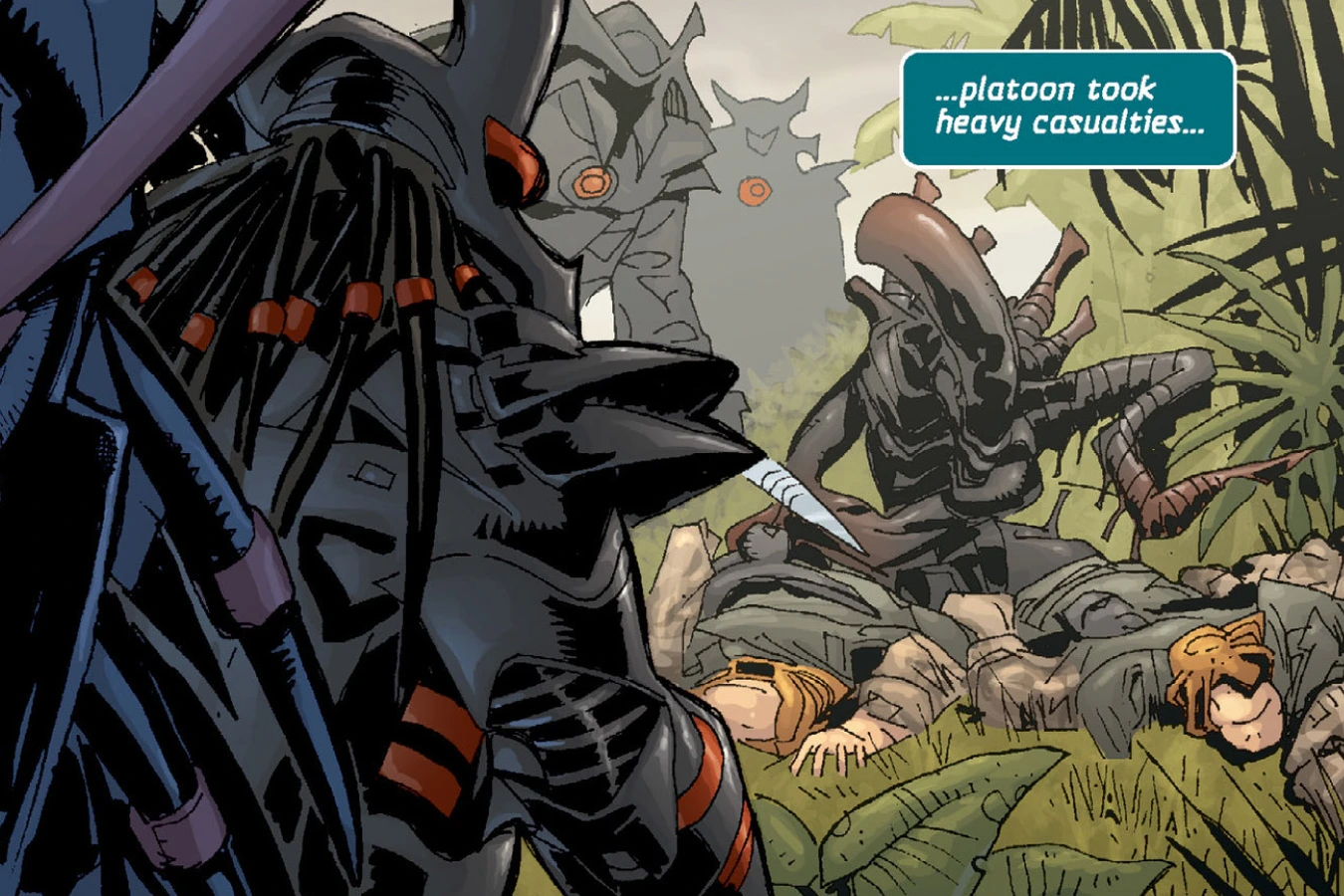
The synthetic Sereda was incapacitated and taken by the Killers during the fighting. His platoon had suffered heavy casualties, and the attackers gathered surviving captives from among the fallen Marines. His account described their curiosity: they apparently had not encountered a synthetic before. He allowed them to carry him while he worked on internal repairs, gaining access to their position rather than immediately revealing that he could still act. Although his face and body were damaged, his olfactory analysers remained functional, giving him a way to investigate the enemy's chemical signals once he reached the base.
Sereda obtained Killer gauntlets and reached a chamber containing hundreds, perhaps thousands, of Xenomorph eggs. They were stockpiled for a controlled breeding programme, but no Queen was present. His olfactory analysers identified synthetic pheromones associated with the Killers. He relayed his findings to Ellis, who passed them to Machiko and the Hunters. The fleets could not simply manufacture the same chemical mixture aboard their ships, but they already had the Queen captured on Ryushi. Sereda's discovery gave that living captive a direct role in defeating the Killer army.
The Xenomorph Army Turns
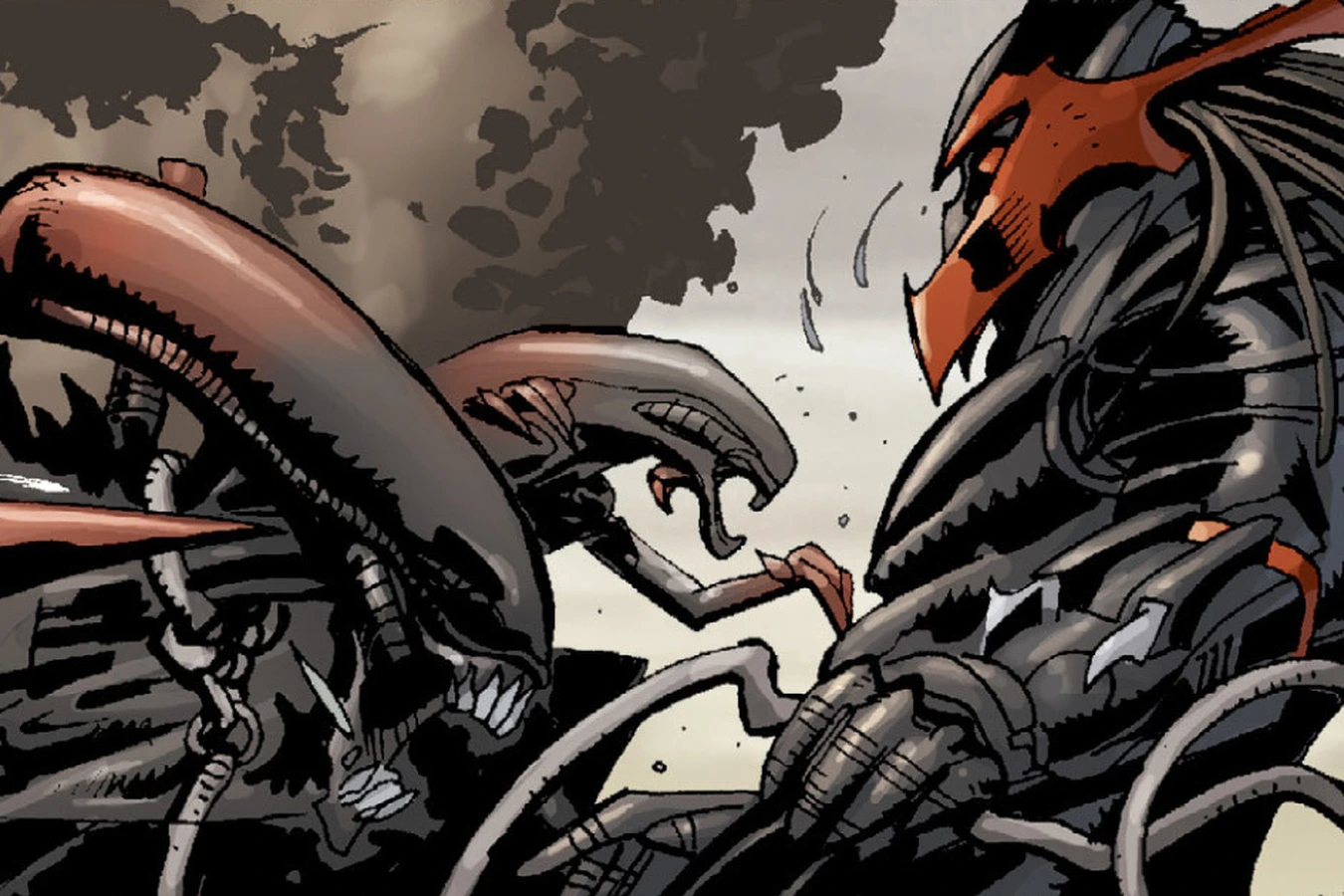
The allies brought the captive Ryushi Queen to Caparis VII. Her natural pheromones overrode the artificial signals and turned the Xenomorphs against the Predators controlling them. The Killers now faced their own attack animals inside their defended position, while the Marines and Hunters continued the assault from outside. The tusked creatures rushed their former handlers at close quarters, attacking armoured warriors who had previously moved safely among them. The clan's advantage in numbers had become a threat within its own lines.
Explosions struck the settlement and the Killer command structure collapsed, giving the Marines an opening they quickly exploited. They fired into the disorganised defenders while Machiko fought through the same position with her blades. The Killers could no longer coordinate the resistance that had held the landing force at the beachhead. The victory did not establish that every Killer had died. Afterward, Machiko reported evidence of another base where a further army was being raised. The campaign had broken the Caparis VII force, but that surviving operation remained a target for another hunt.
Beliefs And The Hunting Code
Machiko explained the distinction through the Hunters' values. Killing was the outcome of a contest with worthy prey, not the entire purpose of the exercise. The renegades called Killers discarded that distinction. Deploying a Xenomorph army allowed them to overwhelm opponents rather than face them on the terms the Hunters respected. Machiko had heard accounts of such renegades while living with the Hunters; the mine recording convinced her that those stories described a real enemy.
Their behaviour placed them among Bad Blood Predators, a broader label also applied to other dishonoured individuals and groups. The conflict was more than competition over hunting territory: the factions practised incompatible forms of violence, and the Hunters treated their campaign as an eradication mission. The comics supplied neither a complete account of the clan's founding nor a named founder.
Armour And Identifying Features
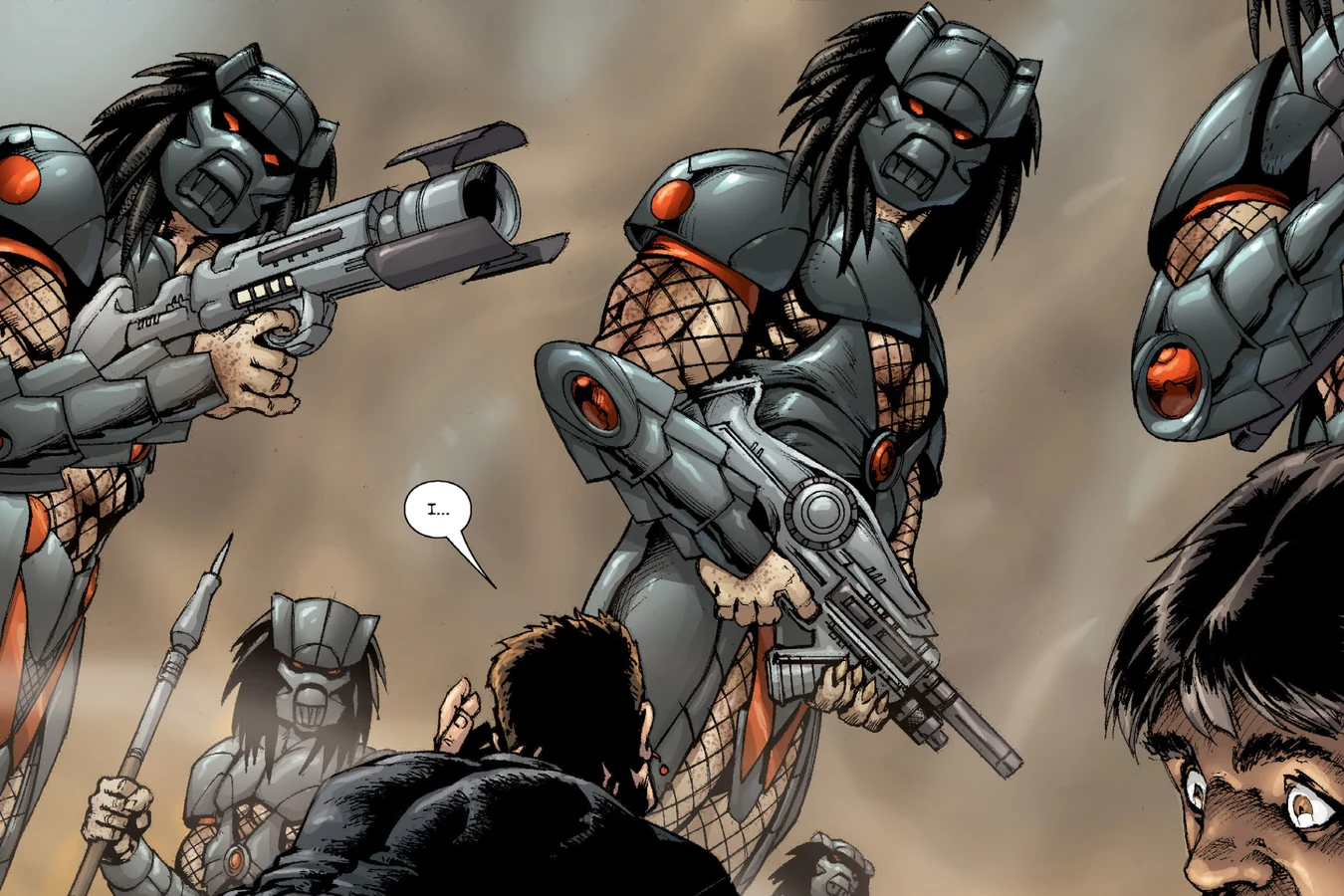
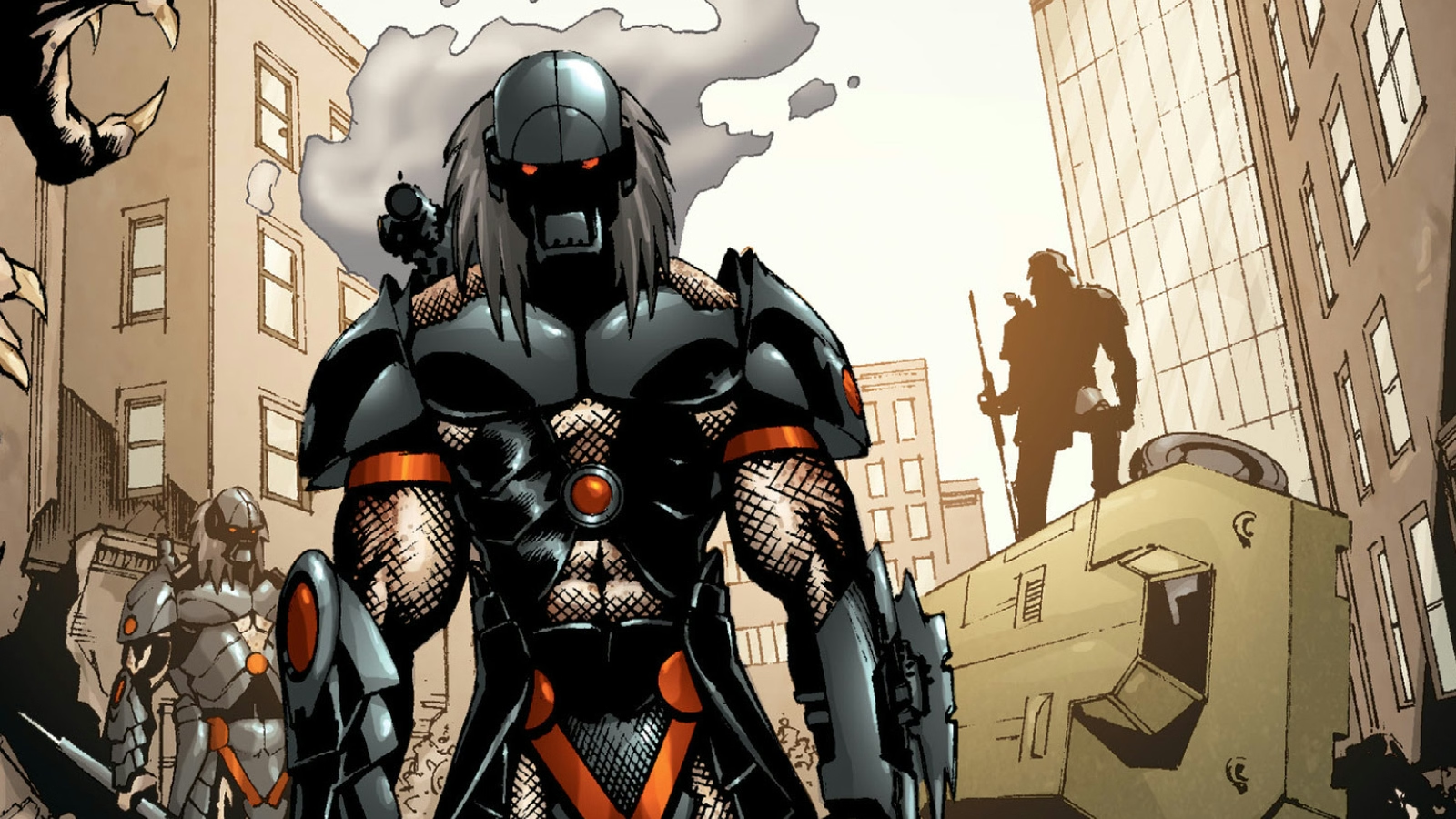
Killer armour used extensive black plating, sharp projections and orange or red accents. Their bio-masks had threatening mouths and red-lit eyes. The Earth campaign showed several similarly equipped members, visibly different from the more lightly dressed Hunters stalking the same city. Heavy shoulder and forearm protection sat over mesh-covered limbs, with circular orange fittings repeated across their equipment.
Three World War retained the broad design, with prominent orange markings, angular masks, armoured shoulders and heavy gauntlets. Individual helmets and weapons varied, but the shared equipment gave the Killers the appearance of a coordinated force. Their armour was not invulnerable: human gunfire, explosives and the tank's main weapon killed members during the African fighting. Tolin shot one Killer off Thorpe's truck, and the vehicle then pinned the wounded hunter against a wall.
Weapons And Electronic Warfare
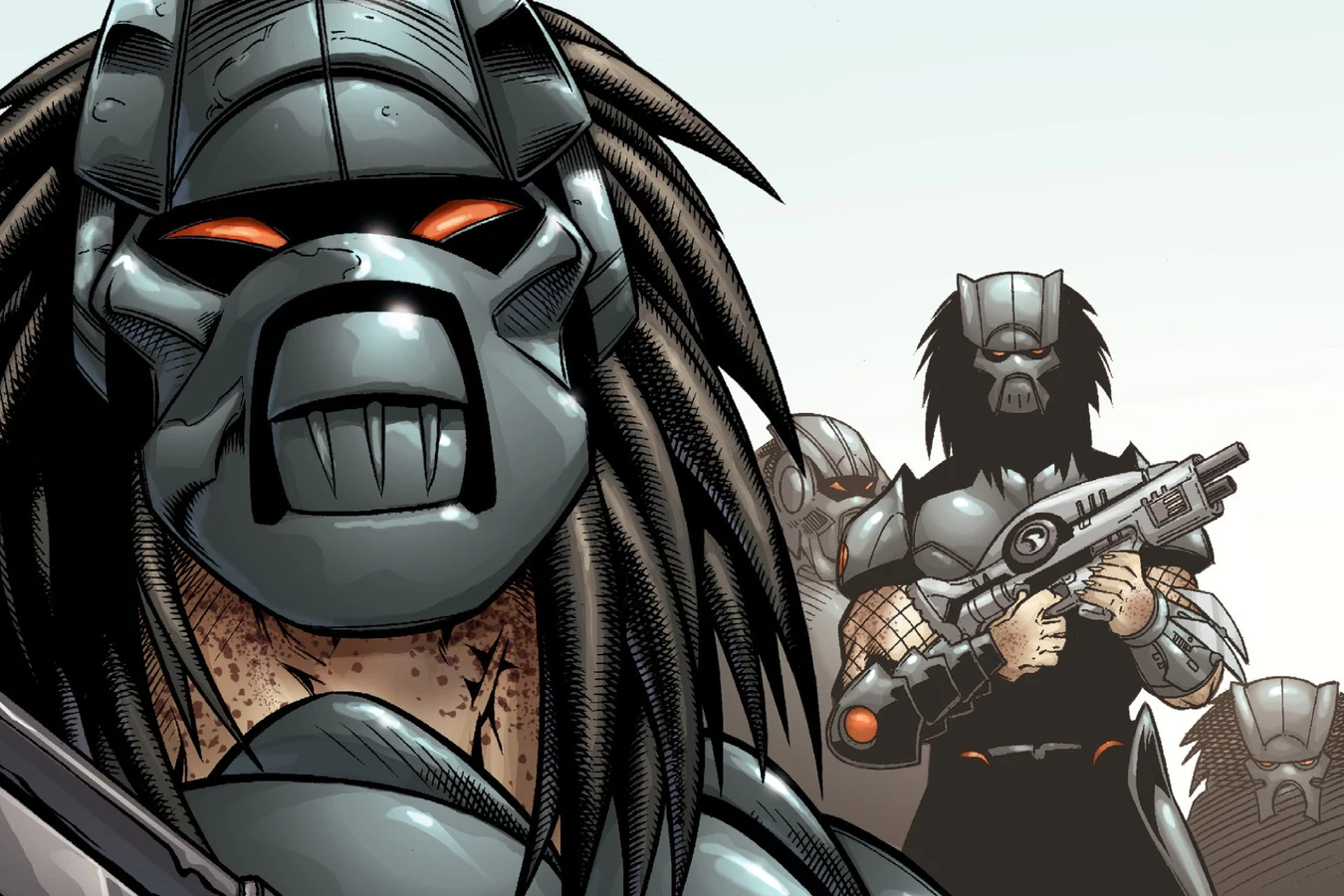
The clan carried hand-held energy rifles alongside other Predator weapons, including plasma weapons, bladed gauntlets and spears. In Africa, rifles supported coordinated advances through the streets. Mortars drove humans toward waiting attackers, combining ranged fire and close assault instead of allowing each warrior to pursue an isolated hunt. They also occupied the security team's office and used its radio, taking advantage of the humans' existing communications before cutting the contractors off entirely.
Electronic warfare was another important part of their operations. The jamming device in the African city silenced radios and interfered with sophisticated weapons, forcing the contractors to rely on simpler equipment until Thorpe destroyed it. The clan later disrupted entire fleets at Caparis VII. That interference affected traditional Hunter technology as well as human systems. At the GDS compound, even a rocket launcher's processor failed, leaving an available weapon unusable until the scrambler was destroyed.
Controlling The Xenomorphs
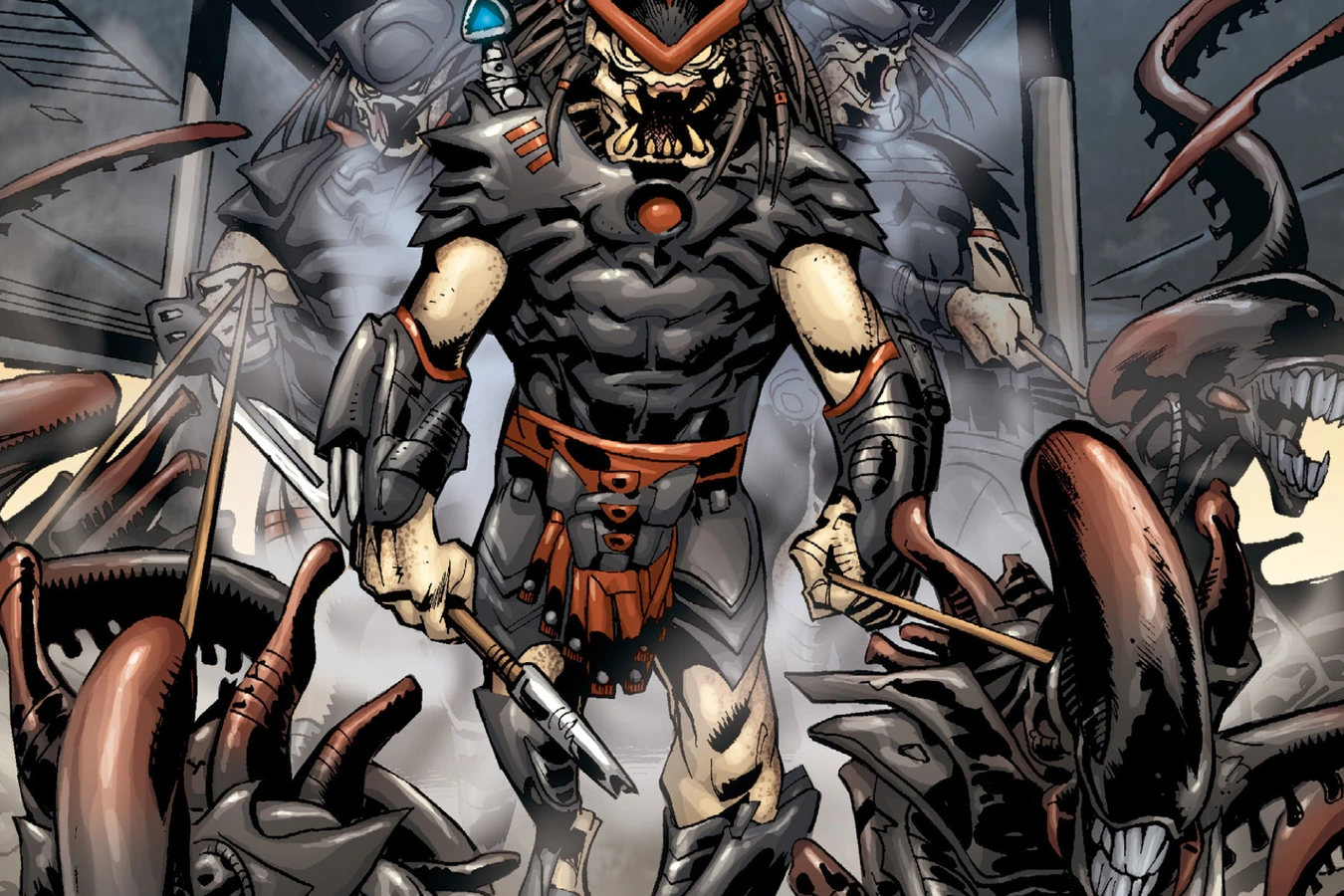
The clan's most distinctive weapon was its army of tusked Xenomorphs. They had reddish colouring and prominent tusks, and fought beside the Predators against miners and allied troops. Their role resembled attack hounds: the Killers directed them against enemies instead of treating them only as dangerous prey. At the mine, the creatures led the assault against armed workers while the Predators followed and killed survivors, combining the aliens' close-range attacks with their own weapons.
Sereda connected that control to synthetic pheromones, including a combination he identified as a relaxant or sedative. The egg stockpile supported continuing production of the army, but the system depended on keeping a real Queen out. Her natural signals could override the artificial ones, as the allies demonstrated. The comics did not establish a host species or explain the tusked creatures' origin in detail.
Behind The Scenes
The armoured faction appeared in Predator: Prey to the Heavens by John Arcudi and Javier Saltares, whose opening sniper encounter was included in the 2009 Free Comic Book Day Aliens/Predator release. The four-issue series ran from 2009 into 2010. Randy Stradley developed the Killers' conflict with the Hunters in the six-issue Three World War, drawn by Rick Leonardi and Mark Pennington in 2010. That story connected the faction to Machiko's earlier adventures and made its Xenomorph army central to the war.
The faction was distinct from the Super Predators in the film Predators, despite both groups opposing traditional hunters. The comics did not identify the Killers as a separate biological species. Their defining differences were their allegiance, methods and equipment, with the name referring to the renegade approach described by Machiko. Neither story supplied a roster of personally named Killer warriors or a complete history of their wider territory.
Conclusion
The Killer Predator Clan combined armoured warriors, electronic warfare and controlled Xenomorphs into a force capable of overrunning settlements and resisting an allied landing. Its defeat on Caparis VII came when the attackers exploited its control system by bringing a Queen into the base. Another breeding site remained, leaving the clan's wider operations unresolved after the local victory.
Appearances
- Predator: Prey to the Heavens, including the Free Comic Book Day 2009 prologue
- Aliens vs. Predator: Three World War #1-6 (2010)
Tag Categories: Yautja Society | Yautja Outcasts | Predators From The Comics | Predator Lore | Avp Lore