
The USS Melville (STS-469) was a Conestoga-class ship in Dark Horse's Aliens: Colonial Marines. It took Lieutenant Joseph Henry and his platoon to the Sun Gun waste station and then to Bracken's World. The ship carried Marines in hypersleep, housed the Alphatech team it was transporting, and launched the landing party from orbit. It broke apart above Bracken's World with Beech still aboard, leaving the survivors on the surface.
Ship and Command
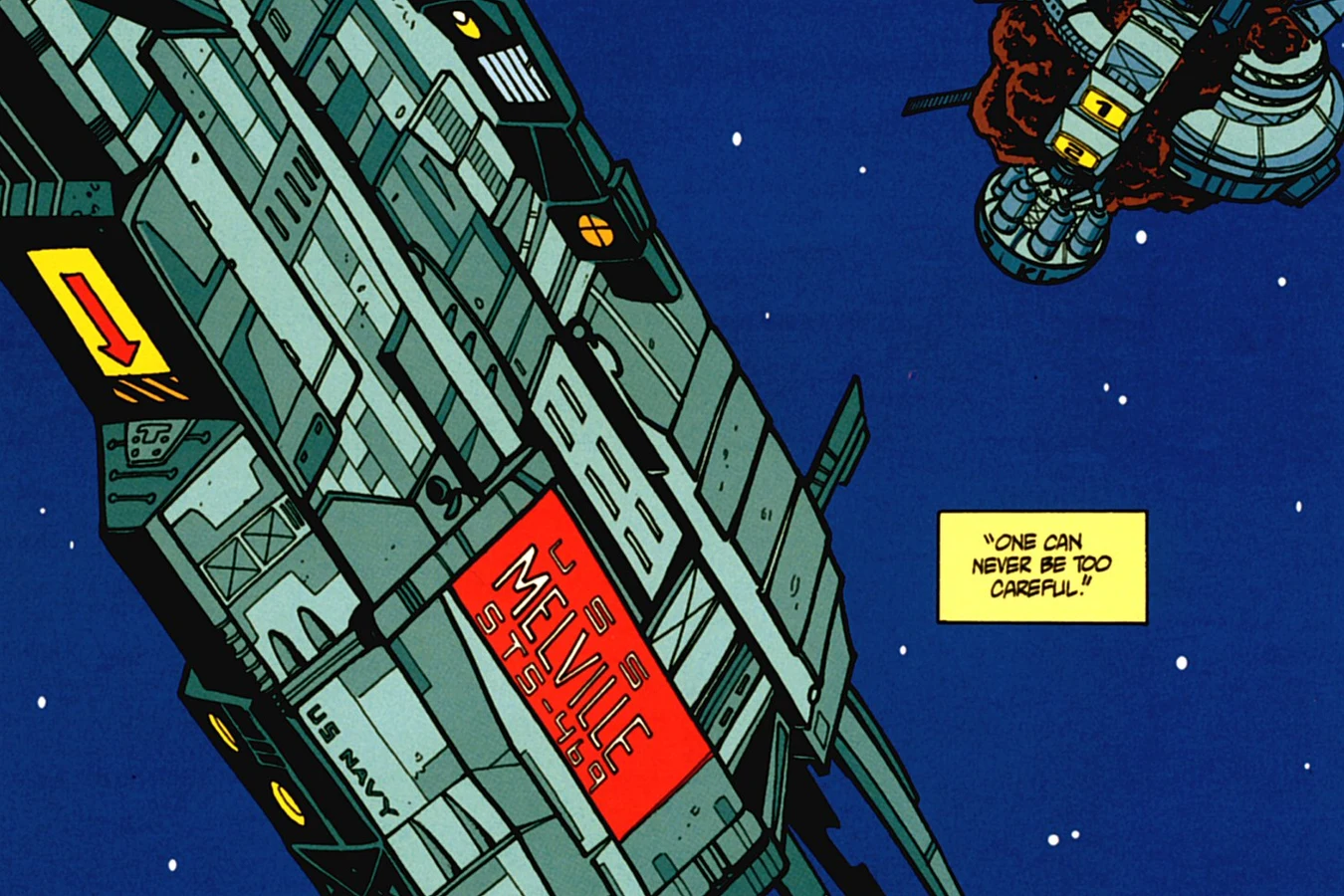
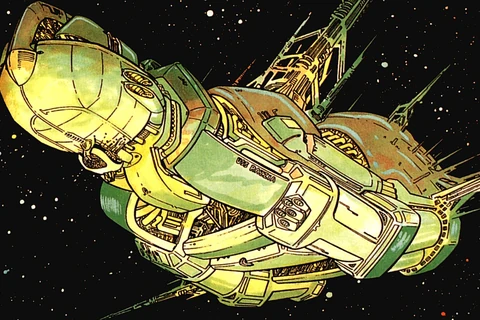
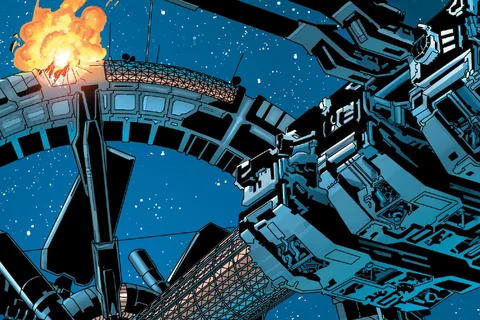
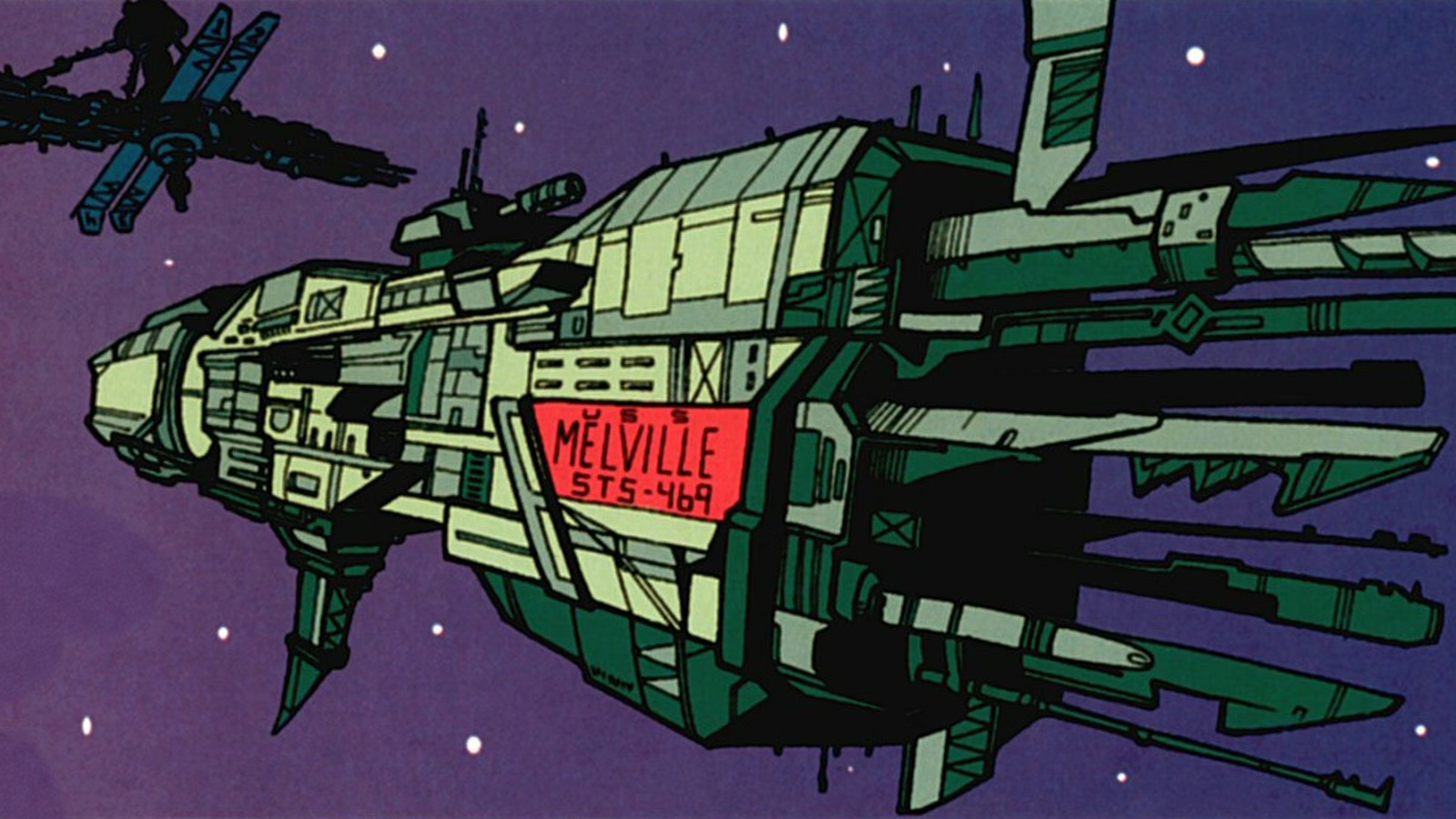
The USS Melville was a Colonial Marine troop transport of the Conestoga class, the same class as the USS Sulaco. The comic identified it as STS-469 on the red plate fixed to its green hull. The comic showed the plate as the Melville approached the waste facility. The same view set the ship's broad, angular hull and long projections against the much smaller installation. The scale becomes clearer once a narrow docking tube connects the two, with the Marines using it to cross from the transport into KL-7.
Lieutenant Joseph Henry led the embarked Marine platoon, with Sergeant Nyland as his senior enlisted Marine. The assignment put him in charge of a punishment detail that included Private Carmen Vasquez, the younger sister of Jenette. Beliveau traveled with an Alphatech security party whose orders and priorities differed from Henry's. Their dispute over who should respond to a failed contact started on the bridge before the main boarding operation.
Capabilities and Weaponry
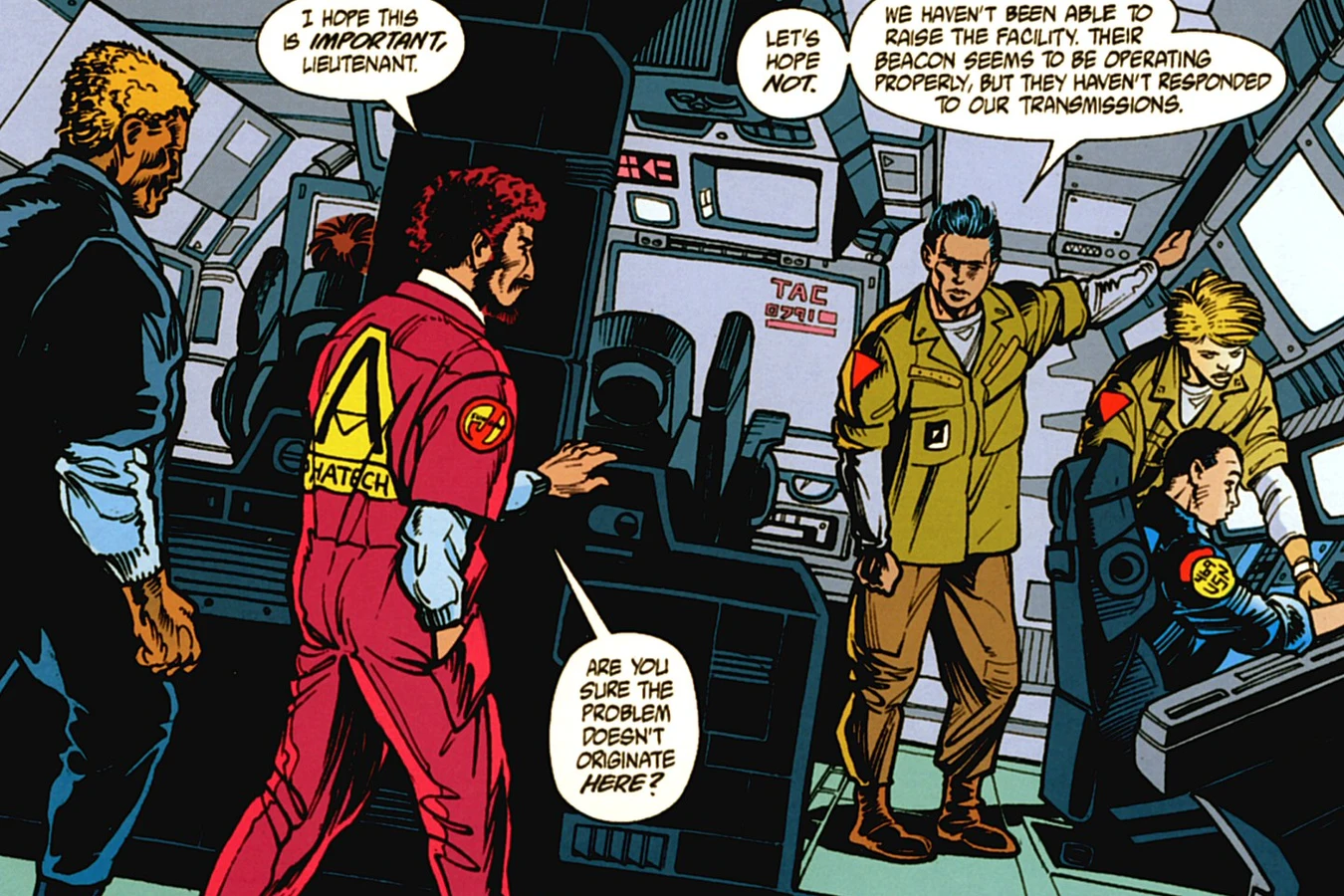
The Melville could keep Marines in hypersleep while the ship's crew operated its bridge and communications systems. It tracked a live beacon at KL-7, transmitted on multiple frequencies, and later swept local channels near Bracken's World. The ship could dock directly with a station through a connecting tube and deploy a separate dropship to a planetary surface. Liston maintained contact with the ship's sensors at planetary distances, which let him report its condition from the colony.
The Colonial Marines Technical Manual describes Conestoga-class ships as transports given additional capacity for attack and fleet support. Its Sulaco diagrams show Long Lance anti-satellite missiles, dorsal and ventral railguns, particle-beam weapons and port and starboard point-defense lasers. These are class references. In Aliens: Colonial Marines, the Melville's documented work centered on transport, communications, docking and deployment. The comic does not establish a ship-specific armament inventory or show Henry firing those systems. The Sun Gun's waste launcher and the equipment later drawn from Alphatech were separate from the frigate's armament.
Operational History
The Assignment to KL-7
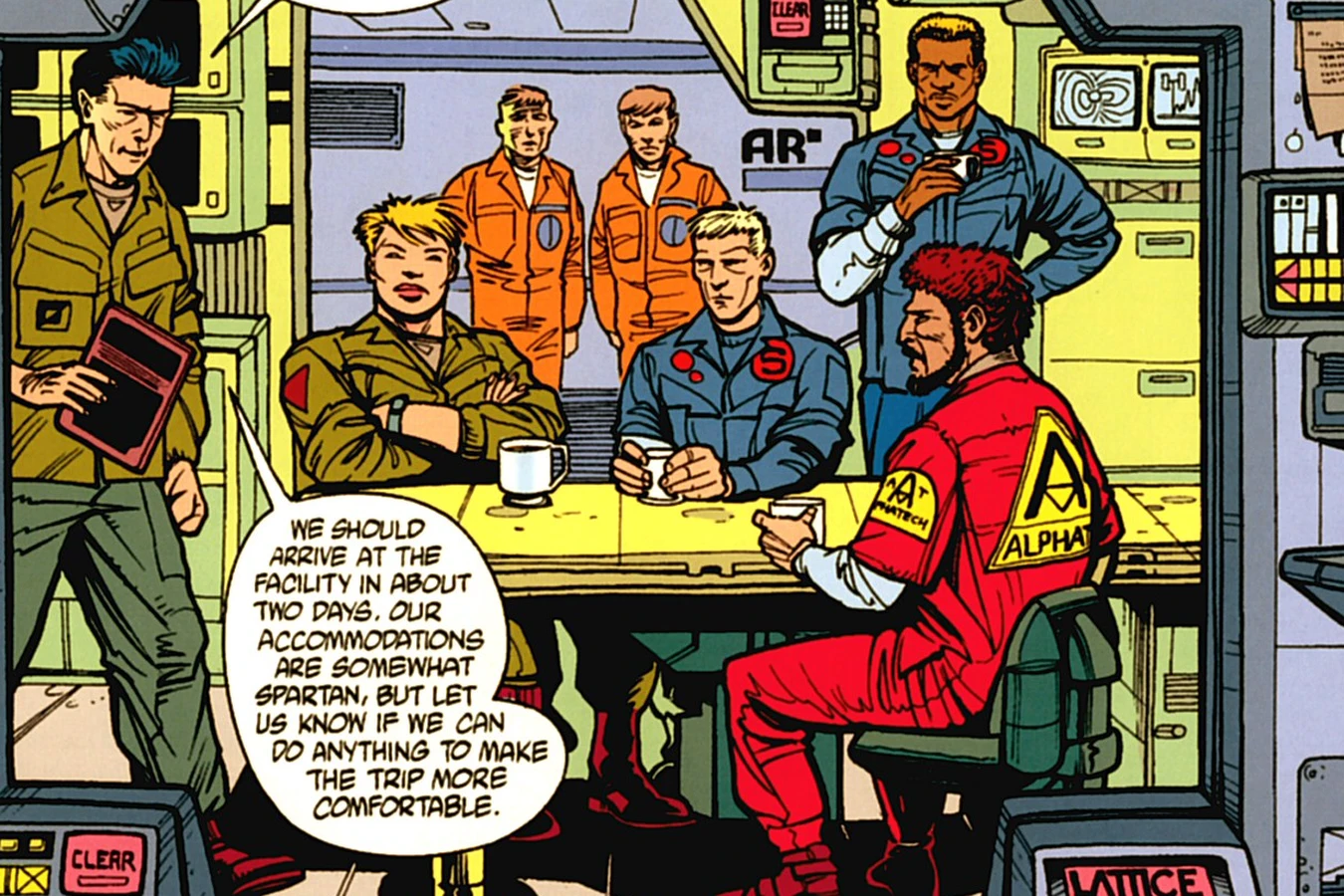
Henry took the Melville on a mission that included delivering Beliveau's party to KL-7, an Alphatech stellar waste-disposal installation known as the Sun Gun. Corporately owned equipment and a civilian executive came aboard a warship with a Marine platoon that neither Beliveau nor Henry expected to rely on immediately. Henry welcomed the visitors aboard and told them they were still about two days from the facility.
The station's beacon was working when the ship reached it, but nobody answered. The bridge checked its own equipment and tried the available frequencies. Beliveau proposed sending his own team in protective gear. Henry ordered Nyland to wake the Marines from hypersleep. The frigate could establish that a machine at the installation was still transmitting, while the condition of its people remained unknown.
Docking With the Sun Gun
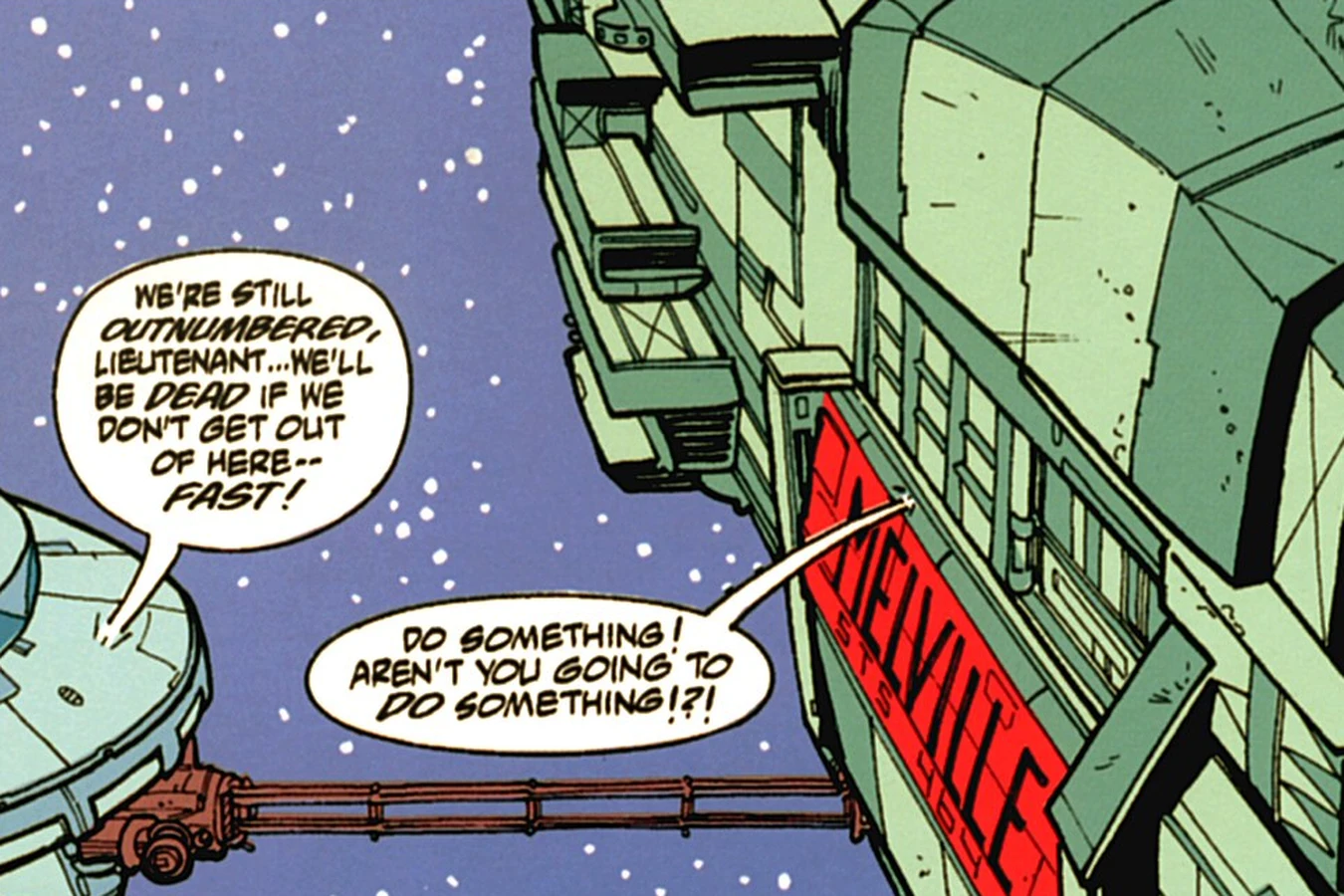
The Melville came alongside and linked to the installation through a docking tube. Beliveau's Talon team went into the facility first and encountered Xenomorphs. The security team tried to withdraw under fire as its transmissions broke up. Henry committed the Marines despite Beliveau's objection, shifting the ship from a transport for an inspection party to the base for a rescue and fighting withdrawal.
Gunfire in the station and failing communications made it difficult for people aboard to tell who could still get out. Liston, the company's synthetic, remained constrained by his authorization while Beliveau pressed him to intervene. On the other side of the docking link, Henry and the boarding party looked for a way back to the only usable ship. The Melville closed in to recover survivors, then left the facility with people from both parties aboard.
Approach to Bracken's World
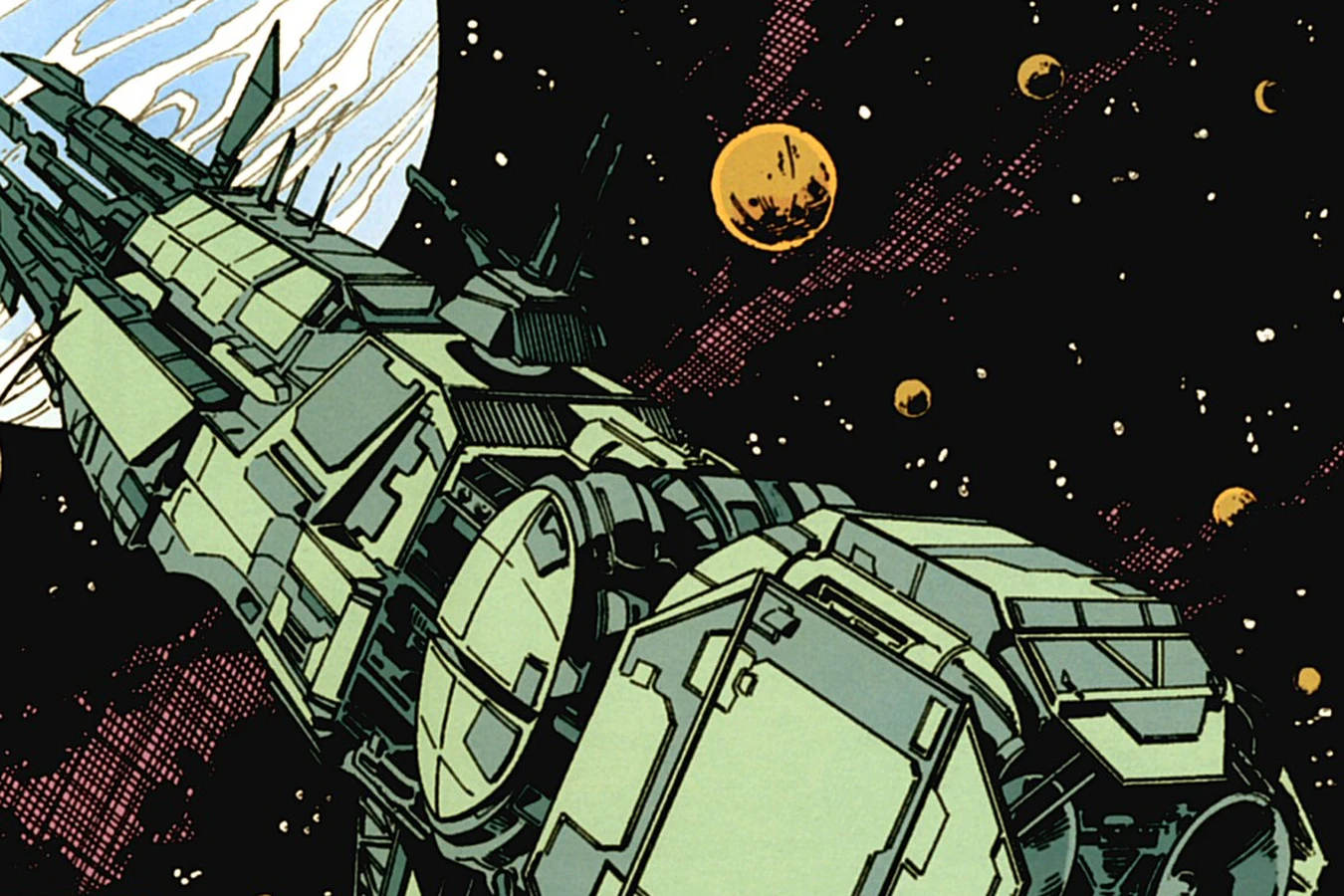
After leaving KL-7, the Melville proceeded toward Bracken's World, a colony built around kelp farming. Sector headquarters had stopped answering priority calls, but Nyland picked up traffic between the subspace array and a kelp bed. The signal gave Henry a reason to inspect a place that otherwise looked like an ordinary stop on the way. It led the landing party to an Alphatech installation among the farms.
Beliveau wanted to know why Henry intended to put him ashore there. Henry explained that the colony was on their route and asked Nyland whether command had replied. Her report made the distinction important. The Melville had gone unheard since it entered the sector, yet equipment at headquarters was still communicating with someone on the surface.
Bracken's World and the Landing
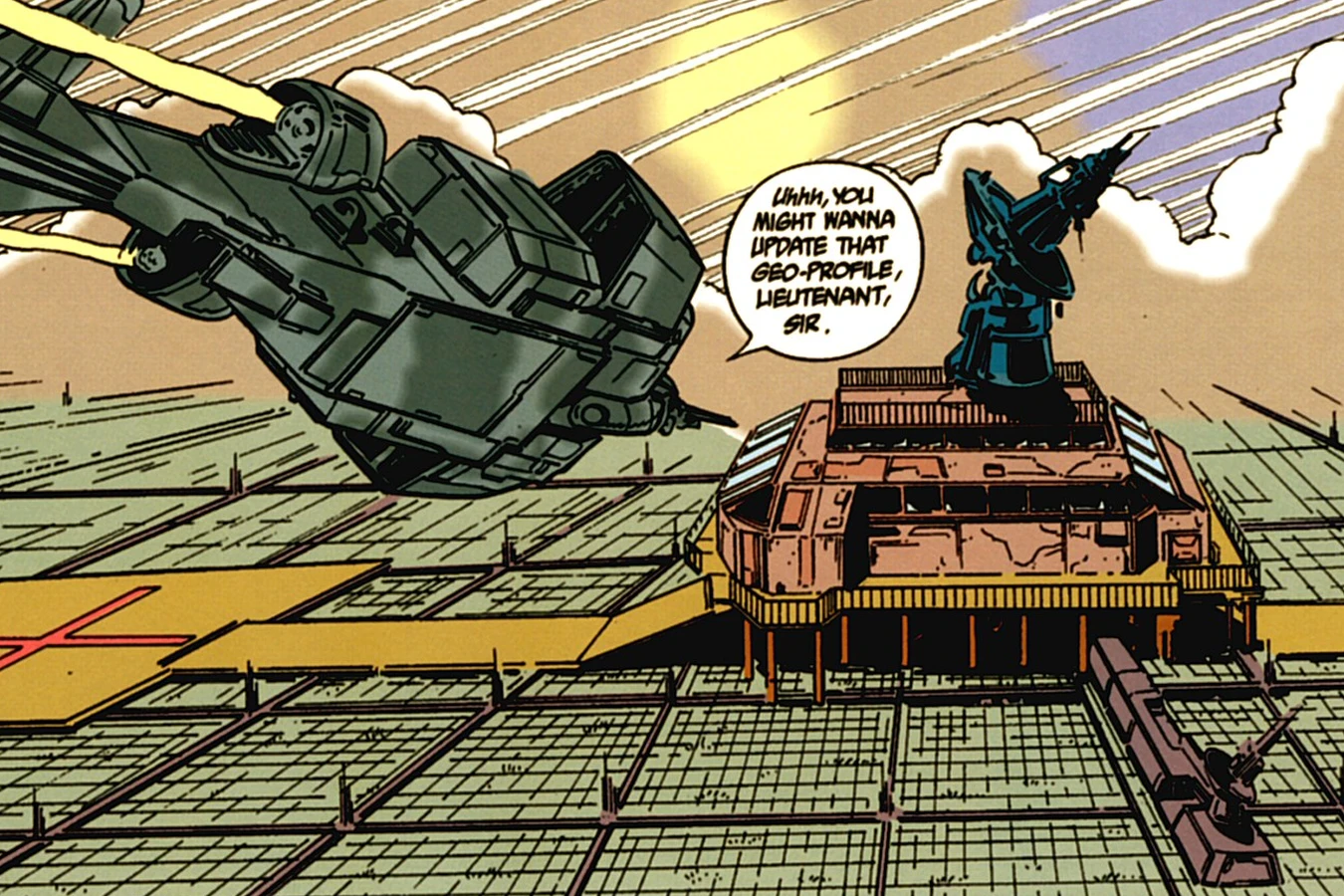
The warship remained in orbit while a dropship carried the Marines down. The equipment they could put on the surface included an armored personnel carrier, useful on the narrow developed ground around the installation but vulnerable once the fighting spread. The landing exposed a connection to Ernst Kleist's Bug-Men, then turned into a fight against aquatic Xenomorphs. The ground force and local colonists had to defend Sector 1 while the ship waited above them.
Beech and the Loss of the Ship
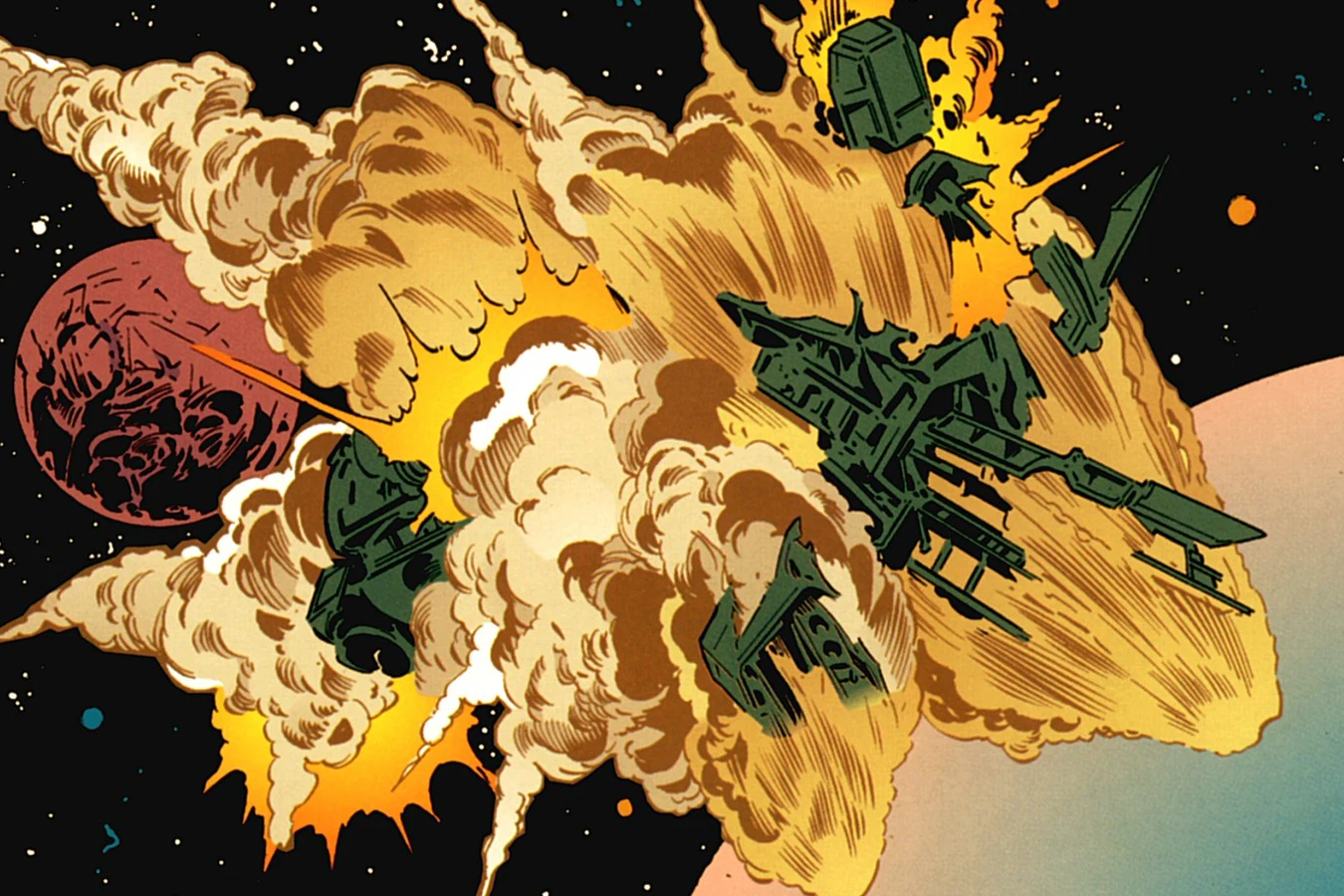
Beech remained aboard while Henry's force fought on the surface. Royal jelly withdrawal left him unable to maintain control of the frigate. Near the end of the fighting, Liston interrupted an argument on the ground to report that the Melville's orbit had decayed and that it was already losing systems as it entered the upper atmosphere. His sensor contact gave the Marines warning but gave them no means to correct the ship's course.
Multiple hull breaches preceded structural failure, and the Melville broke apart before the platoon could recover it. Beech died aboard. The ship had been Henry's way to move the Marines, contact headquarters and withdraw from the colony. Beliveau's offer of equipment at the Joliet Mining Facility gave them another way to continue toward the compromised relay. The force that fought there was the surviving platoon, using replacement transport and weapons after the loss of its original ship.
Conclusion
The USS Melville gave Henry's platoon a base for two very different missions. At the Sun Gun, it brought the Marines close enough to board and gave survivors somewhere to retreat. At Bracken's World, it stayed in orbit while the platoon fought below. When the frigate broke apart, the Marines lost their way off the colony and had to rely on Alphatech equipment to reach the relay.
Appearances
- Aliens: Colonial Marines (Dark Horse comic, 1993–1994, collected in Aliens Omnibus Volume 2)
Tag Categories: Alien Universe Ships | Colonial Marine Lore | Alien Lore