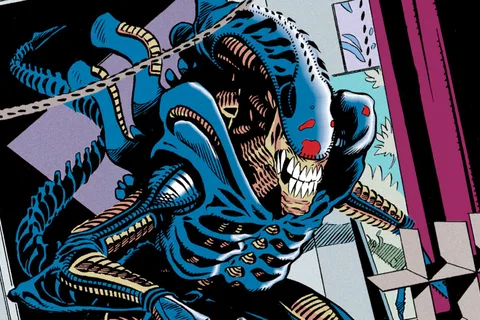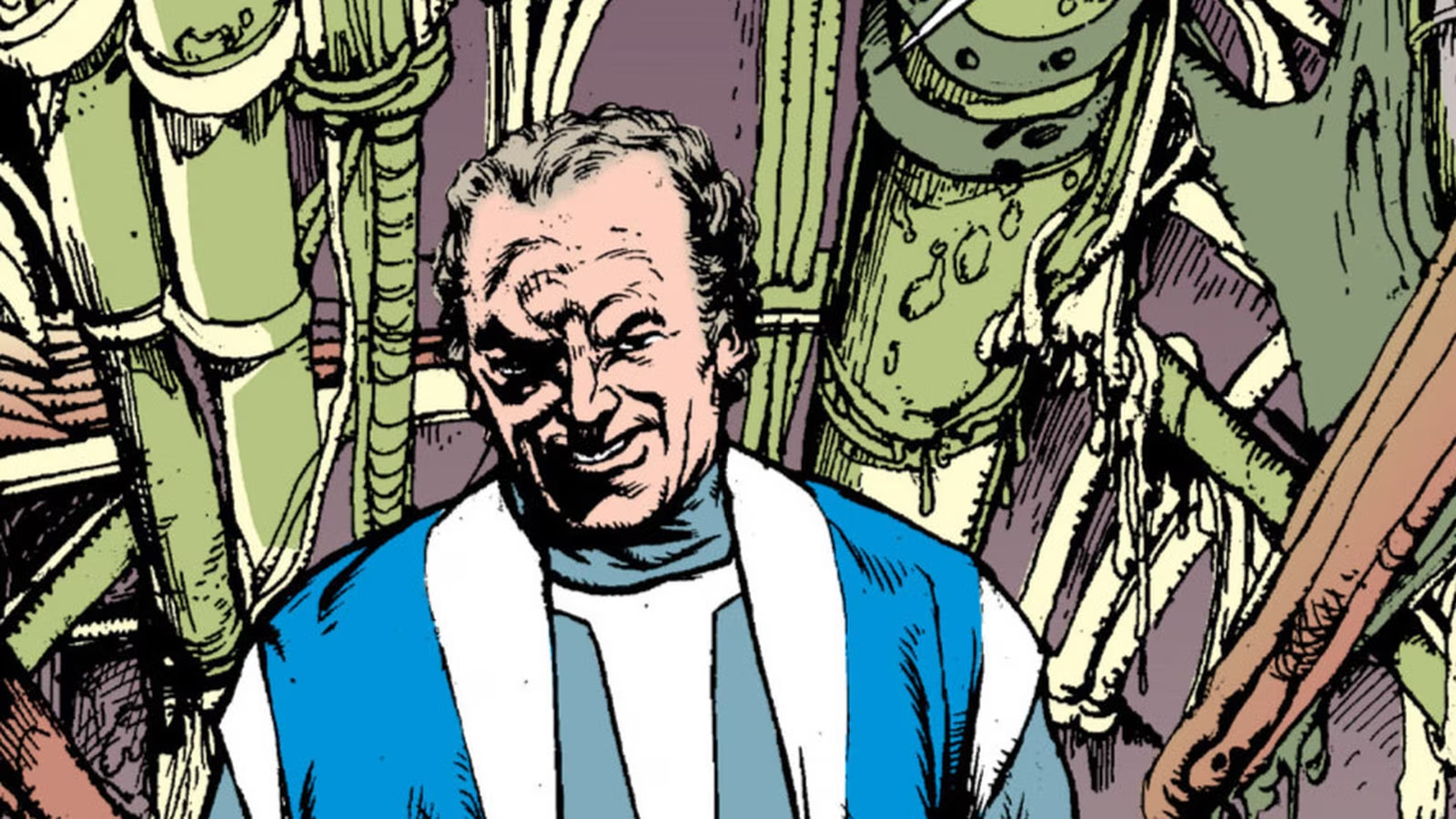

Ernst Kleist was the director of Charon Base for the Z.C.T. Corporation in Dark Horse's Aliens: Rogue, and the man behind Project Chimera. In the comic he welcomed Grant Corporation spy John Kray to the asteroid outpost, walked the hive with a handheld disruptor, and grew a male Xenomorph King from a scraping of Kray's tissue. He stayed behind when the Caliban fled, turned a sound cannon on the Queen, and was not among the survivors in orbit. He later reappeared in Aliens: Colonial Marines as the Father of the Bug-Men, until Lieutenant Joseph Henry killed him.
Biography
Director Of Charon Base
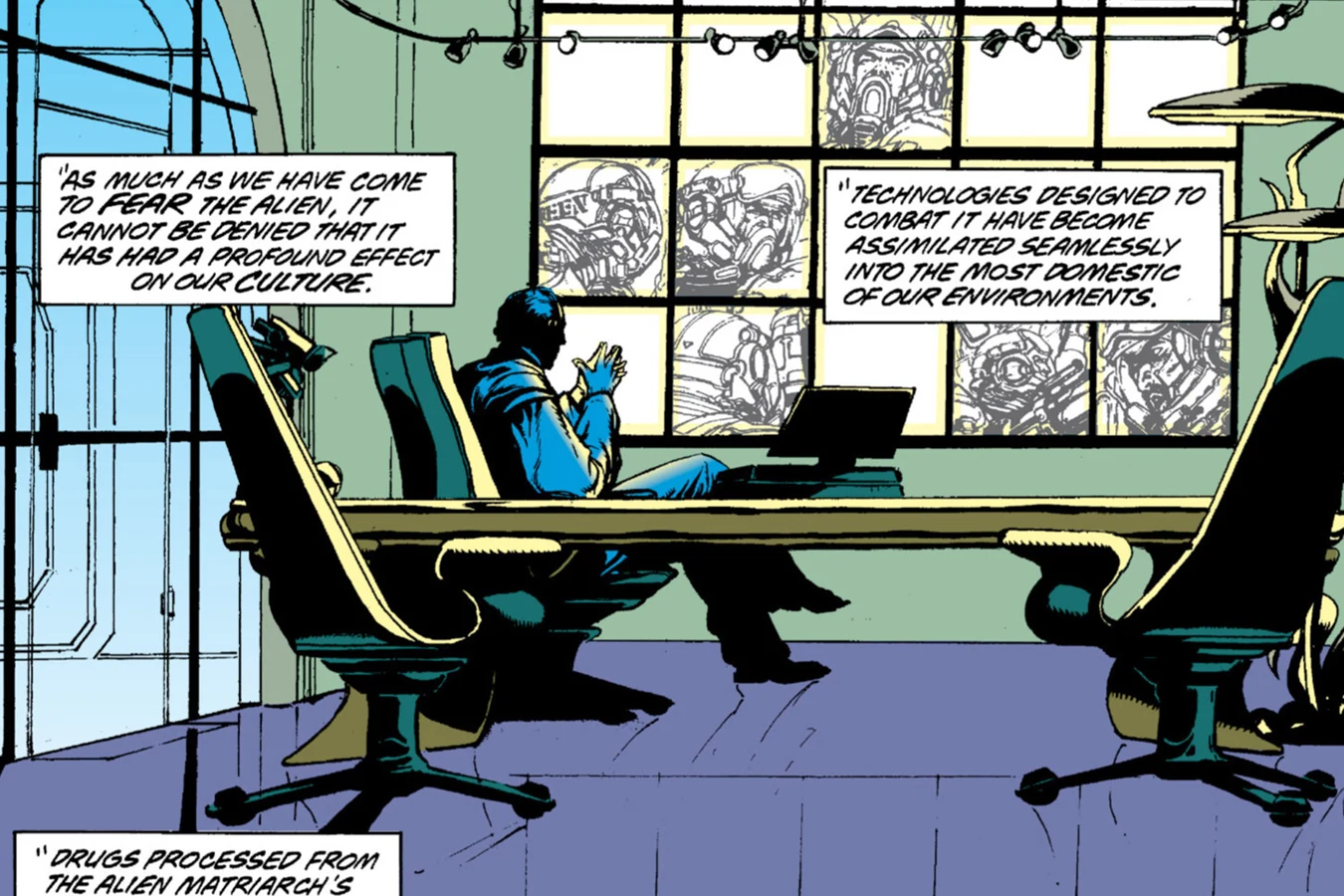
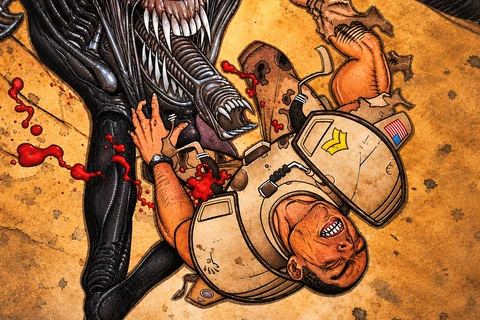
On Charon Base, a Marine squad under Sergeant Reuben Green took a live Warrior from the hive for the labs. Professor Kleist congratulated Green on the catch, then complained that they had slaughtered another specimen, and Corporal Choi blew up at a director who seemed to care more about lost bugs than lost men. The transport Caliban docked in Hangar Twelve, and Kleist met a passenger introduced as Mr. Kray. A recorded message from Z.C.T. official DeSouza warned that Project Chimera had drawn the wrong kind of attention and ordered Kleist to cease all transmissions. The company had sent Kray to collect disc copies of the work on site.
Corporal Choi did not let Boone's death go, and Kleist's people tagged him and dragged him under as an example. A security man wounded the corporal, left him in the hive, and told him that crossing the professor was never a wise move. When Green reached the director and called him a murderer, Kleist answered that Choi had destroyed an expensive specimen and that he had authorized the maximum penalty. This was a scientific research establishment, not a military outpost, and the Marines worked under his jurisdiction. Mr. Larson was told to relieve Green of all duties, and Grace, Kleist's synthetic assistant, was told to arrange a return to Earth.
Walking Among The Hive
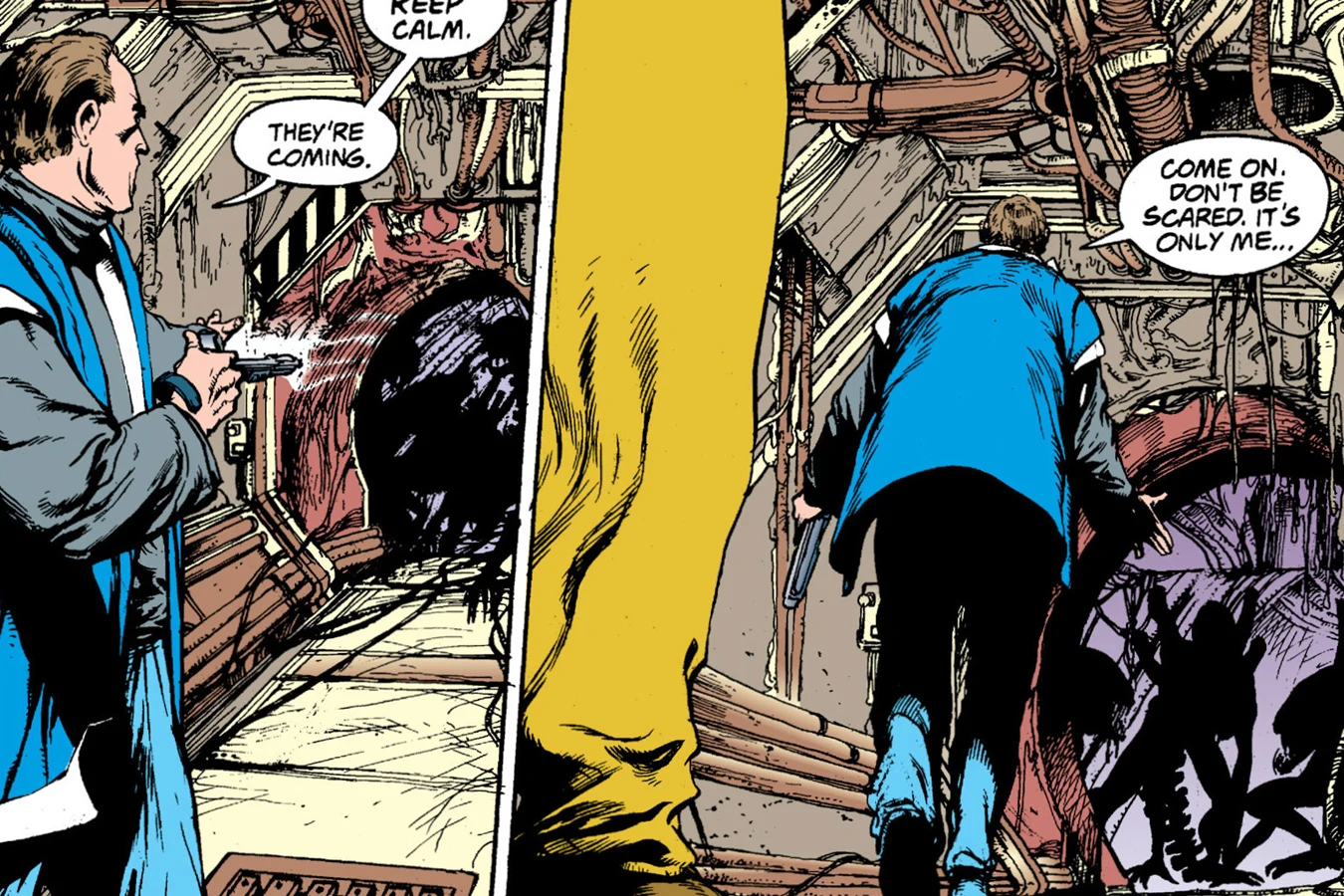
Kleist took Kray on a tour of his little world, starting with a dissection medium adapted from the pH gel. He talked through the DNA reflex, the way an adult Alien inherits physical traits from its host, and through the dummy cloned tissue he grew for implantation and gestation. The real prize, he said, was the creature itself, bioengineered into a tool instead of an adversary, with hostility spliced out through the DNA of more passive animals. Sheep, llamas, and some cattle gave the best early results. There were setbacks, and he had still not produced the equivalent of a queen, because royal jelly alone was not enough.
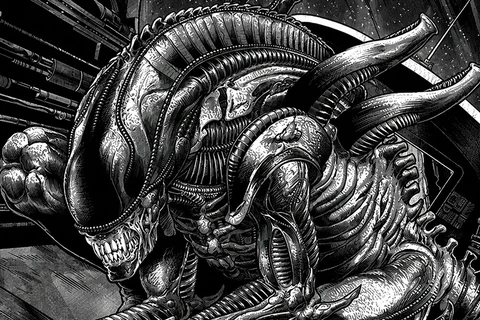
For walking the live hive he carried a compact disruptor he compared to a dog whistle, a smaller cousin of the large device used to secure wild specimens for study. The handheld unit scrambled whatever passed for an Alien central nervous system, and with it he could move among the drones as if they were pets. Stay close, he told Kray, make no sudden noise, and keep calm. In the resin he called the creatures to him like a proud parent, smiling as they gathered and saying, there's my good children. The demonstration was meant to prove control, and it also showed how far that need had already gone.
Failed Queens And Live Hosts
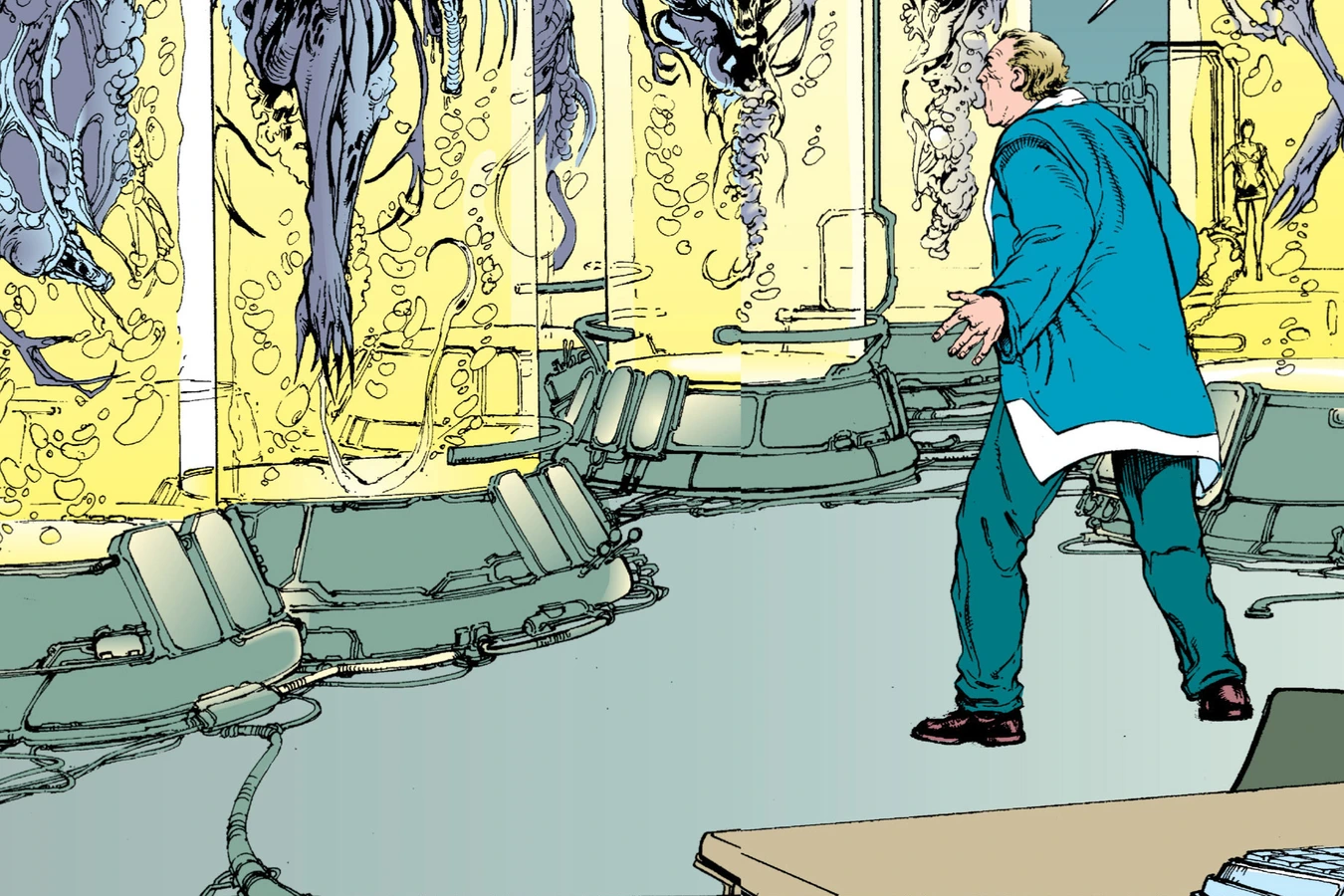
The queens that would not submit ended up as specimens in a gallery of tanks, a mute jury of dead mothers and gene-spliced failures that Kleist still talked to as if they might answer. He asked what they were hiding from him, raged that they refused his gifts, and then slipped into pleading. He had nurtured them, sculpted their genes, and crafted their flesh into new vehicles, and they still defied him. The queens, he told himself, were the ones who always refused to run to heel. Progress, in his mouth, was just another word for the lives already spent to fill those tanks.
Away from the labs, Joyce Palmer showed Kray how Kleist got his results. A recording from the labs caught a host in mid-emergence, and the body belonged to Billy Sinclair, an old buddy who had, on paper, died in a faulty airlock. Palmer called Charon a gulag, six months' communication time from Earth, a place where Kleist could do anything he liked and write it off as another accident. Larson then hit the Caliban with a full security stack, and at the same time Kleist dumped Green's remaining Marines into the hive with blank ammunition. Most of the unit died there, and Green promised he was coming for Kleist.
The Rogue Male
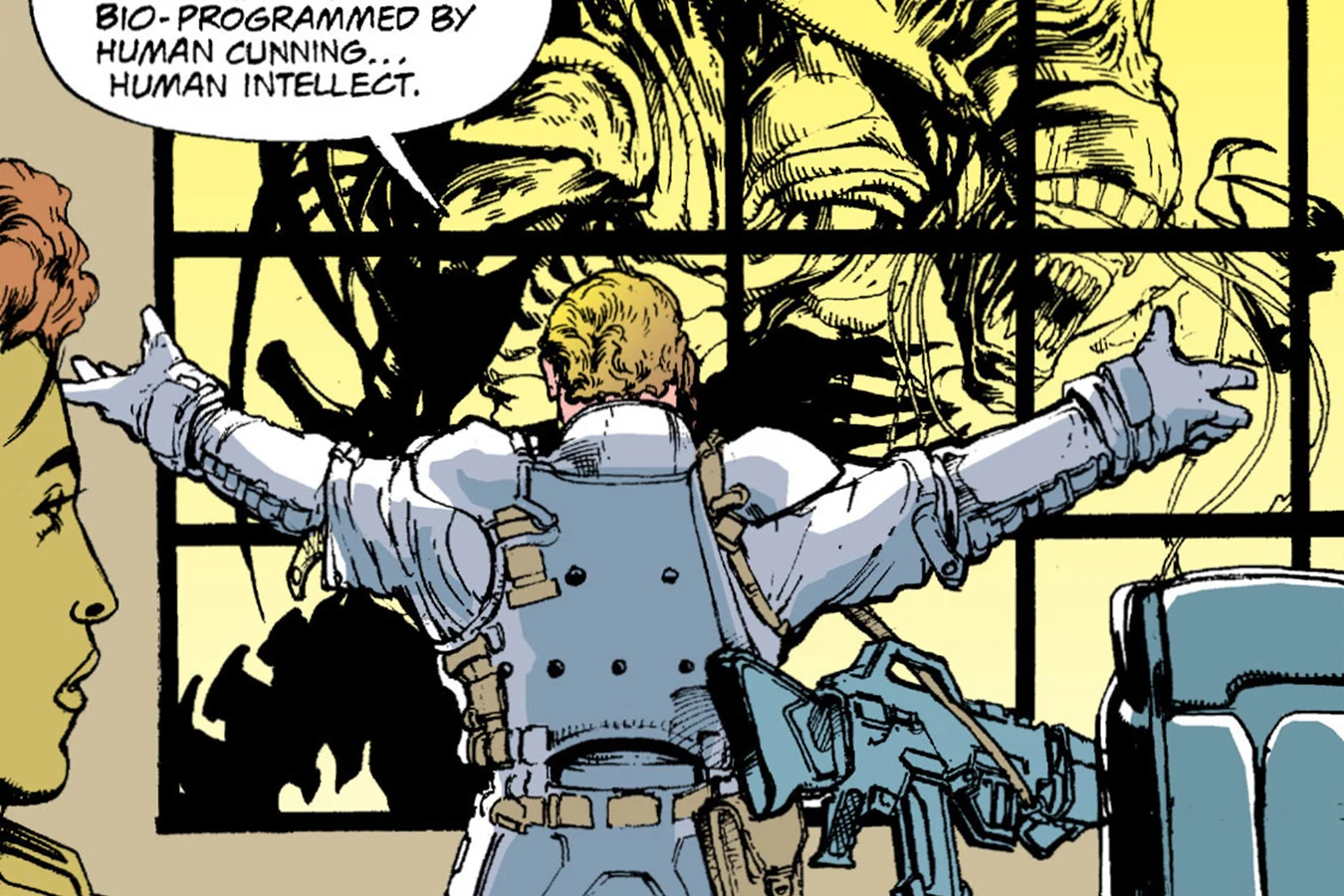
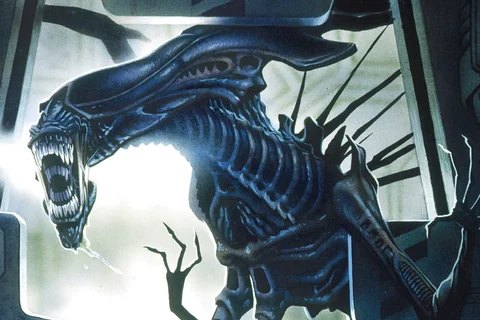
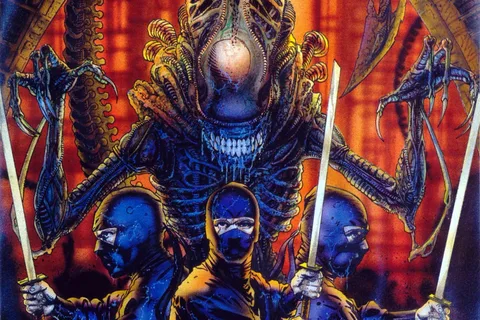
In the labs, Kleist's people knew the passenger calling himself a Z.C.T. operative was not John Kray. Genuine operatives above grade nine carried a security code on the right kidney, and this man did not. They had known he worked for the Grant Corporation all along. Kleist still had Kray brought in to see the thing in the tank, named it an Alien King, a Chimera, a hybrid, and introduced the creature as Kray's son. Only a scraping of the spy's tissue had gone into the mix, with the rest a cocktail of Alien DNA, male hormone, and biochemical soup grown into a body that dwarfed the drones around it.
The new male did not tear Kray apart, and it seemed intrigued by him, a reaction Kleist had never seen. Remove the matriarchal ties and the desire to breed, he reasoned, and a truly tame Alien might remain. He later admitted to Grace that he had been a fool, and that the King had spared Kray only because Kray was strapped down. What they had was a Rogue male, a living engine of destruction, and a prototype for Z.C.T.'s bio-weapons arsenal. Then a silent challenge passed between King and Queen, and Larson's men met the King while Kleist raged that it must not be scratched.
The Sound Cannon Goes Critical
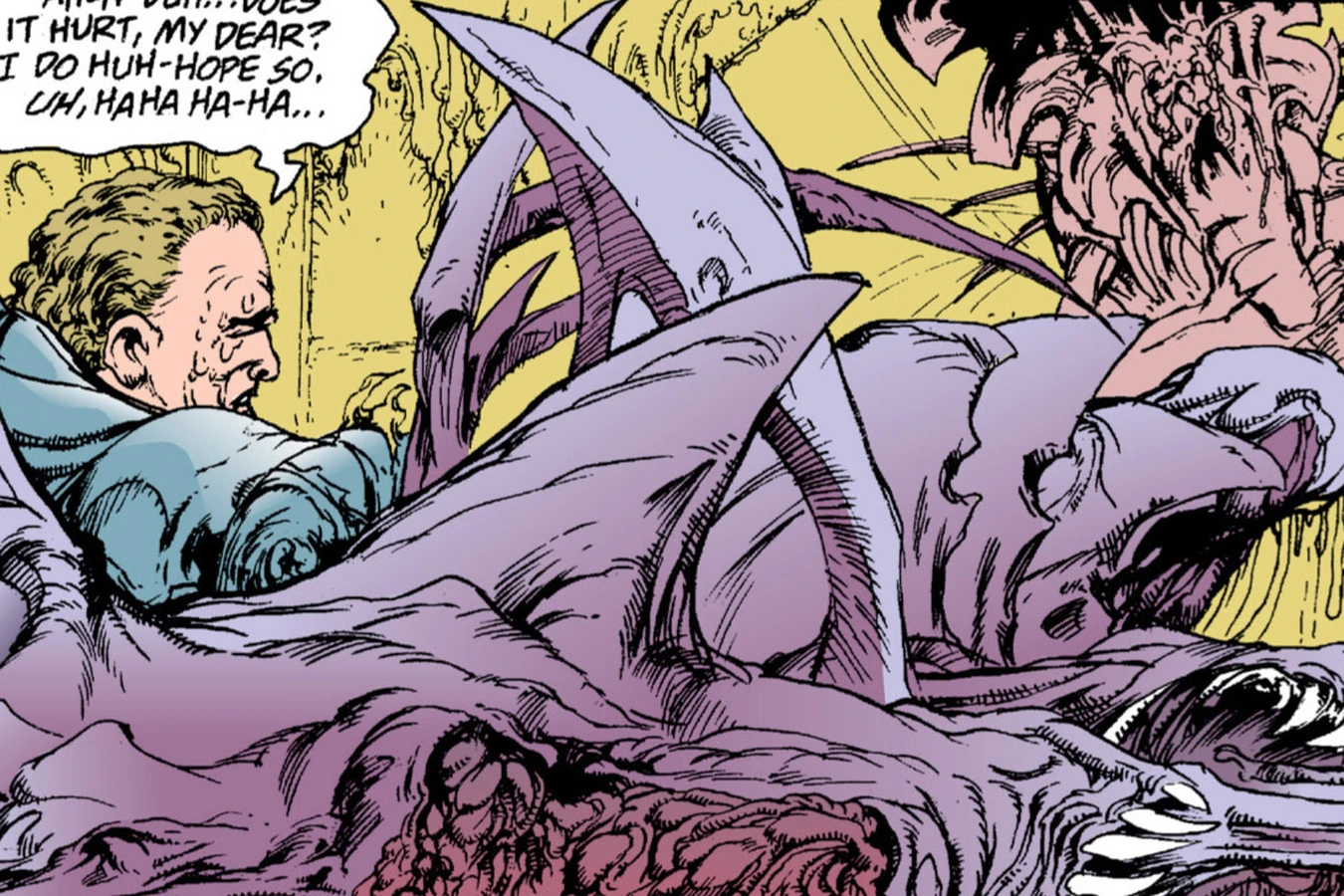
Kleist and Grace went into the hive as the King and the Queen tore into each other. Grace could not guarantee the professor's safety and wanted to withdraw, and Kleist called that absurd. What they were witnessing, he said, was biological anarchy, the slaughter of the old by the new, and he had provided the catalyst. He was already in the Queen's coils when he told her she could not destroy what was his, and that the King was better than she was. He ordered Grace to remove that obscenity from his sight, and the Queen tore her apart when she opened fire.
Still caught in the wounded matriarch's grip, Kleist turned the large sound cannon on her and told her he would see her in hell as the warnings climbed and the device went critical. The blast reeled Queen and King in the chamber as the weapon cooked itself. Green, Palmer, Kray, and Deegan reached the hangar while that window held, and the Caliban cleared the bay as it blew behind them. They held orbit for three days, watching the wreck, and the only thing they picked up was static. Kleist did not appear on the flight deck, and Captain Palmer's closing log set course for Earth without calling it a win.
The Father Of The Bug-Men
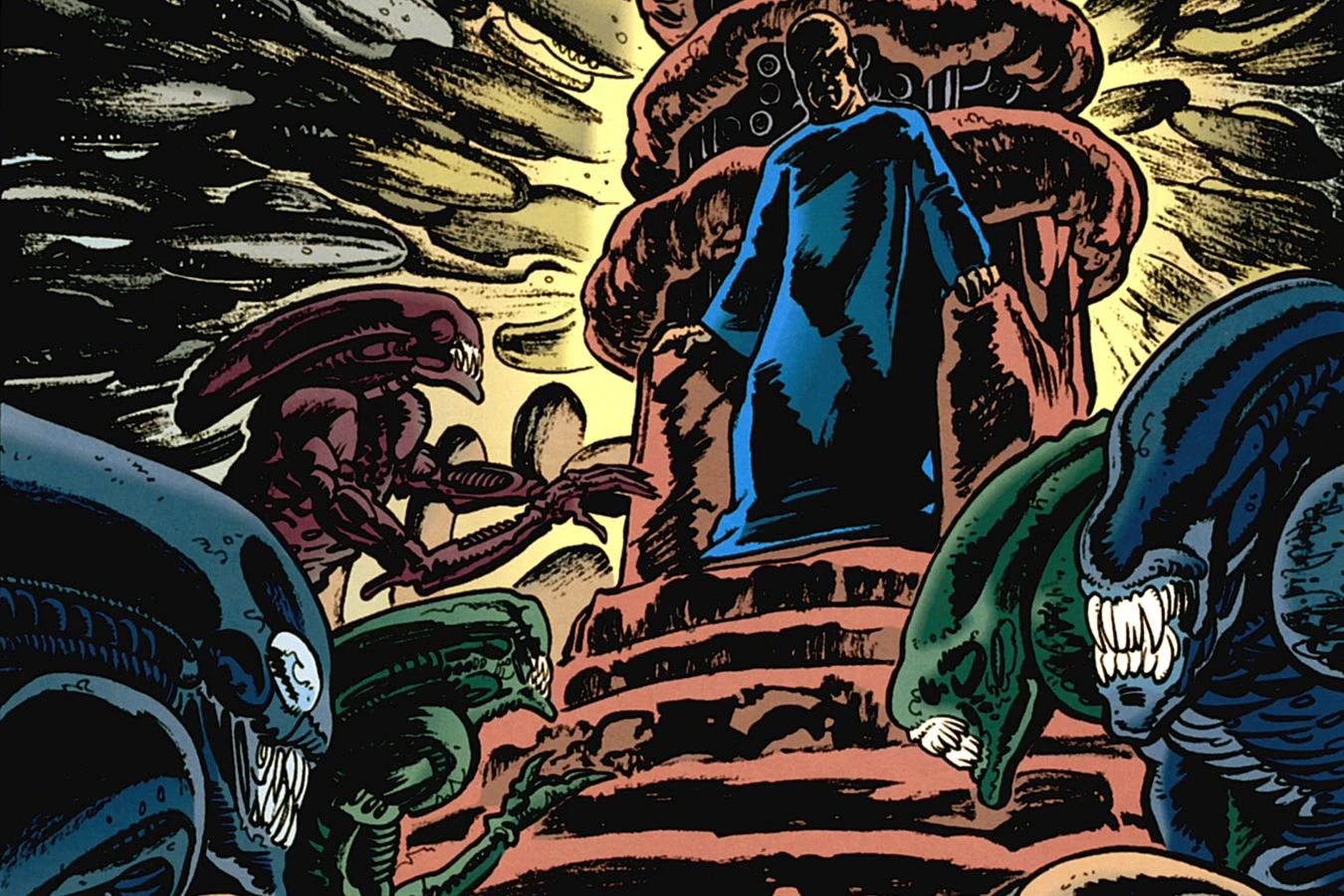
After the fall of Charon Base, a man calling himself the Father organized Bug-Men hybrids and used royal jelly to turn captives into tools. In Aliens: Colonial Marines, a Marine who woke cocooned in resin was offered food, and the same program forced glowing royal jelly into captives' mouths. Lieutenant Joseph Henry led a platoon from the Sun Gun to Bracken's World and an Alphatech communications relay. Beliveau admitted that the Father was the prize the company cared about, and Major Alan Bradshaw was already a convenient scapegoat. The comic does not show how Kleist left the ruined asteroid, only what he had become when Henry reached the relay.
Henry pushed toward research station 2378 and the hive-wrapped relay with the synthetic Liston at his side, after royal jelly withdrawal had already torn the company party apart. Vormitag killed Beliveau, Rosemas killed Vormitag, and Henry abandoned Nyland at the station to keep Liston close. From the outside, the relay was a spherical communications array wrapped in resin, a company jewel turned into a Bug-Men stronghold. Henry's remaining force forced deeper toward the core, and Henry himself was wounded and still moving, locked on ending the man who had built the hybrids. Every deck closer cost more blood, and Kleist was still ahead of him.
Henry Faces The Father
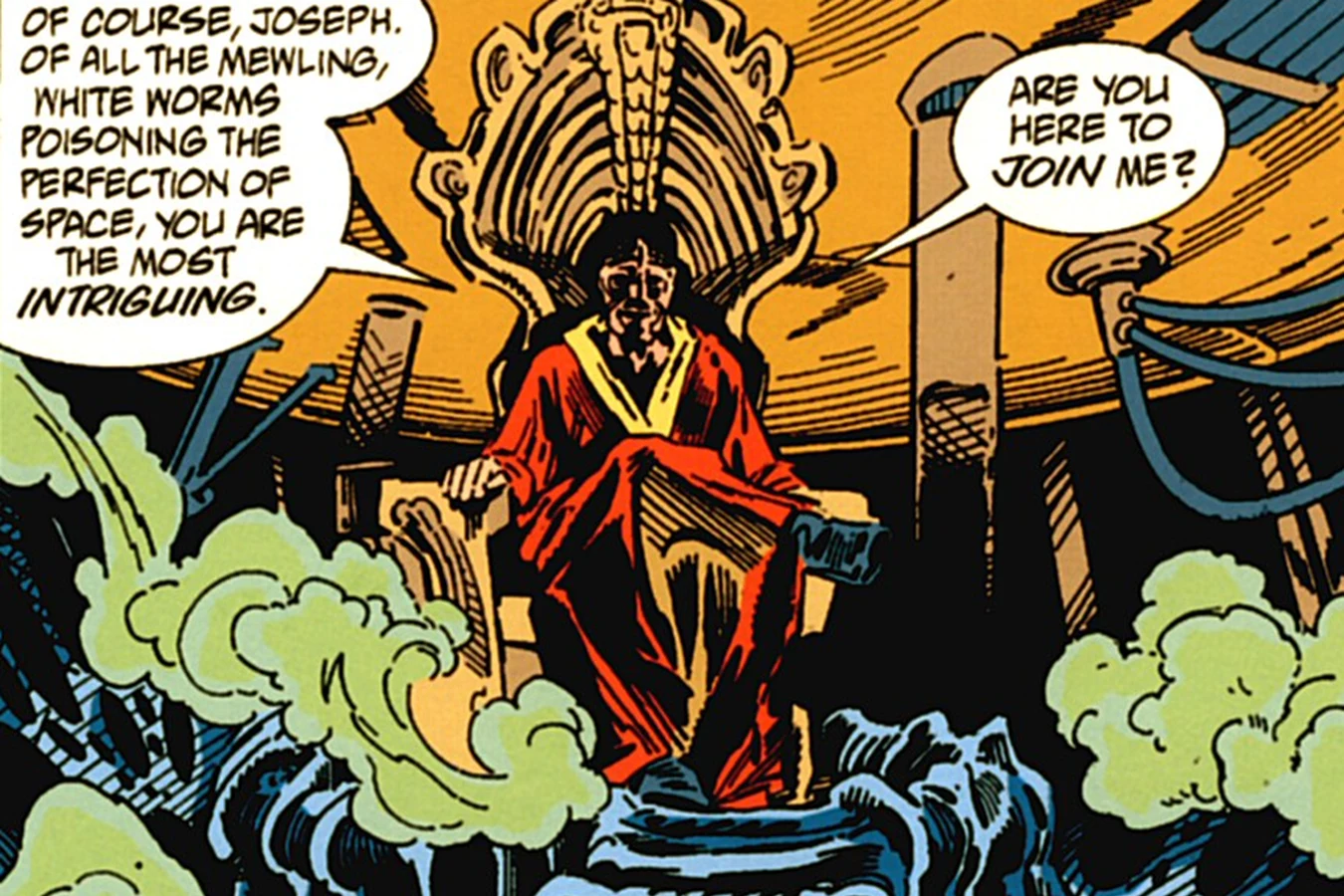
In the core, Henry found the Father on a throne of company tech and ritual junk. The man admitted he had once been Professor Ernst Kleist, a survivor of the Charon disaster, and that Major Bradshaw had been a convenient Alphatech scapegoat already dead for months. He called himself the Cosmos' Herald and mocked Henry's psych file and politician father. Henry had already lost most of the assault team getting that far, and he was still bleeding from the fight in.
Death Of The Father
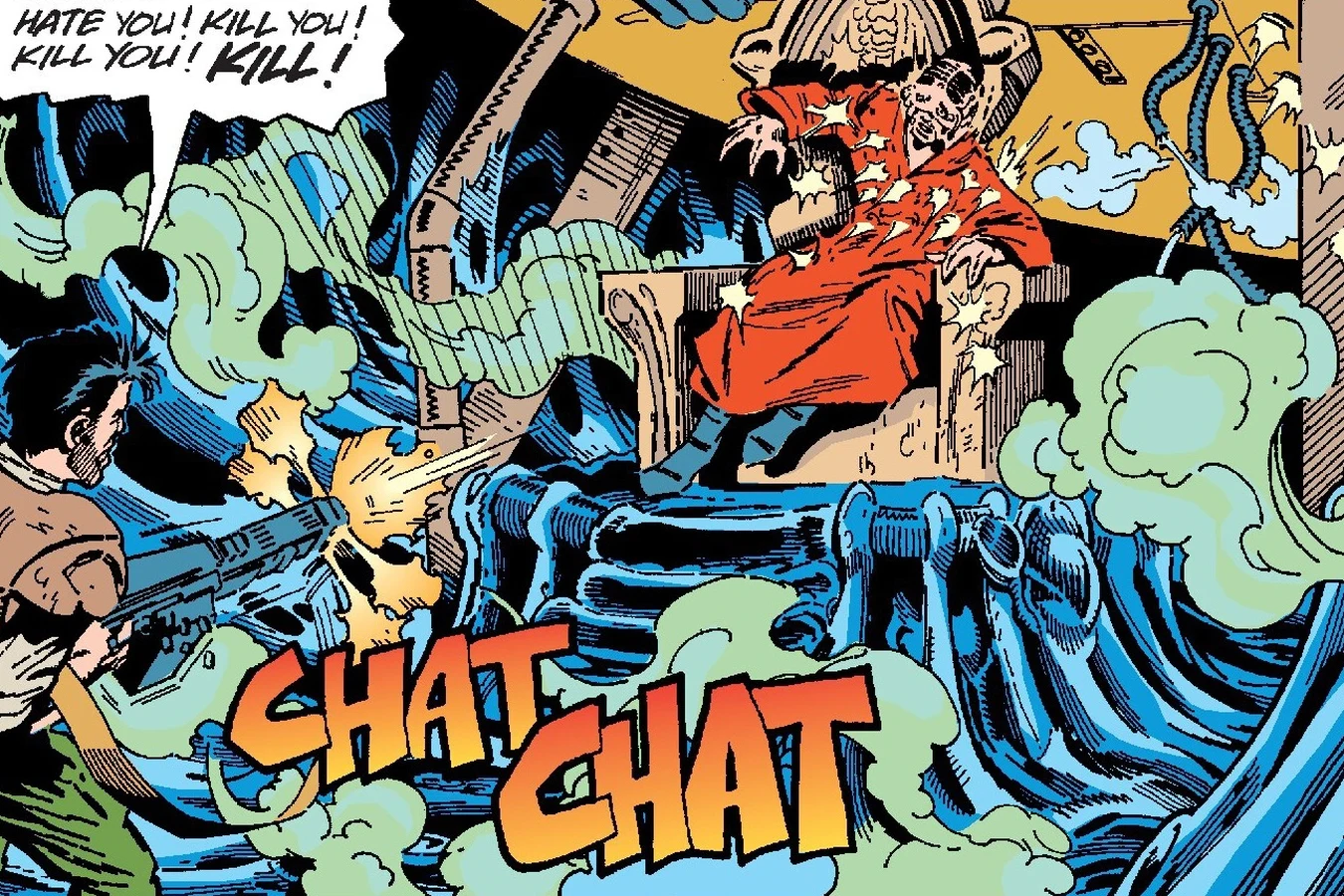
Henry screamed him down and shot him. Kleist's death tripped the station's destroy sequence. Bleeding out, Henry ordered Liston to get the surviving Marines back to the ship at any cost. Liston confirmed the order, then ripped Henry's heart and the detonator from his chest so the neck micro-bombs would not fire when their controller died. Henry did not leave the core, and his body was destroyed with the research station when the Alphatech relay tore itself apart. Afterward, Liston's damaged unit drifted in open space, named Ernst Kleist as the Father, noted Alphatech's liability, and shut itself down.
Comic And Novel Differences
Sandy Schofield's 1995 Bantam novel Aliens: Rogue keeps the same spine as the four-issue comic, then expands the cast and changes who lives. The Grant spy is John Kray in the comic and John Cray in the book. In the book, Hank tells Palmer that two years earlier the rock held over fifteen hundred people, including forty Marines, and that a count now would not break fourteen hundred, with twenty Marines left and over a hundred security men. The novel also shows Kleist watching Choi and Bergren on his monitors, then telling Larson to retrieve Bergren's body because he can use it, and to make sure Green knows.
The novel changes Kleist's end. In the comic he turns the sound cannon on the Queen in her grip, and the blast catches both Queen and King. In the book the Queen's tail cuts off his right arm at the shoulder, the severed arm still holds the cannon, and the impact jars the trigger until it goes critical. The novel kills Cray in the labs, where an Alien's jaws hit his heart, while the comic lets Kray leave on the Caliban. Grace is torn apart in both versions, but only the novel lets her call Kleist a real ass as she dies, and only the novel colors her blood white.
Personality And Traits
Kleist treated human lives as material for Project Chimera, from failed queens in tanks to Marines dumped into the hive with blanks. He could be courteous on the hangar deck and punitive in the same afternoon, and he expected Green and Larson to enforce that gap. He talked to the queens he had already destroyed, called the drones his good children, and congratulated himself when Kray's tissue gave him a King. When Grace called his manner irrational, he answered that in a godless universe there is only man and the Alien, and that the latter's empire would be destroyed by its own kind.
That need to command the hive did not end with Charon. As the Father he still used people as stock, forcing royal jelly into captives and sending Bug-Men to raid and seize more hosts, and he mocked Henry from a throne of company hardware. He called himself the Cosmos' Herald and treated Alphatech's missing colonel as a name he could hide behind. The comic and the novel both show a man who would not leave his experiment, even when the Queen had him in her grip. Henry's shot ended that career, but it did not rewrite the trail of hosts, Marines, and hybrids already spent to feed it.
Famous Quotes
- "Come to daddy." - Ernst Kleist, in the Charon Base hive in Aliens: Rogue.
- "There's my good children..." - Ernst Kleist, in the Charon Base hive in Aliens: Rogue.
- "All progress has its price. A necessary attitude, I think you'll agree. Logic and truth leave little room for moral posturing." - Ernst Kleist, in Sandy Schofield's Aliens: Rogue novel.
Behind The Scenes
Ernst Kleist first appeared in Aliens: Rogue, a four-issue Dark Horse series published from April to July 1993, written by Ian Edginton and drawn by Will Simpson. Sandy Schofield novelized the story for Bantam in 1995, a fuller prose take that spells the Grant spy as John Cray. The comic itself letters the name Kray, and that is the spelling this article follows for the comic events. Kleist later returned as the Father of the Bug-Men in Aliens: Colonial Marines, the ten-issue series published irregularly from January 1993 to July 1994, where Lieutenant Joseph Henry killed him.
On AvP Central the same figure already appears in the Rogue comic overview, the novel overview, the Colonial Marines overview, and the Lieutenant Henry profile, which had to stand in for a dedicated character study. This article collects that career in one place, from Project Chimera and the Rogue King to the Father in the Alphatech relay. The comic remains the source for the version of Kleist who walks back into Colonial Marines, because the novel leaves him with the critical sound cannon on Charon. No later story brought him back after Henry's shot in the relay core.
Appearances
- Aliens: Rogue #1 to #4 (Dark Horse, 1993).
- Aliens: Rogue (Sandy Schofield, Bantam Spectra, 1995).
- Aliens: Colonial Marines (Dark Horse, 1993-1994).
Conclusion
Professor Ernst Kleist entered the Alien comics as the director of a company research station and left them as the Father on a hive-wrapped relay. He used Charon Base to breed a male Xenomorph, walked the hive as if it already belonged to him, and stayed behind with the Queen, the King, and the weapon built to master them. The Caliban's crew held orbit over the wreck and heard only static. The later Colonial Marines series put the same man in front of Lieutenant Joseph Henry, who shot him and died in the same core.
What the comics show is the work and the return, not the escape from the asteroid. Readers who want the Charon plot in full can turn to the Rogue comic and to Sandy Schofield's novel, and to the Colonial Marines overview for the Father's last stand. Kleist remains the scientist who tried to program a hive, and the Father who used that same hunger after Charon. Henry's shot ended him. The experiments, the King, and the Bug-Men are what he left behind.
Tag Categories: Alien Universe Characters | Alien Universe Scientists | Alien Lore