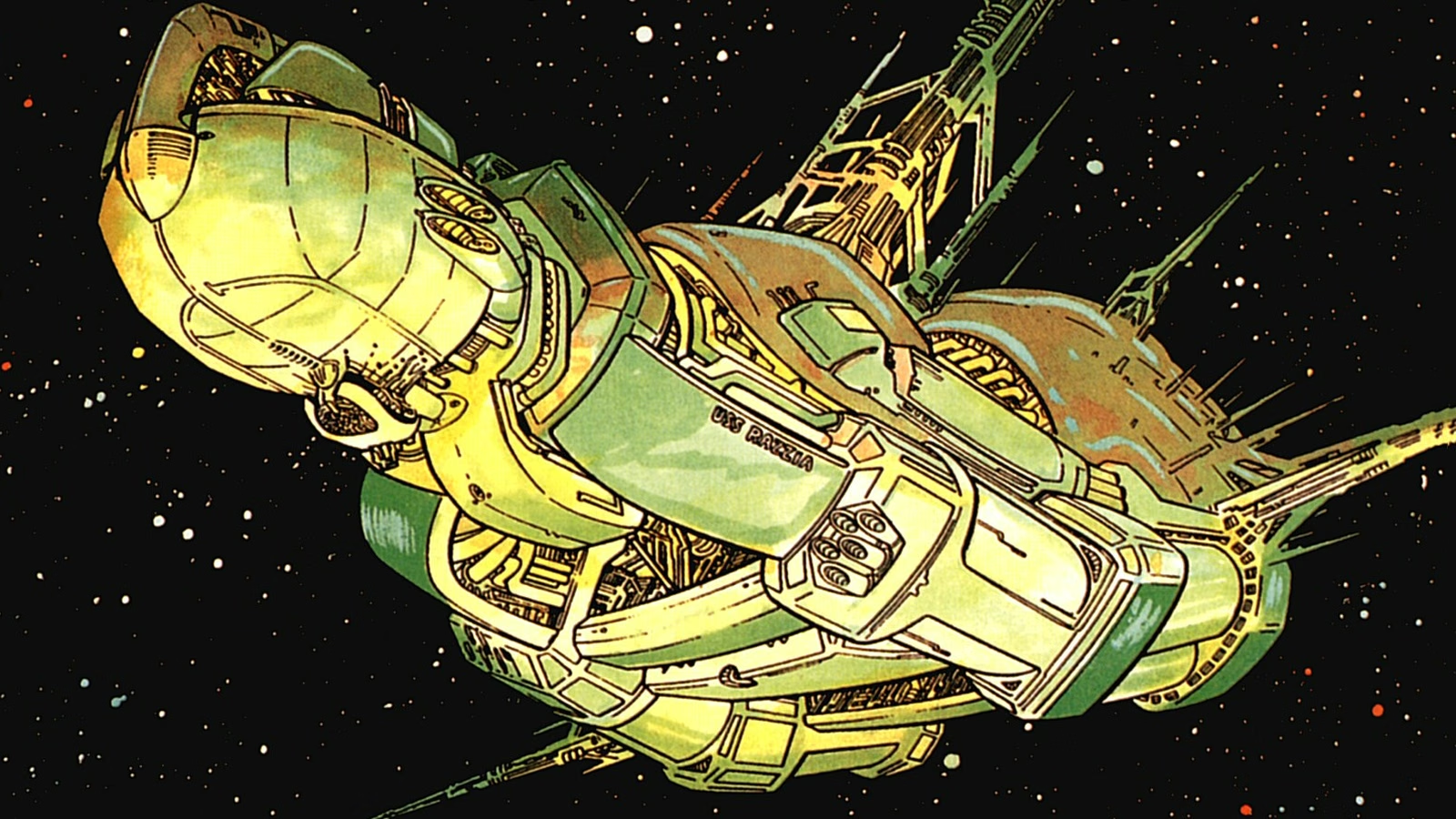

The USS Razzia took Daniel Grant and Major Alex Lee to the Xenomorph homeworld in the Aliens: Genocide comic and David Bischoff's novel adaptation. The Razzia stayed in orbit while the expedition descended in the smaller lander, named USS Anteater in the novel. The larger ship housed the corporate labs and handled orbital support. The lander took Lee's troops and their equipment to the surface and carried the survivors and royal jelly back.
Ship And Command
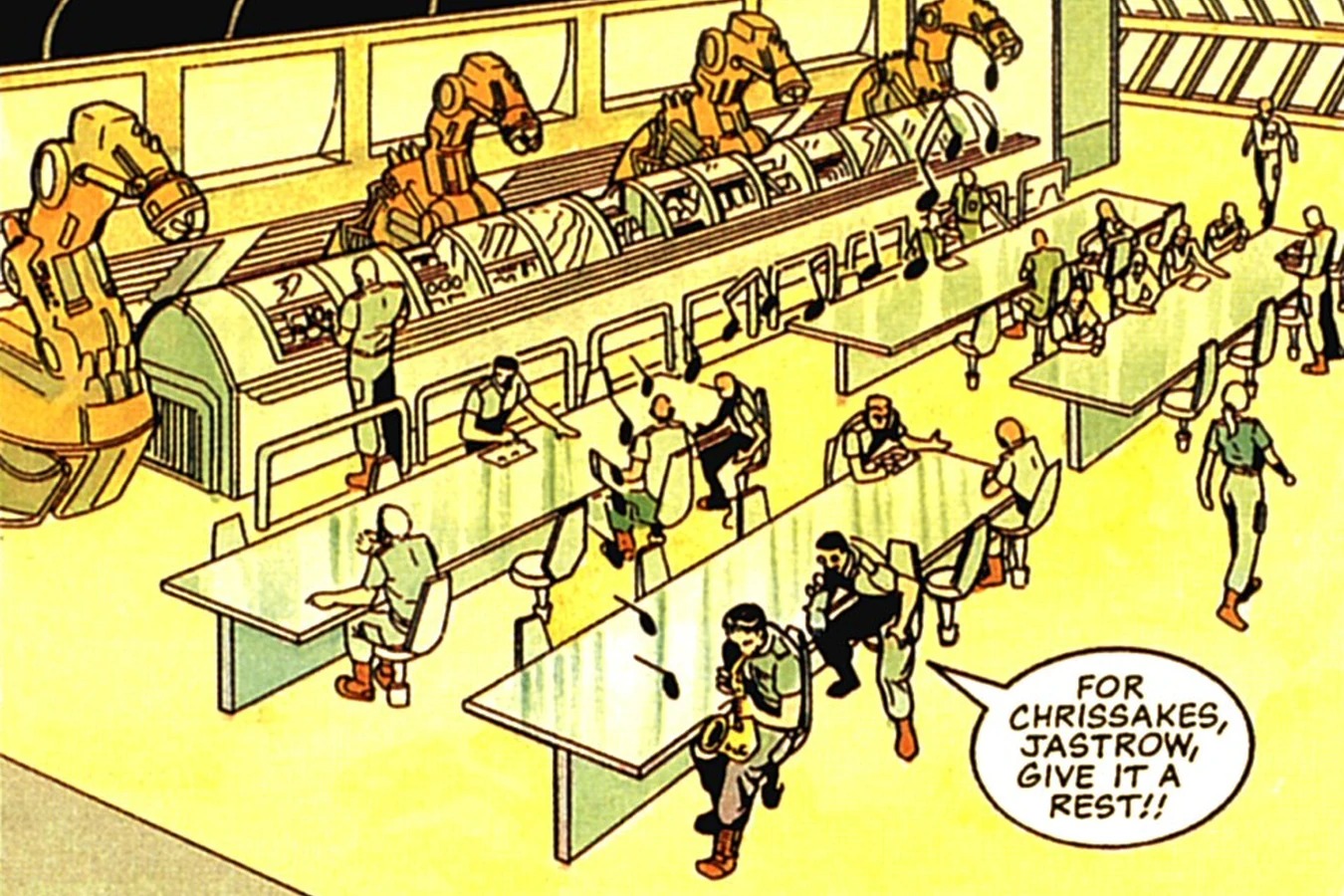
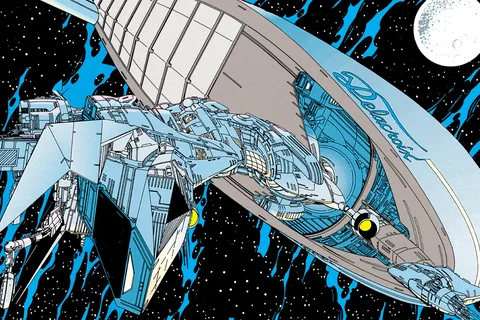
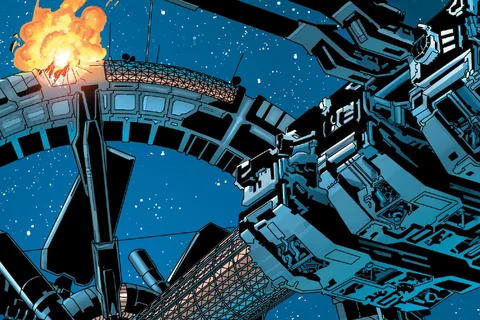
David Bischoff described the USS Razzia as a deep-space tactical hull equipped with gravitonic engines, impulse cruise, and hypersleep. The comic gave it a broad green-and-gold hull with projecting towers and machinery set deep into the structure. Inside, the mess deck had long tables and a row of automated stations, while walkways linked sections of the ship across tall machinery spaces. The Razzia carried enough people and equipment to sustain both a military deployment and a separate research program far from Earth.
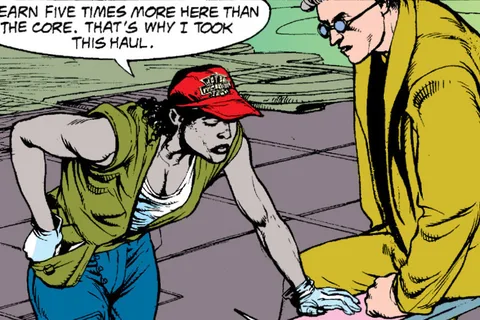
The novel divided authority aboard the ship. Captain Phillip Hastings commanded the vessel and stayed with it throughout the expedition. Alexandra Lee Kozlowski, called Major Alex Lee in the comic, commanded the troops. Daniel Grant controlled corporate decks owned by his company, and his scientists answered to him. The military got a supply of Xeno-Zip in exchange for supporting the royal jelly expedition. Once the Razzia left Earth, Hastings, Kozlowski, and Grant still had different responsibilities aboard the same ship.
Operational History
The Corporate Decks And Sabotage
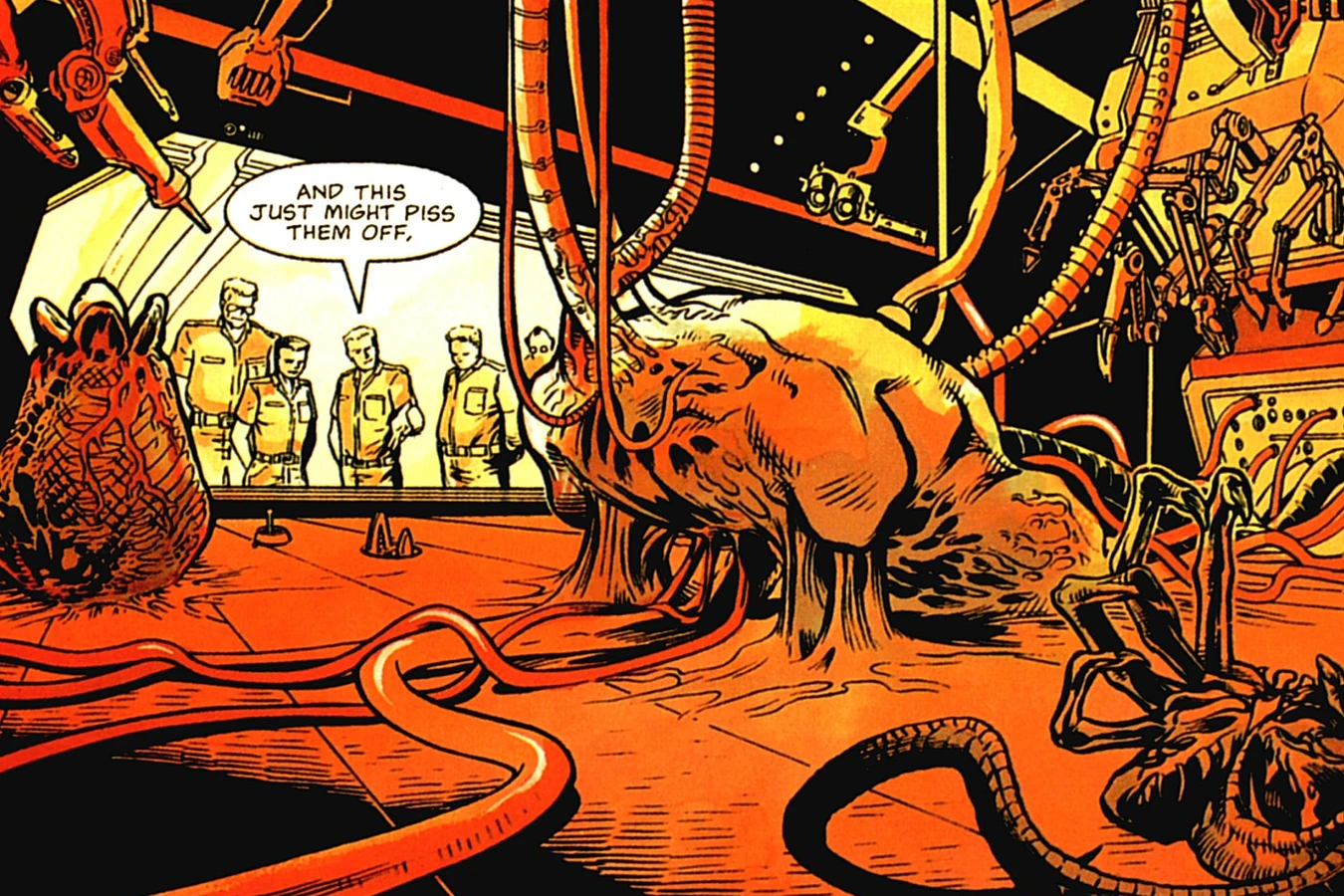
Aboard the Razzia, Grant revealed that the mission involved more than filling tanks with royal jelly. In the novel, Dr. Murray Friel had grown a donor torso using his own cells and was using it to incubate a Xenomorph. The plan was to keep the resulting creature dormant until the expedition obtained enough jelly to develop a Queen under controlled conditions. Decks E and F held the research equipment, egg pens, security systems, and storage for the return cargo. Kozlowski recognized what a breach would mean for the ship and objected to Grant making those decisions without her.
The safeguards included cages, alarms, lasers, and particle beams. Someone disabled the status alarms and damaged the controls in Cargo Bay Nine. The embryo emerged from the donor torso and was destroyed by the beams, but the broken safeguards showed that the danger came from inside the expedition as well as from the planet ahead. Grant suspected a corporate rival, and the true saboteur stayed with the expedition as it prepared for the landing. The comic also showed the crew responding to a cooling-system alarm below the incubation chamber and investigating a missing rifle after the emergency.
Arrival And Deployment
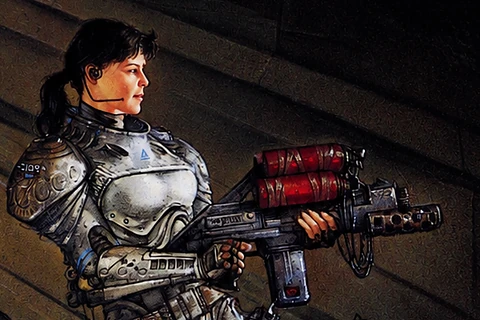
The Razzia entered orbit over the Xenomorph homeworld, cataloged as G-435 in the novel. Its sensors located the site of the old hive. The comic gave the crew ten hours from arrival until the descent. The landing party used that time to prepare while the larger ship retained its orbital position. Kozlowski had reviewed the earlier Hiveworld reports, and Dr. Zato had issued Z-110 acid-neutralizing armor to give the troops some protection from Xenomorph blood.
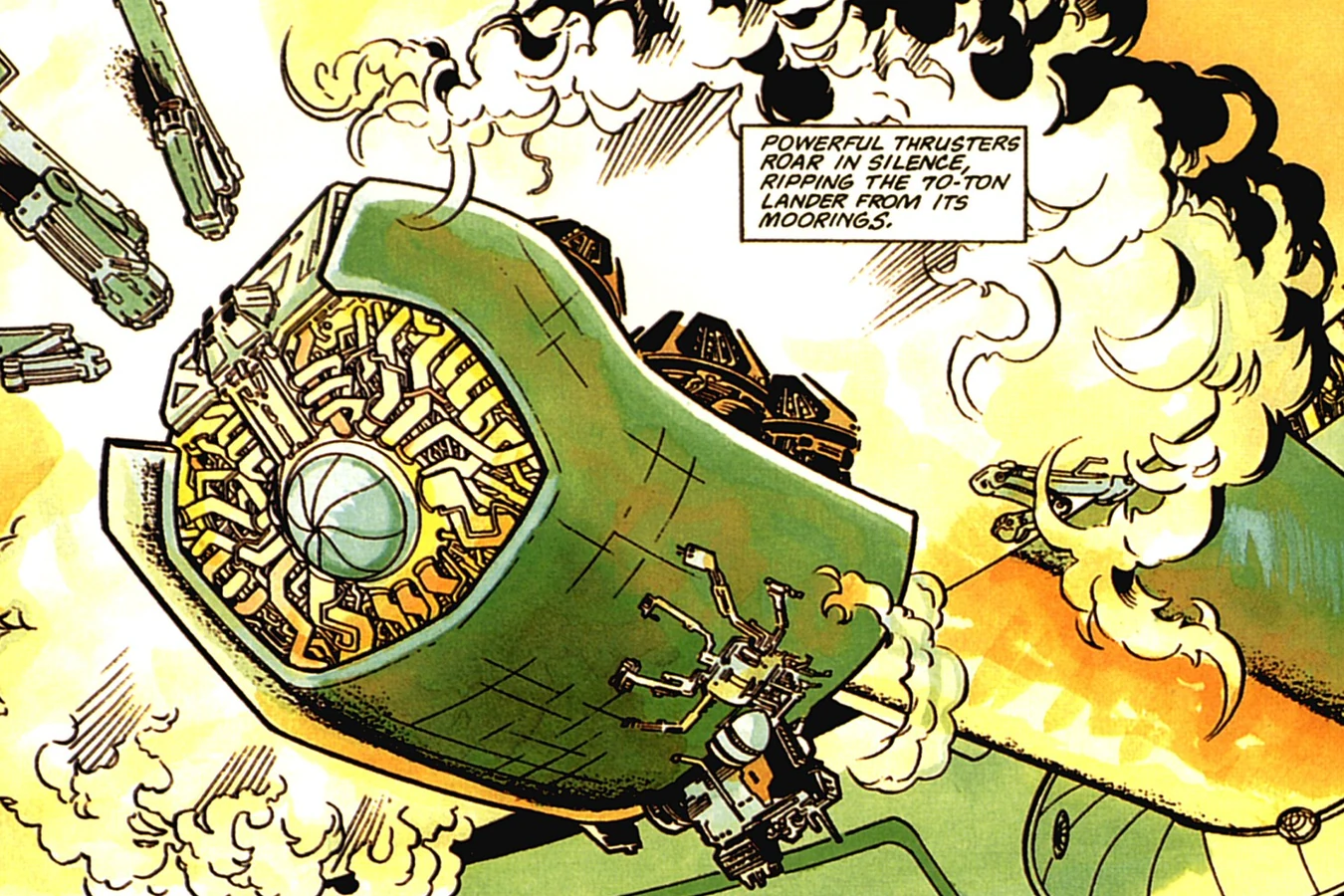
A separate 70-ton landing craft broke free of the Razzia's moorings under its own thrust. The novel named it the USS Anteater, a Mark Nine lander flown by Lieutenants Lenny Fitzwilliam and Tank Tanarez. It carried the troops, a gun array, and the equipment needed to hold a perimeter on the surface. Begalli took Friel's place with the landing party, and Kozlowski went down with the troops. Hastings remained on the Razzia with the crew responsible for orbital reconnaissance and support.
Orbital Reconnaissance And Fire Support
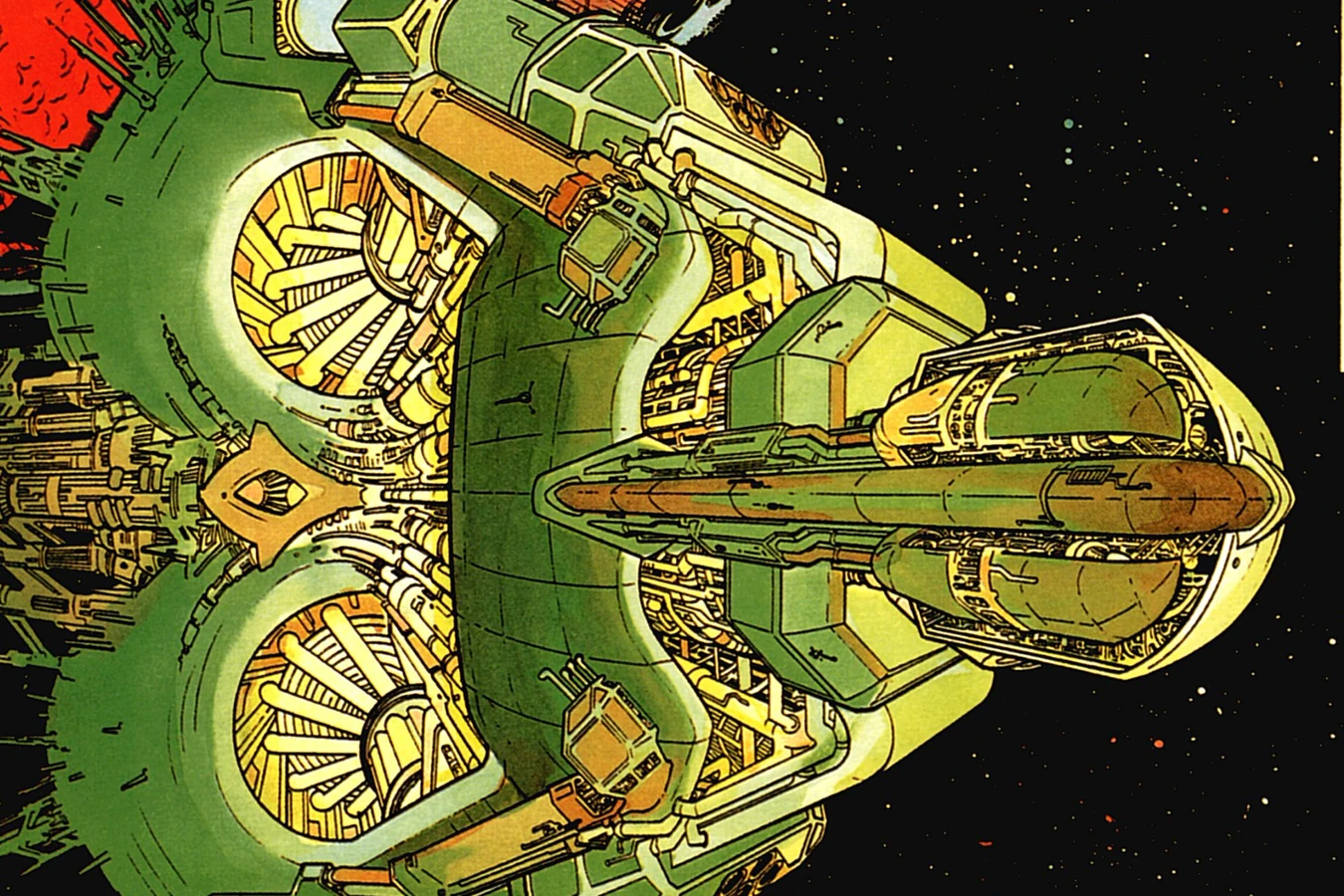
The war between the two hives gave the Razzia a role beyond putting troops on the surface. In the comic, the crew compared current terrain readings with maps from earlier expeditions. They identified a formation about forty-two kilometers east of the landing zone that matched the dominant hive in size and shape. The ship used that survey to identify the rival hive as a target and fired tactical missiles from orbit, destroying the nest of the Red Xenomorphs and killing their Red Queen.
The novel explained why Hastings used a limited-radius strike. Begalli wanted jelly from the black strain and proposed drawing its defenders away, leaving fewer Xenomorphs between the Marines and the chamber they needed to reach. The blast broke the red brood's defense. As its warriors fled, the blacks took up the pursuit. The strike gave Kozlowski's team an opening on the ground. The Razzia fired again against the black hive after the expedition had taken the jelly, a second strike specific to the novel.
Recovery And Return
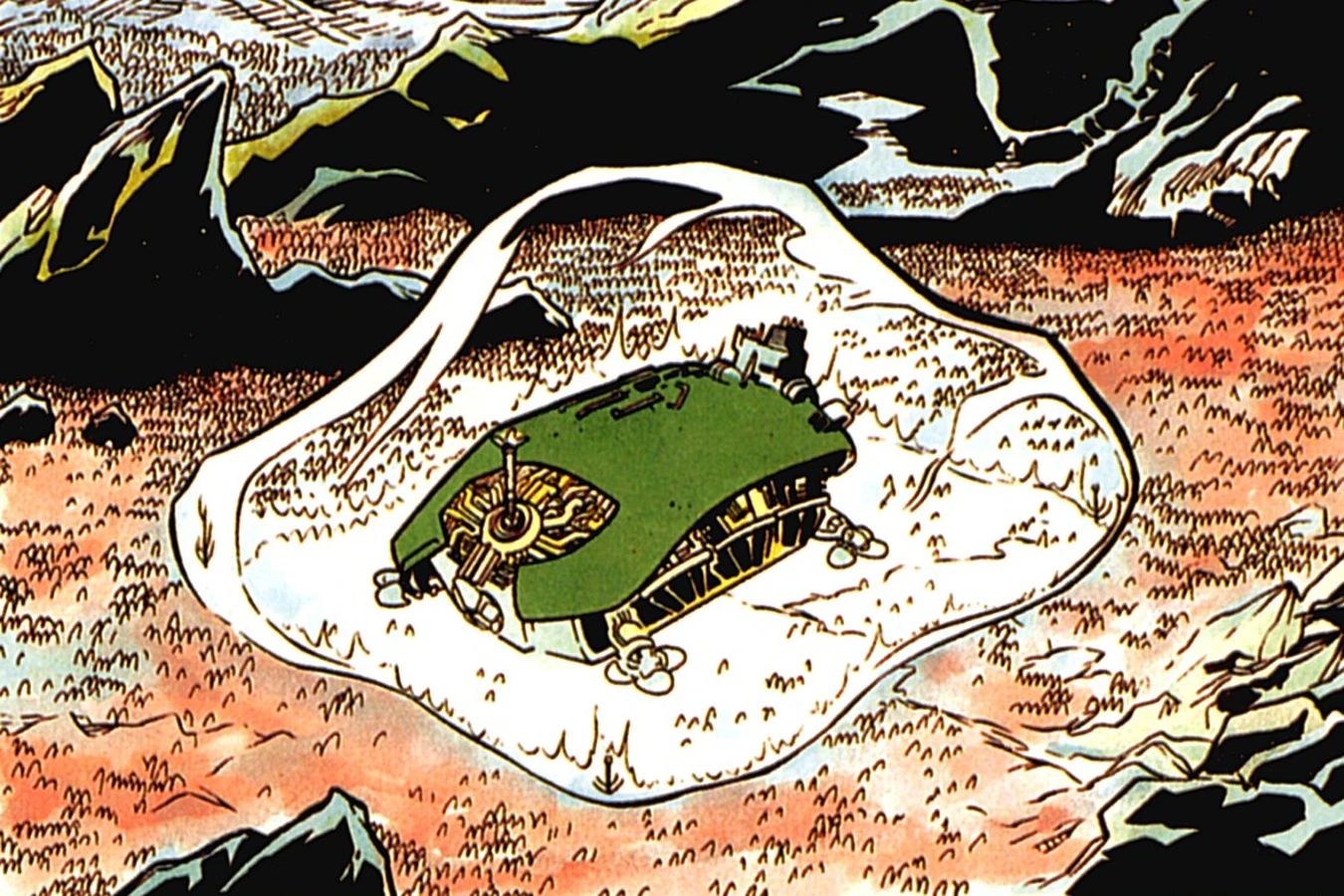
The surface team used Perimeter Extension Harpoons to project a force field and open a route toward the hive. An eight-wheel cargo drone carried the jelly out. The survivors reached the lander with Xenomorphs close behind. In the novel, a warrior caught the ramp as it was closing. Kozlowski stopped the crew from shooting through the hatch because the creature's blood could damage it, and Ellis knocked it loose with Jastrow's saxophone. The hatch sealed and the Anteater lifted back toward orbit.
The Razzia recovered the lander and received 2,500 gallons of black-strain royal jelly. Its sickbay treated Kozlowski's fractured thigh so it could heal in hypersleep during the return voyage. Friel's team began work with the recovered jelly and red-strain DNA, still hoping to produce a Queen Mother under laboratory conditions. The ship returned with the cargo Grant had sought, while Kozlowski turned down his offer of a corporate security post and stayed with the Marines.
Appearances
- Aliens: Genocide (Dark Horse comic, 1991–1992)
- Aliens: Genocide (Bantam novel, 1994)
Tag Categories: Alien Universe Ships | Colonial Marine Lore | Alien Lore