LV-363: Rift World And Khatura Harvest Planet

LV-363 was a breathable planet cut by hundreds of deep rifts in Weston Ochse and Yvonne Navarro's 2022 novel Aliens vs. Predators: Rift War. The Yautja called it a rift world. A drug cartel used the rims to harvest pollen from the narcotic flower Khatura, which grew in very few places, and forced addicts to do the work on cables. The elders also chose the planet as a blooding ground, and the Xenomorphs seeded in the rifts produced a flying hybrid when their Facehuggers took the native riftwings.
The Planet
Name And Location
LV-363 was the human survey designation, and the planet had no other recorded name. The Yautja named the type rather than the world: a rift world, split by gashes that looked as if a giant blade had carved the surface. A mothership dropped the blooding party's hunt ship at the edge of the system. The ship came in from a Lagrange point and scanned for ion traces, but it found only the faint track of a vessel that had passed several weeks earlier. Human mining colonies existed elsewhere, a long way from the rifts.
Surface And Climate
The air was breathable and gravity matched Earth's. Almost no humans lived on the surface, although several small groups of drug collectors worked separate sites with no contact between them. The rifts held enough plant life to make the air humid, and the climate was close to tropical. Even so, fine dust rose from the ground everywhere and coated the machinery, clothes, and screens at Murray's harvest camp. Away from the gashes the vegetation grew shorter and the animals were fewer, and the tallest trees stood along the rift edges.
The Yautja landed their cloaked ship in a clearing and hauled supplies about half a kilometer to a forward camp near the nearest rift. Branch snakes and tree rodents lived in the belt of tall trees beside the gashes. Hunting procedure barred the party from fighting near the ship, because it was their only way back to the mothership and the clans. The open ground between the rifts of LV-363 was quiet enough for the hunters to run perimeter checks and tree-running drills there.
The Rifts
Walls And Floor
Hundreds of north-south cracks split the surface of LV-363. Each drop ran several hundred meters, with bushes rooted between the rocks and growing toward the light, and a rift floor received full sun for only about two hours a day. The long dark hours were silent until daylight reached the floor and birds, beetles, and flybees became active. The walls were hard and slick, and moss and Khatura flowers gave poor footholds. The floor was uneven and covered in boulders of every size, which gave cover to anyone fighting there but made fast movement impossible.
Caves And Nests
Caves opened off the rift walls and floor. One narrow cave was too small for an adult Xenomorph, and the harvester Enid hid inside it during the hunt. A larger lair held a riftwing nest. Its floor was thick with speckled green droppings, dozens of holes in the walls each held a pulsing white sac, and a bloated mother hung from the ceiling. Gas from the droppings filled that cave, and the former Marine Shrapnel warned Enid not to light anything inside it.
Wildlife
Riftwings
The riftwing was the apex predator of LV-363. It was a human-sized, omnivorous winged insect with a proboscis, needle claws, and wings that beat like a dragonfly's, fast enough that its thrum was heard before it was seen. It searched for prey across several visual spectrums and was immune to Khatura pollen, and its hunting call drove smaller animals out of a rift. A microscopic parasite strained its hormone system, slowing its hunger and stopping it from ranging too far or killing off the other species.
Riftwings attacked the harvest cables early in the season, and guards shot them off the lines until the animals learned that humans were dangerous prey. After that most riftwings left the harvesters alone and hunted elsewhere in the rifts. The edges of their wings were sharp enough to cut, as the young hunter Sta'kta found when he dropped onto one. Because riftwings had no natural predators, xenobiologists on Yautja Prime wanted to learn what a Xenomorph born from a riftwing host would become. Not every Yautja scientist accepted that theory.
Other Fauna
The rift floors held six-legged rodents called jivenings, an albino animal like a raccoon with a gray striped tail, and native monkeys that mostly hid during the day. Tiny birds and flybees, insects that looked like flies but behaved like bees, fed on the flowers, and beetles hunted smaller prey. A medium-sized quadruped similar to an Earth deer, with a long split tail and two rows of flat plates along its skull, was held aboard the Yautja ship for a lesson to the young hunters. Nobody had ever classified the fauna of LV-363, so none of these animals had scientific names.
The Khatura Harvest
The Flower
Khatura grew along the upper edges of the rifts in fuchsia masses that hung down like beards. Its bulbs opened as soon as sunlight reached them and released a shower of red pollen. The unprocessed pollen was a powerful narcotic, and a dose on bare skin or in the lungs left a person helpless for hours. It was rare and expensive off the planet, far beyond what ordinary addicts could pay, and scarce on Earth. Some Xenomorphs that got pollen on them in the harvest nets went into a short frenzy, and young Yautja covered in the red dust lost control for a time as well.
The Cartel Camp
The cartel ran a seasonal camp on the rim under Murray, a middle manager who signed his messages Montana 1 and reported to a contact called Scar Face Major. Murray had worked harvest seasons on LV-363 several times without trouble. The camp had a central tent, cable boxes set among the boulders at the rift's opening, and a launch area where the mercenaries lowered and raised the workers. Former Colonial Marines Shrapnel and Margo guarded the lines. When the first Xenomorph kills began, the cartel refused Murray's request to pull the camp out.
Harvesters
The workers were addicts the cartel collected because trafficking people had become too risky, and they worked in exchange for doses of pollen. Each wore a locked mask that filtered out the pollen, hung from a cable above a rope grid, and used a vacuum to draw pollen from the open blooms. Harvesters were not allowed to talk to one another on the comms, and dropping a full vacuum into the rift was a serious offense. Enid, Fetch, and Khaleed, a former Weyland-Yutani officer who became addicted to Khatura, were among them.
Yautja Blooding Ground
The Seeding
The seeder Ar'Wen prepared LV-363 for the elders, the fifth planet he had seeded for them. He chose a placement area, planted the Xenomorph eggs, set a beacon, and hid his ship. The elders picked the world because its mammals and primates were large enough to host embryos, and because the rifts would force the young hunters to deal with difficult ground. When Ar'Wen read the hunt roster, he found the partner who had left him for dead fifteen years earlier, and he stayed on the planet in secret instead of leaving before the blooding.
The Hunting Party
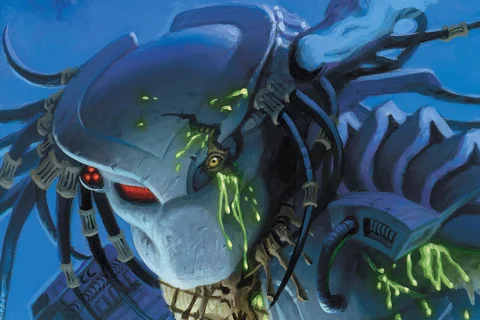
Former Battlemaster Ny'ytap led the blooding with hunting captains Ca'toll and T'U'Sa and nine unblooded, who had never left the homeworld before. Ny'ytap ordered the party to stay away from the humans, and the captains did not tell the students that the riftwings were part of the test. T'U'Sa died early, and a night attack on the forward camp killed Hetah and two of the young. Ny'ytap was impaled on a tree and later eaten by a Xenowing, which left Ca'toll in command of the survivors and of the rest of the blooding.
Xenomorphs On LV-363
The Rift Hive
Ordinary Xenomorphs born from mammal and primate hosts did most of the killing on the rift floor. Juveniles hunted rodents among the boulders, and Ca'toll's students froze one unhatched egg with nitrogen and hauled it up in a net. With no Queen present, the hive grew through eggmorphing, and later in the hunt so many adults and juveniles clung to the rift walls that Fetch mistook them for bushes. The hive overran the cartel camp and the Yautja forward camp, and a juvenile killed Murray aboard the cartel ship.
The Xenowing
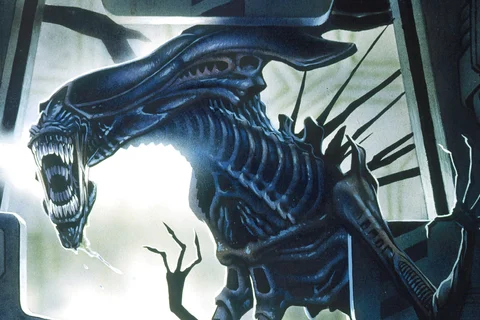
The Xenowing was born when Facehuggers implanted riftwings. It had the long head, inner jaw, tail, and acid blood of a Xenomorph on the winged body of a riftwing, with insect eyes, extra legs, and wing edges that cut like blades. Xenowings attacked the Yautja on their cables, carried off Ny'ytap and others, and in the final fight two of them lifted Ar'Wen off the ground. Ca'toll had heard of such hybrids but had never seen one, and she knew that a flying Xenomorph changed how the hunt had to be fought.
Aftermath
The Xenomorphs destroyed the cartel camp, and nothing worth salvaging was left there. Ar'Wen died from Xenowing acid during his duel with Ca'toll, and she loaded the Yautja dead into cryogenic chambers aboard the ship. She refused to destroy the planet, because humans in the distant mining colonies had done nothing to deserve it, and she left the surviving Xenowings for later bloodings. Enid ended up alone on the cartel ship with her vacuum bag of Khatura, and the Yautja knocked Fetch off their ramp when he tried to board.
The hybrid strain did not stay on LV-363. During the flight to the mothership, a winged newborn emerged from Ny'ytap's corpse in the cryogenic hold, where traces of the liquid pathogen called Plagiarus Praepotens remained. It folded its wings around itself and went dormant beside the body, waiting for a warmer place to grow. That birth came from a Yautja host rather than a riftwing, and none of the hunters in the command suite knew it was aboard as the ship docked with the mothership.
Behind The Scenes
Weston Ochse and Yvonne Navarro wrote Rift War for Titan Books, which published it in 2022. Both authors had written shorter stories in the Predator setting before, and their acknowledgments describe the book as their first full Aliens vs. Predators novel. The cover uses a promotional Predator and Xenomorph image rather than a painting of the rifts, so no official artwork shows the planet. A glossary at the back translates the Yautja words used in the text, from honor and bravery to the word for insect.
The text is not consistent about the planet. It first says Khatura could grow only on LV-363, then that it grew in few places and that the cartel could find another site. It describes almost no human occupation, yet Ar'Wen counts several separate groups of drug collectors, and Ca'toll later mentions other mining colonies at a distance. Ar'Wen also expects to leave in three days to meet another egg carrier, although he stays to fight Ca'toll and dies there. One passage misspells Ptah'Ra as Ptah'ra.
Conclusion
LV-363 was a breathable, dusty planet of deep rifts, where a cartel forced addicts to harvest Khatura pollen and the Yautja elders seeded Xenomorphs for a blooding. The Xenomorphs destroyed the harvest camp, killed most of the hunting party, and produced the flying Xenowing from the native riftwings. Ca'toll left the planet with three young bloods and the dead, left the world intact for later hunts, and carried a newborn hybrid away without knowing it. Enid remained alone on the cartel ship with her pollen.
Appearances
- Aliens vs. Predators: Rift War (2022)
Tag Categories: Alien Universe Planets | LV Planets | Predator Universe Planets | Avp Lore