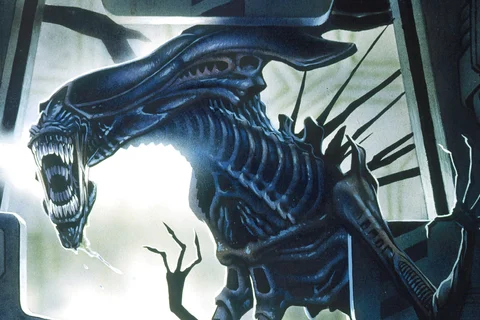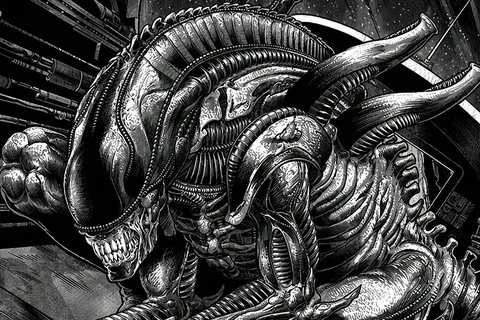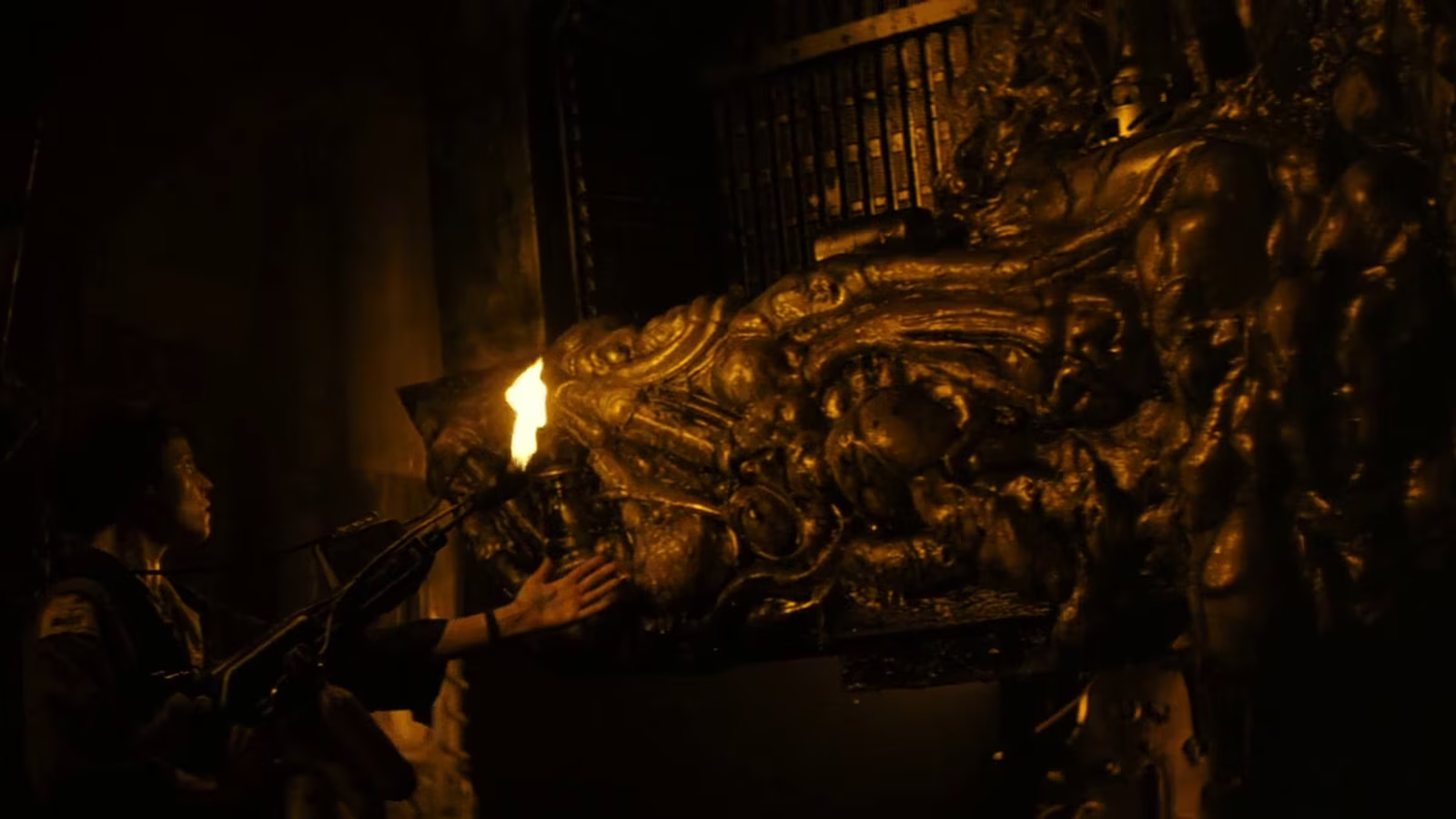

Eggmorphing is a process of turning human hosts into Alien eggs and a part of the Xenomorph's alternate life cycle. Initially cut from the first Alien movie, but re-inserted in the Director's Cut, eggmorphing (also known as ovomorphing) is used by Xenomorph Warriors when an Alien Queen is not available to produce more eggs.
The Concept Of Eggmorphing
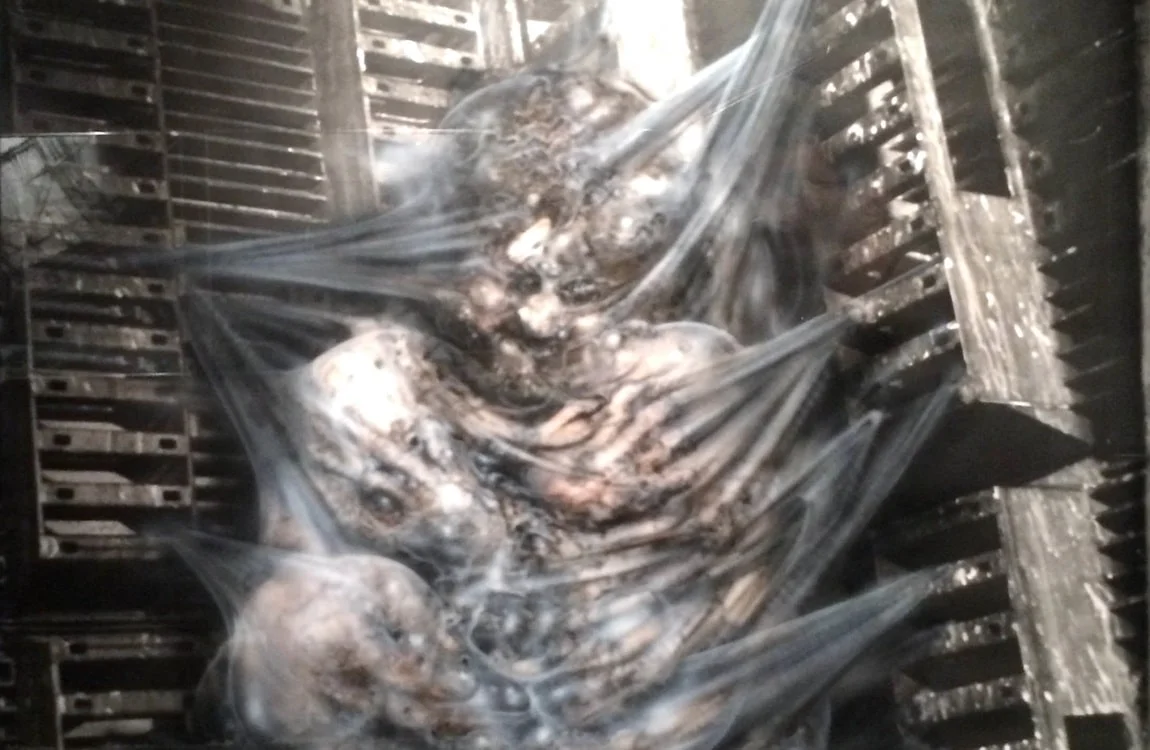
Eggmorphing, or Ovomorphing, is an alternate survival strategy for Xenomorphs. In the absence of an Alien Queen, Xenomorph Warriors (or Drones) undertake the task of expanding their species. They capture hosts and encase them in a resin, exposing them to enzymes and hormones. This transforms their bodies into Ovomorphs or Alien eggs. The Warrior injects genetic material to incubate a Facehugger inside, thus continuing their lifecycle. This transformation usually takes between 24 to 36 hours.
Eggmorphing Dallas
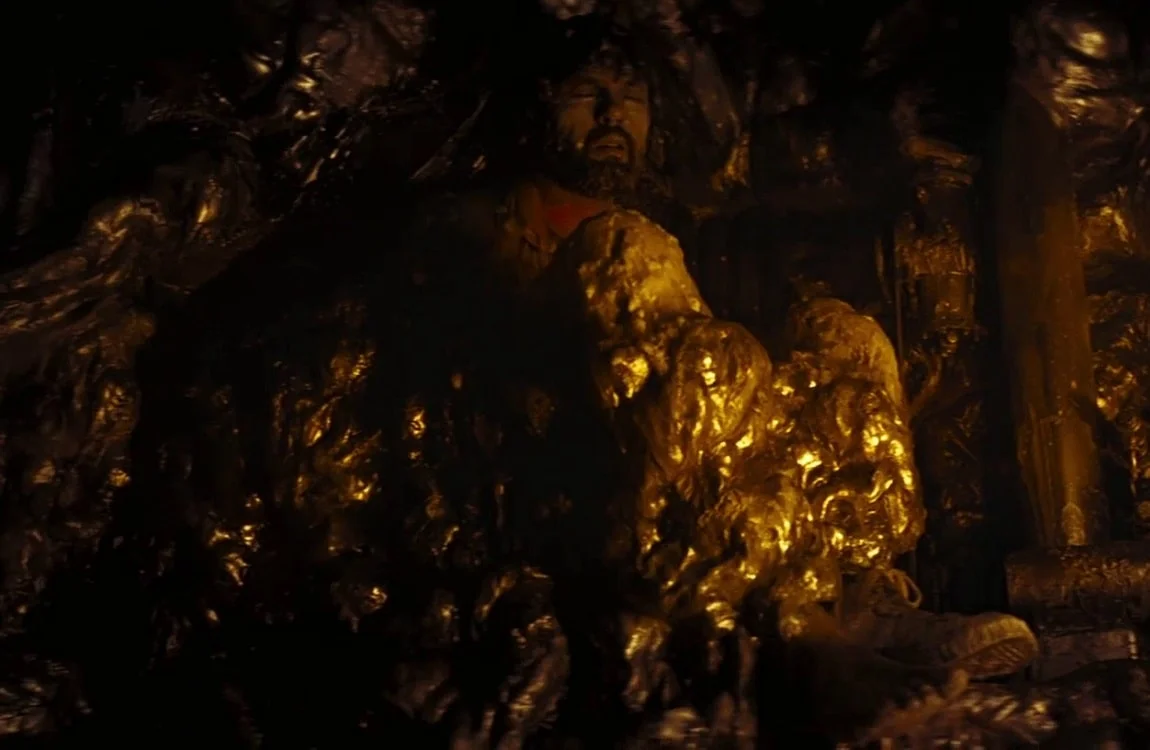
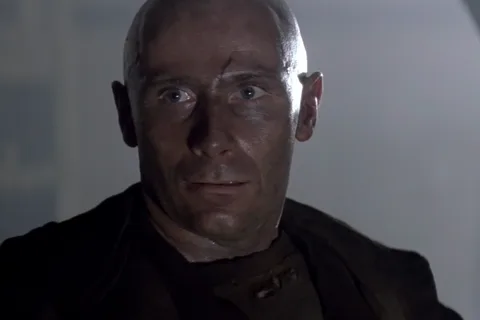
In the original Alien film, crew member Dallas was to be shown in the midst of this horrifying transformation. He was cocooned and on his way to becoming an Ovomorph, but was still semi-conscious and could mumble out words. Dallas asked Ripley to kill him and she granted his request by painfully torching him with a flamethrower. Perhaps letting him wait for about two minutes until the ship exploded would have been a bit more merciful. This scene demonstrated the grim fate of those captured by Xenomorphs and the disturbing efficiency of their reproductive process.
Eggmorphing Brett
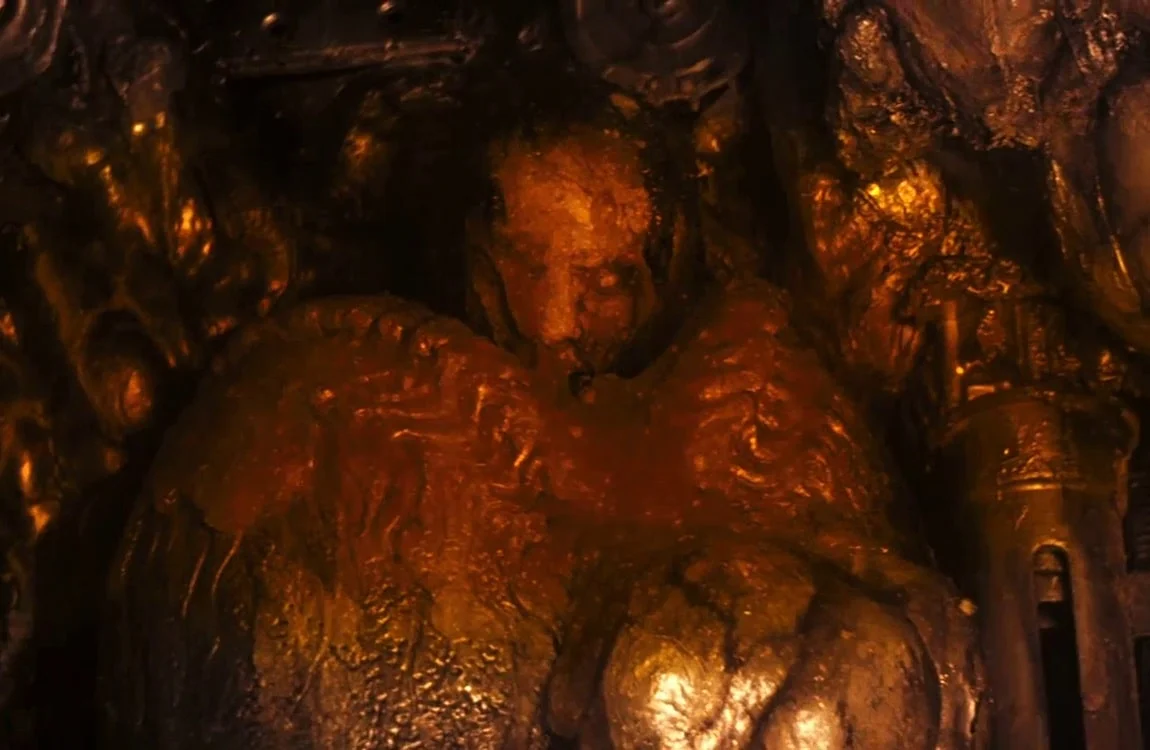
Brett, another crew member, met a similar fate. Brett was captured a few hours earlier than Dallas and had been headbitten, destroying his brain. His body, even after his presumed death, was repurposed by the Nostromo Xenomorph. Brett had almost fully transformed into an Alien egg, only his slime-covered face was protruding out of it. This highlighted a chilling aspect of eggmorphing: the victim doesn't need to be alive for the process to be successful, as dead matter can also be used.
Eggmorphing Bishop
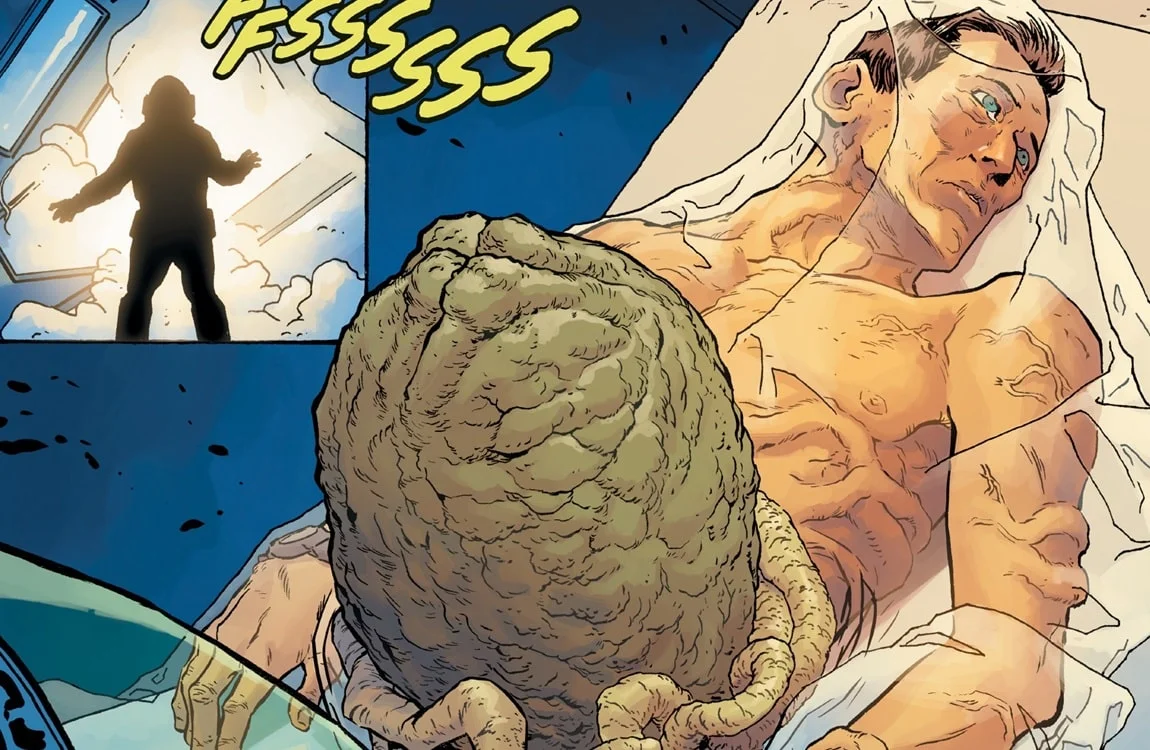
The eggmorphing concept showed up in some of the alternate scripts for Alien 3, including Eric Red's and William Gibson's. William Gibson's script was later turned into Pat Cadigan's book of William Gibson's unused Alien 3 script, a comic, and an audio drama, all featuring an egg growing inside Bishop the android on the USS Sulaco. However, this wasn't a full eggmorphing, the egg was growing out of the lower part of Bishop's body and his upper half remained untouched. Presumably, when the Alien Queen cut off Bishop's legs with her tail, she inserted Alien spores inside of him, which started to slowly develop. During the weeks that Bishop and the others were in hypersleep, the spores grew into a full-sized egg, continuing the Xenomorph's survival for this alternate Alien 3.
Cocooning In AvP Jaguar
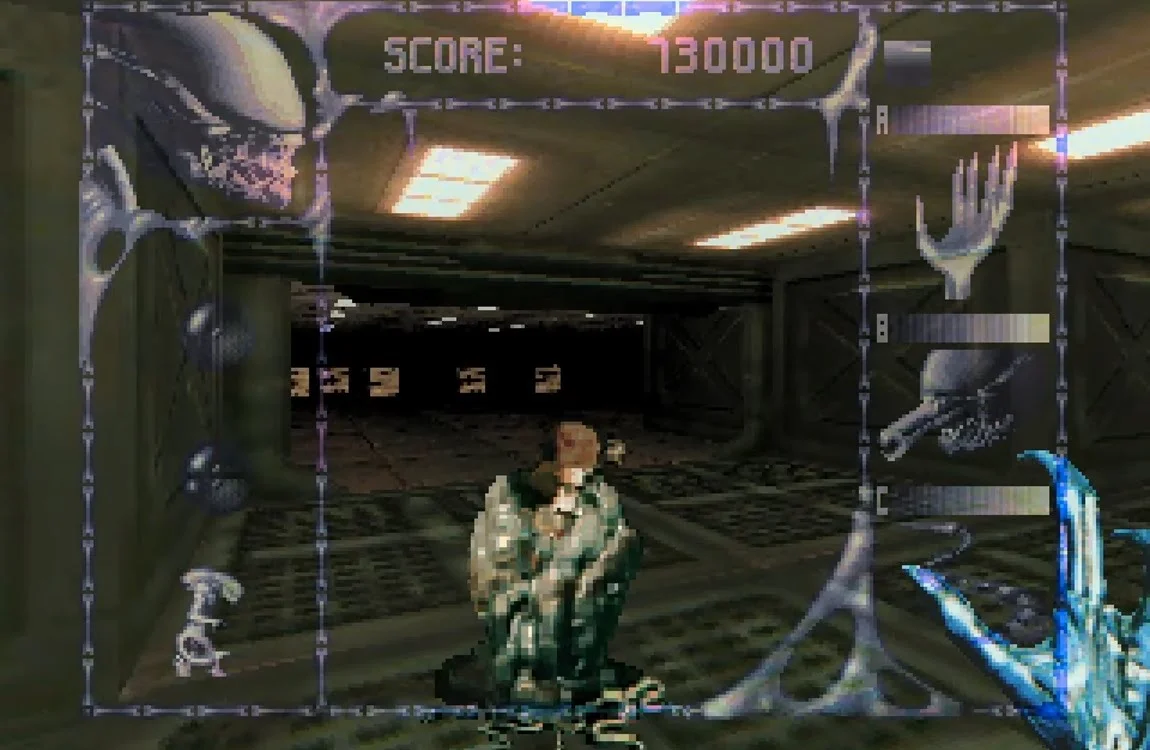
In the 1994 Alien vs. Predator game for the Atari Jaguar, cocooning took on a gameplay-mechanic twist that loosely echoed the Xenomorph reproductive concept from the films. As the Alien player, you could cocoon Colonial Marines by striking them in specific attack combinations, after which they were encased in a cocoon that served as an extra life mechanic. Up to three cocoons could be active at once, and when a cocoon had fully matured the icon on the HUD changed to reflect that it would hatch into a new Alien if your current one died. If your Alien fell in combat but you had a mature cocoon available, you would respawn at the location of the most recent cocoon. There was no Facehugger involved in the cocooning and the Xenomorph's consciousness traveled to the new Alien.
Behind The Scenes
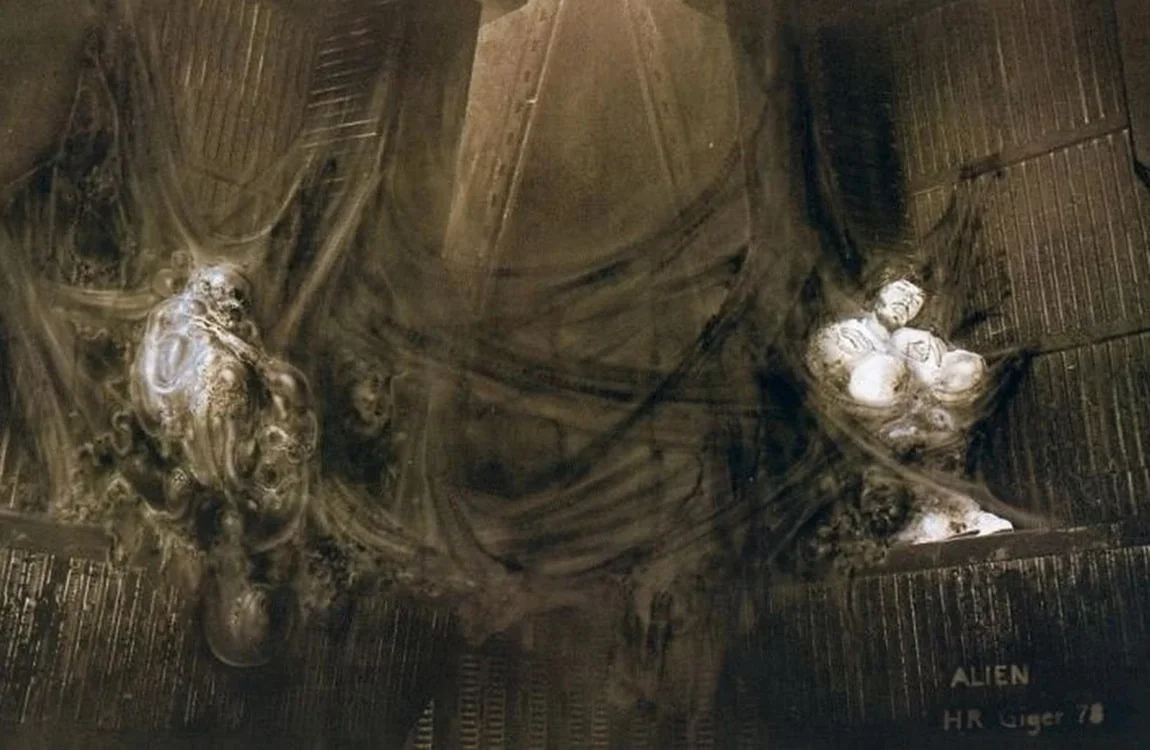
Originally, the climax of Alien was to include the eggmorphing scene, where Ripley finds Dallas and Brett transforming into eggs. H.R. Giger designed this small hive, although his initial drawings somewhat resembled a wasp's nest. However, director Ridley Scott cut it, feeling it slowed the film's pace. Despite its removal, the concept remained known through Alan Dean Foster's 1979 novel and other media. It became a topic of debate among fans: could eggmorphing coexist with the Queen-based reproduction introduced in Aliens? The Director's Cut of Alien later partially reinstated the scene, keeping the concept alive in the Alien lore.
Later Appearances and References
Although initially cut from Alien, eggmorphing surfaced in unproduced Alien 3 scripts and other Alien-related media. Later on, in Alien: Prototype, the Necromorph exhibited eggmorphing, suggesting it might not be a common trait among regular Xenomorph species. In Alien: Enemy of My Enemy, Fowler's biodrones used the same reflex to get around a six-day kill switch and a ban on Queens. It has been theorized that the Xenomorph infestation on Sevastopol Station in Alien: Isolation was the result of eggmorphing. Although the Station had one lone Alien for a long time, a bigger swarm appeared at the end of the game without a Queen present.
Original Screenplay Eggmorphing
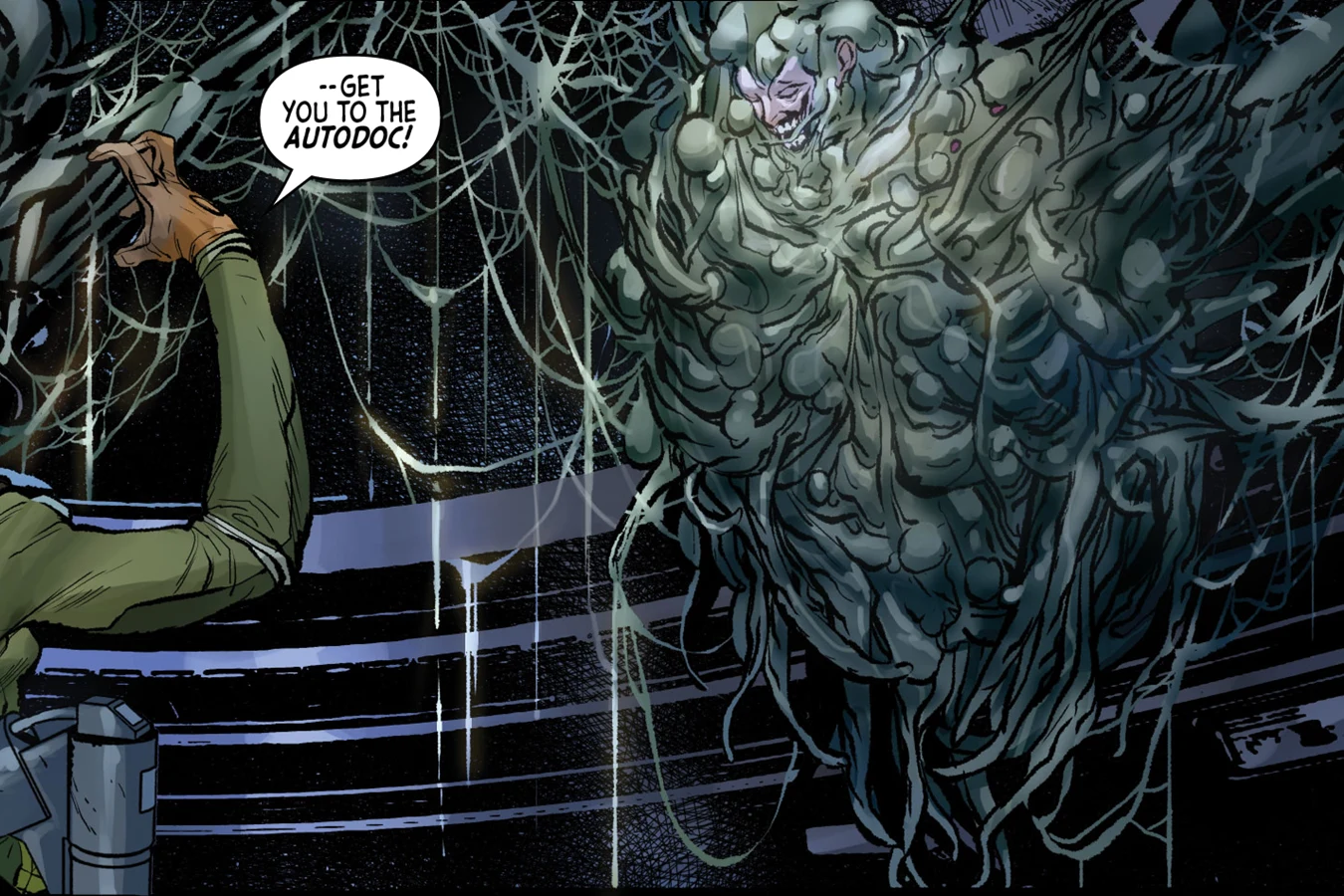
Dark Horse's Alien: The Original Screenplay kept O'Bannon's cocoon climax on the Snark, with First Officer Martine Roby finding Captain Chaz Standard half-alive in resin after the Alien took her. Balbi drew the mass as a greenish, wet, fleshy cocoon, hung on stringy white strands, with Standard's face still clear at the top while the rest of her body was already melting into the organic shell. That look is much more meaty and biological than the brown, leathery resin cocoons of the Alien Director's Cut, where Dallas and Brett were packed into a dry hive corner rather than a glowing green sack. In the comic, Roby still reaches to get Standard to the autodoc before Standard begs for a mercy kill, and Sandy Melkonis later appears cocooned beside her as the ship becomes the Alien's nest.
Conclusion
Eggmorphing is the terrifying and slow process of turning a human victim into an Alien egg, a fate seemingly even worse than being facehugged. Instead of a quick death by chestbursting, the victim would slowly lose their mind and body. It illustrates the unique Xenomorph biology and relentless drive to survive and multiply, even in the absence of their Queen. However, it is not the only alternate means of reproduction available for the Xenomorphs. Praetorians can mutate into Alien Queens with the help of Royal Jelly, and the Predalien can inject embryos through its mouth.
Tag Categories: Xenomorph Behavior | Alien Lore