Aliens vs. Predator (2010): Full Game Overview

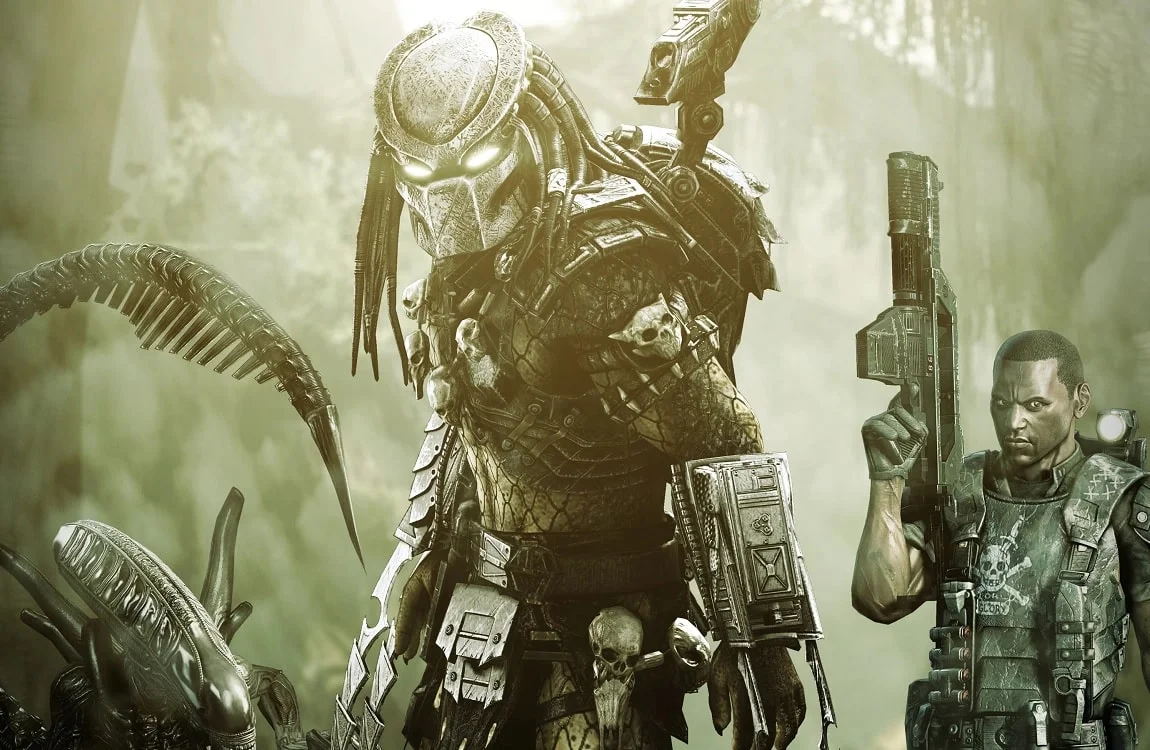
Aliens vs. Predator, often called Aliens vs. Predator 2010 or AvP 2010, is a first-person shooter developed by Rebellion Developments and published by Sega. Released in February 2010, it returned the franchise to the studio behind the classic 1999 PC game and gave players three separate campaigns set on the mining planet BG-386 and the colony of Freya's Prospect. The game follows a Colonial Marine known as Rookie, the unusually intelligent Xenomorph Specimen 6, and the Elite Predator Dark as their stories collide during a Weyland-Yutani outbreak.
Game Overview
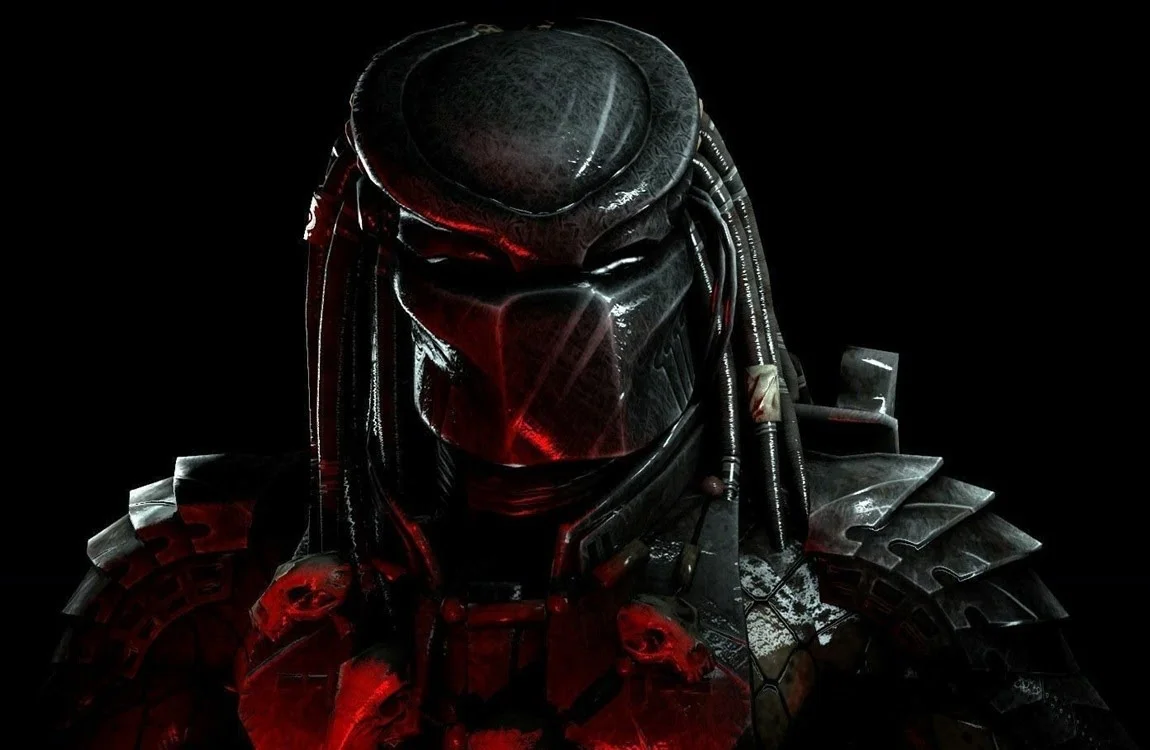
Aliens vs. Predator is built around three short but distinct first-person campaigns, each with its own species, weapons, and movement style. The Marine campaign emphasizes survival horror and squad combat, the Alien campaign focuses on stealth, wall-crawling, and brutal melee kills, and the Predator campaign delivers open jungle hunting with cloaking, trophy collection, and advanced Yautja gear. Although the three stories reuse many of the same locations, the game presents each area from a different perspective and with different objectives.
Visually, the game leaned heavily on the look of the Alien vs. Predator movies, especially Paul W. Anderson's pyramid hunts, while also borrowing atmosphere from Aliens (1986). Rebellion pushed the gore and body horror further than earlier entries in the series, making it one of the bloodiest Alien and Predator games of its generation.
Plot Summary
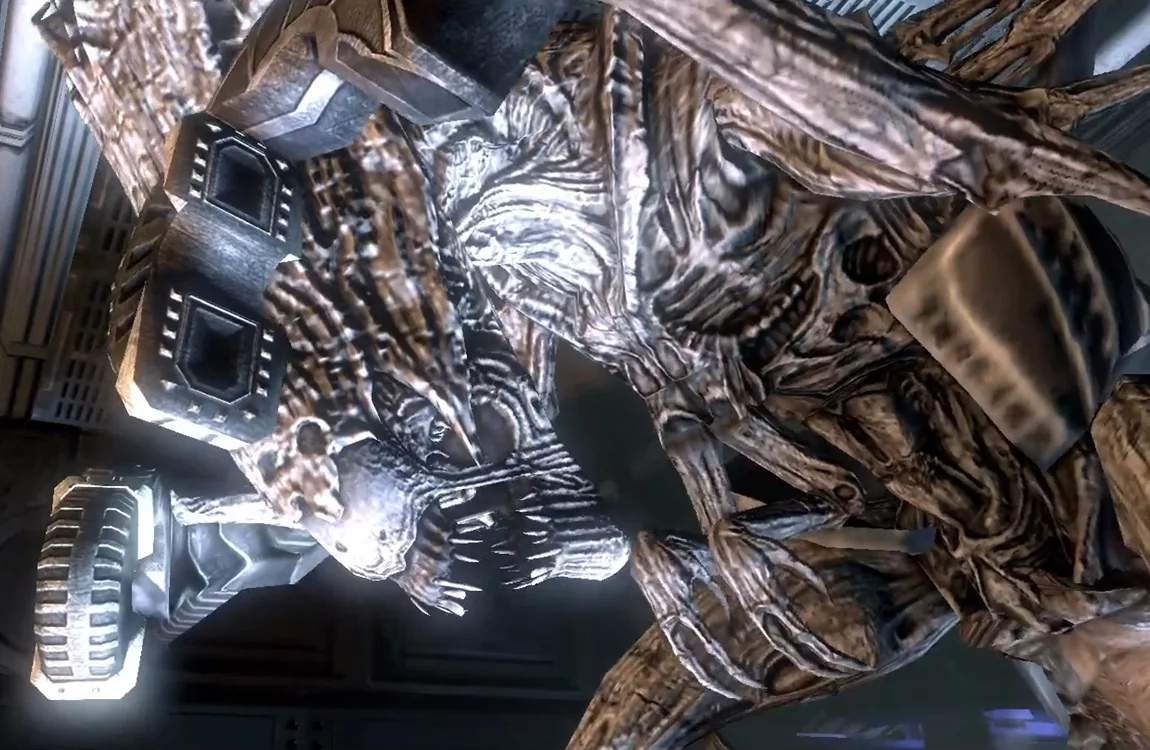
The disaster on BG-386 began inside a Weyland-Yutani research facility built above ancient Yautja ruins. Scientists led by Dr. Groves had captured a massive Matriarch Queen and bred Xenomorphs for study, including the unusually intelligent Specimen 6. When a Young Blood Predator hunting party triggered an outbreak, the facility collapsed into chaos and the infestation spread to Freya's Prospect and the surrounding jungles.
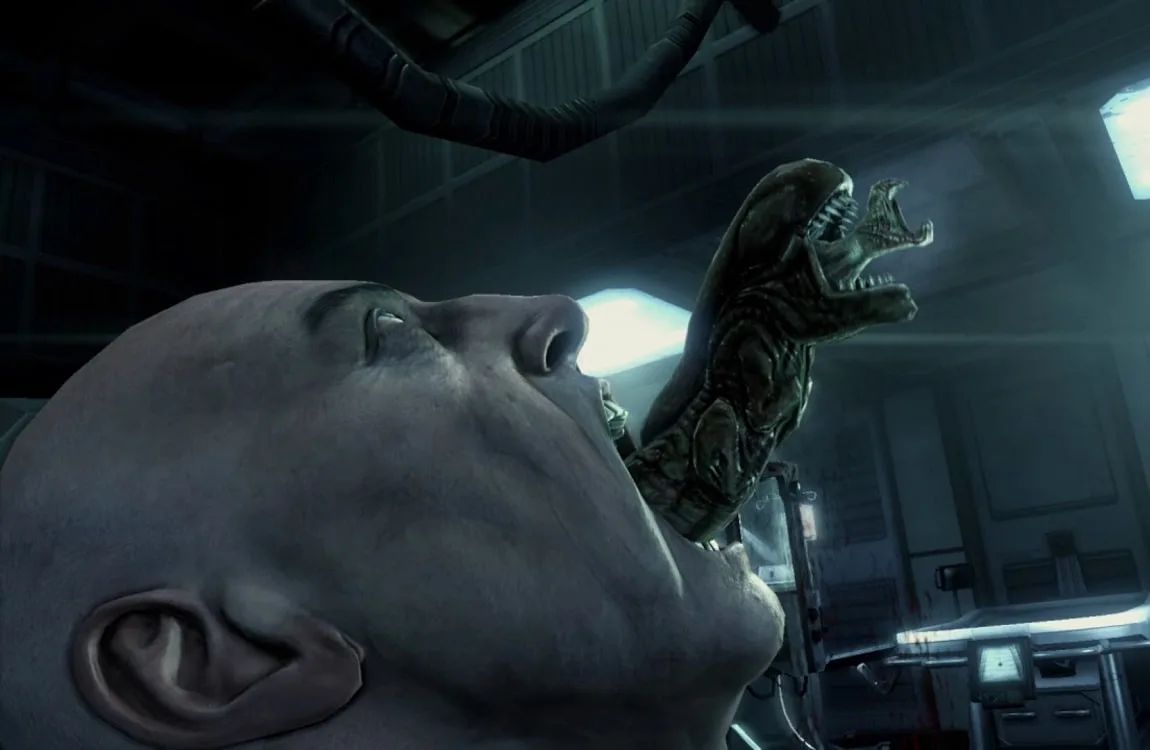
In the Marine campaign, Rookie and the surviving crew of the USS Marlow fought through the ruined colony, refinery, and research labs while trying to escape the planet. Rookie eventually killed Karl Bishop Weyland, the synthetic director behind the operation, only to be knocked unconscious and captured for further study. In the Alien campaign, Specimen 6 escaped captivity, freed the Matriarch, evolved into a Praetorian, and finally molted into a new Xenomorph Queen after defeating a Predator and Colonial Marine force. In the Predator campaign, Dark answered a distress call from lost Young Bloods, recovered the ancient mask of Lord Predator, killed the Predalien known as the Abomination, and left BG-386 with coordinates pointing toward the Xenomorph homeworld.
Key Characters
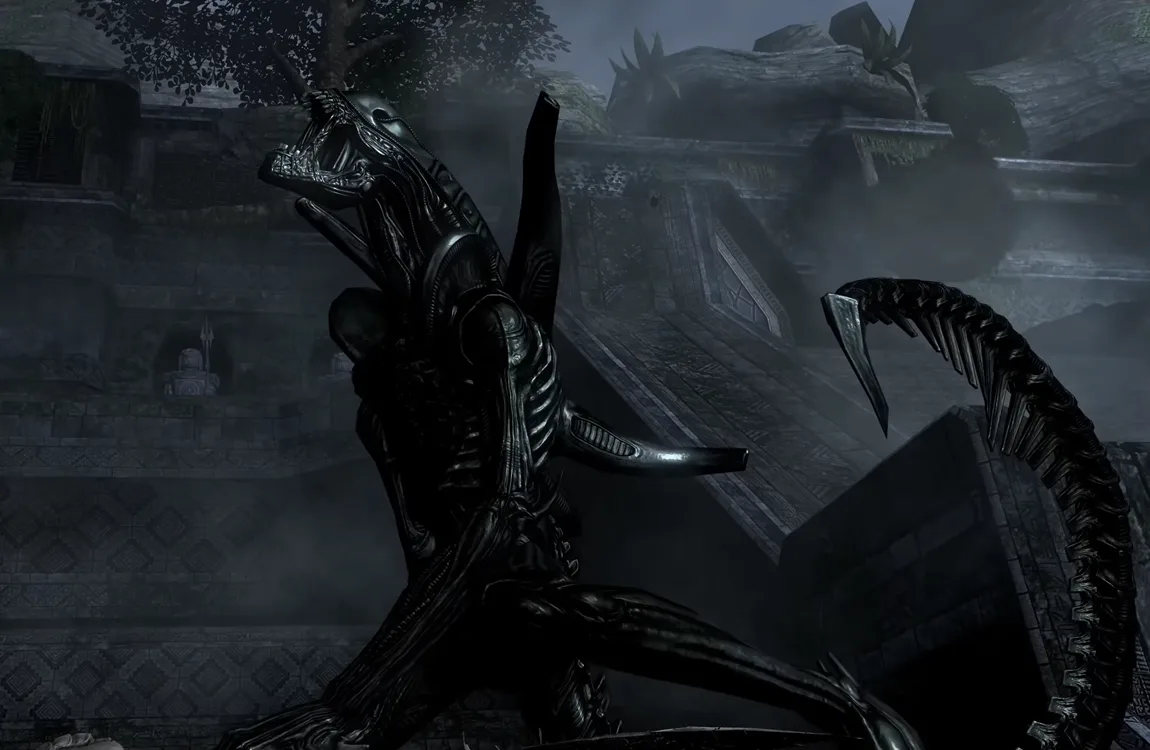
The game's story is carried by its three playable protagonists and the corporate, military, and synthetic figures caught up in the BG-386 outbreak.
- Rookie - The playable Colonial Marine survivor from the USS Marlow who fought through Freya's Prospect and the Weyland-Yutani labs.
- Specimen 6 - The unusually intelligent Xenomorph bred in captivity who became the Alien campaign protagonist and later a Queen.
- Dark - The Elite Clan Predator dispatched to BG-386 after Young Bloods sent a distress signal.
- Karl Bishop Weyland - A Bishop-model synthetic and Weyland-Yutani director who posed as a human descendant of Charles Bishop Weyland.
- Dr. Groves - The lead scientist studying Specimen 6 and the Matriarch before the outbreak.
- Katya - A colonist who helped Rookie survive Freya's Prospect and escape the planet.
- Major Van Zan - The commanding officer of the Colonial Marine detachment aboard the USS Marlow.
- The Matriarch - An ancient Xenomorph Queen held captive beneath the research facility.
- The Abomination - A powerful Predalien responsible for much of the Young Blood slaughter and late-game Predator campaign battles.
- Lord Predator - An ancient Yautja hunter whose tomb and bio-mask became central to Dark's campaign ending.

BG-386 And Freya's Prospect
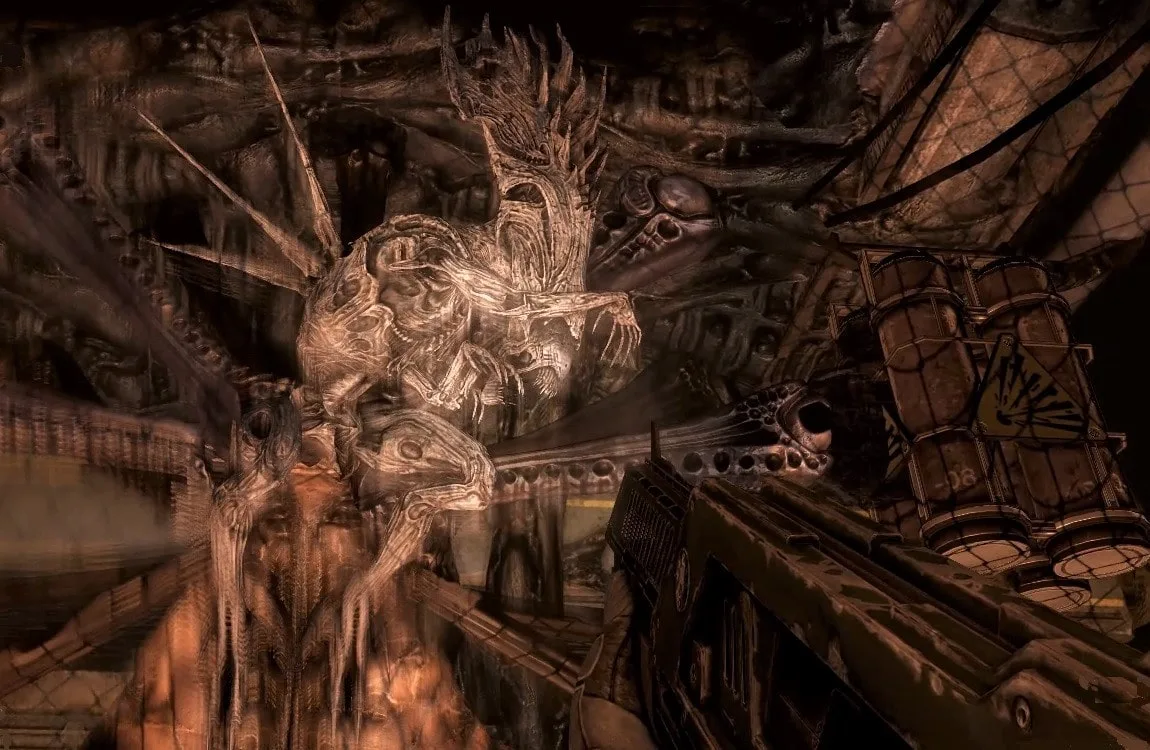
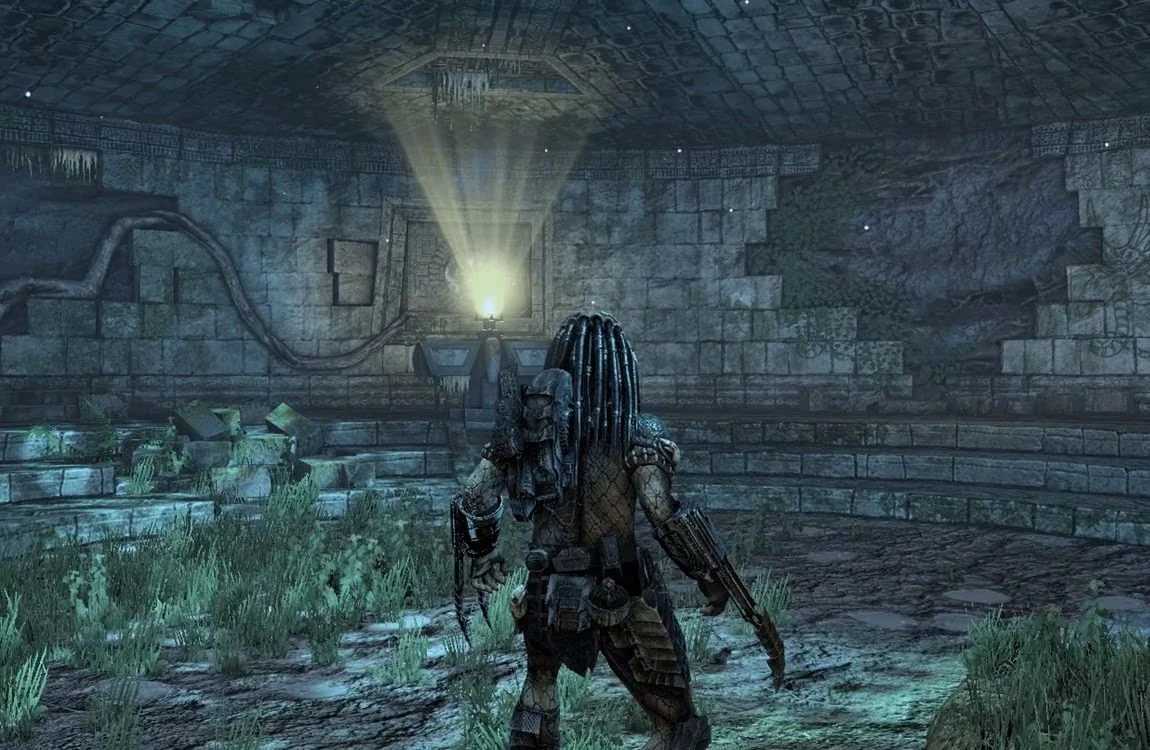
BG-386 was a frontier world valued for its mineral resources and remote location, making it an ideal site for secret Weyland-Yutani experimentation. Freya's Prospect was the main human settlement on the planet, built around mining and refinery operations that were still active when the Xenomorph outbreak began. The research facility sat above buried Predator ruins, pyramids, and trophy chambers tied to earlier hunts on the world.
The Three Campaigns
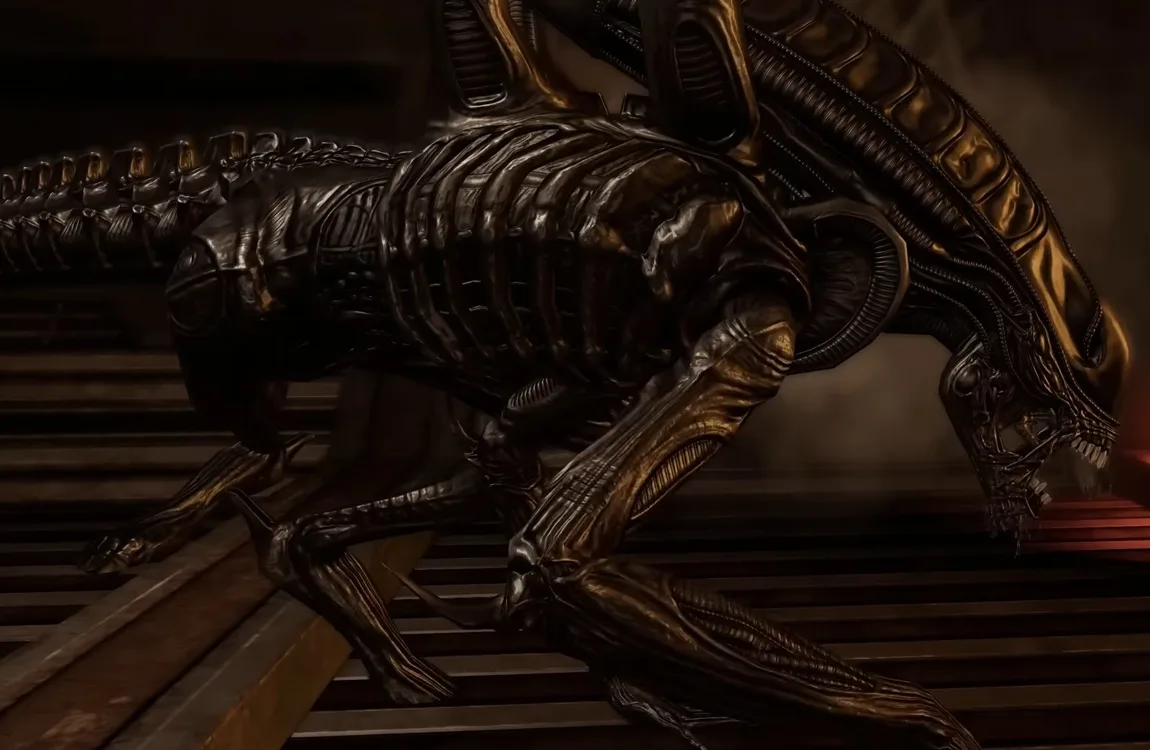
Each campaign offered a different way to experience the same disaster. The Marine story played like a compressed Aliens-style shooter with heavy atmosphere in the early levels, then shifted into larger firefights against Xenomorphs, corporate security, and synthetics. The Alien story turned Specimen 6 into one of the franchise's most memorable playable Xenomorphs, emphasizing stealth kills, vents, and evolution into stronger forms. The Predator story was the most open, with jungle stalking, trophy taking, and set-piece fights against Marines, Xenomorphs, and the Abomination.

The biggest criticism of the structure was length. All three campaigns were relatively short and reused many of the same maps from different angles. Even so, the species-specific gameplay made Aliens vs. Predator feel broader than a standard licensed shooter, and each finale tied directly into wider Alien vs. Predator lore.
Xenomorphs And Enemies
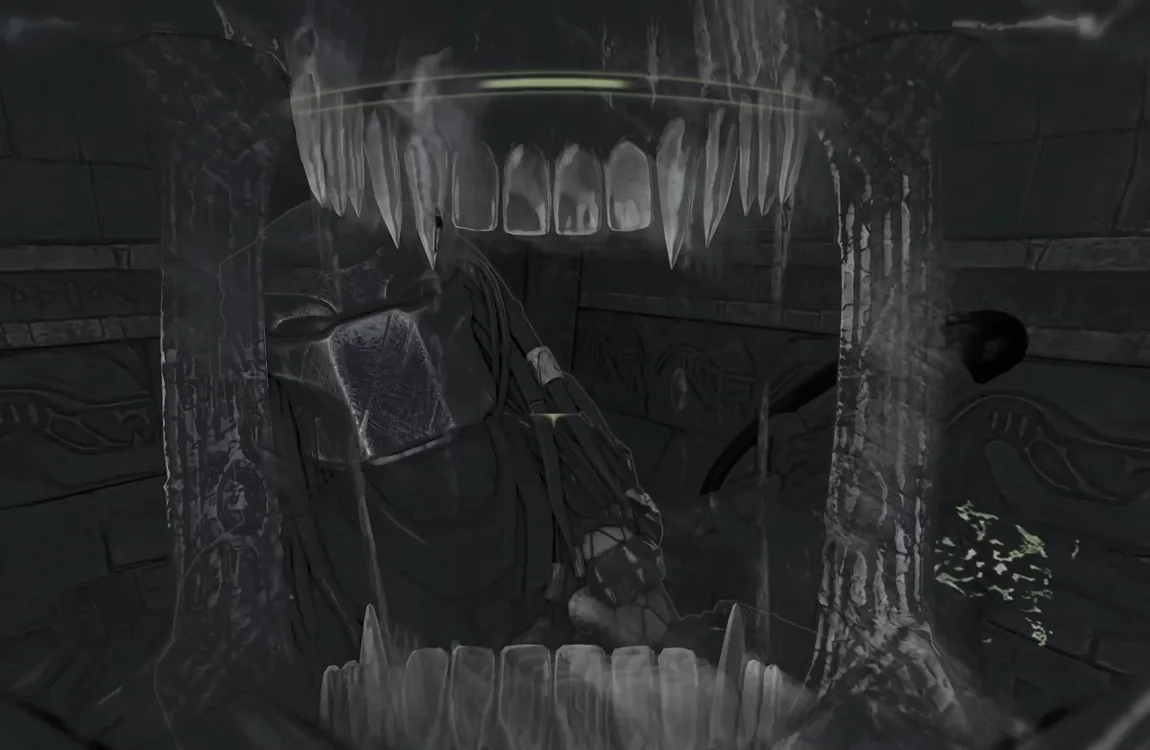
Aliens vs. Predator 2010 introduced or reused several major Xenomorph and enemy types. Specimen 6 began as a Warrior but later became a Praetorian and Queen, making her one of the clearest examples of the full Xenomorph life cycle in game form. The Matriarch served as both a story device and a boss-scale threat, while standard Drones, Warriors, Praetorians, Facehuggers, and Chestbursters filled out the hive forces.
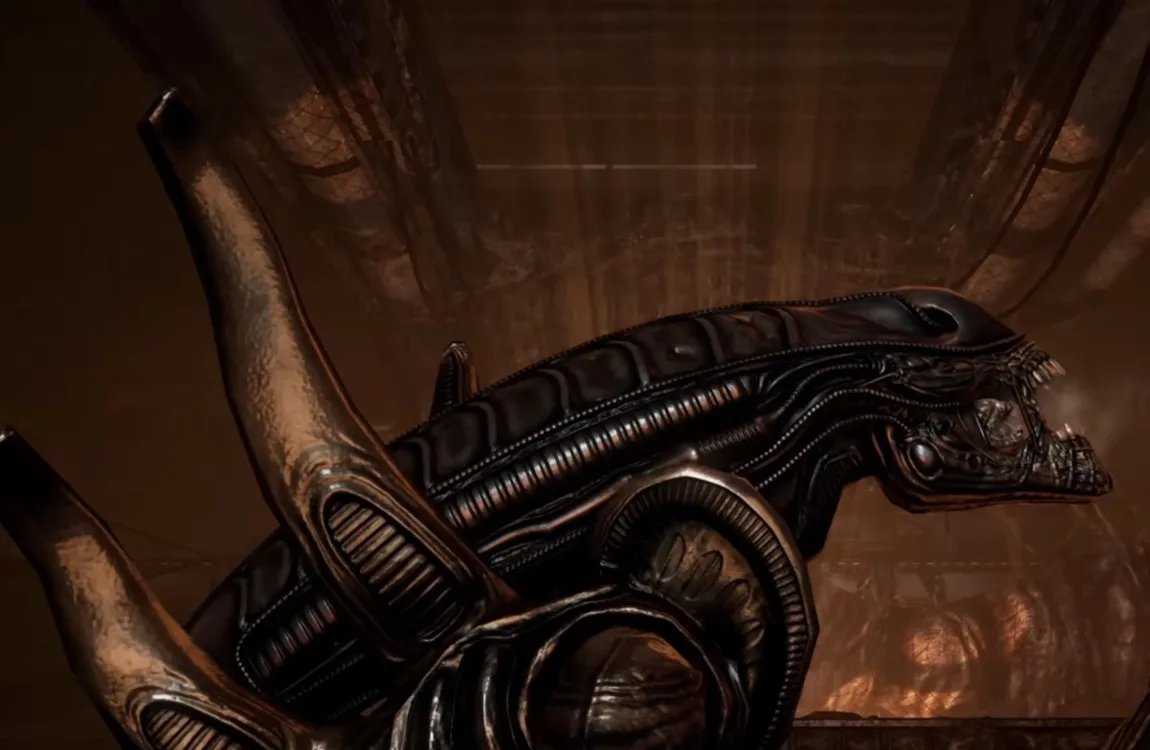
Our gameplay clip below shows one of the game's Praetorian encounters, highlighting how Rebellion used larger Xenomorph enemies as close-range pressure threats during the Marine campaign.
The Abomination was the game's signature Predalien, a massive hybrid that towered over normal Xenomorphs and served as one of Dark's major targets. Human enemies included Colonial Marines, Weyland-Yutani security, and synthetic corporate forces, while Predator ruins and trophy rooms added Yautja history to the environment itself. Specimen 6, the Matriarch, and the Abomination made BG-386 one of the densest Xenomorph settings in the games, with ties to broader lore on Xenomorphs from the games.
Gameplay And Features
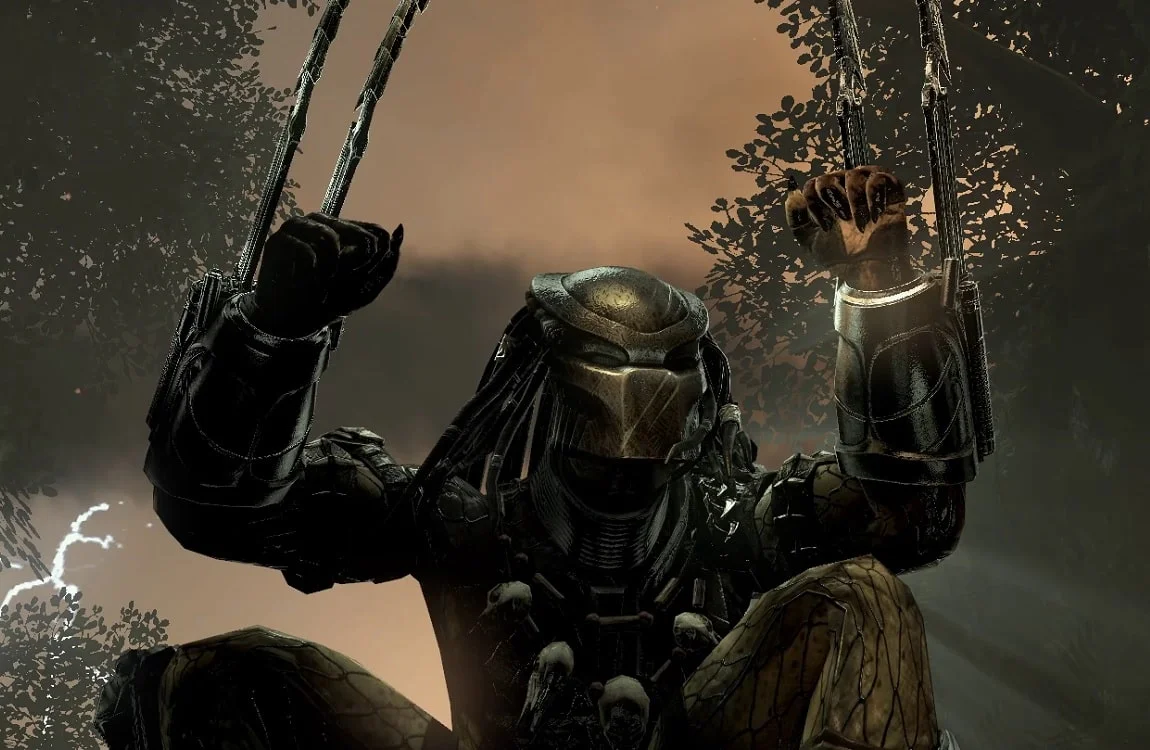
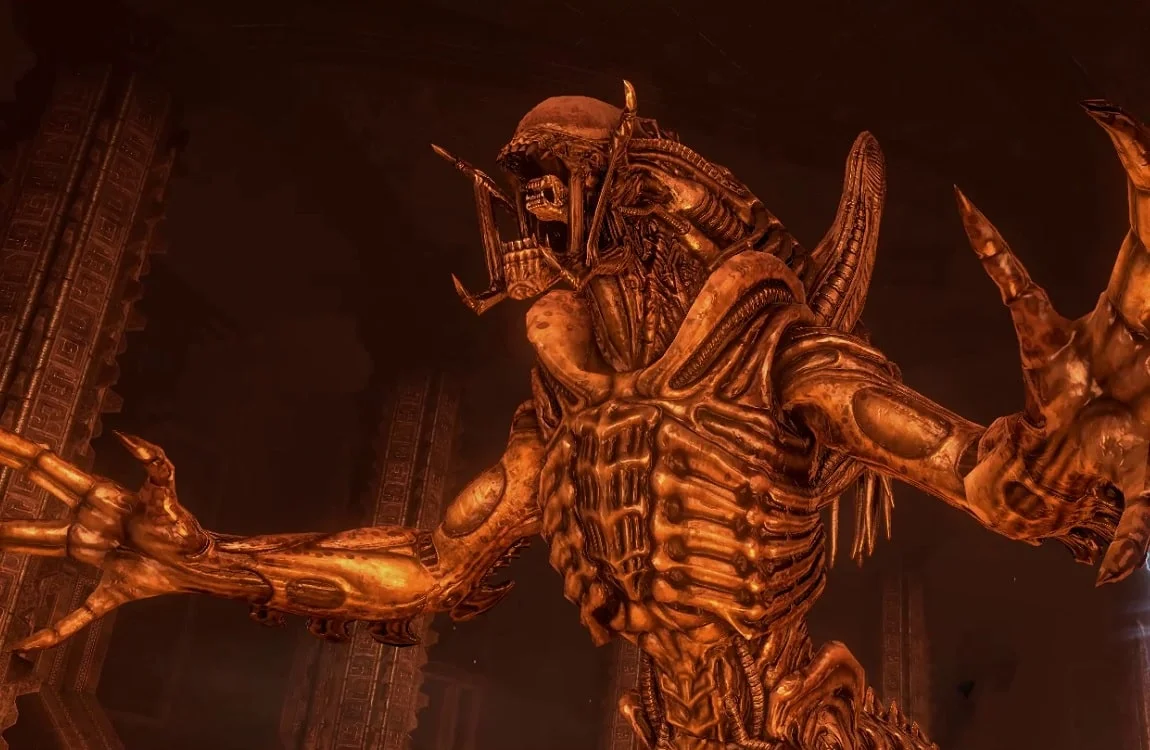
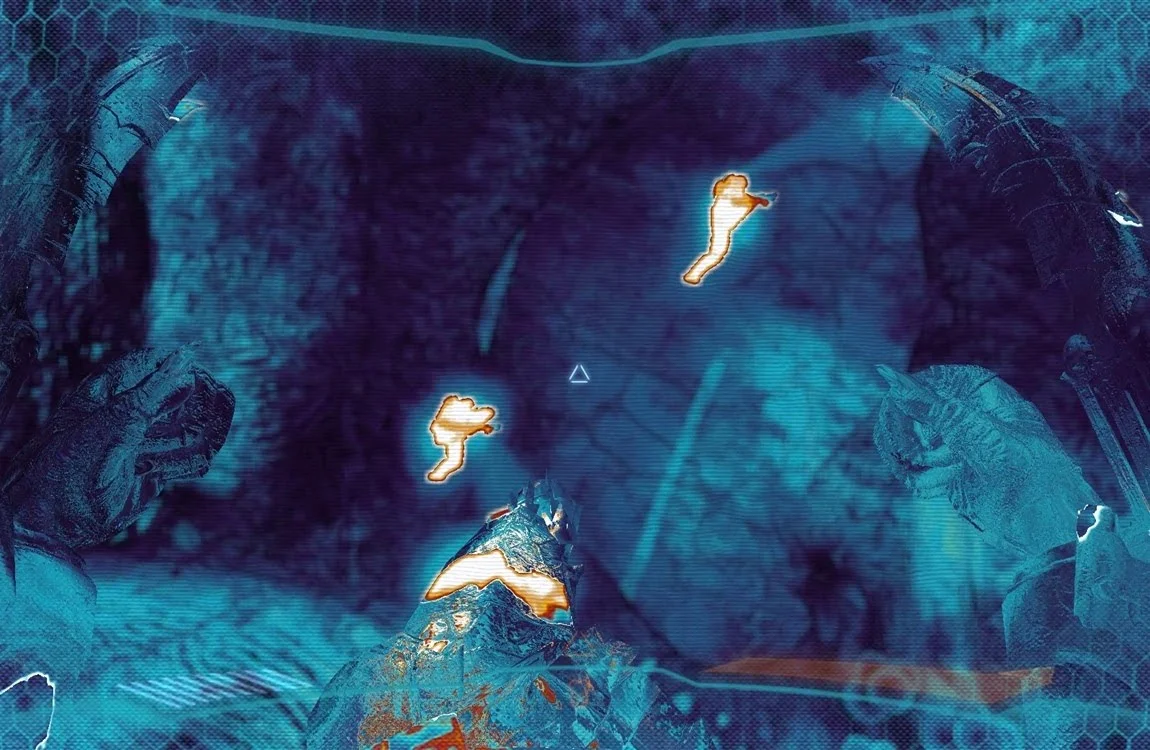
Rebellion built the game on the same general foundation as its 1999 classic, but with modern visuals, physics, and set dressing. Marines used pulse rifles, shotguns, smartguns, motion trackers, and flamethrowers, while Xenomorphs relied on wall-running, tail strikes, headbites, and ambush tactics. Predators used cloaking, wristblades, the plasmacaster, the combi-stick, mines, and trophy collection as part of their campaign loop.
Beyond the campaigns, the game included multiplayer modes and a Survival mode that pitted Marines against escalating Xenomorph waves. Multiplayer never became a long-term community hit, but the mode was praised at launch for giving each species a distinct role. Survival offered a useful bonus for players who finished the campaigns and wanted more action on BG-386 maps.
Alien Timeline Placement
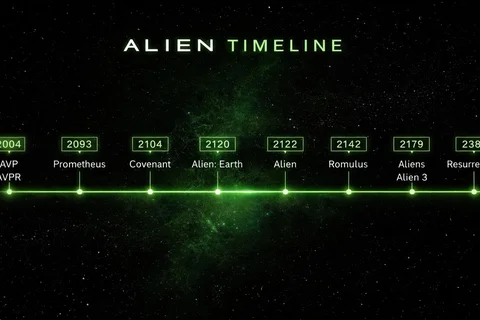
Aliens vs. Predator 2010 is generally treated as expanded-universe material rather than a direct continuation of the core film timeline. It takes place long after the events of the Alien movies, in an era when Weyland-Yutani openly pursues Xenomorph research on remote worlds. The presence of Karl Bishop Weyland, Colonial Marine task forces, and ancient Predator ruins places it firmly in the same lore family as the AvP comics, novels, and crossover films.
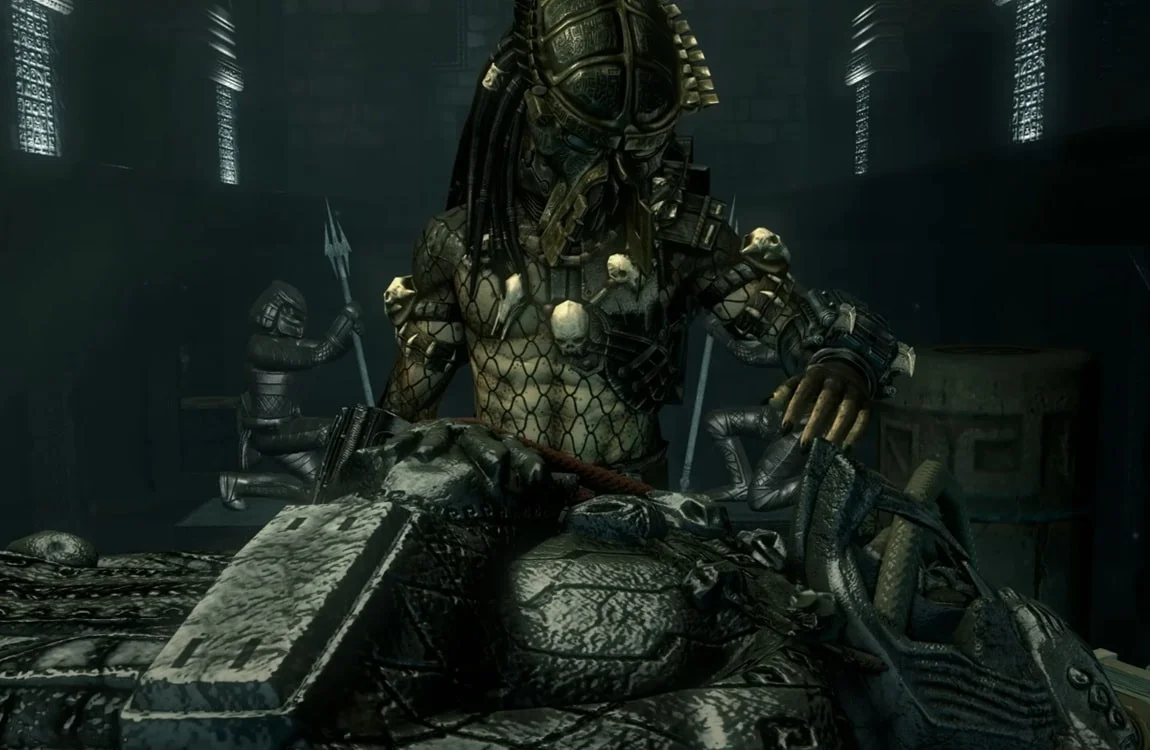
The Predator campaign ending matters for expanded lore because Lord Predator's bio-mask reveals a route to the Xenomorph homeworld. That tease linked the game directly to discussions of Xenomorph Prime and a possible sequel that never materialized. Specimen 6 becoming a Queen also made the Alien campaign one of the biggest endings in the franchise's game history.
Development
Rebellion Developments returned to the series more than a decade after its acclaimed 1999 Aliens vs. Predator PC game. Monolith's Aliens vs. Predator 2 had taken the franchise in a different direction in 2001, so this project was effectively Rebellion's spiritual follow-up rather than a direct continuation of AvP 2. The studio focused on three playable species, heavy movie references, and highly violent finishers that pushed the M-rated tone as far as the license allowed.
Lance Henriksen returned to the franchise as Karl Bishop Weyland, continuing the long tradition of Bishop-family synthetics and Weyland-linked villains across Alien media. The developers also leaned on Predator pyramid imagery, jungle hunt aesthetics, and Aliens-style Colonial Marine combat to appeal to fans of both franchises. The result was a game that felt closer to the crossover movies and classic Rebellion formula than to Monolith's more story-heavy AvP 2.
Release And Reception
Aliens vs. Predator launched on February 16, 2010 for PC, PlayStation 3, and Xbox 360. It received a mixed but generally favorable response, with praise for atmosphere, gore, sound design, and the novelty of three campaigns, and criticism for short length, reused maps, and uneven difficulty. Many reviewers still considered it a solid entry in the franchise and a worthwhile successor to the 1999 classic.
Aliens vs. Predator still ranks high on our best Alien games and best Predator games lists. It sits below genre landmarks like Alien: Isolation and Predator: Concrete Jungle for some fans, but above many weaker licensed shooters such as Aliens: Colonial Marines. Its reputation has held up better as a cult favorite than as a mainstream blockbuster hit.
Multiplayer And DLC
Multiplayer supported competitive matches between Marines, Xenomorphs, and Predators, along with the standalone Survival mode for Marine players. The species asymmetry was one of the game's strongest ideas, but the online population dropped quickly after launch. Post-release DLC focused mainly on additional multiplayer maps rather than new campaign content.
Because the campaign remained the main reason to play, the DLC never changed the game's long-term reputation as much as the three story modes did. Survival mode and local multiplayer gave the package some extra value, but AvP 2010 is still remembered primarily for Specimen 6, Dark, Rookie, and the BG-386 outbreak.
Legacy

Rebellion's 2010 game was the studio's return to the three-campaign AvP shooter after the 1999 PC game. Lance Henriksen voiced Karl Bishop Weyland, a Bishop-model synthetic posing as a descendant of Charles Bishop Weyland from Alien vs. Predator. The Specimen 6 campaign is the one people still talk about: she ended as a Queen on BG-386. Dark left with unused coordinates to Xenomorph Prime. The three campaigns are short and reuse maps. DLC added multiplayer maps, not a new campaign, and Rebellion did not make that sequel.
Status Of An Alien Vs. Predator Sequel
The possibility of a sequel has remained open mostly through fan demand rather than official news. Rebellion, Sega, and 20th Century Games have not announced a new Aliens vs. Predator game, but one specific rumor did surface in January 2021 when industry insider Daniel Richtman reported that an Alien vs. Predator title was in development. He did not provide further details such as the studio involved or a planned release window, and no reliable follow-up ever confirmed the report, so it should be treated as speculation rather than evidence of an active project. Even so, the continued release of separate Alien and Predator games, the Disney/Fox rights consolidation, and renewed film and TV activity around both franchises keep the idea plausible. For the latest status and rumors, see the full overview of the new AvP game possibility.
External Sources
Tag Categories: Alien Games | Alien Vs Predator Games | Predator Games | Alien Merchandise