Predator: The Pride at Nghasa: Plot, Characters & Lore

Predator: The Pride at Nghasa is a three-part Predator comic written by Chuck Dixon and drawn by Enrique Alcatena, serialized by Dark Horse Comics in Dark Horse Comics #10 to #12 in 1993. Narrated by the game ranger Johnny Copeland, it was set in 1936 Africa, where workers building a new railway spur for the Crown Victoria were being slaughtered by something the locals called a forest devil. Copeland, his friend Reggie and his assistant Wanji escorted a railway hunter to find the killer, only to come face to face with a Predator that had arrived with the hunting star.
Plot Summary
The Hunting Star
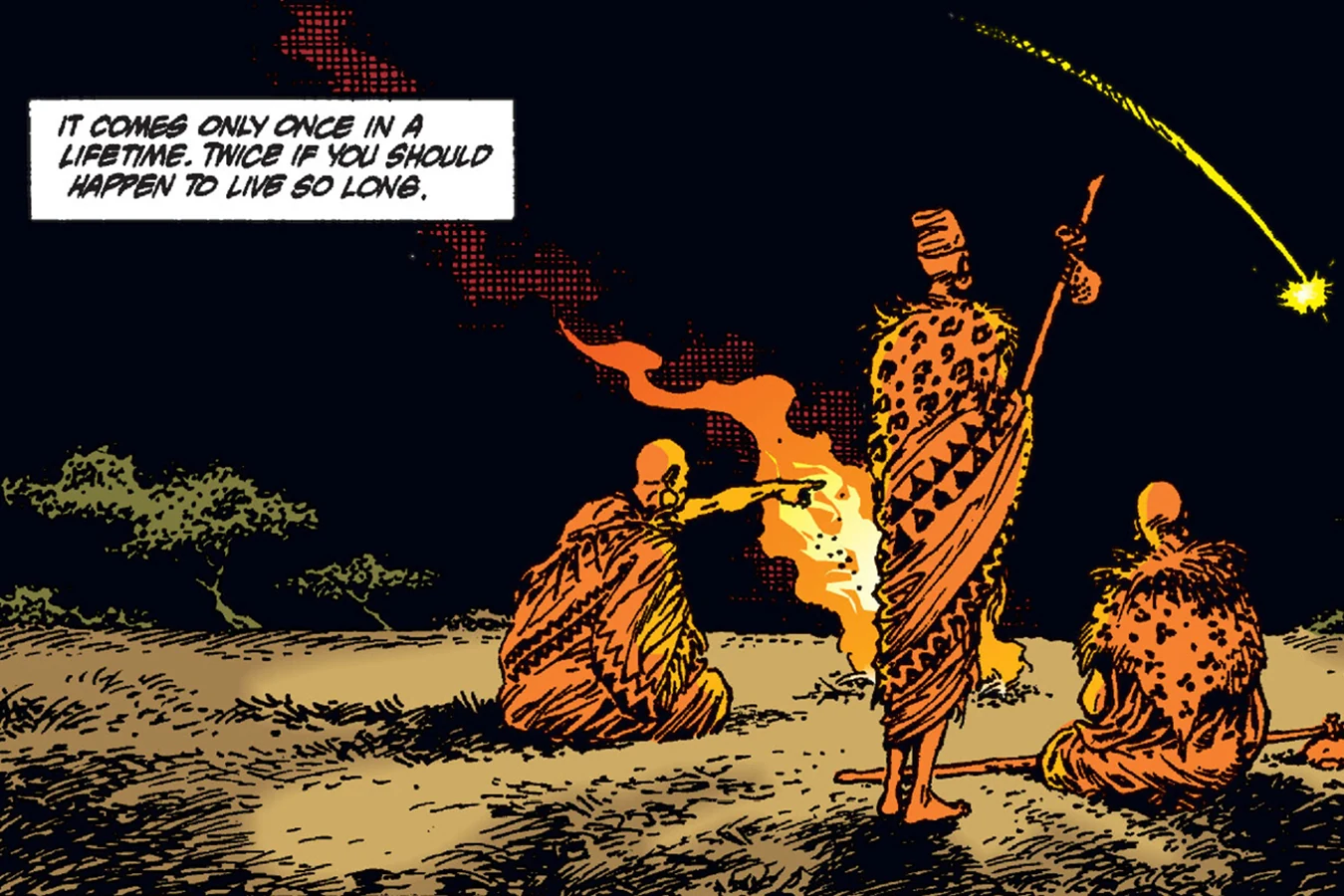
The story opened with a caption dated August 16, 1936, as the narrator explained that it all began with some old wandering mystics who read the stars above the Serengeti. Sitting around a fire at night, the robed men told of a heavenly body they called the hunting star, which had no fixed position in the sky and could not be found in any almanac. It came only once in a lifetime, twice for anyone who lived long enough, and only in seasons of record heat, when the veldt burned and the stink of blood was everywhere. As they spoke, a bright streak of light fell across the night sky above them.
Killings On The Victoria Spur
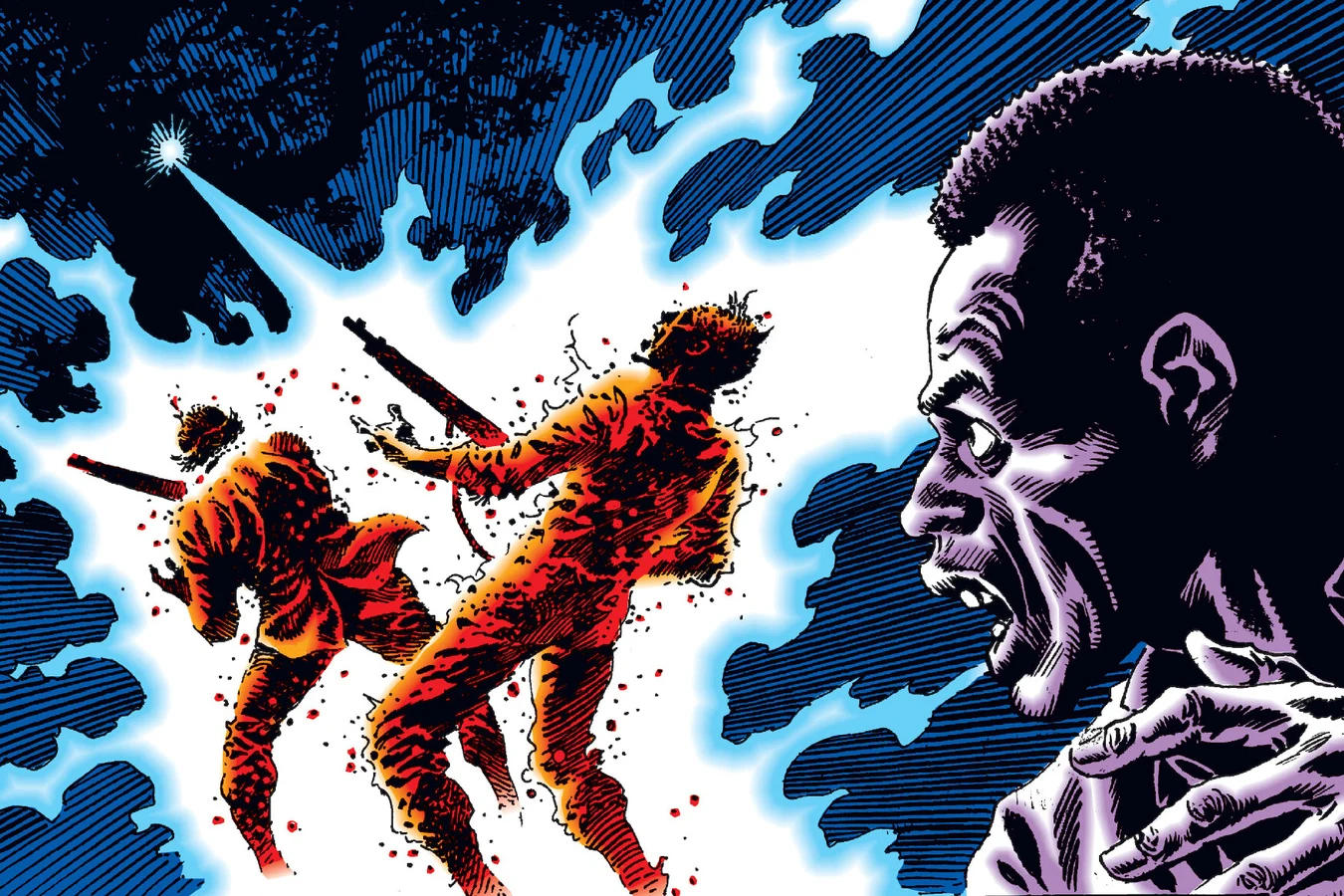
The narrator recalled that it had been as hot as the skillets of hell that summer, a terrible time to be running a new spur for the Crown Victoria railway. One night, as workers played cards beside a locomotive in their camp, a man ran screaming through the tents after natives reported seeing something in the dark. The foreman, Boss George, went to look and was soon reported killed, with a frightened worker claiming a big ghost had come out of a tree. Searchers found a body burning on the ground, and in the confusion a bolt of light from the trees blew two armed workers apart.
Before long, word of the killings along the Victoria spur had spread. A shimmering, nearly invisible shape was shown standing among the trees, with only its red eyes clearly visible, while survivors fled through the undergrowth and smoke rose from the bodies it had left behind. The railway workers had no idea what was hunting them, and the men in charge preferred to blame a lion. Along the grade to Kildeer Station, the camp was left with nothing but rumor, fear and a growing number of dead men.
Kildeer Station
The narrator was John Copeland, known as Johnny, a game ranger at Kildeer Station, which he described as nothing too grand, just an old Dutch farm by a wadi. On the porch, his friend Reggie, a red-haired man with an eyepatch, was retelling for the umpteenth time how he had stood his ground against a rogue elephant and dropped it with a shot through the brain. A runner then arrived with a message from the rail office in Nairobi, reporting that several railway employees had been killed by a lion near the Nghasa basin. Johnny remarked that there was no such thing as one lion.
Johnny's assistant Wanji translated what the runner had told him. According to the messenger, no simba had killed the men at all, but a ghost, a forest devil, which he called the Dudu ya Porini. Reggie was eager to go hunting, but Johnny explained that the Crown Victoria had already hired its own man and wanted them only to escort him to Nghasa. When Reggie asked who it was, Johnny named Sir James Neville Ramsay, and Reggie groaned that it was the same man he could not stand. Johnny admitted he did not like the arrangement either.
Sir James Neville Ramsay
Sir James arrived that afternoon by aeroplane, flying in on a red biplane over a stampeding herd of zebra. Johnny noted that he was no more pleased to see him than Reggie was. Johnny introduced himself, Reginald Barrows and Wanji, and Sir James immediately told Wanji to carry his bags to the car. Johnny corrected him, saying that Wanji was not a bearer but his assistant, and that they would hire men from the local village in the morning. Until then, they would carry their own luggage, a reply that Sir James accepted without arguing.
Sir James explained that he held stock in the railway line and that the Crown Victoria had asked him to tag along to look after his investments. He showed no interest in the native accounts of the killings, dismissing the idea of a ghost and calling the locals superstitious. Riding in an open car with a band of leopard skin around his hat, he treated the expedition as a weekend hunt for a pride of man-eating lions. He expected to have the animals shot and to be home before long, giving little thought to the warnings that Wanji had passed on from the runner.
Things Without A Name
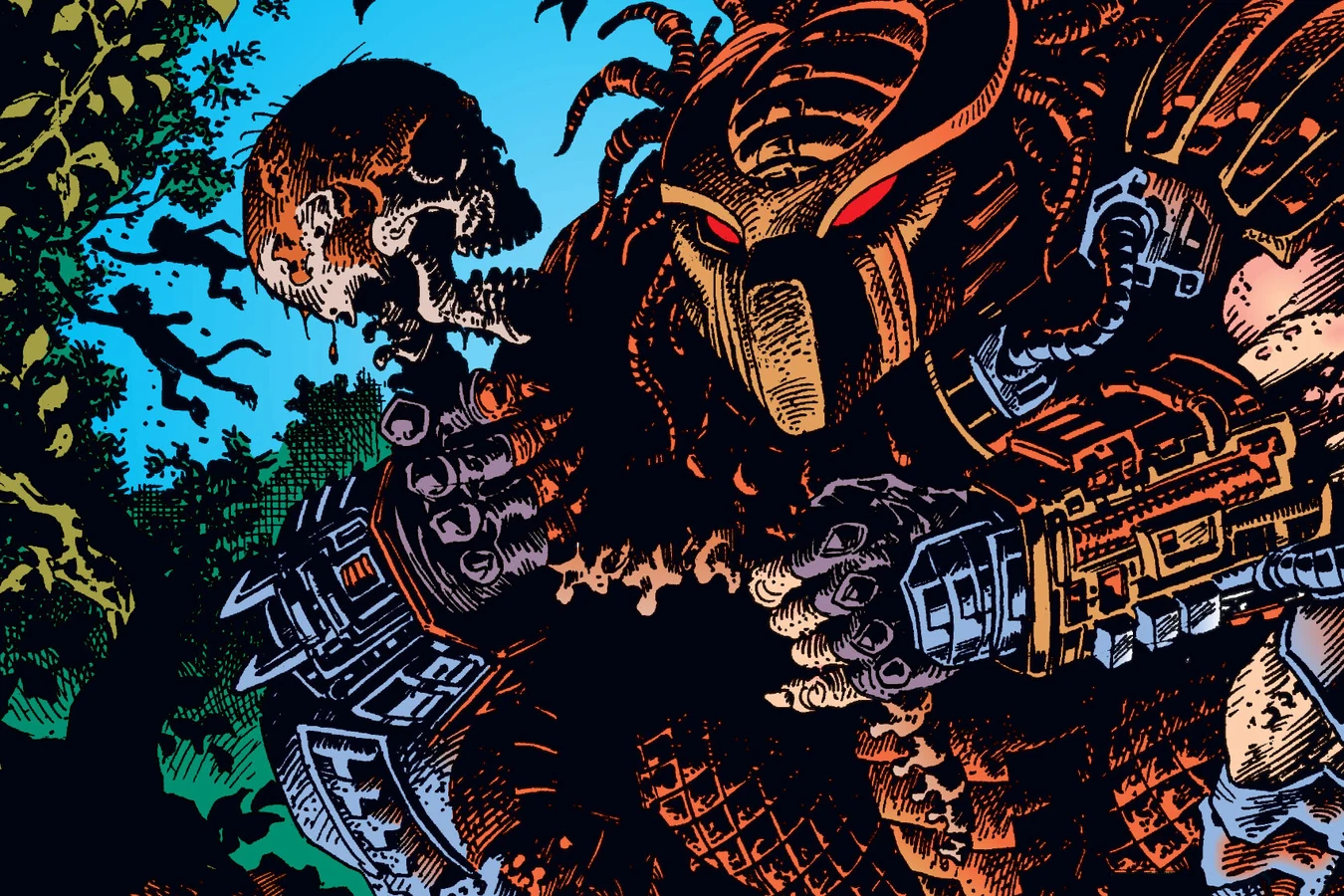
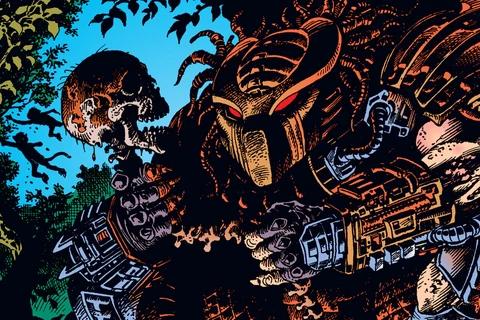
Johnny's narration admitted that he had been too long in Africa to brush off local superstitions so quickly. There was always some truth to their beliefs, he reflected, and to have an unreceptive nature in Africa was to be blind. As a pair of monkeys watched from the branches under a full moon, the page cut to the creature itself. A huge masked hunter crouched among the trees, holding up a bloody human skull in one hand, with bones and skulls scattered at its feet. Johnny closed the thought by saying that there were things in those wilds that white men had no name for.
The Empty Village
On August 20, 1936, the party assembled a team of bearers at the village near Kildeer and set out toward the Nghasa basin. Sir James led the hunt and decided they should move along the Nghasa river toward the rail construction, believing the lions would shelter among the trees on either side of the water. They first reached a village that Johnny and Reggie had passed through only the week before, but it now looked deserted, its frightened women and children hiding inside the huts. Sir James wondered aloud whether something had scared the men away.
An old man told them through Wanji that a forest devil had lured the men of the village into the bush and killed them, not for food but only to kill. He said it was the hunting star, the star that came from the sky to hunt men. One of the hunters found a scorched crater and pointed out that no lion had made such a blast hole, but Sir James suggested it was a bolt of lightning and joked that it was the old man's hunting star. Wanji then reported that a young girl from the village had seen the forest devil and could lead them to it.
Slaughter In The Trees
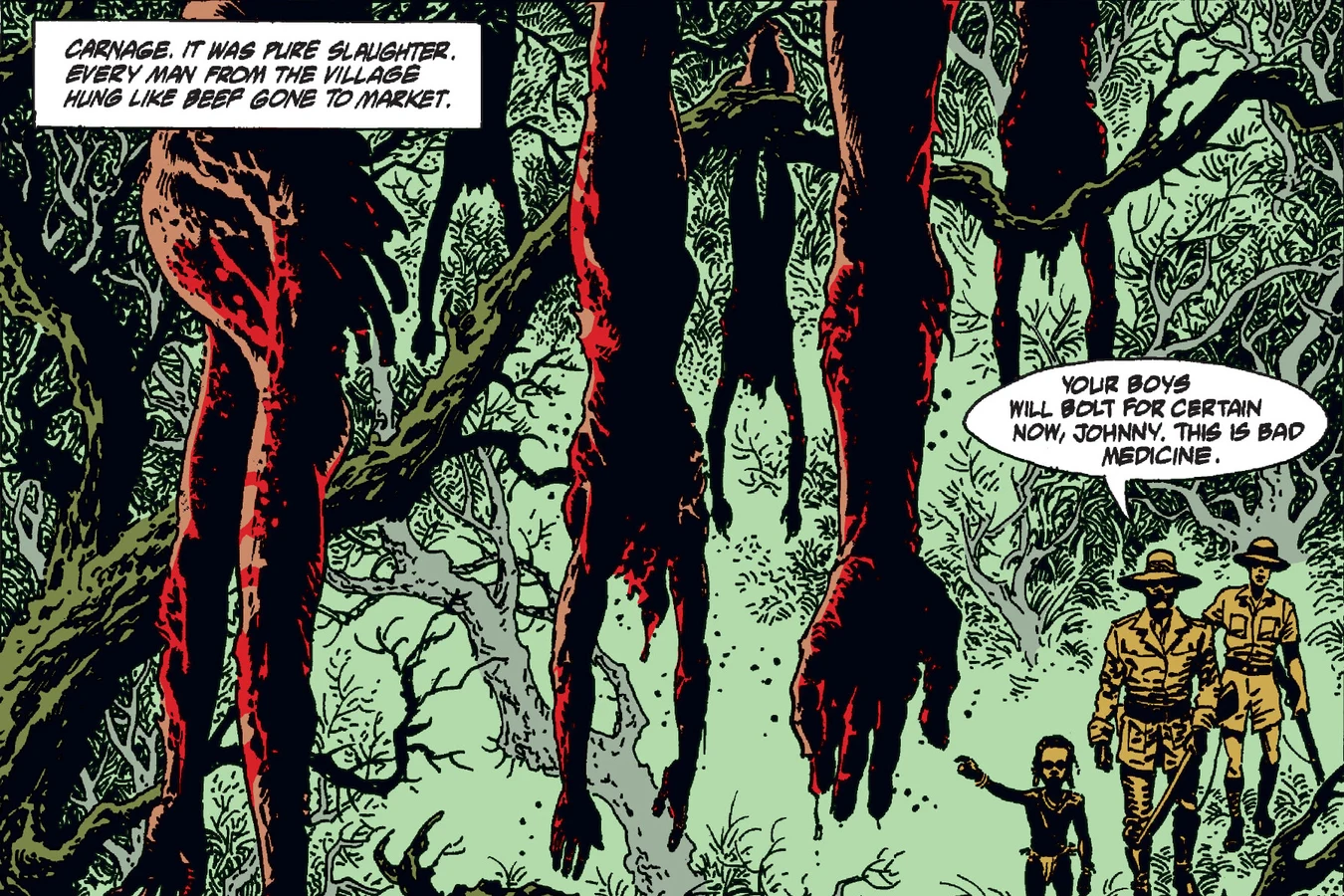
The girl led the hunters into the bush, but Sir James complained that they had found no lion spoor and called the whole business preposterous. He added that all the talk of forest devils and killing stars would put the fear into the bearers, but Johnny insisted they were stout fellows who would hold. Then one of the men noticed a reek that was not lion urine but something else, and they soon found what the girl had seen. Every man from the village was hanging from the trees like beef gone to market, their bodies stripped and bloody, and Reggie warned that the bearers would surely bolt after seeing such bad medicine.
Sir James still refused to accept that anything unusual was at work. He told Johnny that no lion or devil had done this, and insisted that he had a revolt on his hands, with locals butchering their own people and blaming the sahibs so they could stop the railway and the civilization it stood for. Johnny argued that something was going on that they did not understand, but Sir James cut him off, telling him not to contradict him. As the men argued, a red targeting triangle settled on Sir James's chest, marking him as the unseen hunter's next target.
The Ambush
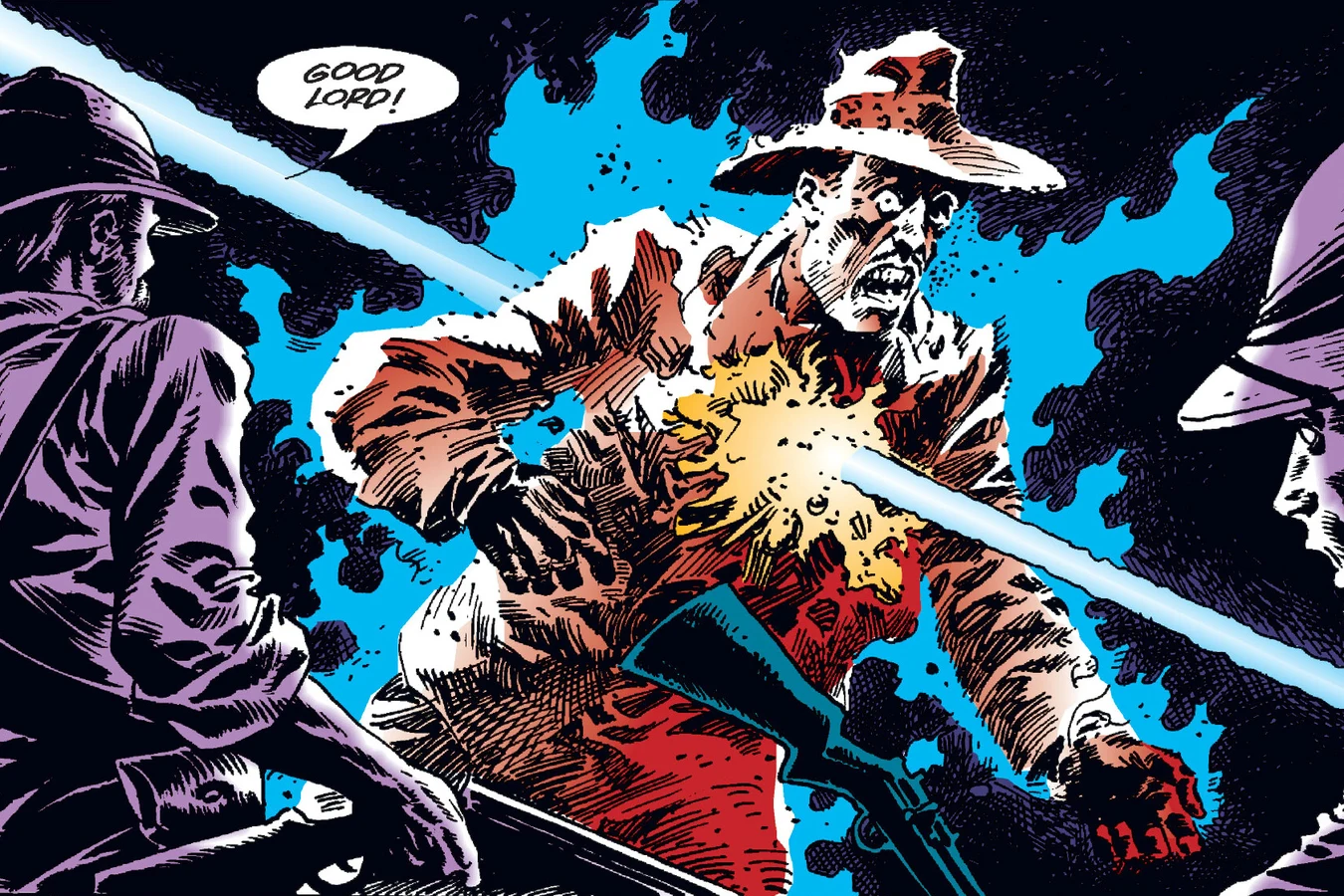
A beam of light struck Sir James in the chest, and he only had time to cry out before falling. Johnny shouted that they were being fired upon and ordered the men to lay down rounds into the treeline, while one of the party cried out that Sir James had been cut in two. The bearers fired wildly at a red-eyed shape among the trees as more blasts tore through their ranks. Johnny noted that in sight of such horror, even the stoutest fellow would give in to panic, and the men around him began to break.
The bearers fired their weapons without aim, and their wild shots struck around the hunters. Reggie was hit and went down, and the bearers then ran off as one man to spread the story of the Dudu ya Porini, which some of them also called Shaitan. Kneeling beside Reggie, Johnny called for Wanji to help him, saying that Reggie was dying. Only then did he notice the glassy stare in Wanji's eyes and a crimson stain spreading across the front of his shirt. Wanji fell in the confusion, and Johnny later counted him among the dead.
Face To Face With The Forest Devil
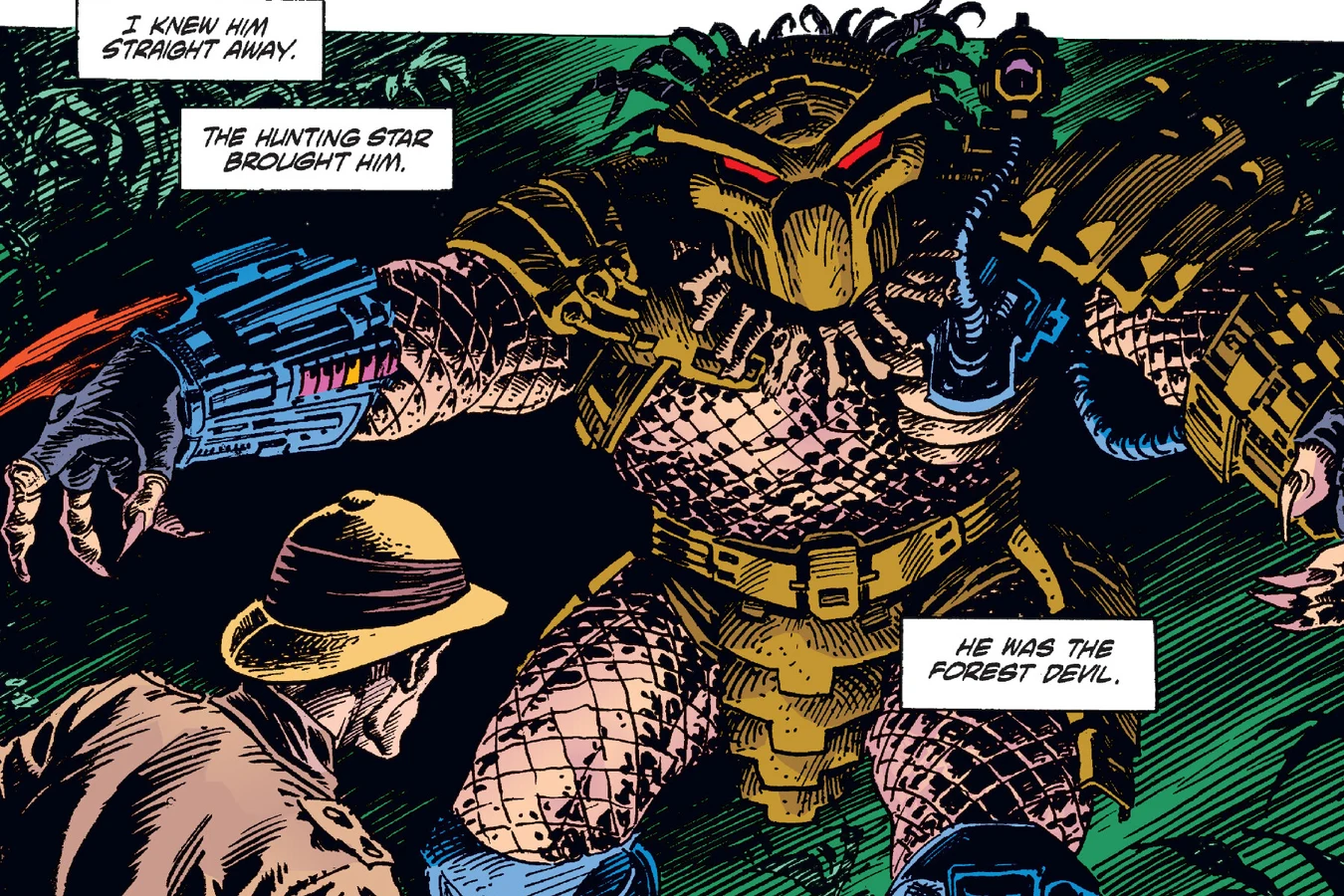
A stink of offal, blood and urine hit Johnny as a massive figure stepped over the bodies, its blades dripping with blood. He went cold as ice in the African heat when the Predator appeared before him in full armor, with a shoulder cannon and bladed gauntlets. Johnny said he knew it straight away, the hunting star had brought it, and it was the forest devil. He stood eye to eye with the creature and fired his pistol at it while the girl from the village crouched nearby, then thought of Sir James, Reggie, Wanji and the bearers, all dead.
Johnny expected to be the last to die. Instead, the hunter loomed over the girl while Johnny broke and ran into the bush. He reflected that his Webley revolver might have done for the creature, but he knew better than that. It did not follow him, and not because he had wounded it, since it could have killed him at any moment. He believed that the forest devil had simply let him go. Johnny ran until he reached the river and threw himself into the water, hoping to put distance between himself and the hunter.
Crocodile Country
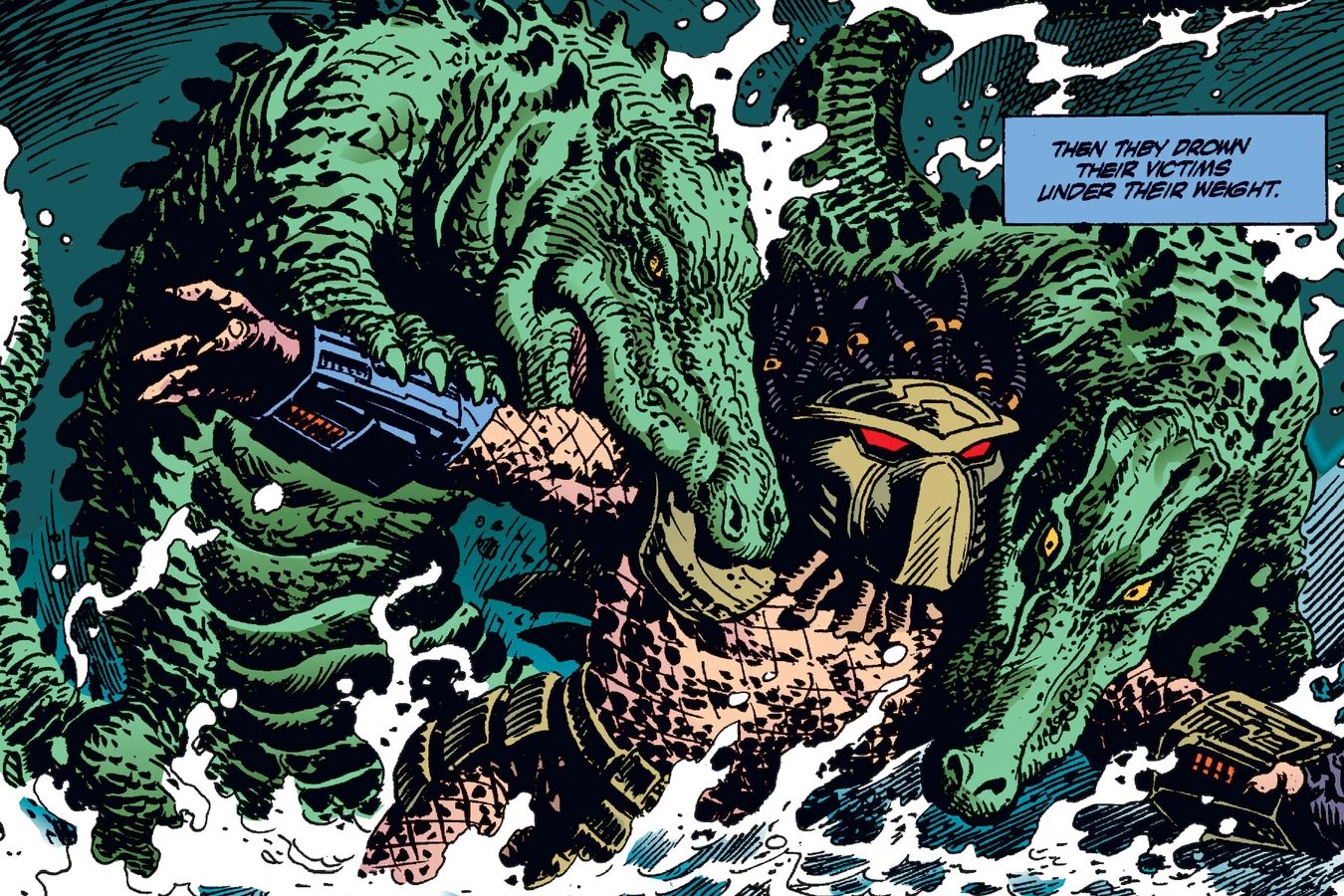
Johnny knew this was crocodile country, where crocodiles were the real killers in the bush, but he would rather take his chances in the water than have the forest devil at his back. As he struggled through the shallows, the Predator followed him into the river. The narration explained that crocodiles caught most of their prey along the banks and then drowned their victims under their weight. Two of them seized the hunter, one clamping onto its arm, and dragged the Predator under the churning water in a spray of foam and blood.
Johnny assumed that, god or devil, the creature would fill the belly of a crocodile, but it was made of sterner stuff. An explosion erupted from the river in a burst of yellow fire, and the Predator rose from the water covered in glowing green blood. It was a sorrier sight than before it went in, with its left arm gone below the shoulder and only a bleeding stump remaining. Mad with its wounds, it vented its rage on the jungle around it, firing blasts into the trees while Johnny ran.
Hyenas In The Night
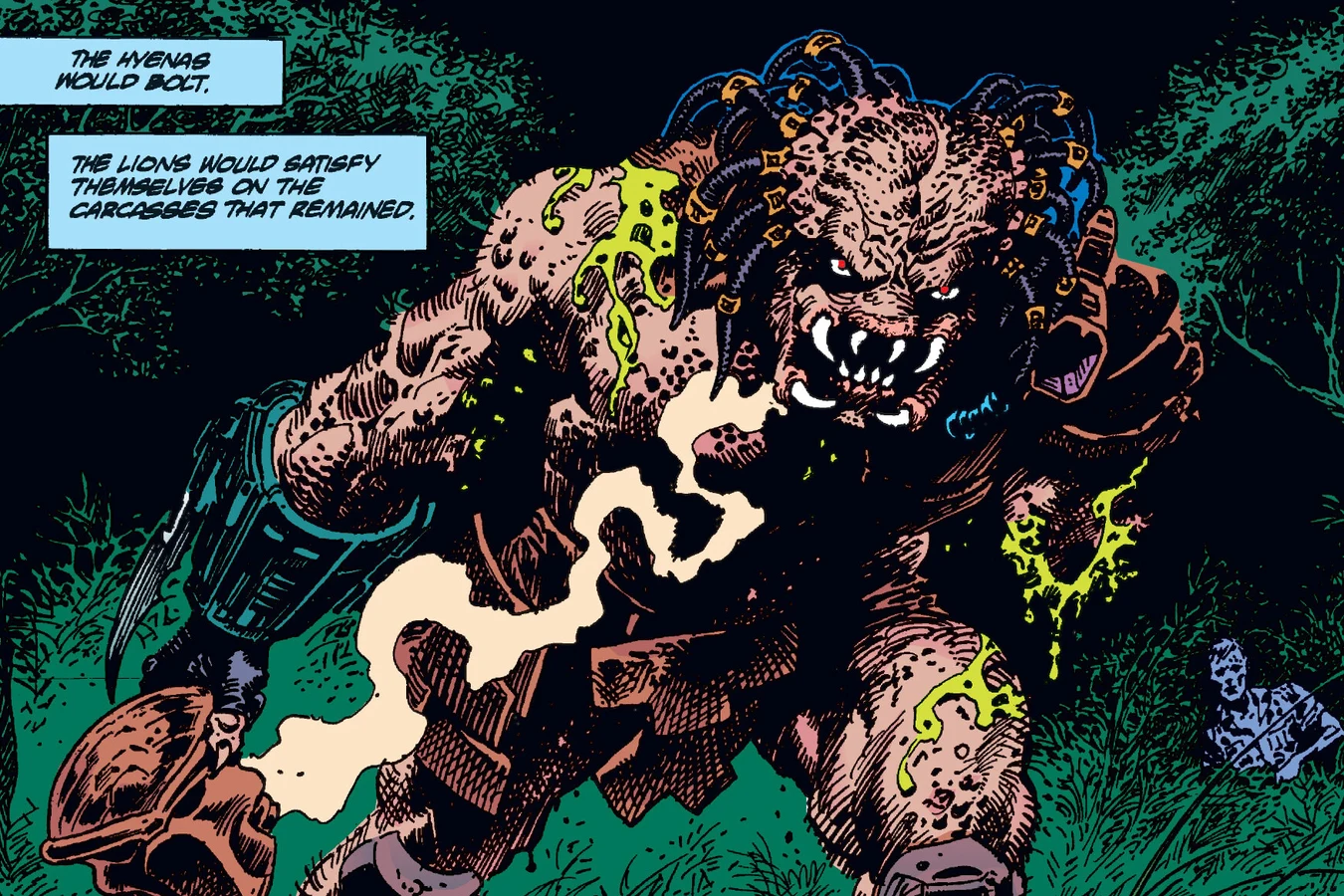
Johnny realized there was nothing he could do to kill such a creature, and his only hope was that Africa itself might do the job. He ran until he thought his lungs would burst, and by nightfall he had no strength left. Then a tittering bark sounded in the dark as a small army of hyenas closed in on the wounded hunter. Johnny supposed that the devil's scent must have been strange to them, but blood was blood, and blood was what brought the veldt to life. The pack leapt onto the Predator from every side.
Lions arrived and fought the hyenas over the prize, because to them the creature was no god or devil and no hunting star. The Predator emerged unmasked, carrying its mask in its remaining hand, its body streaked with green blood. The hyenas bolted, and the lions settled for the carcasses that remained. Johnny admitted he should have made his escape then, but he had to be certain the creature was dead, so he followed it all night to a muddy wallow just east of Nghasa.
The Hunting Star Departs
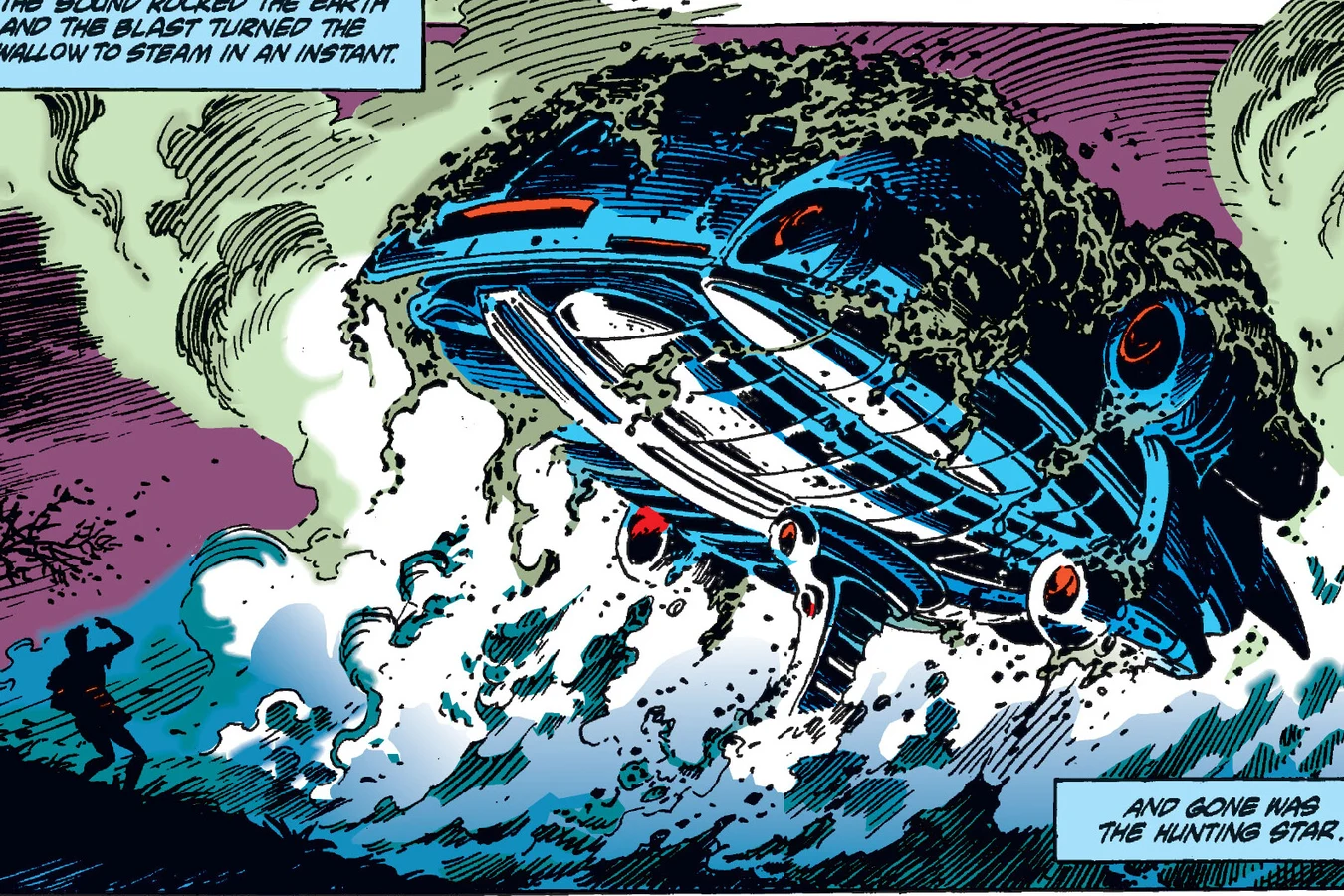
Johnny watched the Predator wade into the wallow, its jaws dripping green blood, until it sank beneath the surface. He thought it meant to drown itself, or to find relief for its wounds in the cool mud. Nothing prepared him for what happened next, as a sound rocked the earth and a blast turned the wallow to steam in an instant. A Predator ship rose out of the mud, shedding water and muck as it climbed, while Johnny shielded himself on the bank. The hunting star was gone.
In the final panel, Johnny knelt alone in the grass as a streak of light crossed the night sky, the same image that had opened the story. He reflected that the hunting star had gone to track game on some other unfortunate world, and closed his account with the words "and God's great mercy to them." The Predator had lost an arm but escaped alive, and Johnny was the only member of the expedition to survive. The last page carried the signatures of Chuck Dixon and Enrique Alcatena, dated 1992.
Key Characters
- John "Johnny" Copeland was the game ranger at Kildeer Station and the narrator of the story. He escorted the hunting party, faced the forest devil and was the only member of the expedition to survive.
- Reggie, introduced as Reginald Barrows, was Johnny's red-haired friend with an eyepatch and a fondness for retelling his elephant story. He was shot by the panicking bearers and was dying when Johnny reached him.
- Wanji was Johnny's assistant, who translated for the party. He was mortally wounded during the ambush.
- Sir James Neville Ramsay was the hunter sent by the Crown Victoria railway, who held stock in the line. He blamed the killings on lions and then on a native revolt, and was cut in two by the Predator.
- The village girl was the young girl who had seen the forest devil and led the party to the hanging bodies. She was last seen crouching unharmed as the cloaked Predator passed her by.
- Boss George was a railway foreman killed in the first attack on the workers' camp.
- The mystics were the old men who read the stars and told of the hunting star at the start of the story.
The Forest Devil
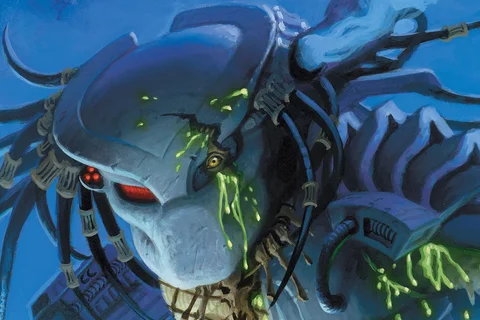
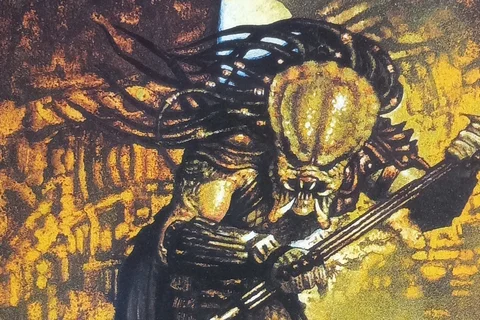
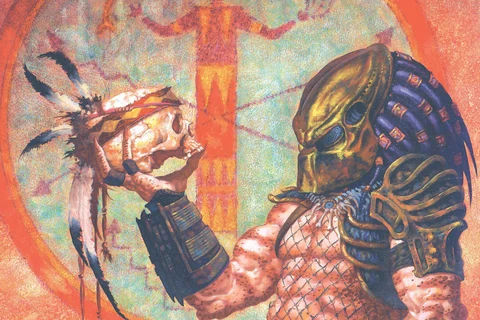
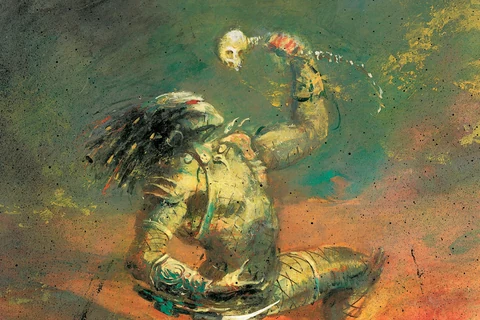
The Predator of the story, a lone Yautja known as the Nghasa Predator, was called the Dudu ya Porini by the locals, which Wanji translated as a forest devil. It wore a traditional mask with a triangular laser sight, bladed gauntlets and a shoulder cannon that fired bolts powerful enough to cut a man in half. It hunted both the railway workers and the village men, hanging its victims from the trees and keeping human skulls, and the old man insisted it killed only for sport rather than for food.
No human hero defeated this hunter in a final duel. Its downfall came from the African wilderness itself, as two crocodiles cost it its left arm and a pack of hyenas forced it to fight again before it could reach its ship. Wounded and unmasked, it waded into a mud wallow where its craft lay hidden, and instead of self-destructing it left Earth alive. Johnny watched from the bank as the ship rose out of the steaming mud and carried the one-armed hunter away.
Place In The Predator Comics
The Pride at Nghasa was one of several short Predator serials that ran in the Dark Horse Comics anthology in the early 1990s, following Predator: Rite of Passage and Predator: Blood Feud. Like Rite of Passage, it was set on the African plains and featured lions, but it told its story through the voice of a colonial game ranger. With its 1936 setting, it held an early place on the Predator timeline, as one of the few Predator stories set in colonial Africa.
Behind The Scenes
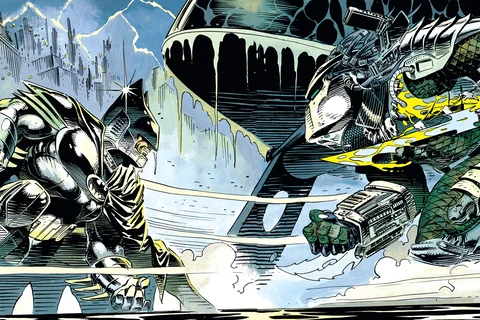
The Pride at Nghasa ran in three eight-page chapters in Dark Horse Comics #10, #11 and #12, cover-dated May, July and August 1993. Chuck Dixon wrote the script, and Enrique Alcatena penciled and inked the art, with colors by Chris Chalenor and letters by Clem Robins. Alcatena's dense linework filled the pages with tribal masks and patterned borders, and the final page carried the creators' signatures dated 1992. Each chapter shared its issue with other serials, and the final part appeared alongside Aliens: Backsplash and the first chapter of Predator: Bad Blood in issue #12, which also carried a painted Predator cover by Derek Thompson.
Dark Horse later reprinted the story in Predator: Jungle Tales in 1995 and in Predator Omnibus Vol. 1 in 2007, and paired it with Rite of Passage in a digital edition titled Predator: Rite of Passage/Pride at Nghasa. Marvel included it in Predator: The Original Years Omnibus Vol. 1 in December 2022, alongside Predator: Dark River, Predator: Bloody Sands of Time and other early Dark Horse tales. The Jungle Tales collection used a cover by Val Mayerik and Perry McNamee showing the Predator wrestling a lion on the savanna.
Conclusion
Predator: The Pride at Nghasa was a compact colonial adventure that turned a routine lion hunt into a massacre, told through the weary voice of a game ranger who respected the land and its people more than his employers did. Chuck Dixon and Enrique Alcatena let Africa itself deliver the final blows, with crocodiles and hyenas doing what no rifle could. The ending, with the wounded hunter escaping to stalk some other world, left Johnny Copeland alive but shaken, and gave the hunting star legend its grim payoff.
External Sources
- Dark Horse Comics #10 at the Grand Comics Database
- Dark Horse Comics #11 at the Grand Comics Database
- Dark Horse Comics #12 at the Grand Comics Database
- Predator: The Original Years Omnibus Vol. 1 at the Grand Comics Database
- Predator: The Original Years Omnibus Vol. 1 at Marvel
Tag Categories: Predator Comics | Predator Lore