Predator: Bloody Sands of Time: Plot, Characters & Lore

Predator: Bloody Sands of Time is a two-issue Predator comic written and drawn by Dan Barry from a story by Barry and Mike Richardson, published by Dark Horse Comics in 1992. A lawyer named Griggs Irving took on the case of a covert operative accused of skinning a village in Central America, and a stranger handed him the diary of a French soldier from 1916. Its pages described a hunter stalking the trenches of Verdun and the Somme, making it one of the earliest stories of Predators in the World Wars.
Plot Summary
The Mendares Raid
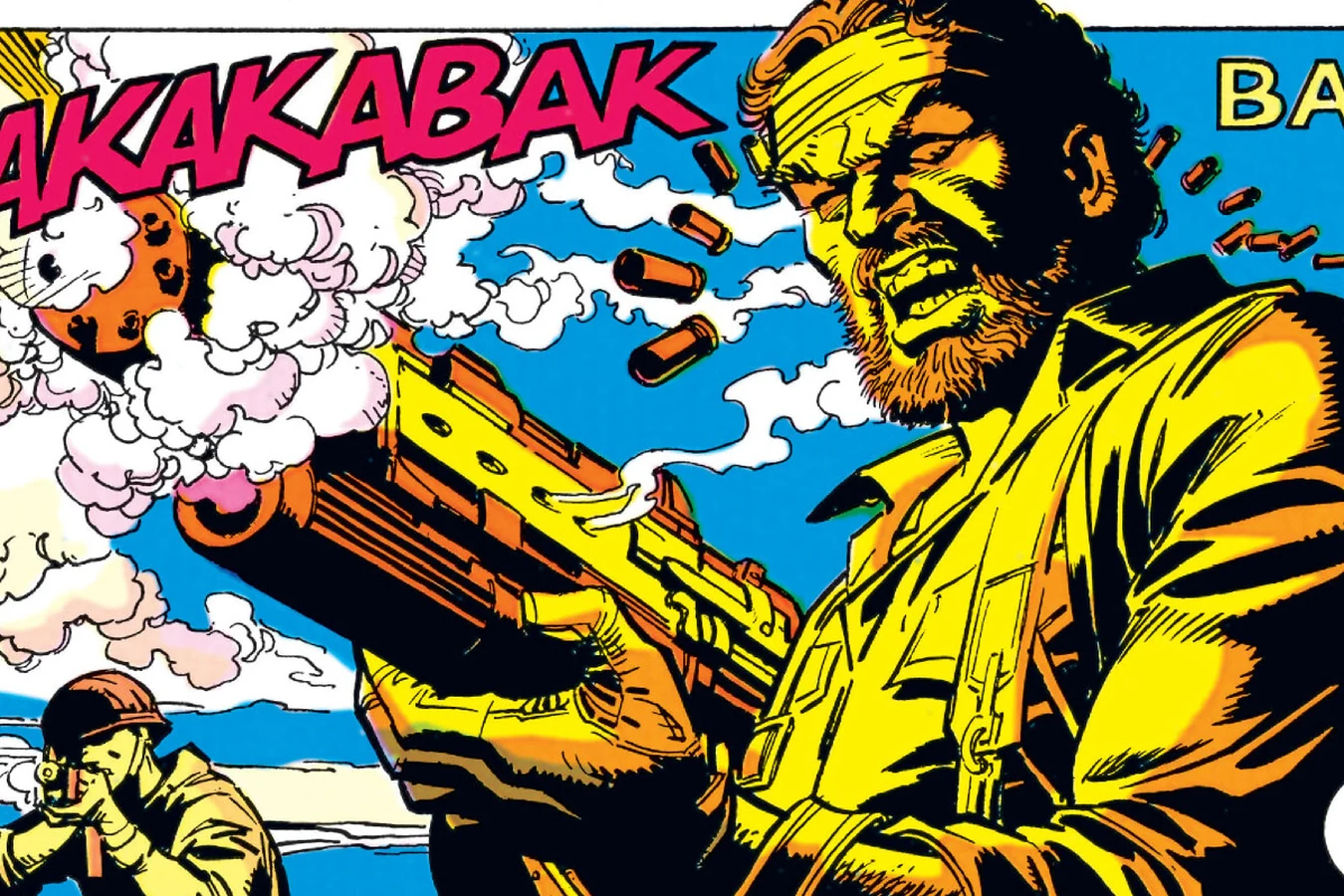
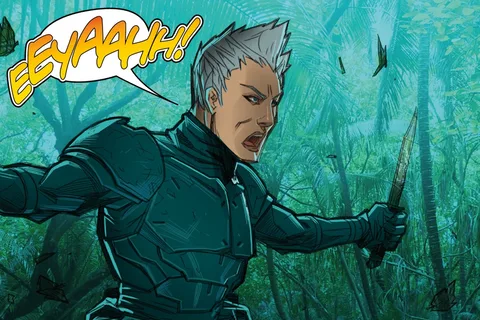
The story opened over a Central American jungle, where a helicopter carried a strike team toward the camp of the drug lord Mendares. The hulking Joe Bob Cantrell wanted to burn the village with napalm, but Marty Dworkin of the DEA was in charge and ordered that only Mendares be taken, since the villagers were his captives. The team rappelled down and found the guards asleep, and Cantrell silenced one of them with his knife. Then Dworkin blundered into the open, the camp erupted in gunfire and Cantrell cursed him for getting them all killed.
Butchers In The Jungle
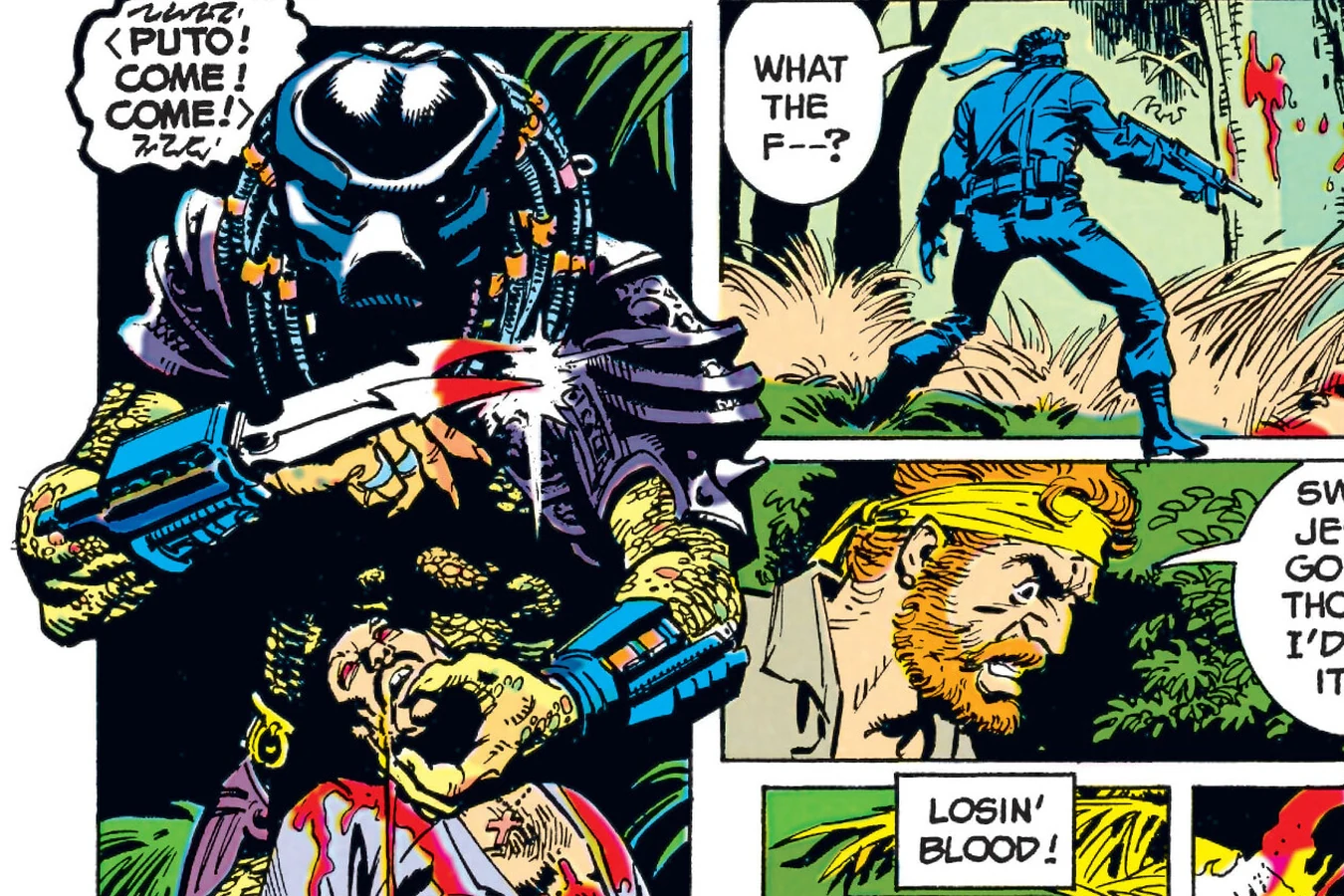
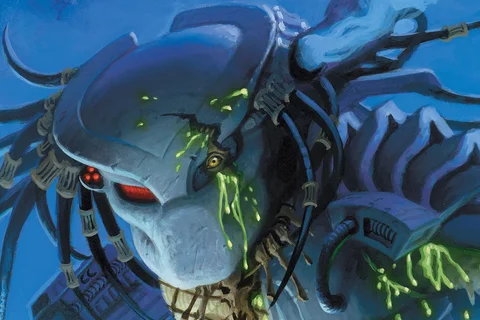
In the chaos, Cantrell caught one of the drug runners and was about to finish him when a Predator appeared, holding up a bloody man who had been skinned. A blinding light swallowed the scene, and someone screamed Cantrell's name. When army troops reached the camp, they found him among a forest of corpses hanging from the trees, skinned and stripped. The soldiers called his team C.I.A. butchers and took him into custody. At a board of inquiry, a colonel blamed stress and told Cantrell he was headed for a psychiatric hospital, while the prisoner insisted that whatever he had seen out there had scared the soldiers too.
Griggs Irving
Cantrell's lawyer was Griggs Irving, a heavyset man in glasses who admitted that, on the evidence, he was inclined to think his client was mad. One detail held him back. A dossier showed that a secretive government agency known as the Office had set Cantrell up and was using Irving as its front. Griggs felt a strange sense of déjà vu about the case and flew home convinced it had happened before. He talked it over with his partner Gwen, a fashion designer, and the conversation brought back a memory from the Vietnam War that matched the massacre in the jungle almost exactly.
The Saigon Officer
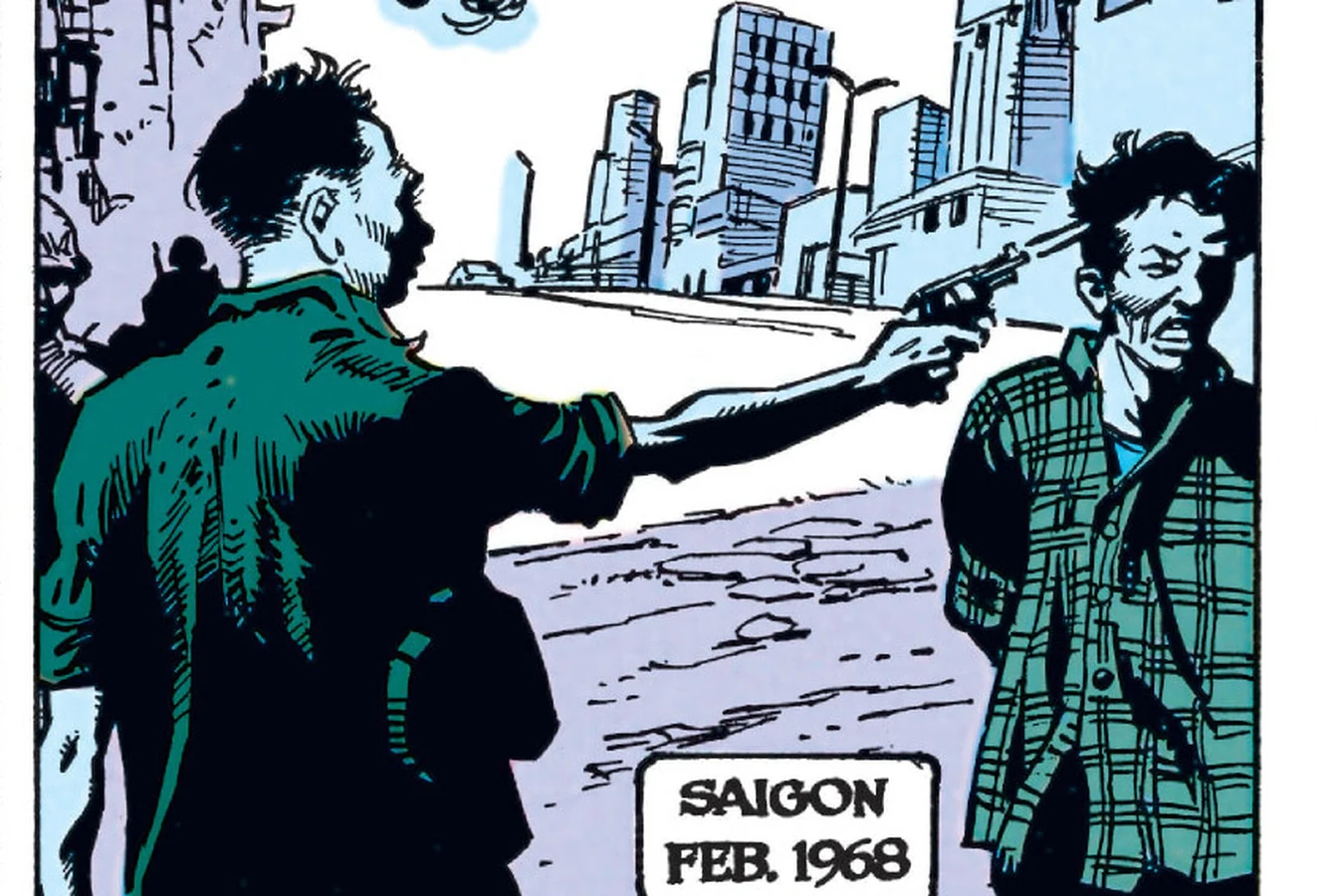
In Saigon in February 1968, a South Vietnamese liaison officer famous from a news photograph had been charged with massacring an entire Viet Cong village. The bodies had been skinned, with the skulls and spines stripped out, just as at the Mendares camp. The officer claimed that ghostly creatures from another world had done it, and he was nearly committed before the Office spirited him out of the country before the fall of Saigon. Griggs tracked him to a horse farm near Lexington, Kentucky, only to learn from a stable boy that he had been killed two years earlier by a speeding van while riding a colt.
The Verdun Diary
The van had carried no license plate, and Griggs recognized the method as the one his own employers had used to eliminate a double agent called Ilyanakov. Realizing that the Office was covering its tracks, he decided to give Joe Bob the best defense he could. Back at Gwen's apartment, a stranger with a raspy voice had come looking for him and left behind a bundle of brittle, numbered pages written in French. Gwen, who had studied fashion in Paris, translated them. They were the diary of a French soldier, dated near Verdun on 18 June 1916, after four months in the trenches without relief.
The Patrol
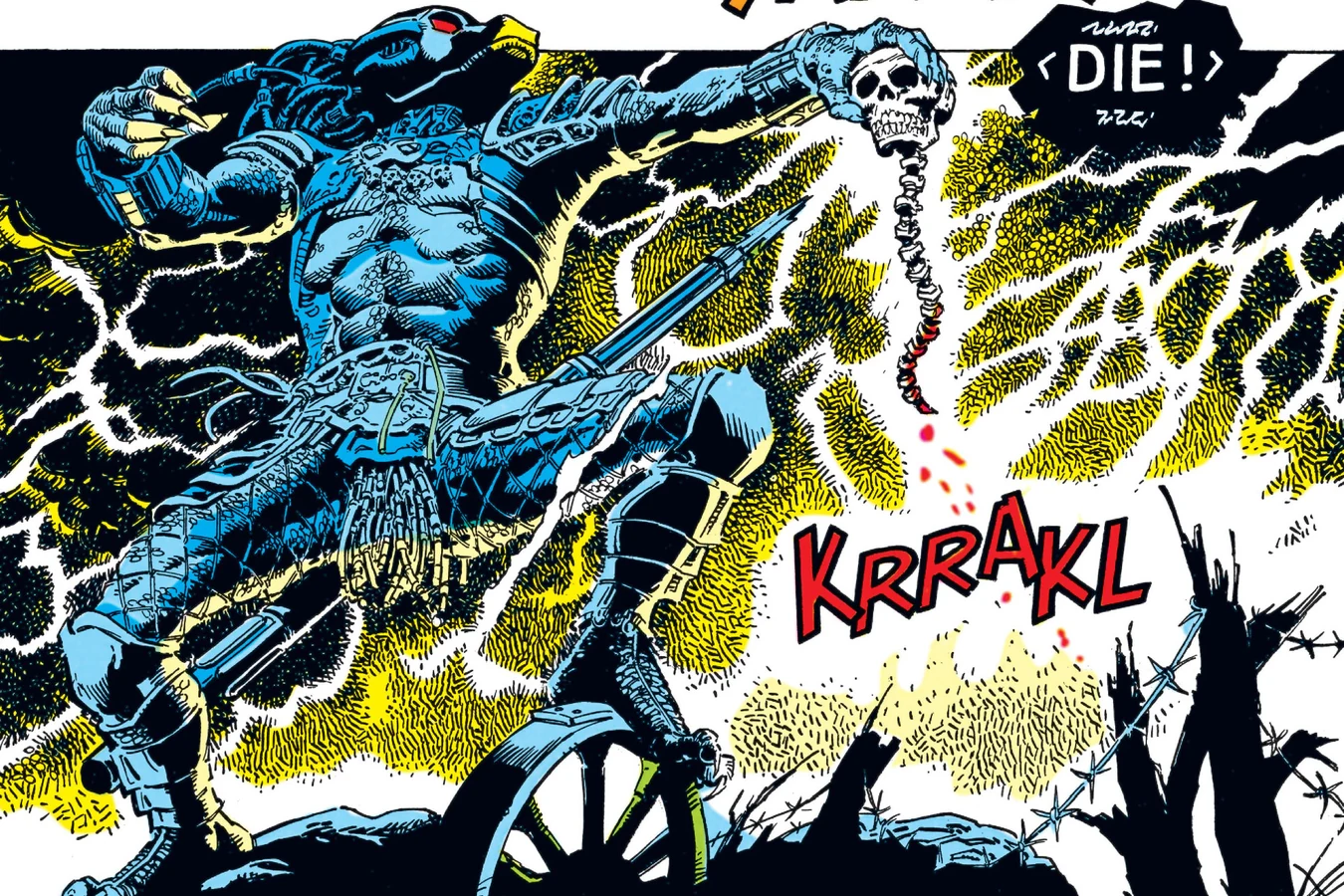
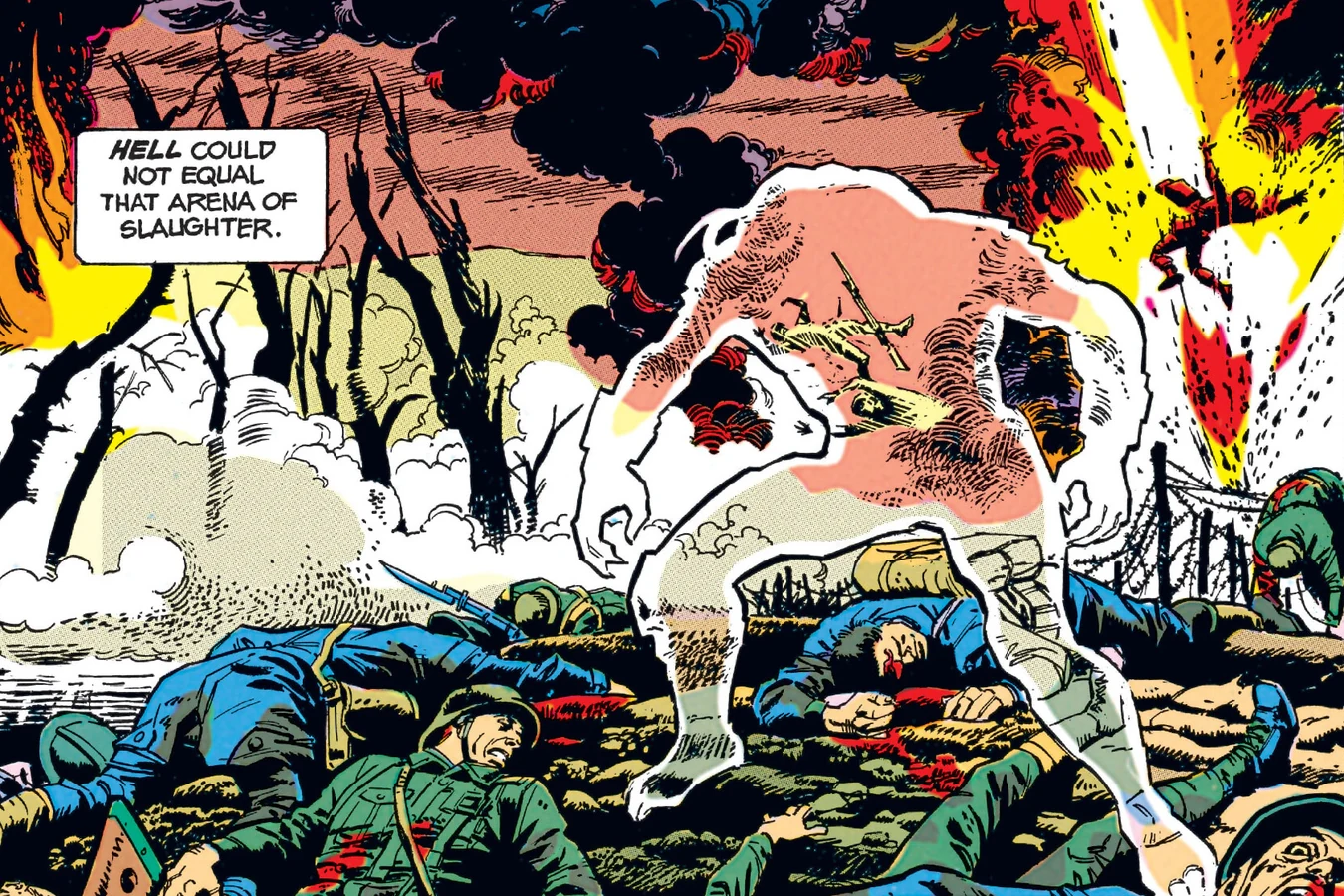
The diarist was Jean Brunaud, who described the mud, the stench of rotting bodies and the slaughter of the First World War alongside his friend Claude. One night their lieutenant led a patrol into no man's land, and the men were driven into a bayonet charge under German fire. Their sergeant was killed, and when Jean went after the officer he found him mutilated, his head gone and his chest ripped open. Germans rushed them, shouting for the French to die, but lightning revealed a Predator holding the lieutenant's skull and spine aloft like a trophy as the enemy soldiers turned their rifles on it.
A Ghost In The Lightning
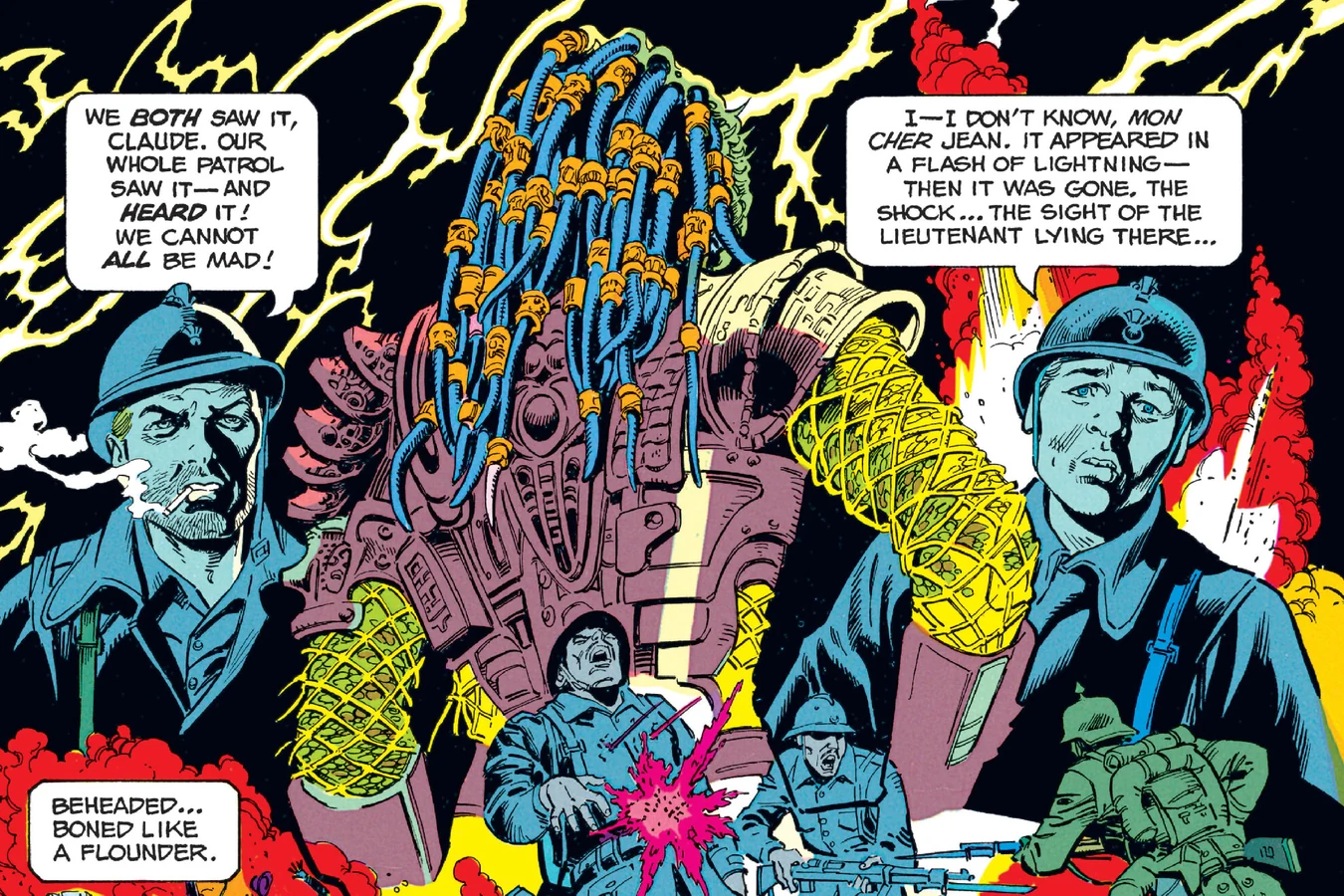
Brunaud reported to his captain that the whole patrol had seen a horror waving the lieutenant's skeleton like a trophy. The captain blamed the strain of the big guns, gave the men two hours of rest and promised to file a report. In the trenches, Jean and Claude argued about what they had seen, with Claude refusing to believe it while the shells kept falling. Jean wrote that the lieutenant had been beheaded and boned like a flounder, and that ghosts had been seen rising from the endless seas of the dead. He swore in his diary that the thing was real and that he was not mad.
Fort Douaumont
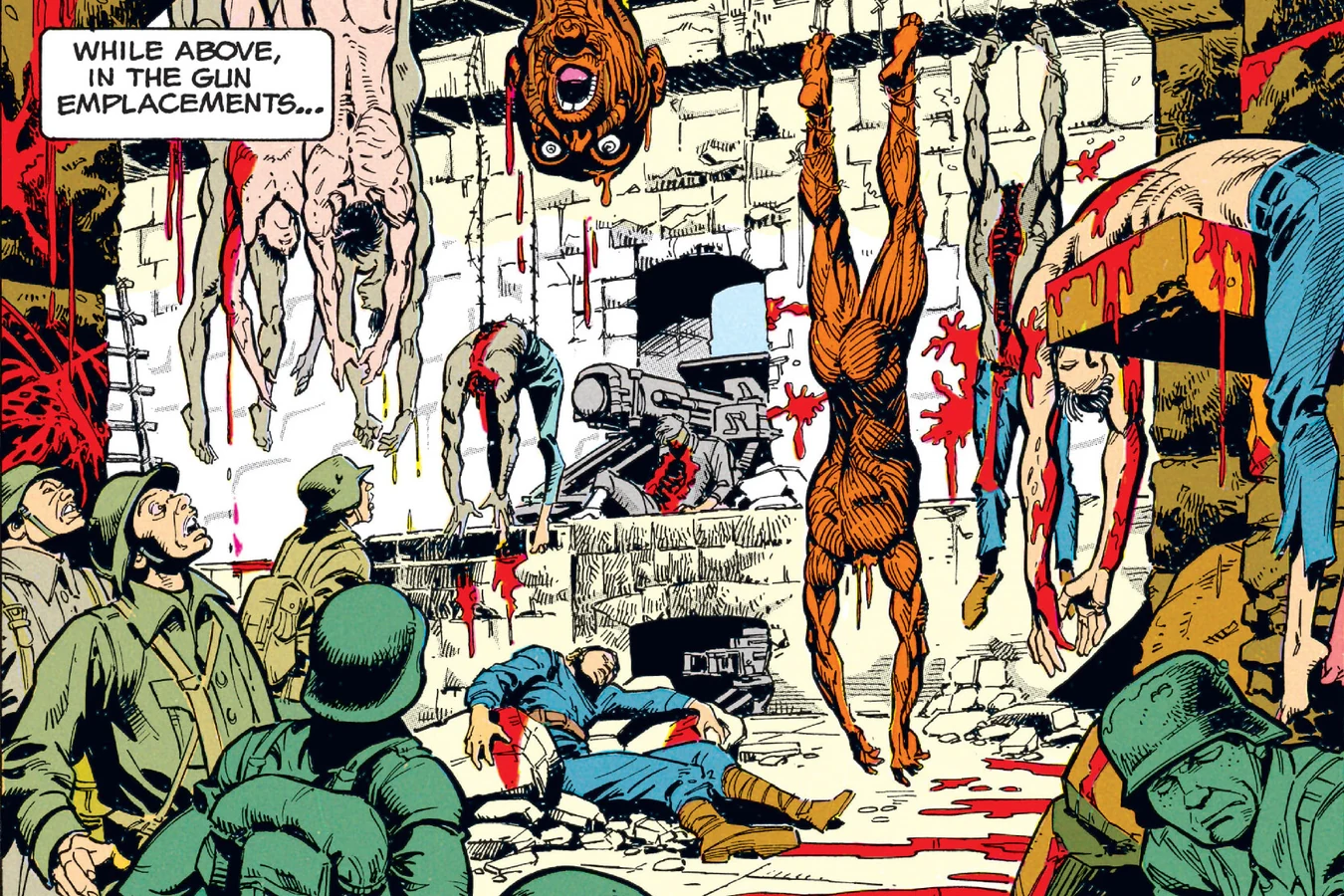
Griggs judged Jean an astute observer and saw the same atrocities that Joe Bob and the Saigon officer had described. The diary then recalled the fall of Fort Douaumont, the supposedly impregnable fortress at the heart of the Verdun defenses. On 25 February 1916, a patrol of the 24th Brandenburgers led by Sergeant Kunze climbed in and found the garrison cut down to a few dozen men. The French defenders were huddled in shock, and up in the gun emplacements skinned bodies hung upside down like meat in a larder. Jean wondered whether the credit for the capture belonged to Kunze or to the ghosts.
The Somme
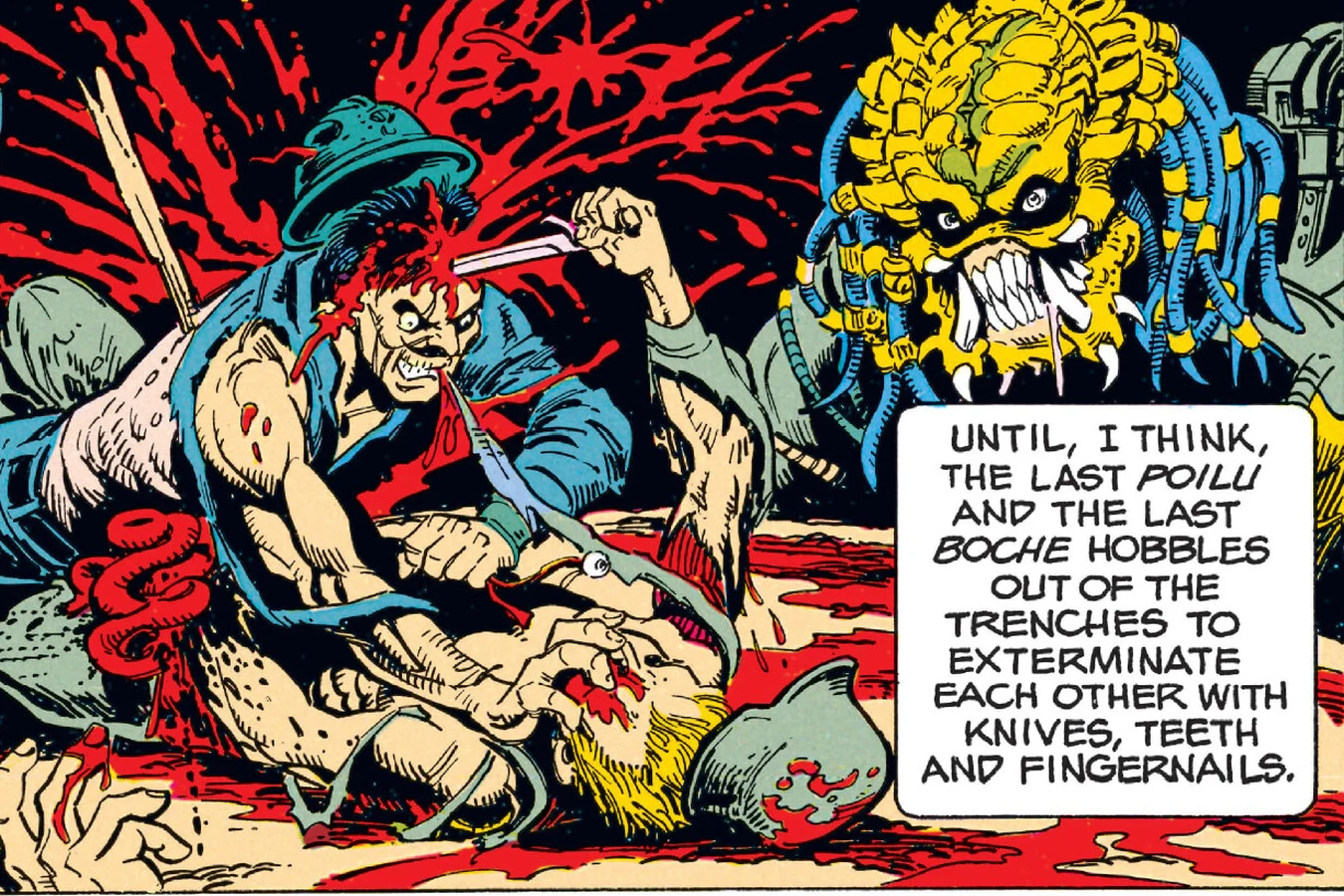
In June 1916, Jean and Claude were moved to the Somme, where the British commander Douglas Haig was preparing his great offensive. Jean described a battlefield where the last soldiers on each side might one day hobble out of the trenches to finish each other with knives and teeth, and a grinning Predator face hung over his words. The French pair watched a British officer arrive in an open car and sneer at the ragged troops as a disgrace to the crown. Moments later the shells came screaming down, and the friends found that their luck was running out.
The Tanks
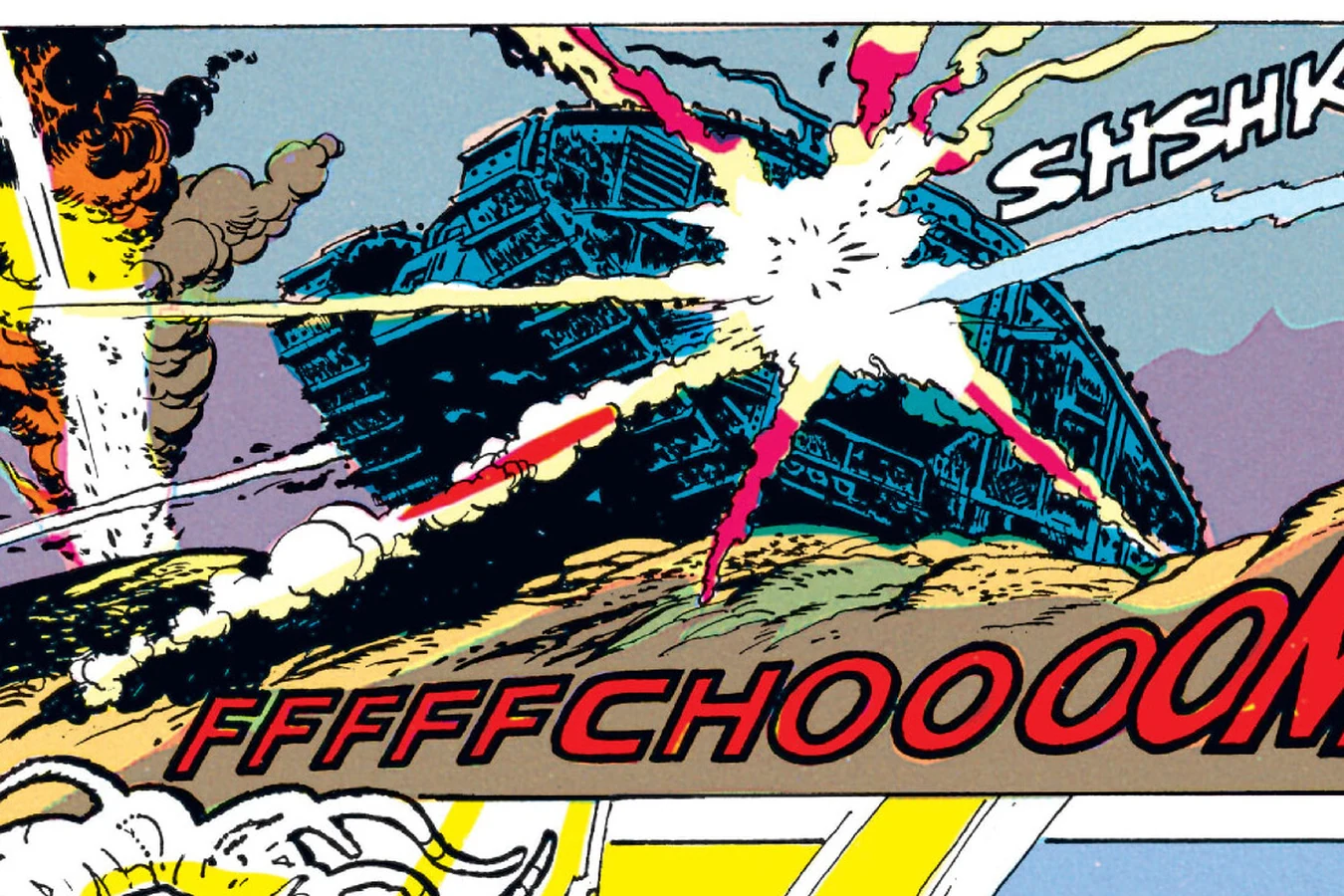
With Claude hurt, Jean carried his friend through the trenches as the battle raged around them. Haig had brought the new tanks into the fight, and the Germans facing them cried out that a monster was coming. Jean watched a couple of hundred German soldiers surrender to the machines, but the advance did not last. A shell struck one of the tanks and it erupted in flame. The diary made clear that the steel monsters of the Somme were not the only hunters on the field that day, and that something else was moving through the smoke and the flooded shell holes around the two Frenchmen.
Out Of The Mud
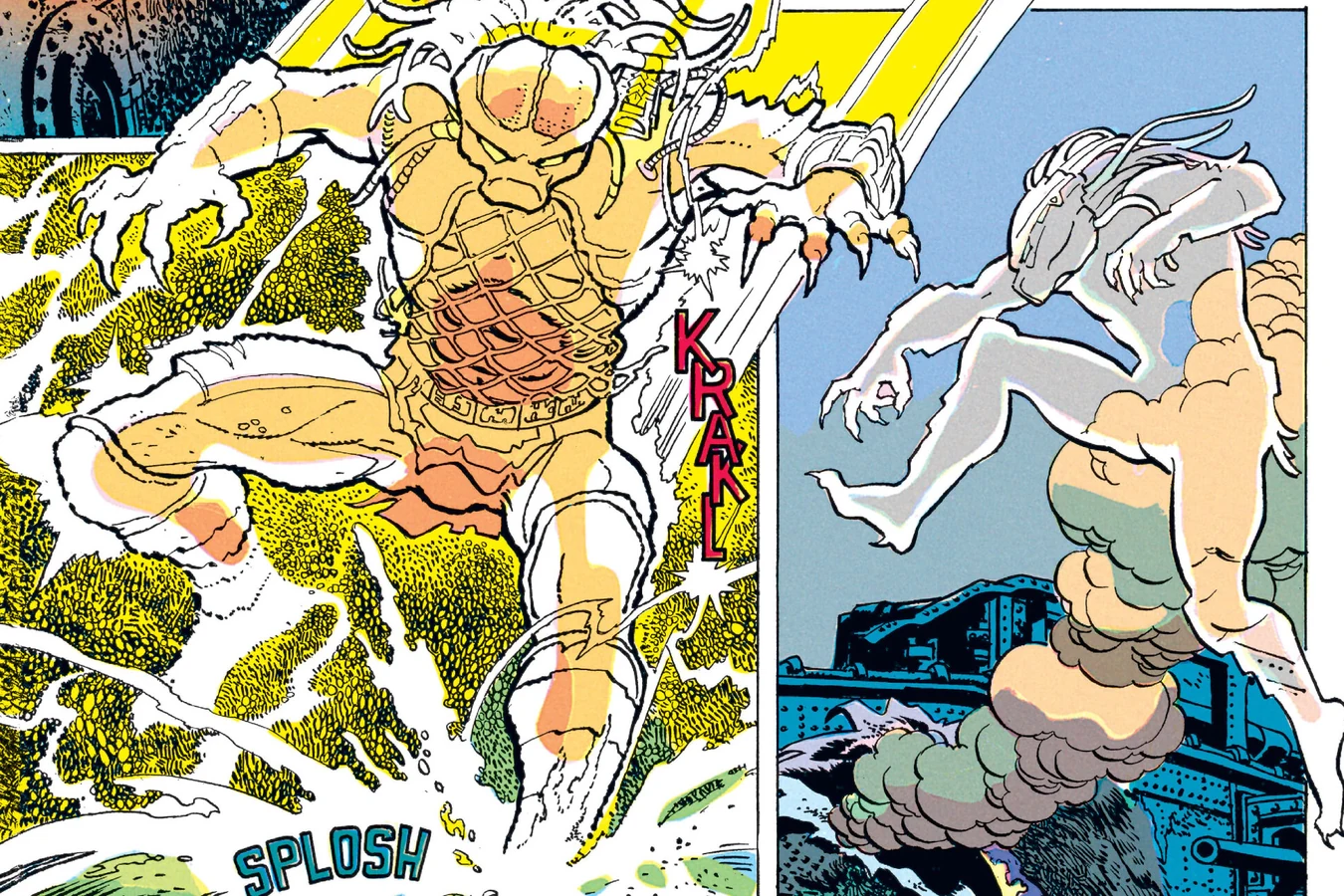
With a splash, the Predator burst out of the muddy water in front of the burning tank, its shape shimmering behind its cloaking field before it faded from sight again. The tank exploded, and in the blast the hunter's mask was torn away and landed in the mud close to Jean. In the struggle that followed, Claude was fatally wounded, and Jean cradled his dying friend in the trench and begged him for forgiveness. Then he picked up the strange helmet, turned it over in his hands and, without quite knowing why, pulled it over his own head.
The Helmet
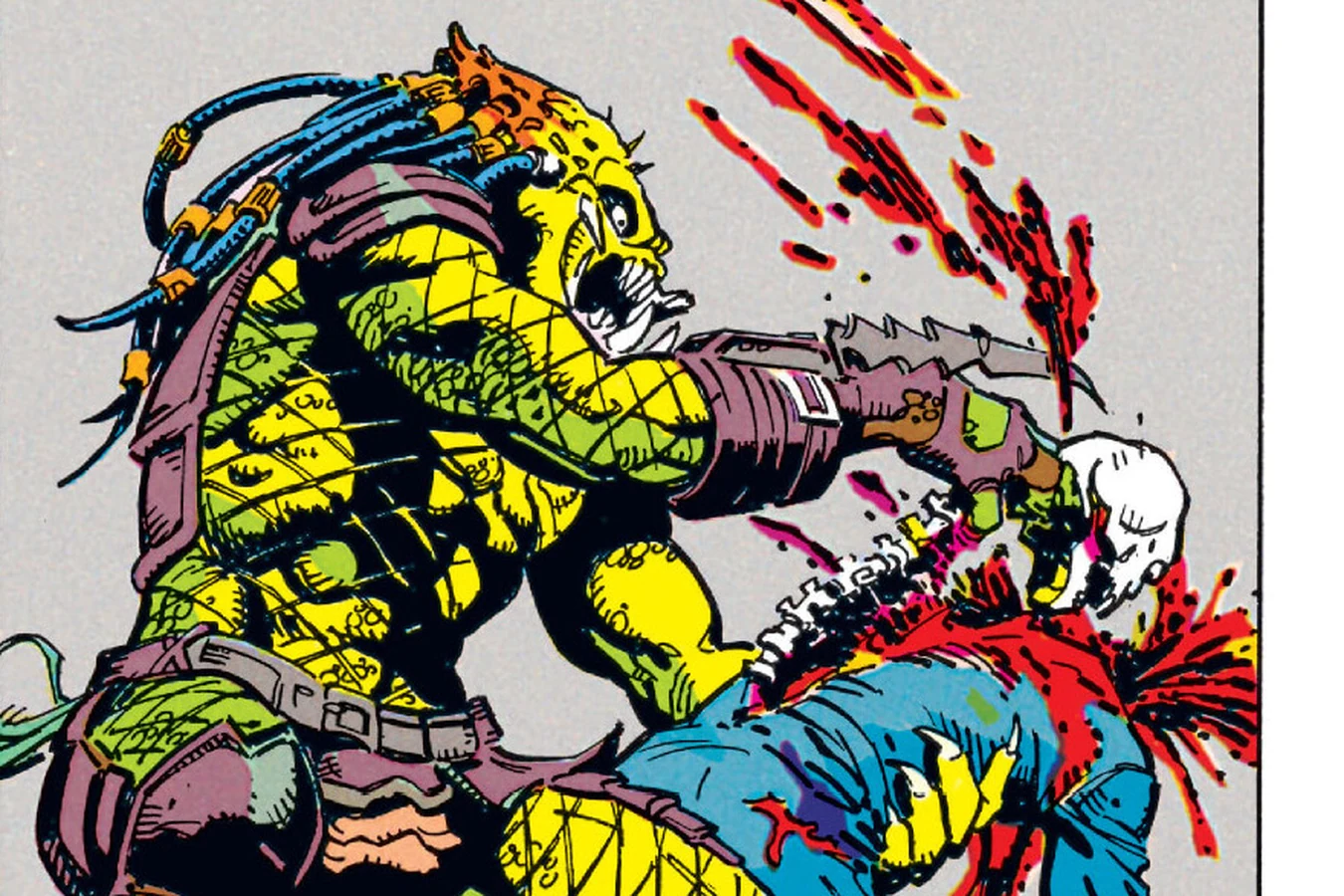
Through the lenses of the mask, Jean could suddenly see the hunters clearly. He watched a Predator rip the spine out of a soldier and could only gasp in horror. When he reported a German super-weapon to an officer, he was sent away to rest with a corporal assigned to watch him, while the other soldiers mocked the helmet as a strange gas mask. On 26 June 1916, the men were ordered to take a fortified hill guarded by a German Maxim gun nest, and Jean went back into the line with the mask still in his possession.
The Super-Mensch
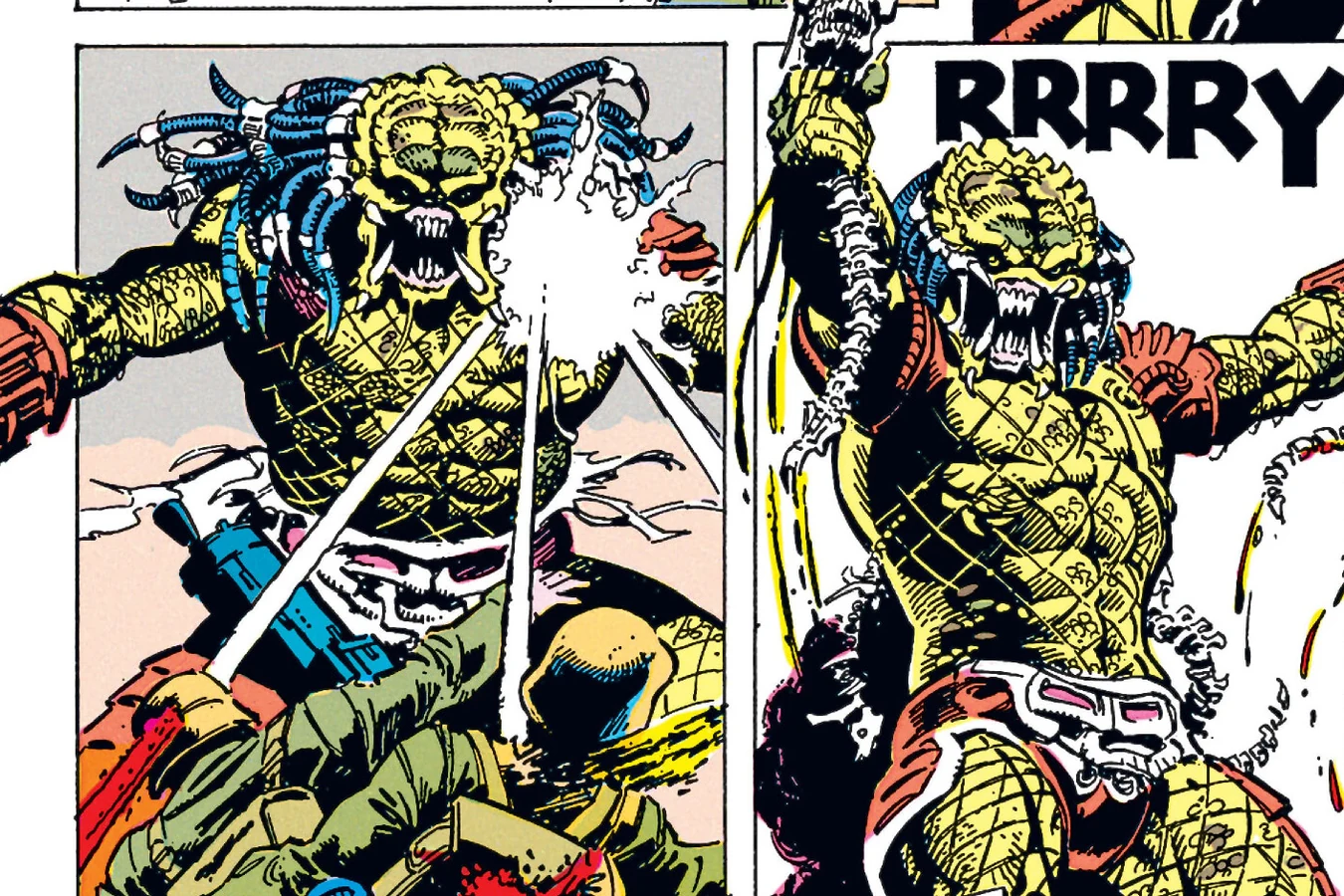
The Maxims cut the attackers down, and Jean hid among the dead until he saw the ghost again. This time he did not need the helmet, because the Predator appeared fully visible among the Germans, roaring as it held up a skull. A terrified German soldier took it for a French super-mensch and called for the cannons to fire. When it vanished, Jean told his captain that it was not a German weapon at all but a creature that attacked both armies like a wild beast, an ogre out of the Brothers Grimm. For his trouble, he was shipped off to headquarters.
General Fouchard
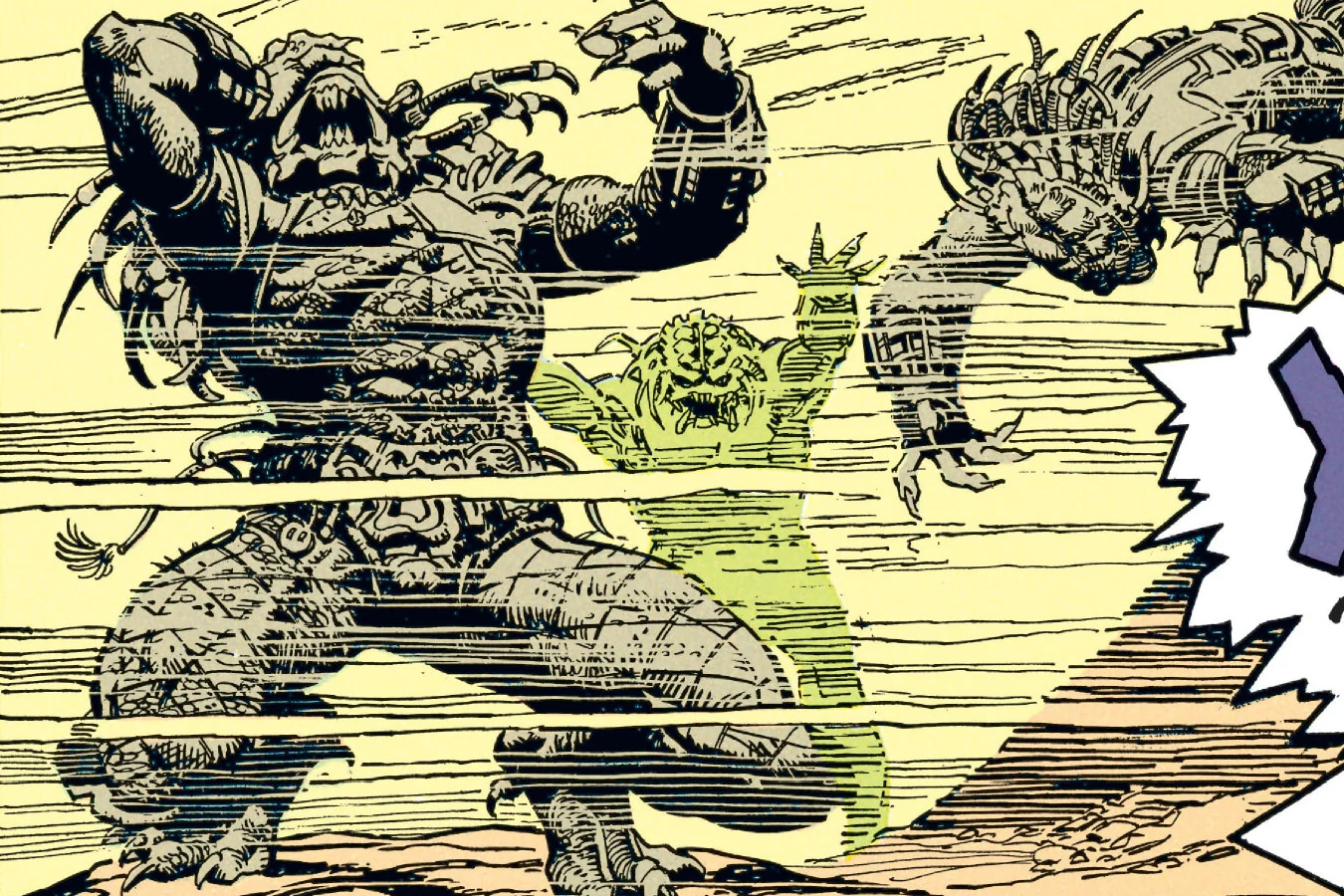
Headquarters belonged to General Emile Fouchard, a commander known for executing soldiers to keep cowards in line. He ordered an attack at dawn behind a cloud of mustard gas and announced that he would be there to observe. The troops were to follow Haig's tanks, but the machines stalled when their crews needed air, and the general refused to reconsider. As the gas rolled over the trenches, screaming broke out among the men. Through the yellow cloud, the hunters could be seen moving among the soldiers, and the attack collapsed as the survivors fell back into the trench in panic.
No General, You Show Us
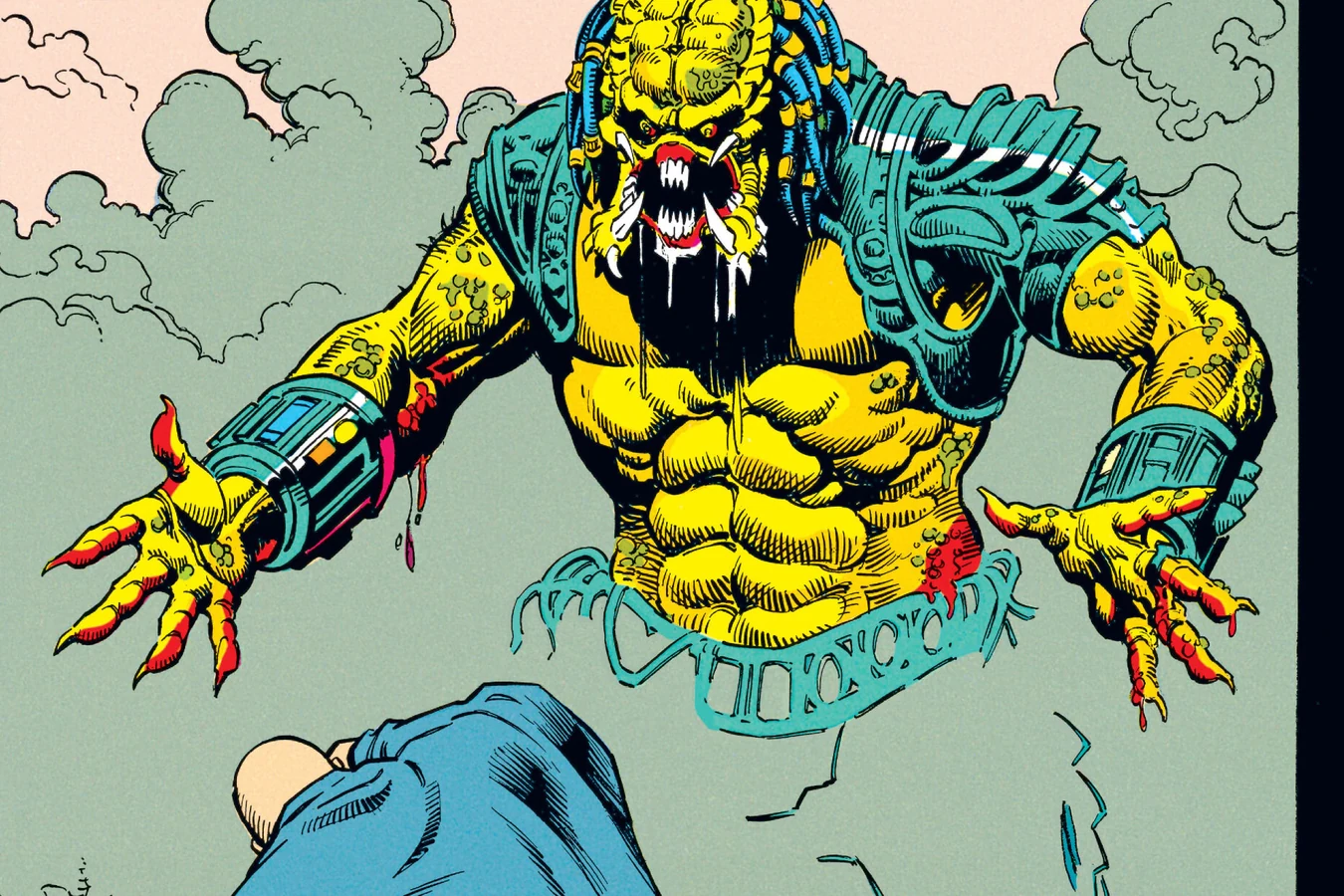
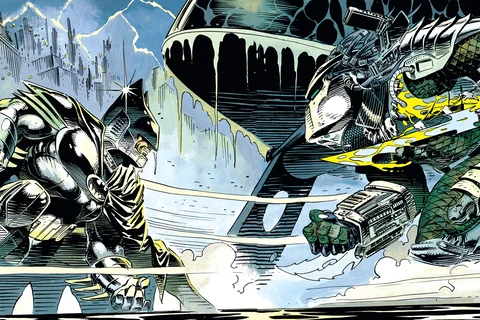
Fouchard called the retreating men cowards and demanded that they go forward again. Jean Brunaud drew his pistol on the general and told him that he should show them how it was done. Under the gun, Fouchard climbed out of the trench in his blue cape and walked alone into the haze. The Predator rose up in front of him with its claws spread wide. The next panel showed only the general's severed head, its face frozen in a scream, and Jean's revenge on the commander who had sent so many men to their deaths was complete.
The Field Pack
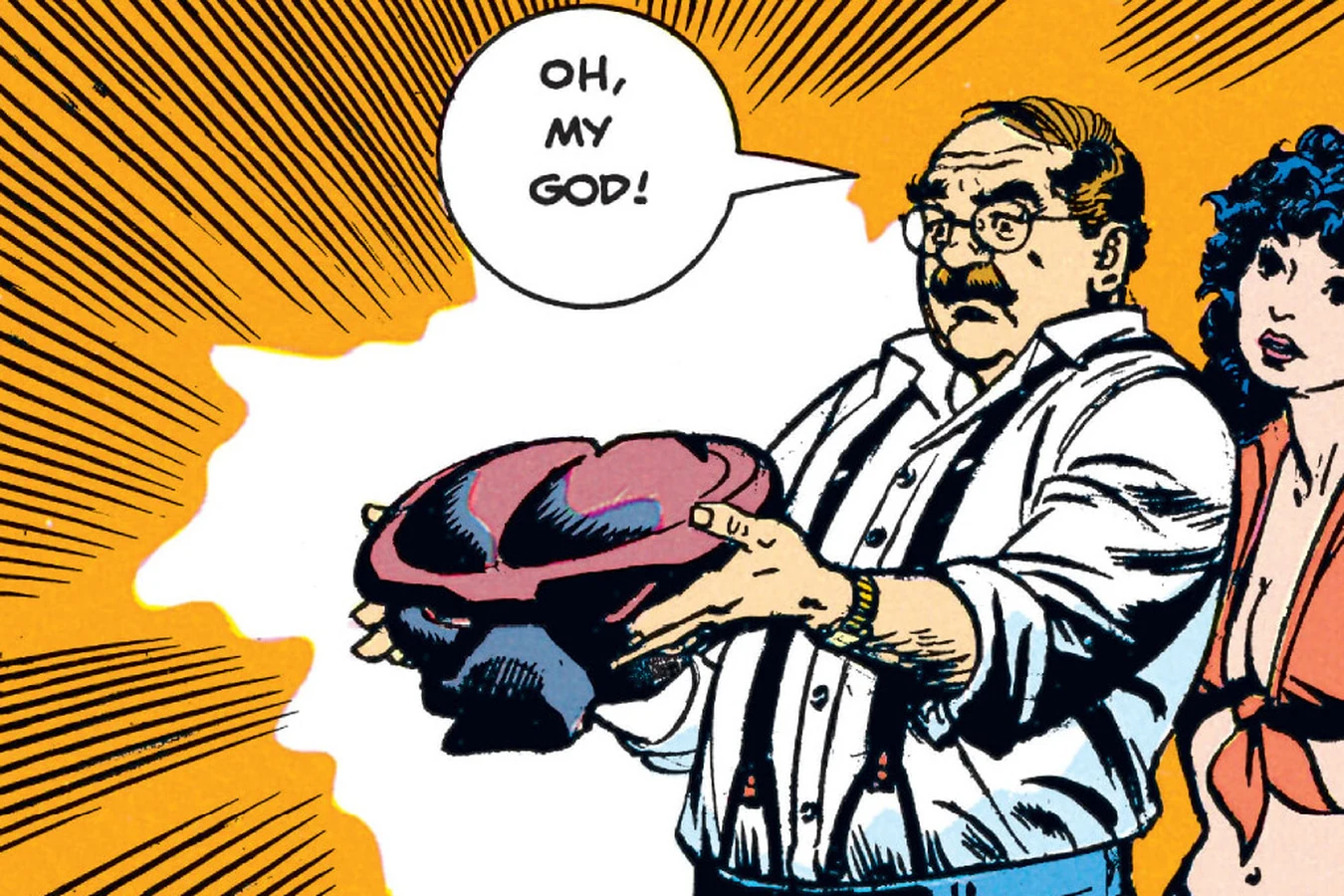
The diary ended there, and Griggs learned that Brunaud had been shot by one of the general's staff officers and had died in hospital. Griggs believed the pages proved Joe Bob's story, but a letter from the army informed him that Cantrell had hanged himself in his cell. Griggs did not believe it. Their mysterious informant returned one last time and left a musty old field pack marked J.B. at the door. Inside were a canteen, a mess kit and some letters, and at the bottom Griggs found the Predator mask that Jean had carried out of the Somme.
Key Characters
- The Predators were the unnamed hunters who skinned their victims in Central America, Vietnam and France. One lost its mask on the Somme and another killed General Fouchard.
- Jean Brunaud was the French soldier whose 1916 diary told the story. He wore the lost mask, held Fouchard at gunpoint and was later shot by a staff officer.
- Claude was Jean's friend in the trenches, who doubted the ghost stories and died on the Somme.
- Griggs Irving was the lawyer working as a front for the Office who defended Joe Bob Cantrell and uncovered the diary.
- Gwen was Griggs' partner, a fashion designer who translated the French pages.
- Joe Bob Cantrell was the operative found among the skinned bodies at the Mendares camp. The army later claimed he had hanged himself.
- Marty Dworkin was the DEA agent in charge of the raid on Mendares.
- General Emile Fouchard was the French commander who ordered the gas attack and was beheaded by a Predator.
Behind The Scenes
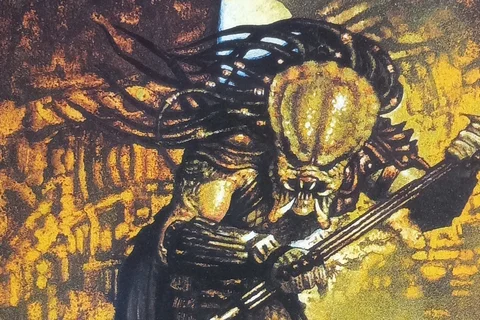
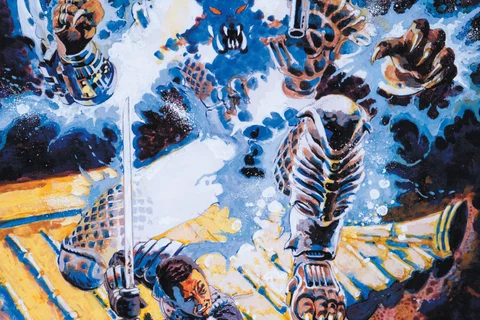
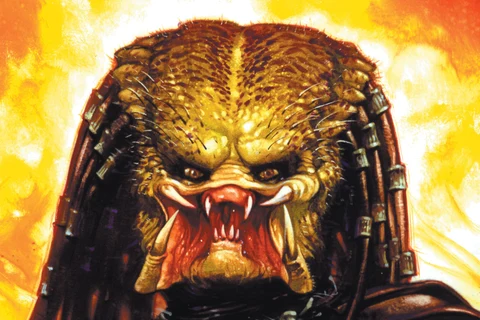
Dark Horse published the story as a two-issue series, with #1 dated February 1992 at $2.50 for 36 pages. Dan Barry scripted and penciled both chapters from a story he developed with Mike Richardson, while Chris Warner inked the interiors and Gail Beckett colored and lettered them under executive editor Randy Stradley. Barry also drew both covers, with Chris Chalenor coloring the first and Rachelle Menashe the second. The cover of the second issue showed a Predator clutching a severed head above German soldiers, and it appeared between the two chapters when the story was reprinted.
The comic followed earlier Dark Horse stories such as Predator: Concrete Jungle, Predator: Big Game and Predator: God's Truth, which had already sent the hunters into the past. Marvel collected it in Predator: The Original Years Omnibus Vol. 1 in December 2022, alongside Predator: Cold War and Predator: Dark River. Its flashback to 1916 placed it among the earliest events of the Predator timeline, and the lost mask and cloaking device echoed the hunter's gear from the 1987 film Predator.
Conclusion
Predator: Bloody Sands of Time wrapped a First World War horror story inside a modern conspiracy thriller, using a lawyer's investigation to connect massacres in Central America, Vietnam and the Western Front. Dan Barry let the slaughter of Verdun and the Somme do much of the work, presenting the hunters as one more horror in a war that already killed men by the thousand. The mask in the field pack gave the story a quiet final sting, proving that Jean Brunaud had told the truth even after the army and the Office had silenced everyone who believed him.
External Sources
- Predator: Bloody Sands of Time #1 at the Grand Comics Database
- Predator: Bloody Sands of Time #2 at the Grand Comics Database
- Predator: The Original Years Omnibus Vol. 1 at Marvel
Tag Categories: Predator Comics | Predator Lore