Predator: Homeworld: Plot, Characters & Lore

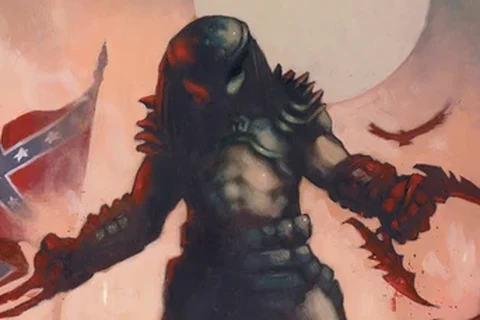
Predator: Homeworld is a four-issue Predator limited series written by Jim Vance and Kate Worley and pencilled by Toby Cypress, published by Dark Horse Comics from March to June 1999. Mark Lipka inked the interiors, Dave Stewart colored the series and Joel Naprstek painted the covers. It follows naturalist Maya Bergstrom and freelance photographer George Sperling through Yellowstone National Park as an elder Predator arrives to stop three young thrill-kill hunters, and as Maya argues that the species may once have belonged to Earth. Among Dark Horse Predator comics, it is a late-1990s Earth hunt built around Bad Blood hunters and a government cover-up after the park was cleared.
Plot Summary
Bad Bloods On The Homeworld
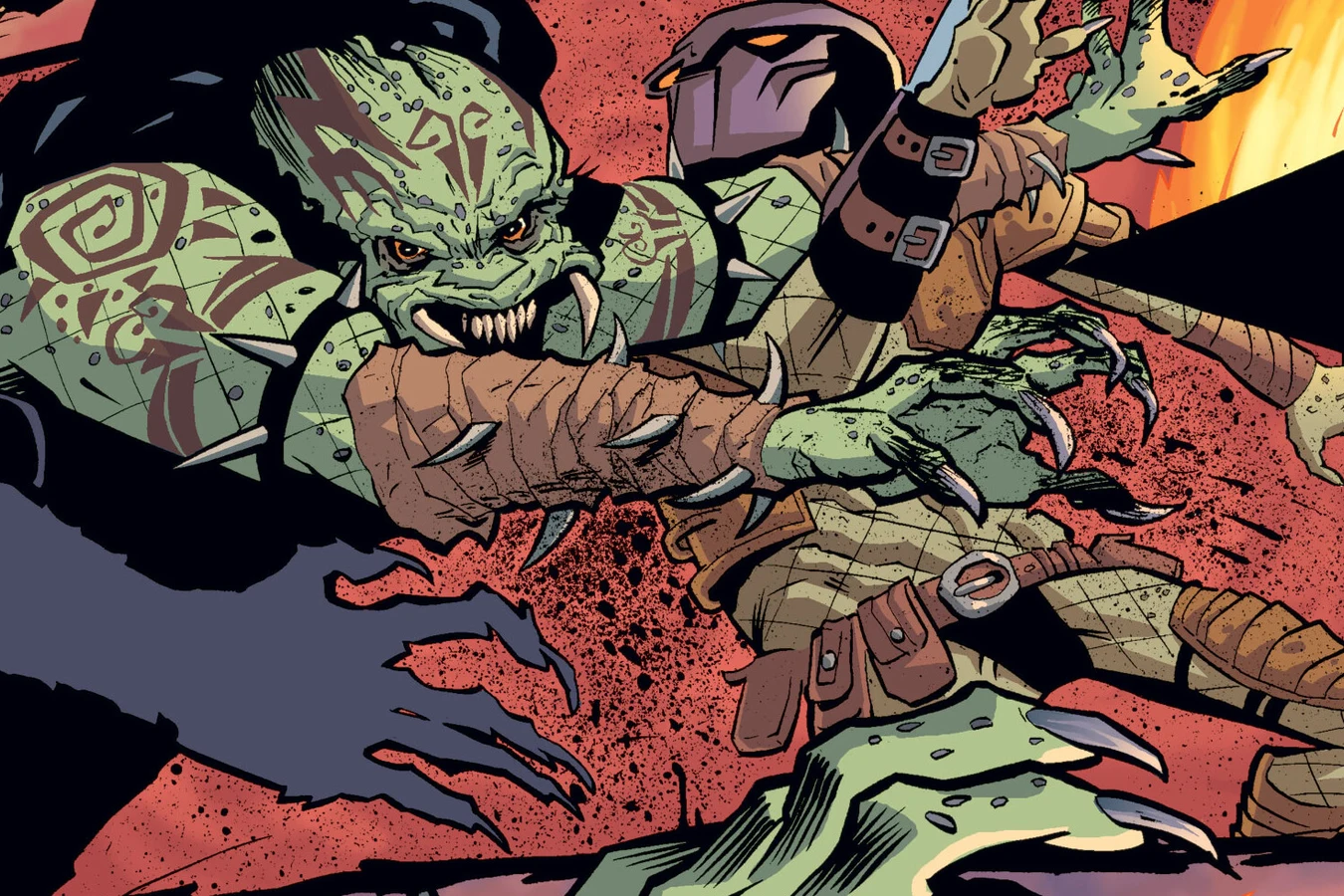
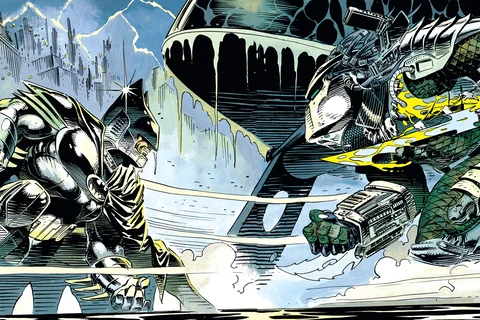
The series opened away from Earth on a Predator world of carved stone halls, ritual fire and piled skulls where Bad Blood hunters had already broken the code. Hunters gathered around a brazier while younger warriors in bio-masks pressed an older fighter whose face carried red markings and spiral tattoos. The clash went to fists, blades and armor at arm's length, a close-quarters fight that settled who still held the code and who had broken it. Three young thrill-killers had already left for Earth, and the gathering marked the moment their people chose to send a pursuer after them.
The elder Predator who survived that hall fight was not there for sport among humans. His charge was to find the three hunters who had turned Earth into a private slaughter ground and to end their rampage before the damage spread further. Other hunters watched from the stone while the decision hardened into a mission rather than a debate. What followed on Earth would test whether that code still meant anything once the chase left their world.
Sent From The Homeworld
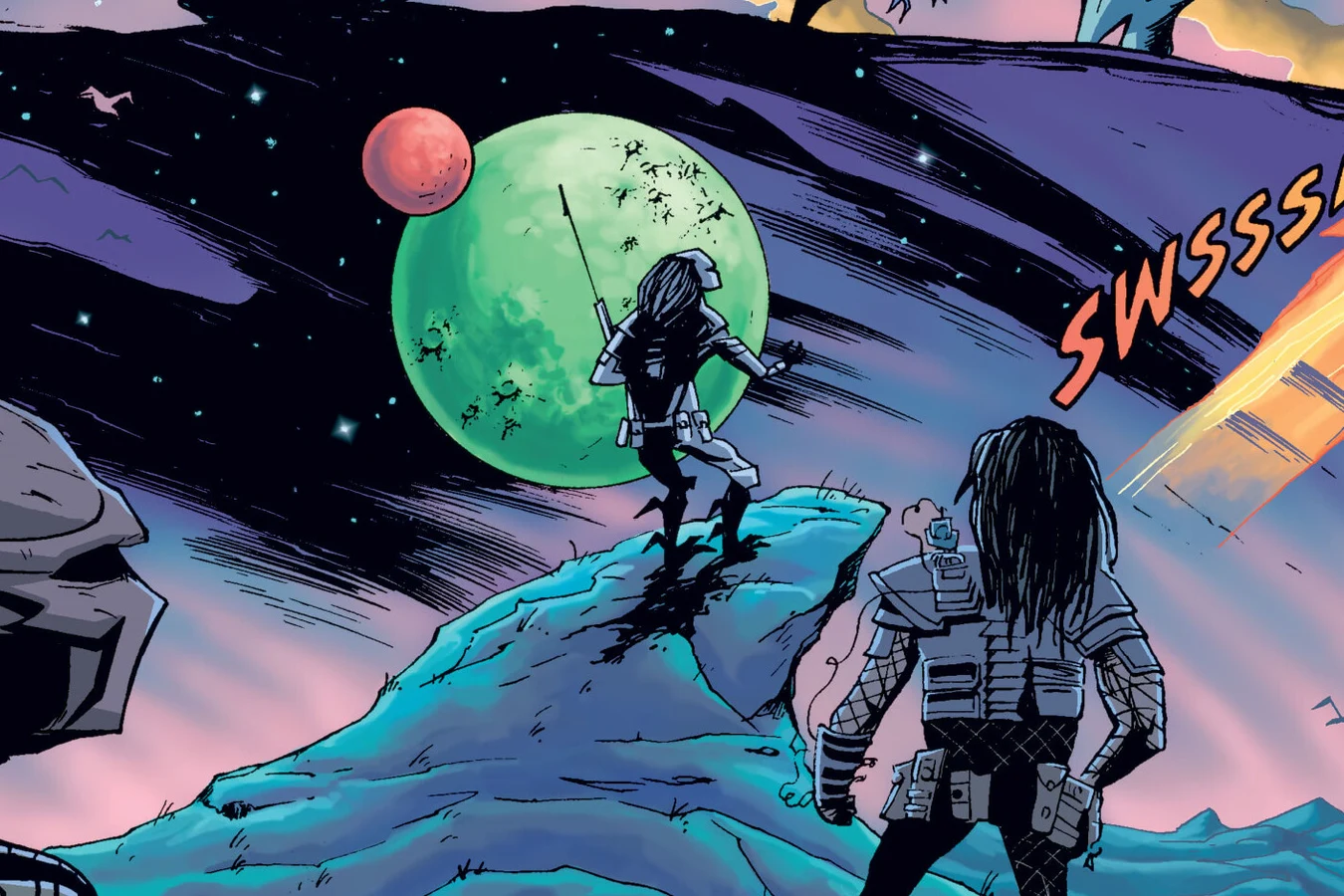
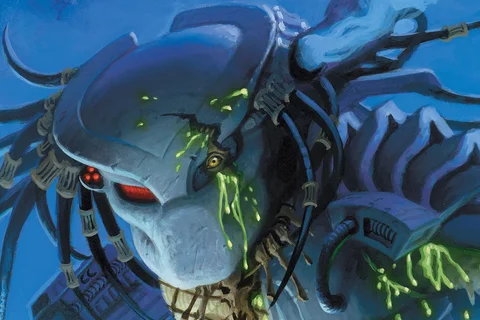
A ship left that world with the elder Predator aboard while other hunters watched from rocky heights under a sky of moons and winged prey. The launch closed the homeworld chapter and sent the pursuer toward Earth with a clear order: find the three thrill-killers, stop them and restore the code they had ignored. On its face the mission was clean. The elder carried spears, blades and a battered mask rather than a ceremonial parade of heavier armor.
What waited on Earth was not a ceremonial hunt among equals. It was a chase through a national park already filling with carcasses, witnesses and a government file that would treat every survivor as a security problem. The hunters on the ridge stayed behind as the ship cleared the rock. From that point the story belonged to Yellowstone, not to the homeworld halls.
Arrival Over Yellowstone
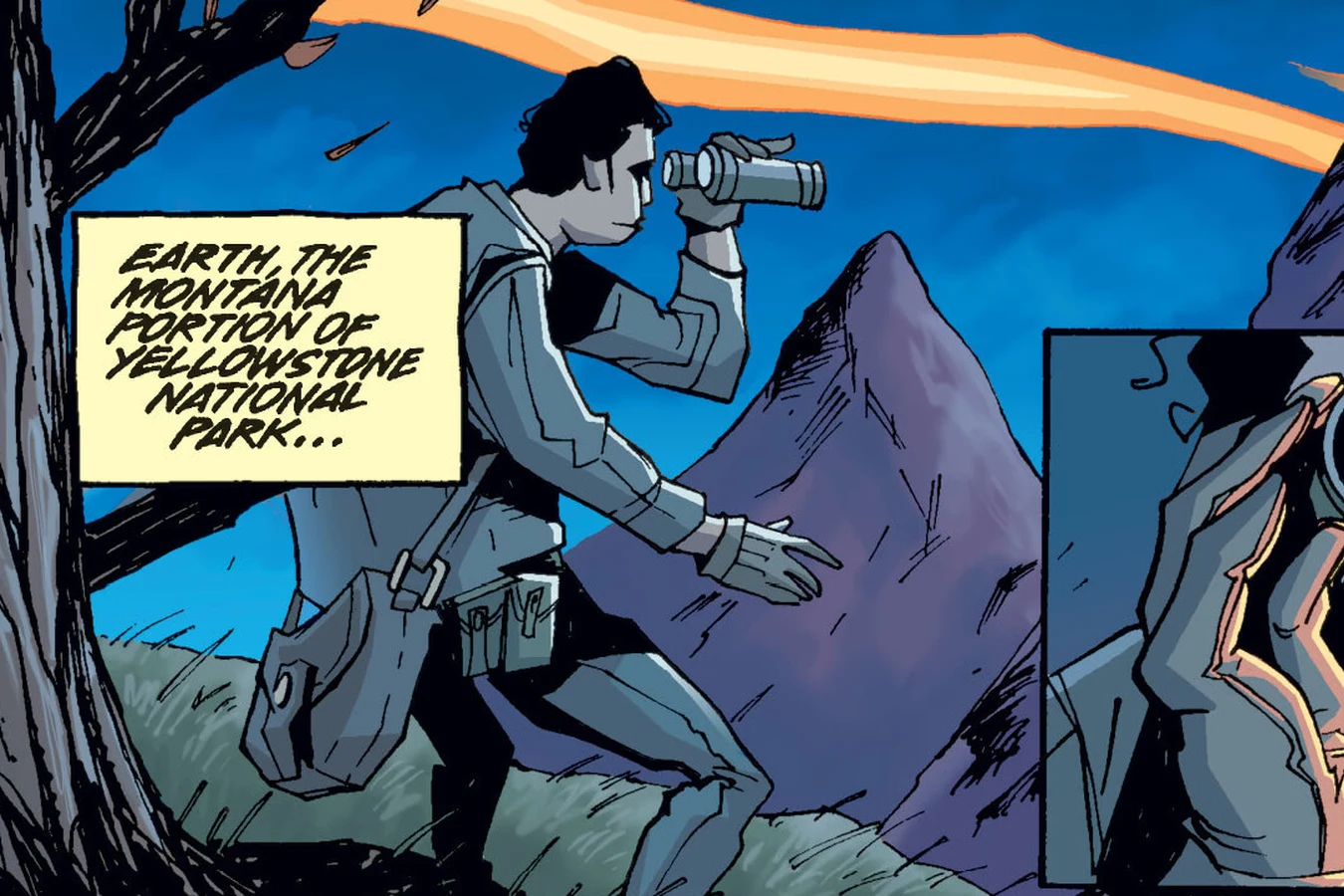
On the Montana side of Yellowstone National Park, a witness on a ridge raised binoculars as a hard orange streak cut the night above the peaks. The light lasted too long for an ordinary meteorite, and the man later told agents he had wondered about a craft before he understood it had a mission. That streak was the elder's arrival on Earth, not a random park fireball. Within hours the sighting belonged in a security interview rather than a ranger log.
In the holding rooms that framed the whole case, a government agent reconstructed how the ship, the carcass fields and two human trails would meet. Maya Bergstrom was already working the wolf reintroduction program in the park. George Sperling, a freelance photographer who had quit news work after Desert Storm, had not yet walked the elk herd that would pull him into the same story. Geography alone would put the scientist, the photographer and the elder on one set of ridges.
Sperling And The Elk Rut
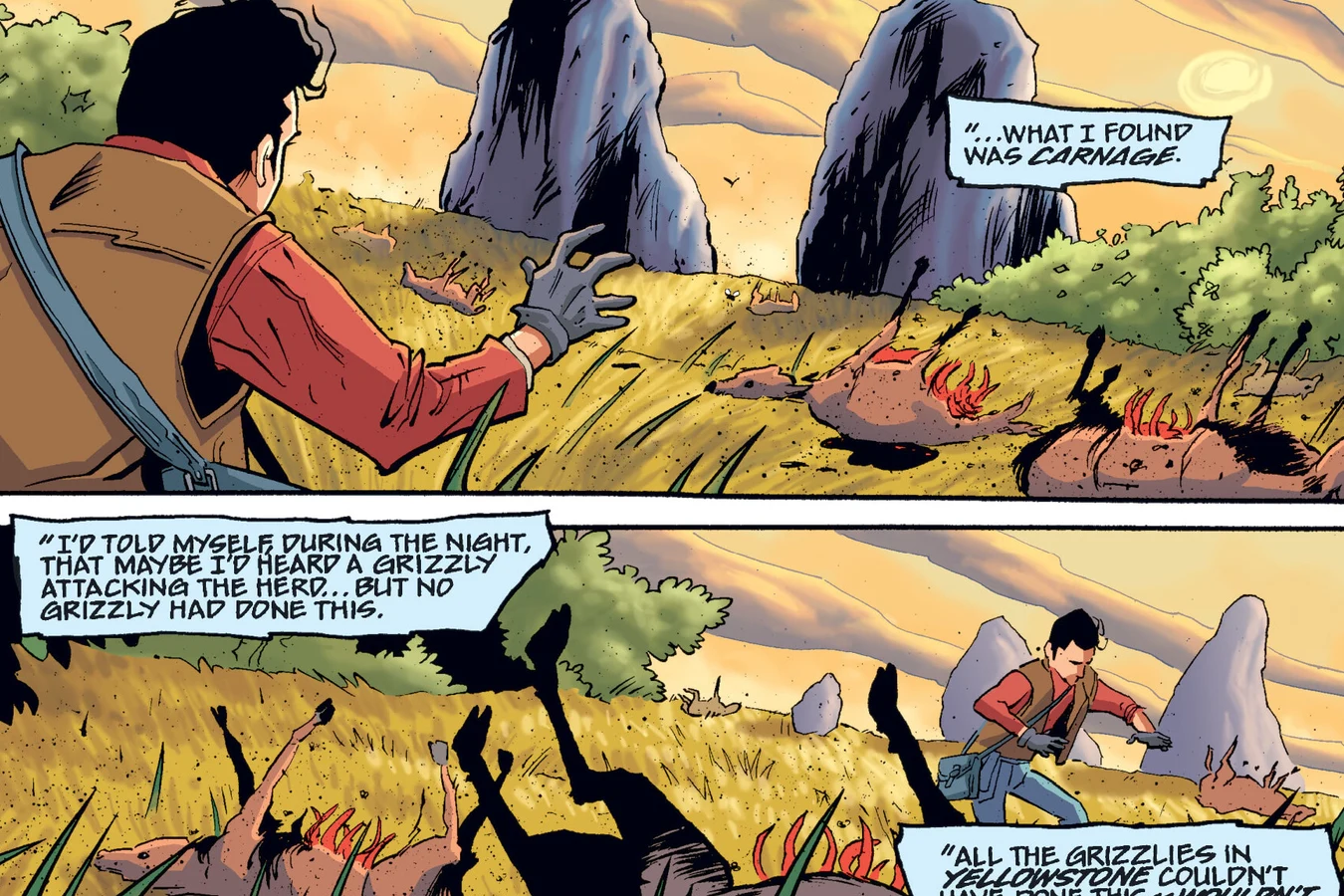
George Sperling came to Yellowstone on a magazine assignment for the elk rut and hoped for wildlife frames he could also sell to hunting titles. What he found instead was a meadow of carnage, carcasses opened in patterns no grizzly would leave and pieces missing as if someone had butchered for trophies rather than food. He told himself during the night that he might have heard a bear on the herd, then walked the field at dawn and discarded that idea. All the grizzlies in the park could not have done what lay in the grass, and would not have done it.
George decided to document the trail for a story he could sell rather than for outrage alone, kept shooting as the kills grew messier and the tracking got easier, and stashed film so the rolls would not vanish if he became a body himself. Night shrieks over the herd left him bleeding and shaken, and by morning he scraped himself together to follow what he still called poachers. Polaroids and developed frames would later matter more than he expected when agents recovered them. The park story that began as inventory for hunting magazines was already a hunt record.
Maya And The Elder
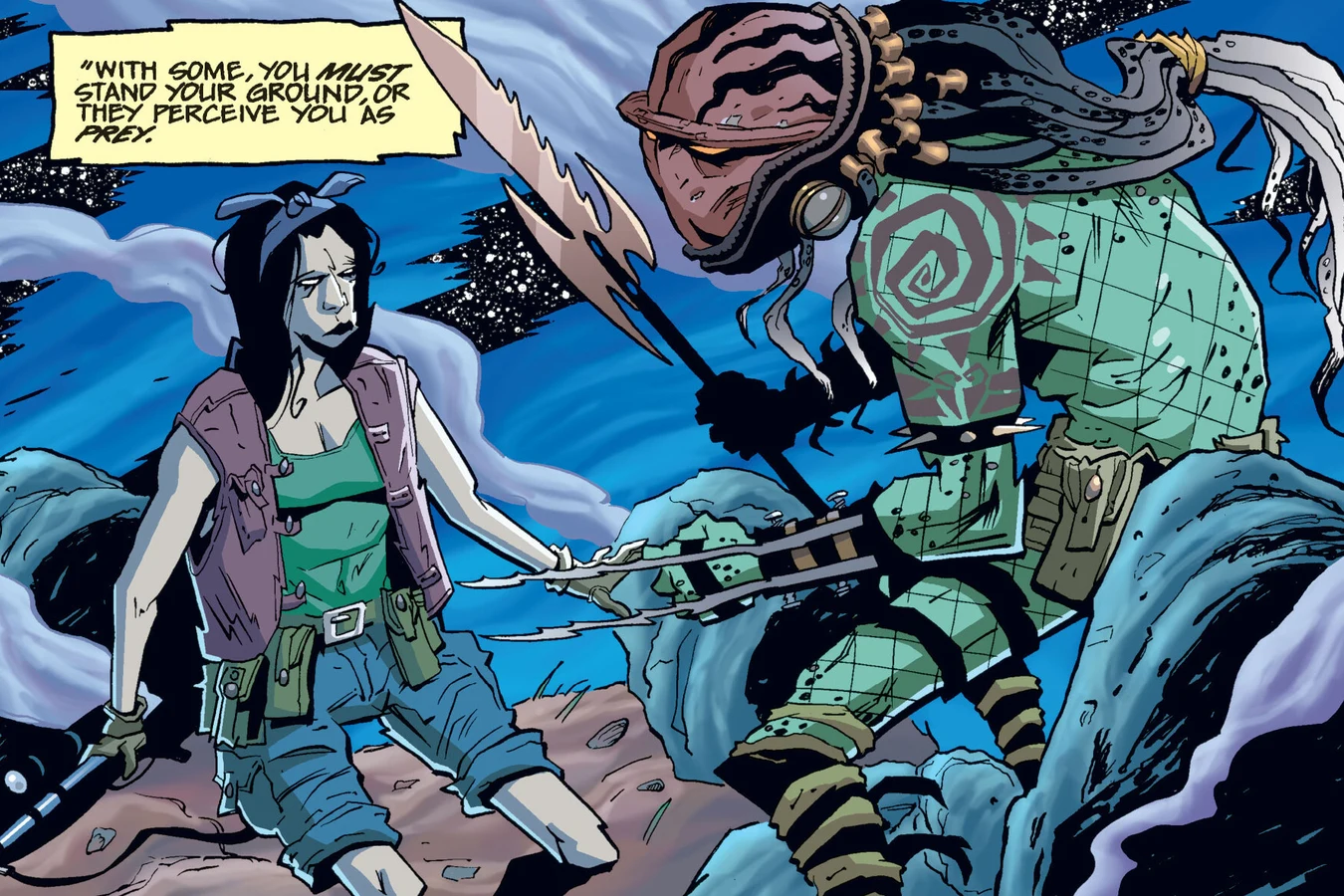
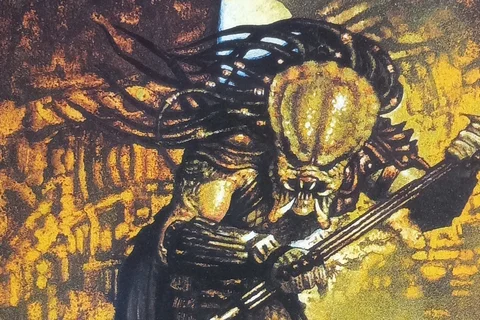
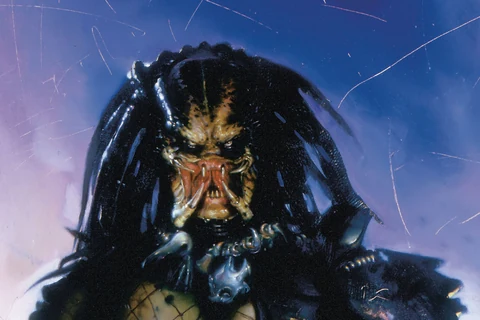
Maya Bergstrom, working the wolf program in the same park, felt an unseen presence while taking notes and recognized the pressure she had felt near Predators on other expeditions. On a peaceful early evening, with the sun starting to slant over the mountains, she and a companion walked a grassy hillside while an unmasked elder Predator with beaded dreadlocks and a two-pronged spear stalked the same slope in the tall grass and palm shade. Mist over the thermal ground hid whatever moved toward her until a copper bio-mask, a bladed polearm and extended wristblades rose out of the dark at a scale that froze her rifle down. When she dropped the gun, the elder stopped treating her as a challenge and moved on, a reaction she later used to argue that this hunter still followed a code. George, scarred by earlier wars and slower to trust, kept his weapons longer when their paths finally met.
The agent's interviews later pressed Maya on that disarming gesture and on what she felt in the moment, and she answered with fear, shock and awe rather than a clean scientific summary. She had not yet seen the thrill-killers work, only an aging hunter who spared an unarmed observer. George saw the same creature as a threat that merely chose not to finish them yet. Between the wolf collar work, the mist and the first face-to-face stand, Maya's notes shifted from park biology to a living hunter she believed she might never describe again.
Stalking Yellowstone
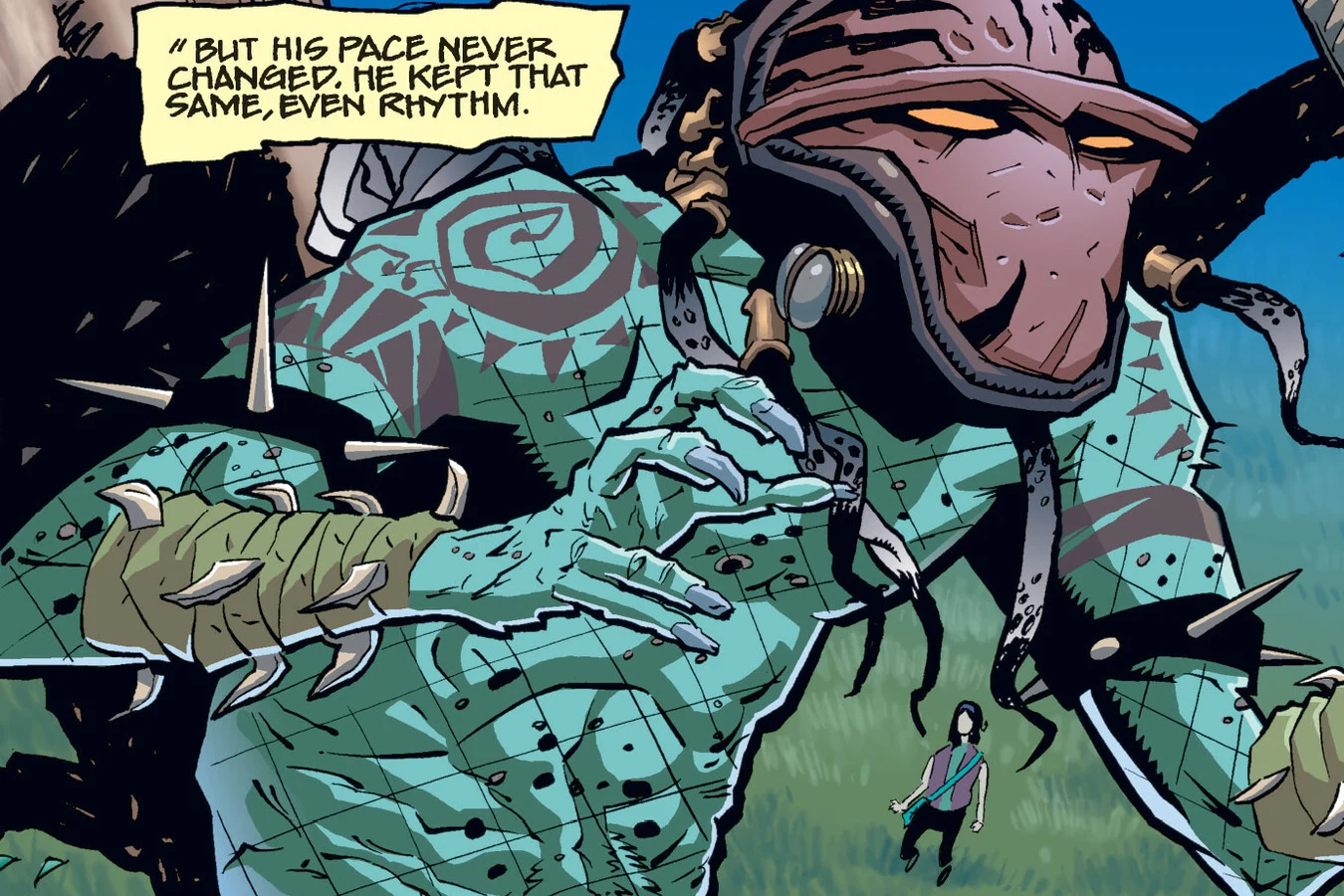
Once the group entered the treeline, the elder changed tactics but not pace. Maya watched him move through the canopy and grass with the steady rhythm of an old leopard, grace narrowed by age yet still precise, and she began taking notes because she believed she might never get another chance to describe what she was seeing. He kept the humans alive when the younger hunters would not have, and he reacted with visible anger whenever they found the thrill-killers' gory displays of body parts left as insults. George clutched his camera and tried to make sense of a hunt that spared observers while still treating the park as a battlefield.
The elder's gear stayed close to spears and blades and a battered mask rather than the heaviest Predator equipment of later comics, and Maya read that restraint as ritual rather than poverty. She told George that a culture able to cross space would not need machete-level weapons unless the hunt itself mattered more than efficiency. He answered with sarcasm about peace protesters and glaciers, but he stayed on the trail because the carcasses, the ranch attacks and the cloaked shapes in the trees left him no clean exit. Behind them, the agent's file on both witnesses grew as radio reports and body counts stacked up outside the park boundary.
Thrill Killers Near The Park
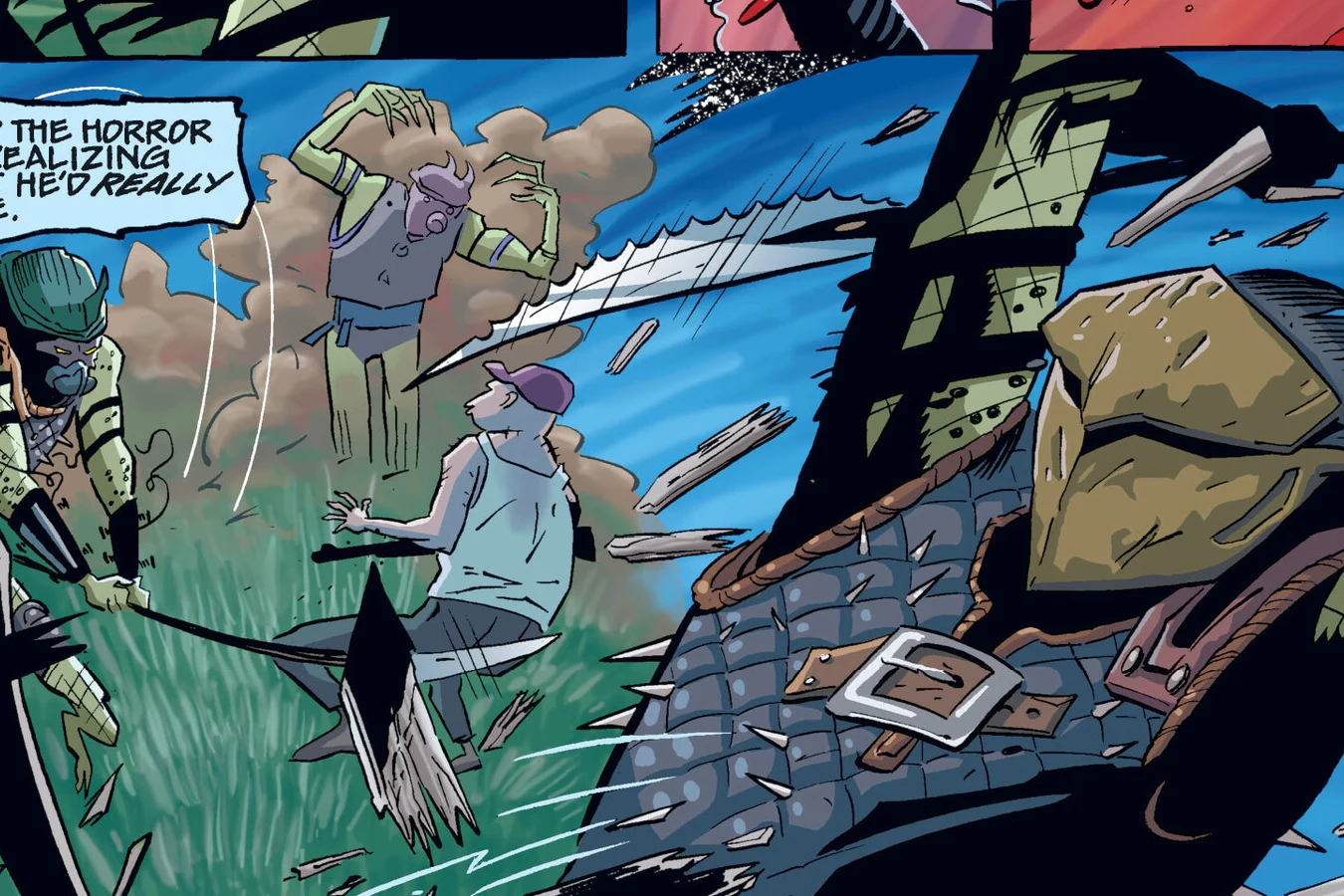
The three younger Predators treated the land around Yellowstone as open season. On a rural ranch a man tried to draw them away from his family with a shotgun, and the hunters answered by smashing through fence and yard before closing the distance on him in the grass. Inside the house they turned a family's rooms into a joke of spears and severed trophies, and outside they ringed the kneeling rancher while he still clutched a rifle he no longer understood how to use. Maya and George saw cloaked shapes flank them in the forest like a pack, and George refused to lay his gun down even after Maya reminded him that the elder had stopped threatening her once she disarmed.
George decided the elder was not a random visitor but a hunter sent after that pack. Maya agreed that his mission was to stop the slaughter rather than to collect human trophies, and she pushed them to follow the direction the younger killers had taken. The agent's interrogation later treated those ranch nights as proof that the creatures could not be left as a public story, while Maya insisted the distinction between the elder and the pack mattered more than any single body count. The park and its edges became a three-way hunt among Bad Bloods, their pursuer and the two humans caught between them.
Rangers In The Crossfire
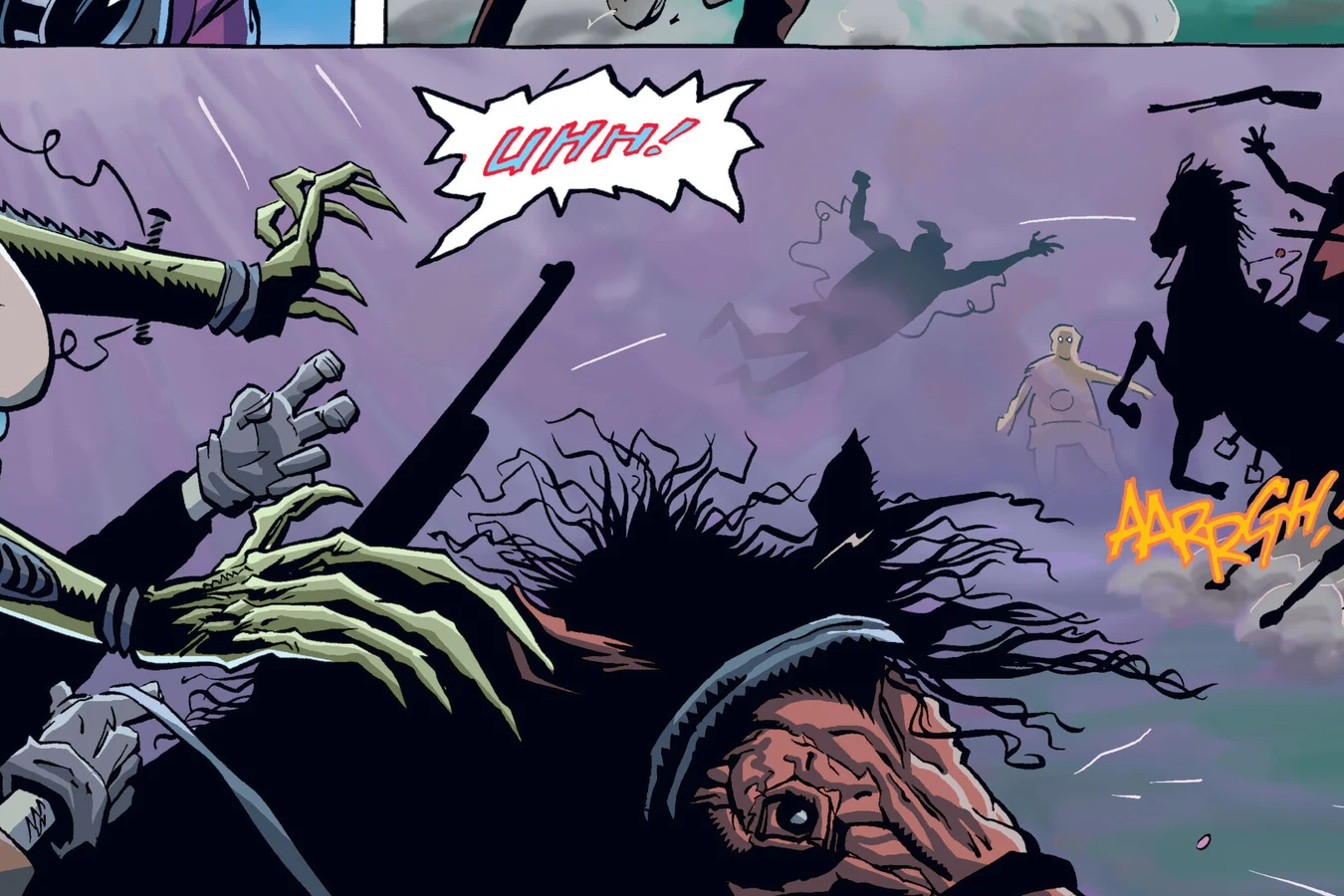
Armed park rangers on horseback rode the edges looking for whatever had been carving up the herds, rifles out in a way that meant they expected more than a tourist complaint. George watched from cover and wondered whether they already knew about the hunters, whether a warning would help or only mark him as unstable, and then the choice vanished. Cloaked shapes hit the riders in a purple haze, horses reared, men left their saddles and green clawed hands closed on flesh and tack. It was too late for thinking and too late for the rangers.
The pack carved up everyone it met, armed or not, and treated hikers, ranchers and uniformed riders as the same sport. Maya later saw the same flanking pattern in the trees and told George the younger hunters moved like hyenas, not like the elder who had spared her. George kept the shotgun up anyway, because this lot had already proved that dropping a weapon bought nothing from them. Each new body count pushed the agent's cover story harder while the elder's trail still pointed toward a final meeting with his own kind.
Maya And The Pack
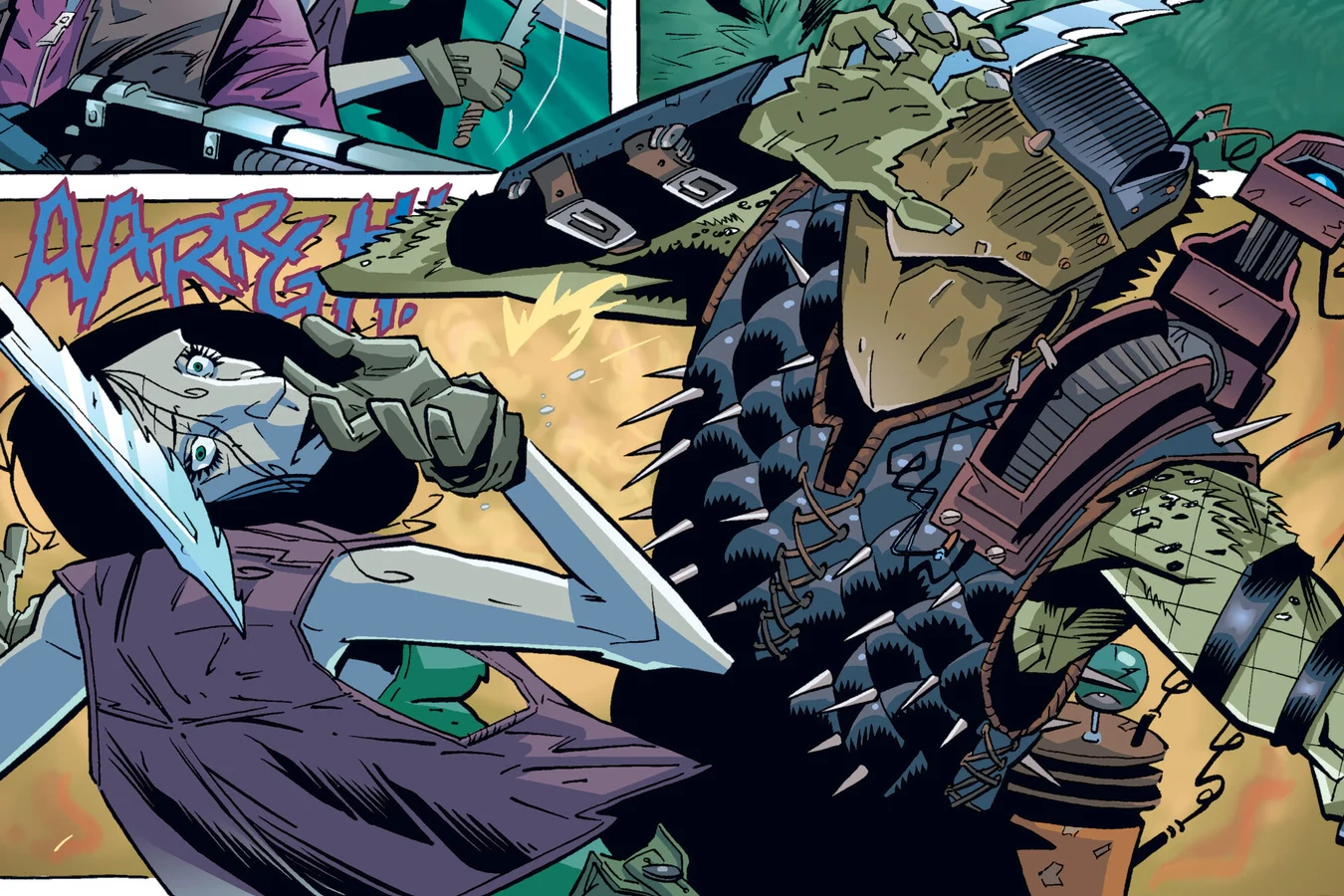
The pack did not stay at the edge of Maya's trail for long. One of the younger hunters closed to arm's length in spiked armor, and Maya went down hard under the rush with a scream that left no room for notes or theory. Unlike the elder who had paused when she dropped her rifle, this Bad Blood treated her as prey the moment she was in reach. George saw the gap between the two kinds of hunter in a single strike rather than in a careful argument.
The contact forced Maya and George to stay on the elder's path if they wanted any chance of surviving the park. She had argued for a code after the mist confrontation, and the pack's answer was a lunge that nearly ended that argument for good. The agent's later file counted the wounded and the dead without drawing the distinction Maya still insisted on. From that point the humans were no longer observers trailing a stalker. They were inside the same hunt.
Spawning Grounds
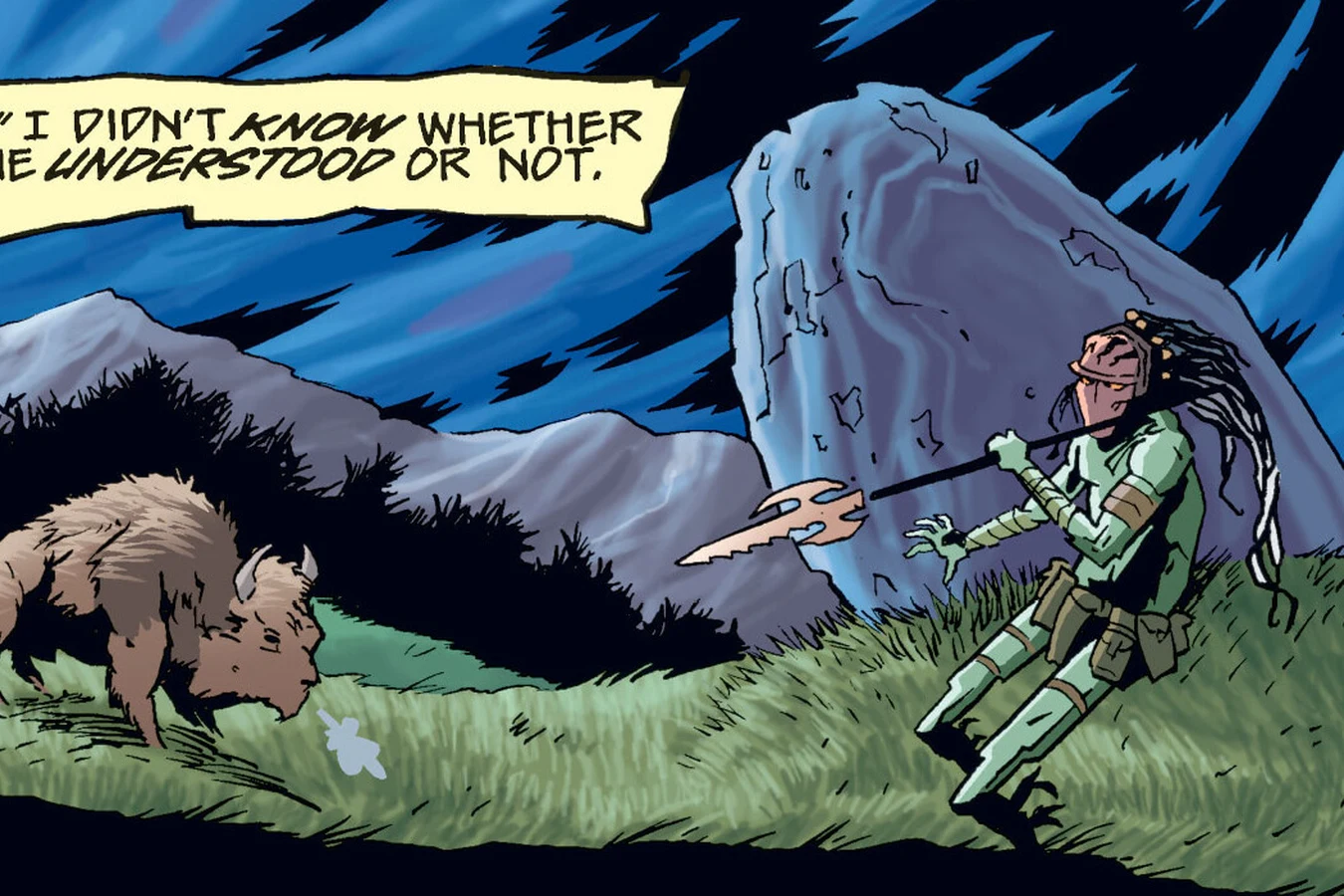
Along the trail the elder still took living game when the moment offered it. When a bison bull charged, Maya shouted a warning, then watched him plant his spear, stand his ground and meet the animal on his own terms instead of cutting the herd apart for sport. That contrast with the ranch massacres sharpened her working theory. She told George it might be a mistake to call the hunters aliens at all, and that they could be returning to old spawning grounds on a homing instinct across space.
Maya pressed the idea further in the hills at dusk while the elder's silhouette held the ridgeline ahead of them. She argued that Earth's mountains had once held the largest game on the planet, that such hunters could have evolved here under different conditions, survived, run out of challenges and moved on, and that the present visits looked like returns rather than first landings. George mocked glacier stories and sci-fi invasions, yet he kept walking because the elder's refusal to slaughter them did not match the pack's behavior. The government agent who later heard the hypothesis treated it as dangerous knowledge rather than folklore, and the interviews after the pickup made clear that suppression mattered as much as containment.
Trophy Trees
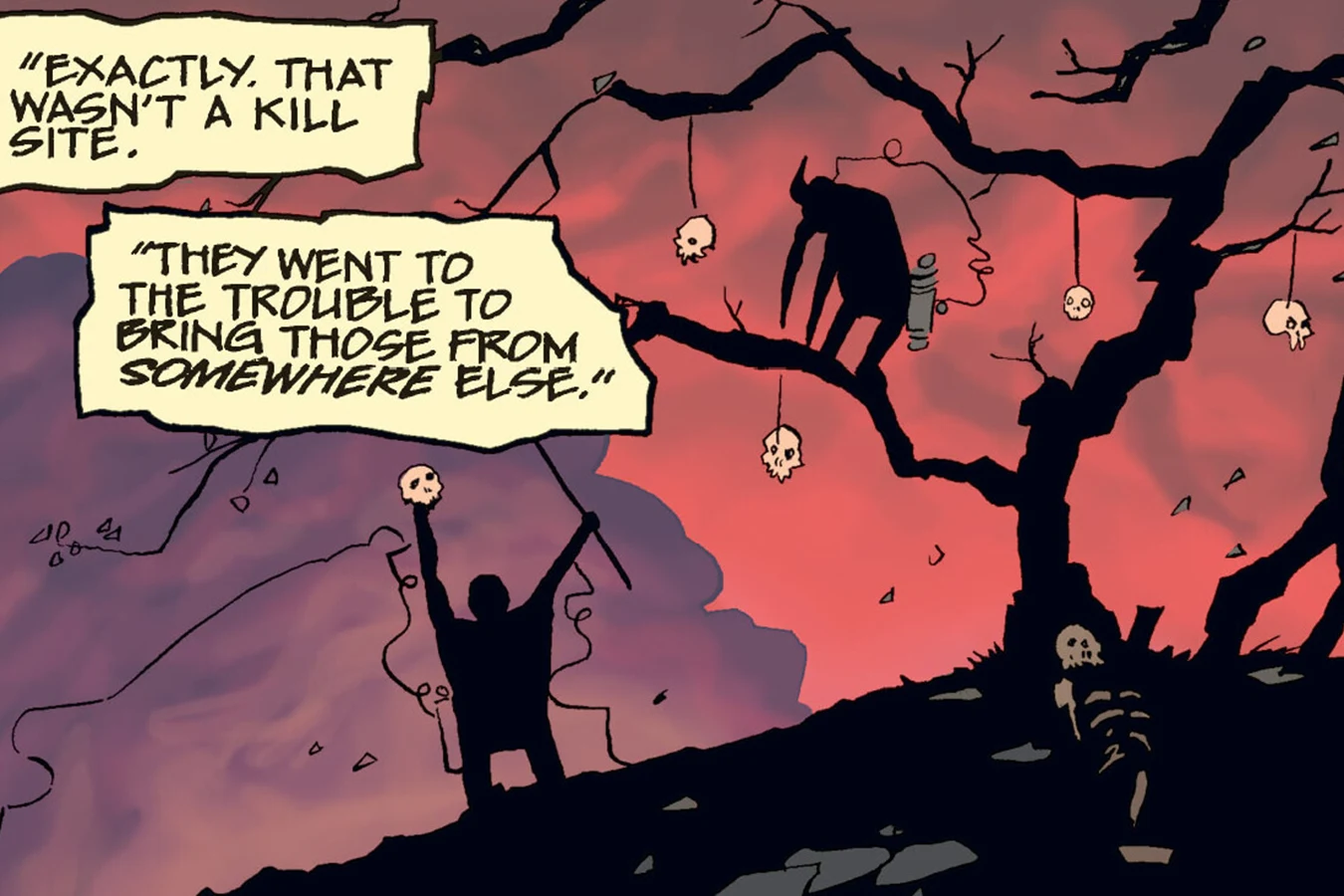
Deeper in the woods the younger hunters left more than carcasses. Skulls hung from ropes in the trees like a warning or a joke, pale against the teal haze while a Bad Blood lingered near the display with a spear in hand. Distant figures on a ridge had no idea what waited below them in the branches. Maya and George read the hanging trophies as proof that the pack hunted for insult and show, not for food or a clean kill.
The elder Predator's anger at those displays matched the code Maya had guessed at from the first mist confrontation. Where he still took game on his own terms, the thrill-killers built galleries of bone for anyone who followed their trail. The agent's later reconstruction treated the trophy trees as one more reason the park could not keep an honest body count. For the two humans on the ground, the skulls meant the pack was still ahead of them and still playing.
Predator Against Predator
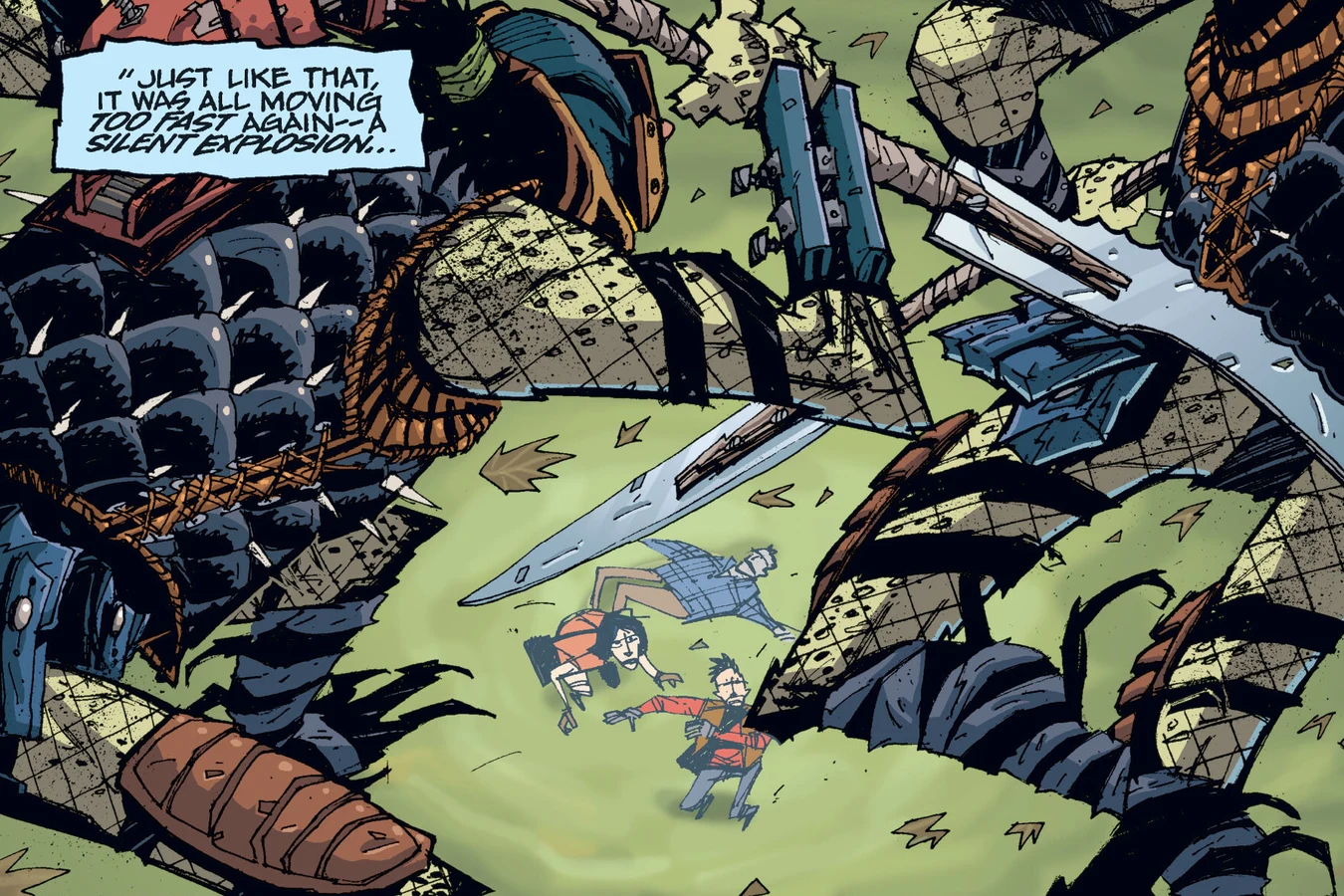
The trails finally met in open ground when the elder caught the thrill-killers and the fight went loud and fast. Spears and blades filled the space above Maya and George, who looked small under armored legs and swinging glaives while the younger hunters tried to overwhelm age with raw power. Maya ran toward the clash against George's protests because she would not watch from cover while the only hunter who had spared them took the pack alone. For a split second she felt the three of them locked into one pride as bodies slammed together under a hard sky.
The younger hunters fought without the code that had spared her, and the elder took wounds while still trying to end their rampage. Cameras cracked, humans went down hard and the park clearing became a war between monsters with two witnesses trapped inside it. When the government team moved in afterward, the living and the dead were sorted into custody, stretchers and sealed crates. Official language would soon erase the fight even as Maya's memory of that pride moment refused to fade.
The Pride And The Cover-Up
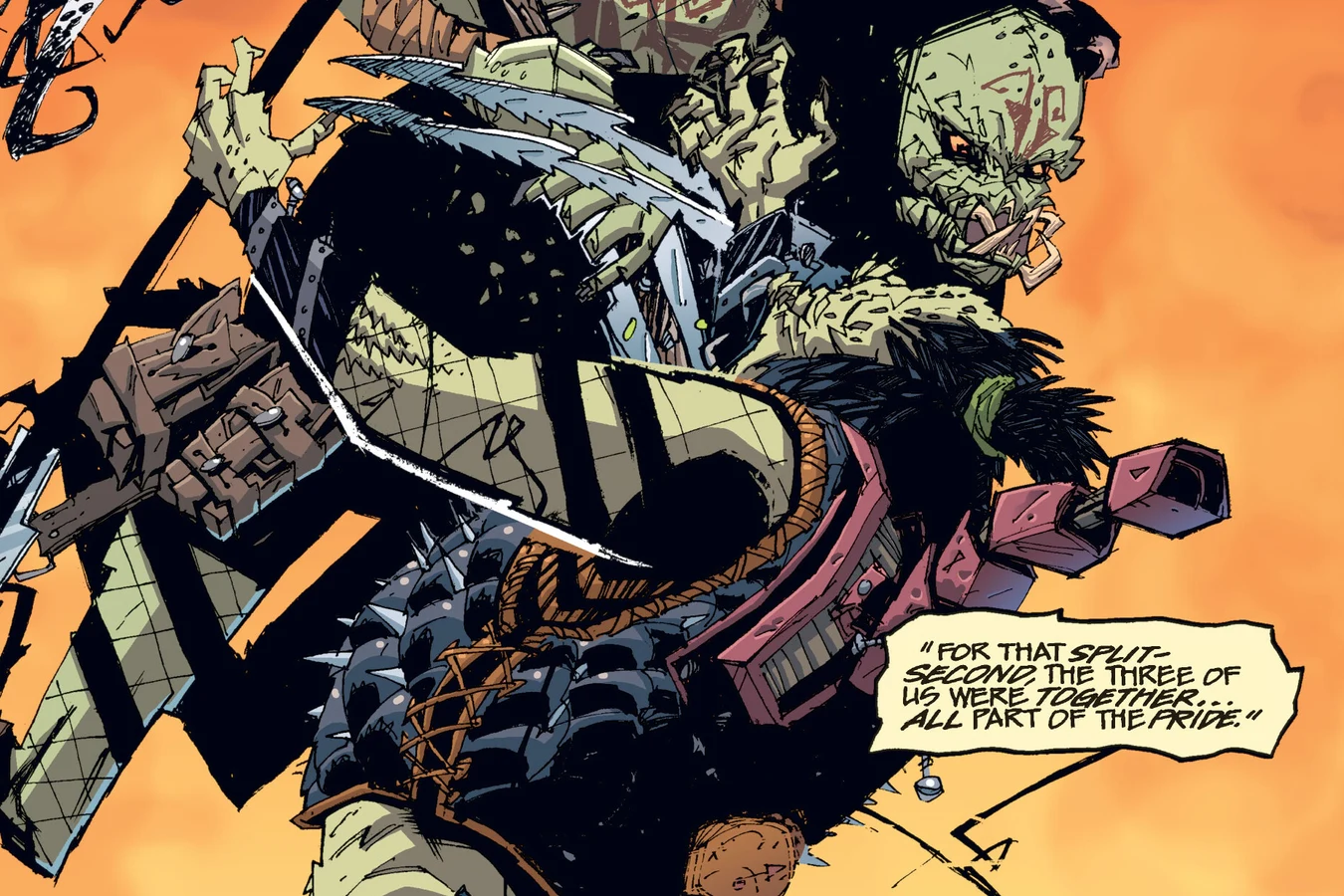
After the clash the park story collapsed into pickup crews, holding rooms and sealed files. Maya could not say what became of the old one once the recovery teams rolled in. She liked to think he reached a ship and went home, doubted that outcome, and allowed that his body might have been taken when the survivors were lifted out. Officially the hunters left no trace, yet a film canister stayed hidden in a hollow tree and the agent's questions made clear that Maya's Earth-origin hypothesis was part of what the cover-up was meant to bury.
Bodies were not returned to families with honest causes of death, park records were altered and vehicles that might have identified victims disappeared from the narrative. George survived with tourniquets, interviews and a photographer's stubborn refusal to forget what his camera had almost kept. The pride Maya felt in the clearing ended as a security problem the government intended no one outside that room to name. What remained open was only the elder's last path after the pickup lights left the ridges.
One Last Opponent
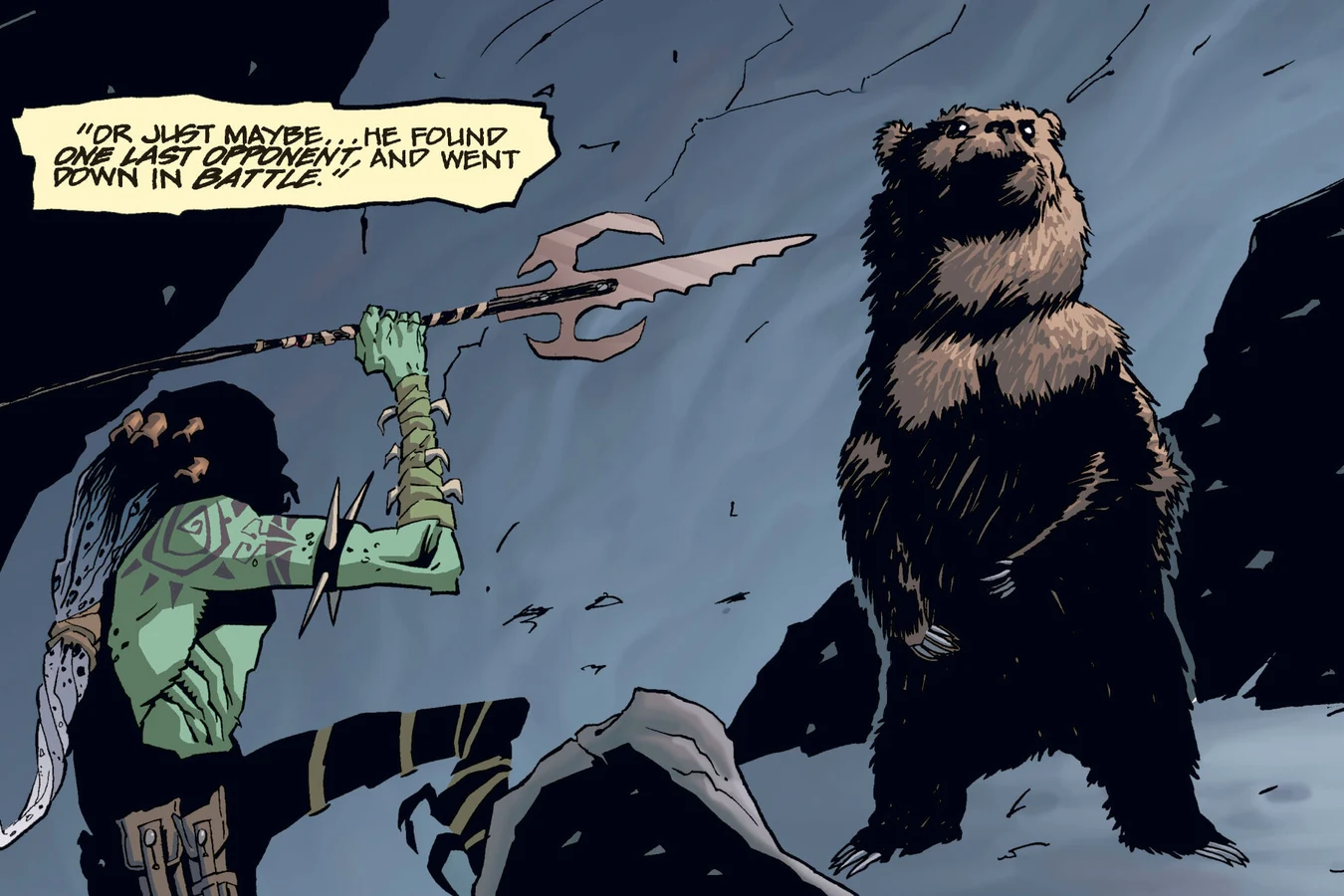
Maya also pictured the elder climbing away to die quietly like other large predators, or finding one last opponent such as a grizzly and going down in battle. In the story's closing beat that second picture held: an aging hunter with a serrated spear faced a rearing bear inside a dark cave, still choosing a fight on his own terms rather than a sealed crate. Whether that end was fact or the hope she kept after the interviews, it matched the code she had watched him follow from the mist to the clearing. The pack had hunted for sport. He still met living game as a hunter.
The government file never confirmed a cave kill or a homeward ship. It confirmed only that Yellowstone was cleaned, the witnesses were questioned and the official record left the hunters without a trace. George's hidden film and Maya's unanswered questions were what remained outside that file. The series closed on the elder's last possible stand rather than on the agent's cover story.
Key Characters
- Maya Bergstrom was a naturalist on Yellowstone's wolf reintroduction program. She first felt the elder as an unseen presence, dropped her rifle when he confronted her, followed him through the park and argued that Predators may once have evolved on Earth.
- George Sperling was a freelance photographer and former combat news shooter who left that work after Desert Storm. He came to Yellowstone for the elk rut, found butchered herds, kept his weapons longer than Maya and survived the Bad Blood attacks beside her.
- The elder Predator was an aging hunter sent from a Predator world to stop three thrill-killers. He spared Maya when she disarmed, tracked the pack through Yellowstone, took game such as bison on his own terms and vanished after the final clash.
- The three Bad Blood Predators were young hunters who ignored their race's code. They carved up hikers, ranchers and park rangers near the park, left skull trophies in the trees and fought the elder when he caught them.
- The government agent was an unnamed official who interrogated the survivors after the pickup. He pressed Maya on the elder's fate and treated her homeworld hypothesis as knowledge to contain rather than publish.
Editions
Dark Horse Comics published Predator: Homeworld as four full-color issues from March to June 1999, with Jim Vance and Kate Worley on script, Toby Cypress on pencils, Mark Lipka on inks, Dave Stewart on colors, Michael Taylor on letters and Joel Naprstek on painted covers. Jeremy Perkins designed the books under editors Philip Amara and Mike Hansen, and Cypress also inked on the final issue. Dark Horse did not issue a standalone Homeworld trade paperback in the 1990s beyond the original floppies. The story was collected in Predator Omnibus Vol. 4 in September 2008 beside Predator: Primal, Predator: Nemesis, Predator: Captive, Predator: Hell Come a Walkin' and Predator: Demon's Gold.
Dark Horse released the complete series digitally on June 5, 2013, reusing Naprstek's issue #1 cover. After Marvel took the Predator comics license, the story returned in Predator: The Original Years Omnibus Vol. 2 in May 2024, the same hardcover that reprints Captive, Nemesis, Demon's Gold and the later Hunters trilogy. The Omnibus Vol. 2 printing keeps Cypress's Yellowstone interiors in color under the Homeworld cover lineage for the story open.
Behind The Scenes
Dark Horse solicited Predator: Homeworld in early 1999 as a relaunch beat for the Predator line, with Vance and Worley billed as a married writing team using the series to plant a backstory for why Predators keep returning to Earth. Issue #1 reached shops on March 24, 1999, at $2.95 for thirty-two full-color pages, and the remaining three issues followed through June. Toby Cypress's jagged interiors and Joel Naprstek's painted covers gave the book a look apart from the cleaner late-1990s Earth hunts around it. Philip Amara and Mike Hansen edited the series, and Jeremy Perkins handled design on the Dark Horse issues.
Promotional copy for the first issue called the photographer George Maxwell, while the lettered dialogue that introduces him in the story names George Sperling. Later indexes sometimes list the same man as George Sterling, but the comic lettering on that page is the name used here. Maya's Earth-origin hypothesis, which brushes the same ground as later Yautja origins debates, is the series' central lore claim, and the unnamed agent who debriefed her behaved like the kind of containment officer later comics tie to units such as OWLF, though Homeworld never prints that acronym. In the Dark Horse line the book follows Predator: Demon's Gold and precedes Predator: Xenogenesis.
Conclusion
Predator: Homeworld is the March-June 1999 Dark Horse four-issue series by Jim Vance, Kate Worley and Toby Cypress, with colors by Dave Stewart, letters by Michael Taylor and painted covers by Joel Naprstek. It follows Maya Bergstrom and George Sperling from Yellowstone carcass fields and ranch massacres to an aging Predator sent against three Bad Blood thrill-killers, and it ends with a government pickup, sealed interviews and Maya's unanswered question about whether the elder died, fled home or found one last fight. A hidden film canister remains in the woods while the official story leaves the hunters without a trace.
External Sources
- Predator: Homeworld #1 at Dark Horse Comics
- Predator: Homeworld at the Grand Comics Database
- Predator: The Original Years Omnibus Vol. 2 at Dark Horse Comics
Tag Categories: Predator Comics