Predator: Nemesis: Comic Overview

Predator: Nemesis is a two-issue Predator comic series written by Gordon Rennie and drawn by Colin MacNeil, published by Dark Horse Comics with December 1997 and January 1998 cover dates. Gary Fields lettered it, Amy Arendts designed it and Tom Taggart painted the covers. It follows Captain Edward Soames from a Diogenes Club commission against East End killings blamed on "Spring-Heeled Jack" through an India flashback that named the hunter a Rakshasa, to a final duel over a Yautja ship buried under London. It is one of the Dark Horse Predator comics that place a Yautja hunt in Earth's history rather than the late twentieth century.
Story Summary
The story is told from the journal of Captain Edward Soames, an ex-Army officer who returned to London haunted by a colonial hunt that was never a tiger hunt at all. A telegram pulled him into the Diogenes Club, where a silent committee that watches the Empire's capital hired him to stop East End killings the papers called Spring-Heeled Jack. Working with Inspector Lestrade, Soames recognized a Predator's kill signature, heard an Indian witness name it Rakshasa, and followed the trail from a cellar of flayed corpses to a ship buried under the Underground. He cleared the Metropolitan Police from the site, armed himself with an elephant gun, and settled the India score alone in London's sewers and docks before leaving his journal for the Club and booking passage back to the Raj.
Meeting The Men
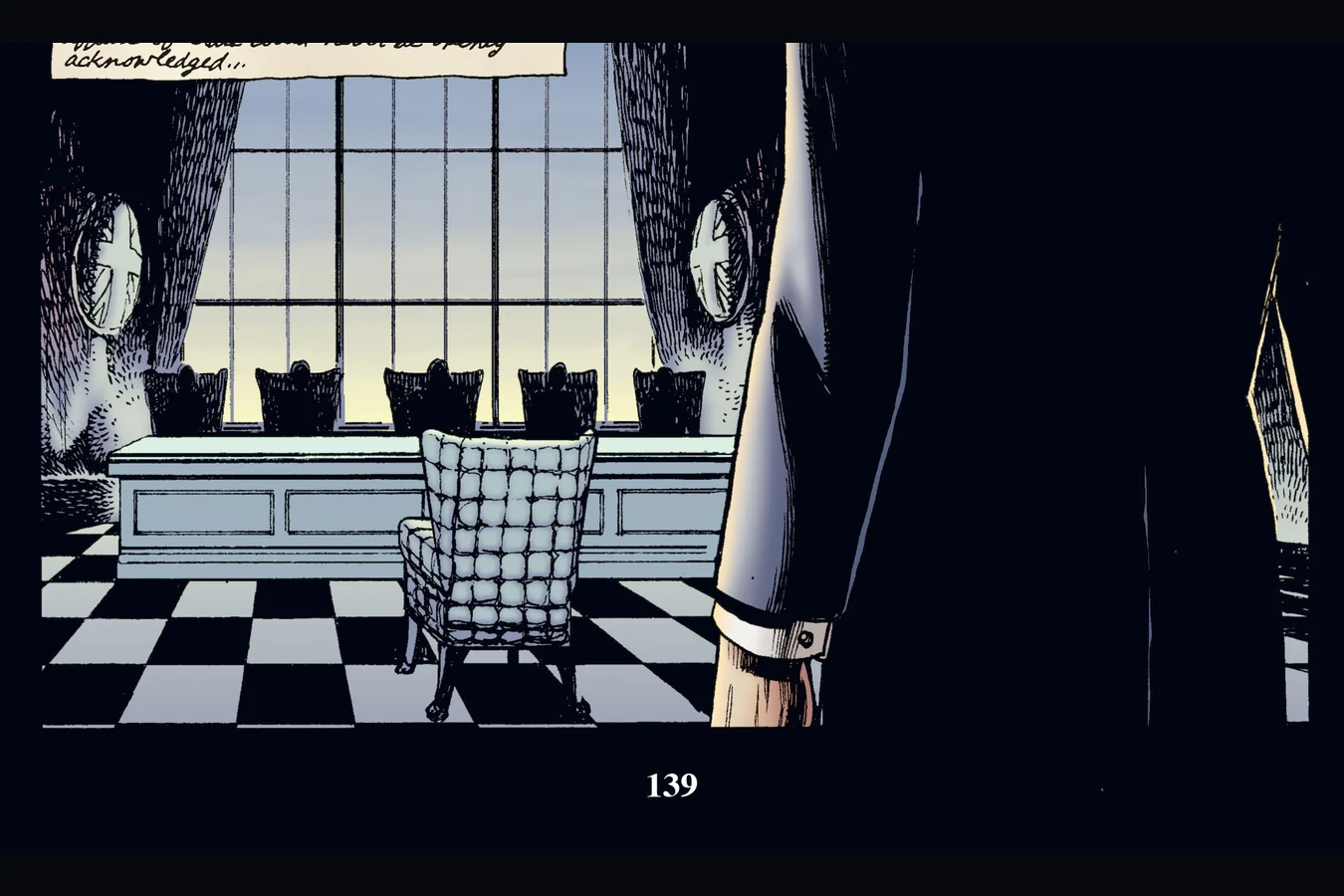
Soames had been home two weeks without a suitable position when a telegram summoned him to The Diogenes Club. An attendant led him down a neoclassical hall with black-and-white tiling and told him the Committee were expecting him. Even out in the Colonies, Soames wrote, the true nature of the organization now seeking his services was well known, even if its role in the affairs of state could never be openly acknowledged. He entered a formal room with a checkered floor, Union Jack crests on the walls and a single empty chair facing a long desk. Behind that desk sat a line of men in silhouette against a tall window, the kind of shadowy Empire patrons who never appear in newspapers.
Mycroft Holmes rose to greet him for the committee and invited him to take a seat. Soames asked whether Mycroft was related to a famous consulting detective; Mycroft confirmed that his younger brother Sherlock occasionally undertook freelance services for the members, but was out of the country. That absence, Mycroft said, was why they had sent for Soames instead. The Club did not choose its agents lightly, and London was already full of unemployed ex-Army officers; they wanted the one man whose India record matched the work ahead.
The Diogenes Club
Mycroft asked how much Soames knew about the new East End killings the periodicals called Spring-Heeled Jack. Soames had only the newspaper accounts; Mycroft said the Ripper would never return to trouble them, because the Club had already seen to that, and that information could never leave the room. The killer currently stalking the city was something far more deadly than a prostitute-hating madman. London was the heart of an empire encompassing a quarter of the globe, and any event that shook the capital would shake the Empire with it. It was the duty of the committee to ensure that nothing threatened the stability of either the city or the empire it controlled.
The committee laid Soames's overseas military career on the table: active service in the Khyber Pass campaigns, a Victoria Cross for bravery in the Madapur uprising, and a resignation that had been a loss to Her Majesty's armed services. Certain events he had experienced in India made him, in their belief, the perfect man for the task. They wanted him to track down and deal with Spring-Heeled Jack by any means necessary. No agency or servant of the Crown could stand in his way; he would have carte blanche and the authority of both the committee and Her Britannic Majesty herself. Soames accepted. He did not pretend to understand affairs of state, but if the security of the Empire was at stake he said they left him little choice, and the Club told him the details were already arranged.
Cellar Massacre
With a letter of introduction Soames met Inspector Lestrade of Scotland Yard, who already knew which gentlemen he represented and warned him not to name them in front of the uninformed branch. A sergeant led them to an East End cellar where the savagery was worse than the Ripper killings. A flayed body hung upside down among other corpses scattered over cards, knives and blood-slick stone — the Predator trophy signature written in Victorian London. Lestrade remarked that a military man ought to be used to a little blood, then admitted he had never seen anything like it among the foreign victims butchered in the district. Soames examined a severed arm still clutching a kukri and answered that he had seen the method once before, years ago, in India.
He told Lestrade he had seen all he needed, to dispose of the cadavers as he wished, and that they would furnish few clues to the killer's identity. The method was not uprising savagery; it was something he had hoped never to see again. He left his card and warned that the killer would strike again soon. The Club's wager on Soames's India experience was already paying off: he alone in London recognized what had walked into the East End.
Rakshasa
Before Soames left, Lestrade produced a witness the killer had somehow spared: a young Indian lad, half terrified out of his mind, who spoke no English. The boy kept saying one word — Rakshasa — and Lestrade, who thought it damned nonsense, had written it down because Soames was a colonial gentleman who might understand. Soames understood at once. In Hindu lore a Rakshasa is a man-eating demon banished from Nirvana; it was a word he had prayed never to hear again, a word that belonged fifteen years ago and half a world away, back in India.
Alone afterward he turned that word over in his journal and in an illustrated book of demons, and he wondered how much the Diogenes Club already knew. Little of anything in the Empire escaped their attention, yet they had still sent for him rather than explain the hunter in plain speech. He looked at his kukri, at a Bengal photograph from 1881, and at fifteen years of trying to atone for a friend he had failed to save. Fate, kismet, karma — call it what you want, he wrote; the Club had given him a second chance to settle the old account.
Ambush In The Jungle
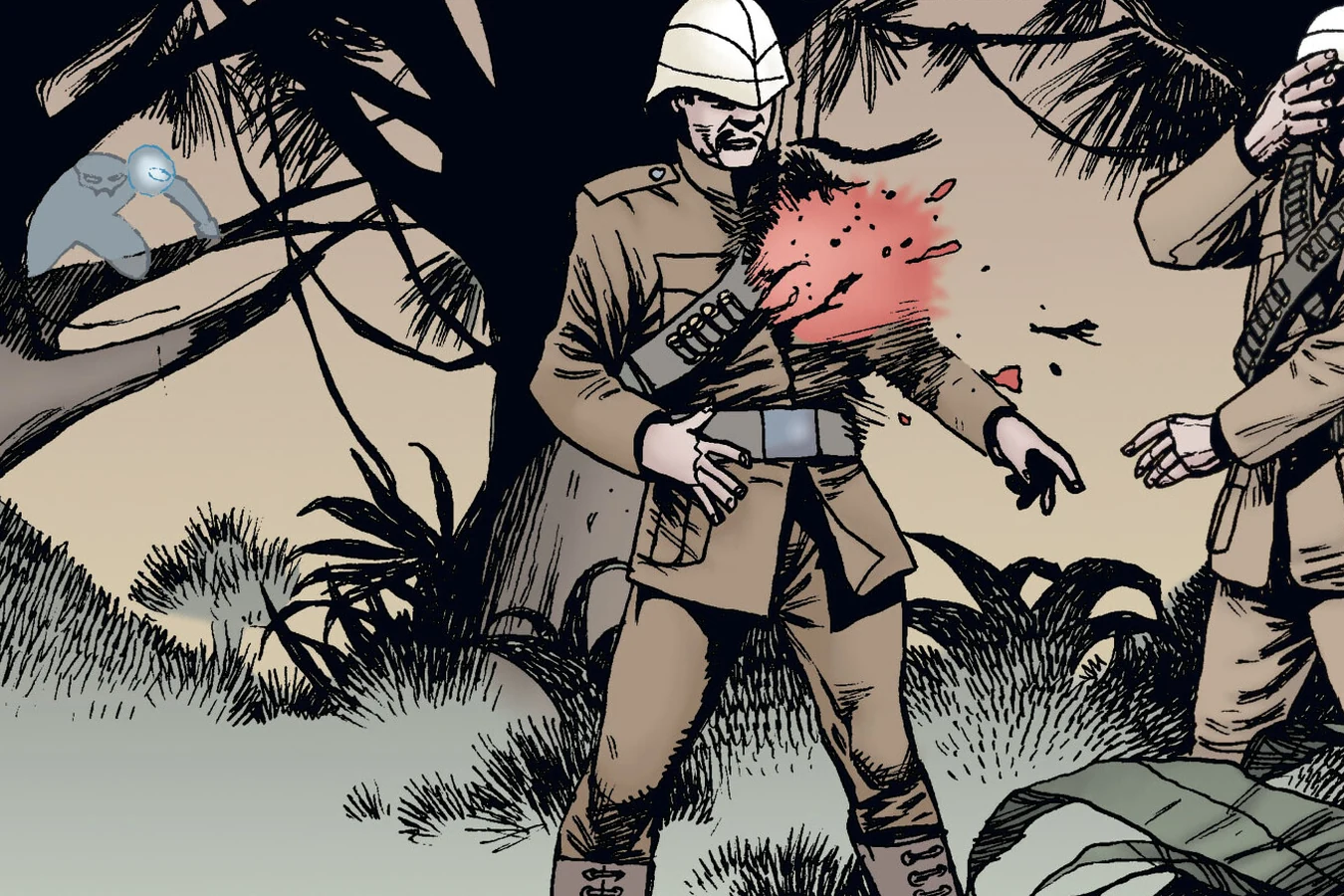
The flashback opened on villagers reporting a "tiger" that preyed on them, with Soames translating for the officers. A Brahmin warned it was no tiger but a demon — a Rakshasa — and the other officers mocked Soames for listening, joking that he would go native and pray to some yellow-eyed monkey god. They planned a trophy hunt before the monsoon anyway. In the jungle the hunt went wrong; the Predator ambushed the party from the branches with cloaking and plasma fire while a dying officer screamed for Soames to help him. The "tiger" that was supposed to decorate the officers' mess was an armored hunter that had already chosen its ground.
Rakshasa In India
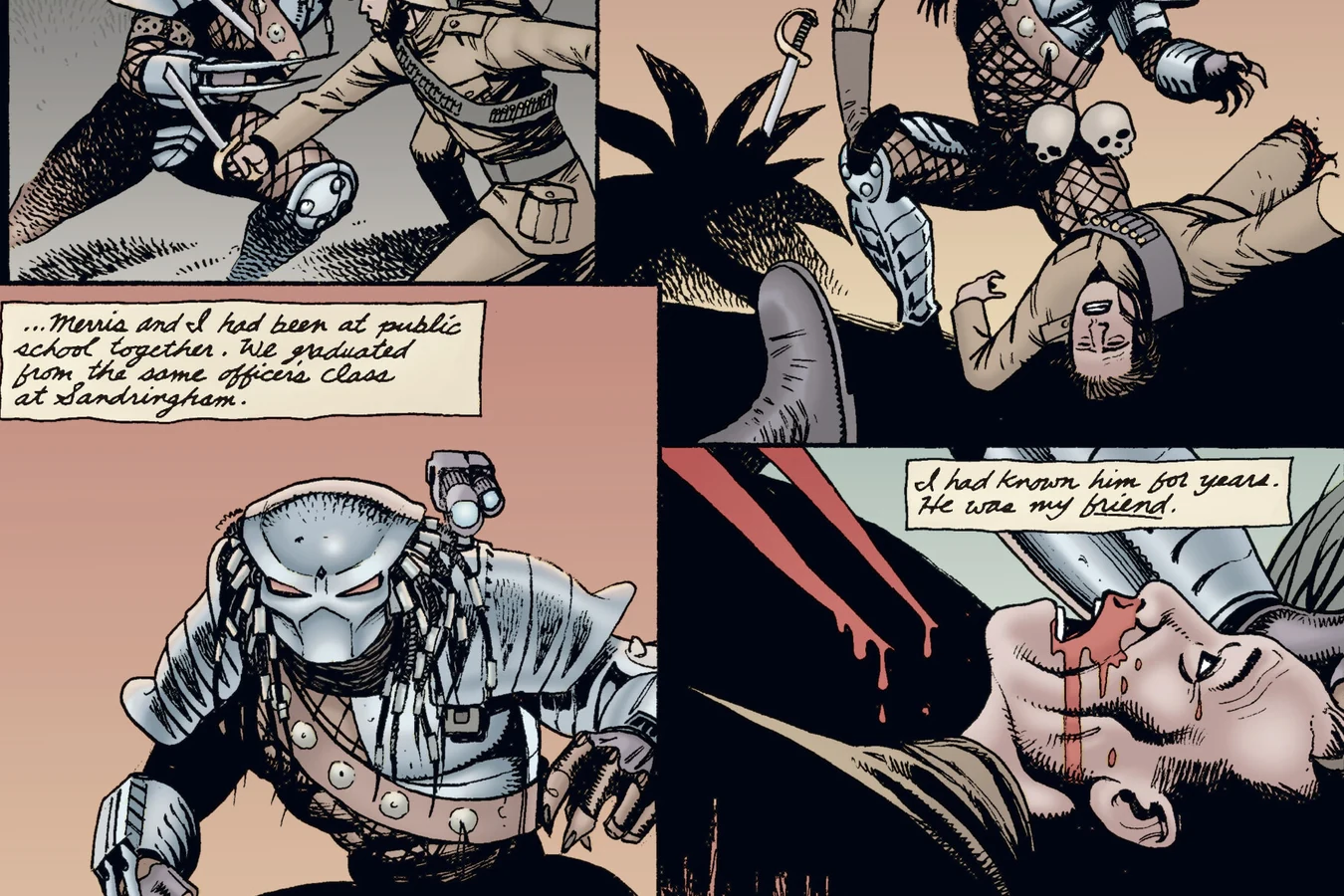
The India sequence ends with the hunter standing over the pith-helmeted dead, the colonial party broken and Soames left with a debt he could not pay on that ground. The Brahmin's warning had been right; the officers' trophy talk had been a death sentence. Soames carried that failure for fifteen years, through more colonial wars and medals that never closed the account. When London's East End produced the same kill signature and the same name, the flashback stopped being memory and became the map for the present hunt.
Hunter Over London
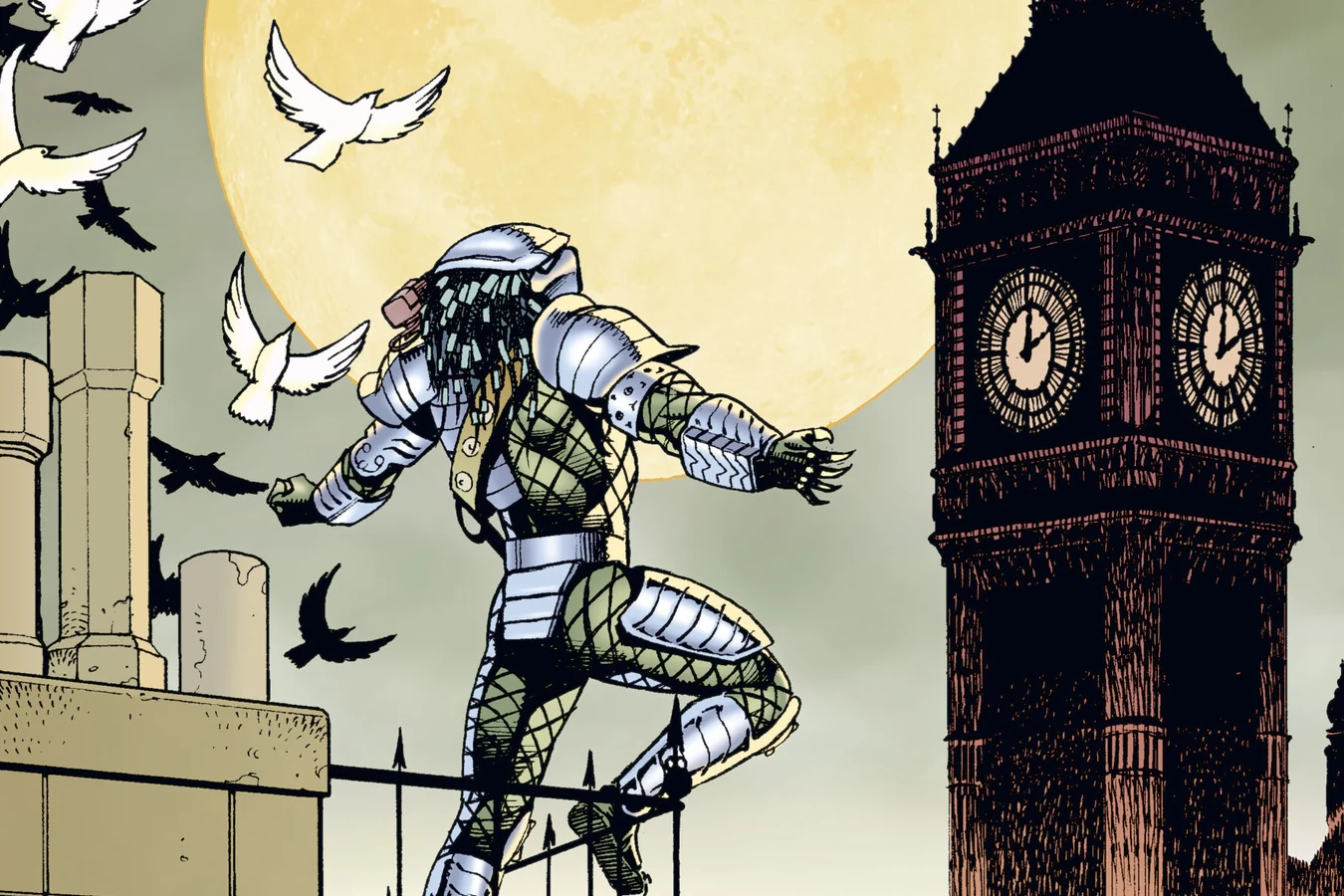
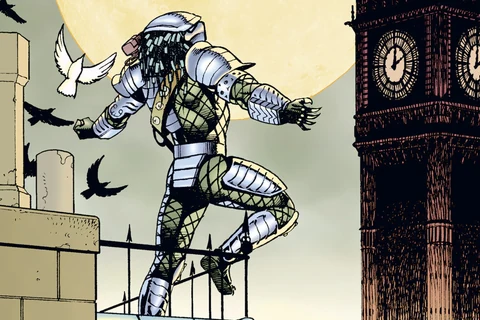
Back in the present the same hunter worked the rooftops and fog of Victorian London, the papers still calling it Spring-Heeled Jack while the Club treated it as an Empire-level threat. Soames's journal framed the city as prey-dense ground the creature had chosen as carefully as any jungle. The India Rakshasa and the London killer were one Yautja, and the investigation was about to drop from crime scenes into the tunnels under the streets.
Object In The Underground
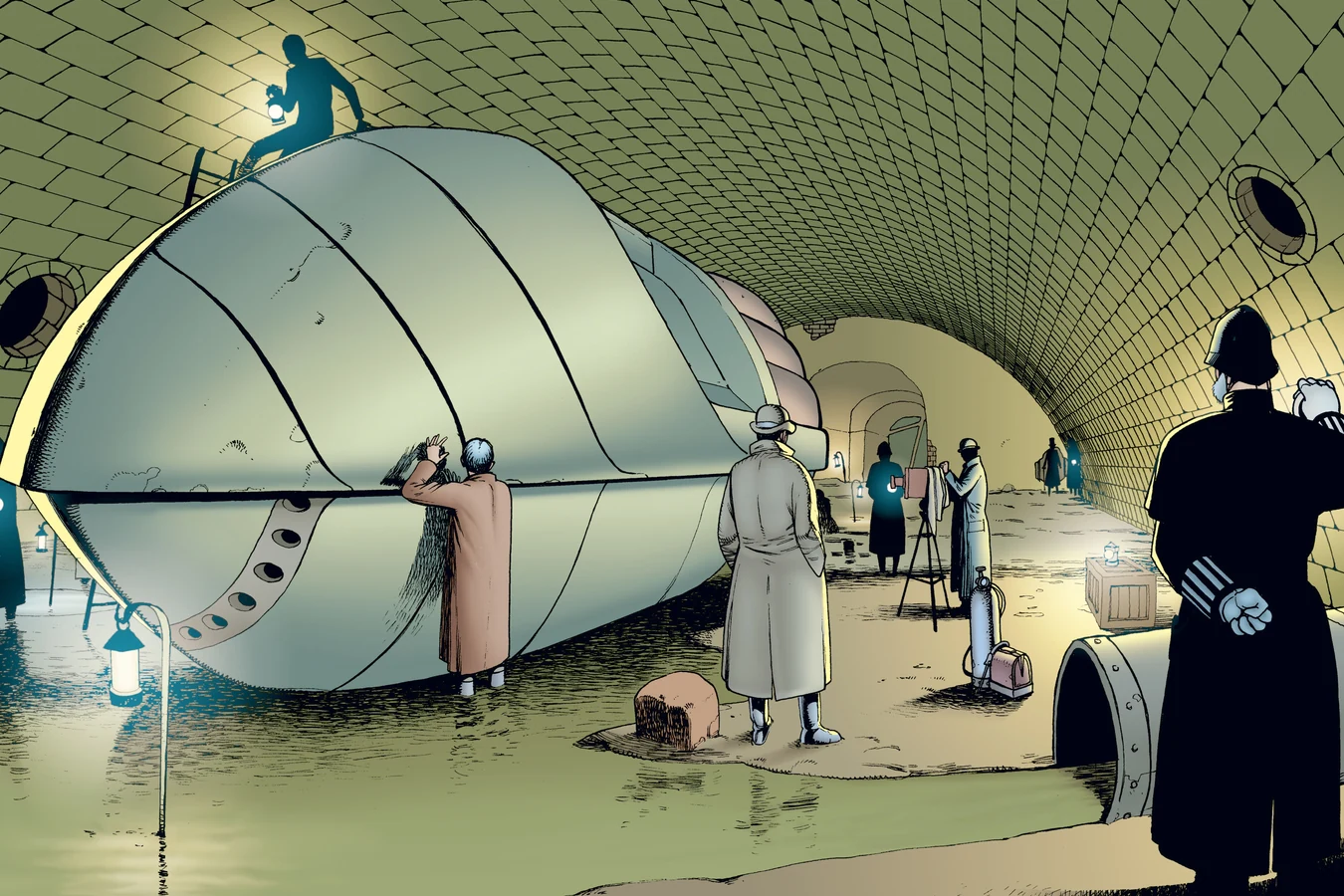
Excavations for an Underground extension turned up an object only Lestrade, Special Branch and the Irish navvies working the dig were supposed to know about. Lestrade brought Soames down to the ship with Sergeant Thackery, who served both the Metropolitan Police and the Diogenes Club. Royal Society boffins were baffled by a craft with no wings; some talked of a German submersible or an agent provocateur wearing the Spring-Heeled Jack name. Soames saw a hunter's vessel, not a Kaiser plot. Thackery's talk of London standing on ancient land left Soames wondering whether the Club had known all along that such creatures — or others like them — had been here before.
Trophy Wall
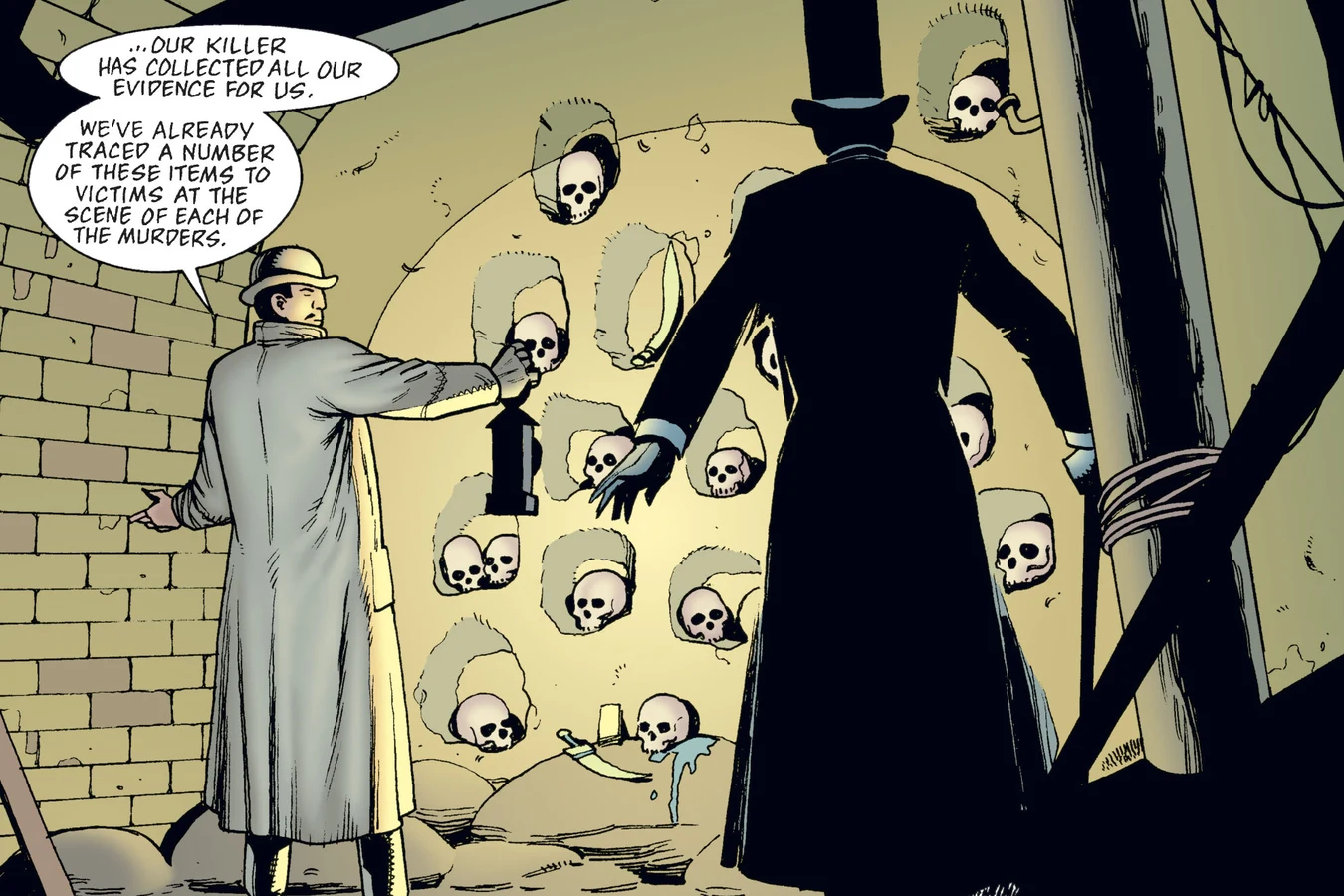
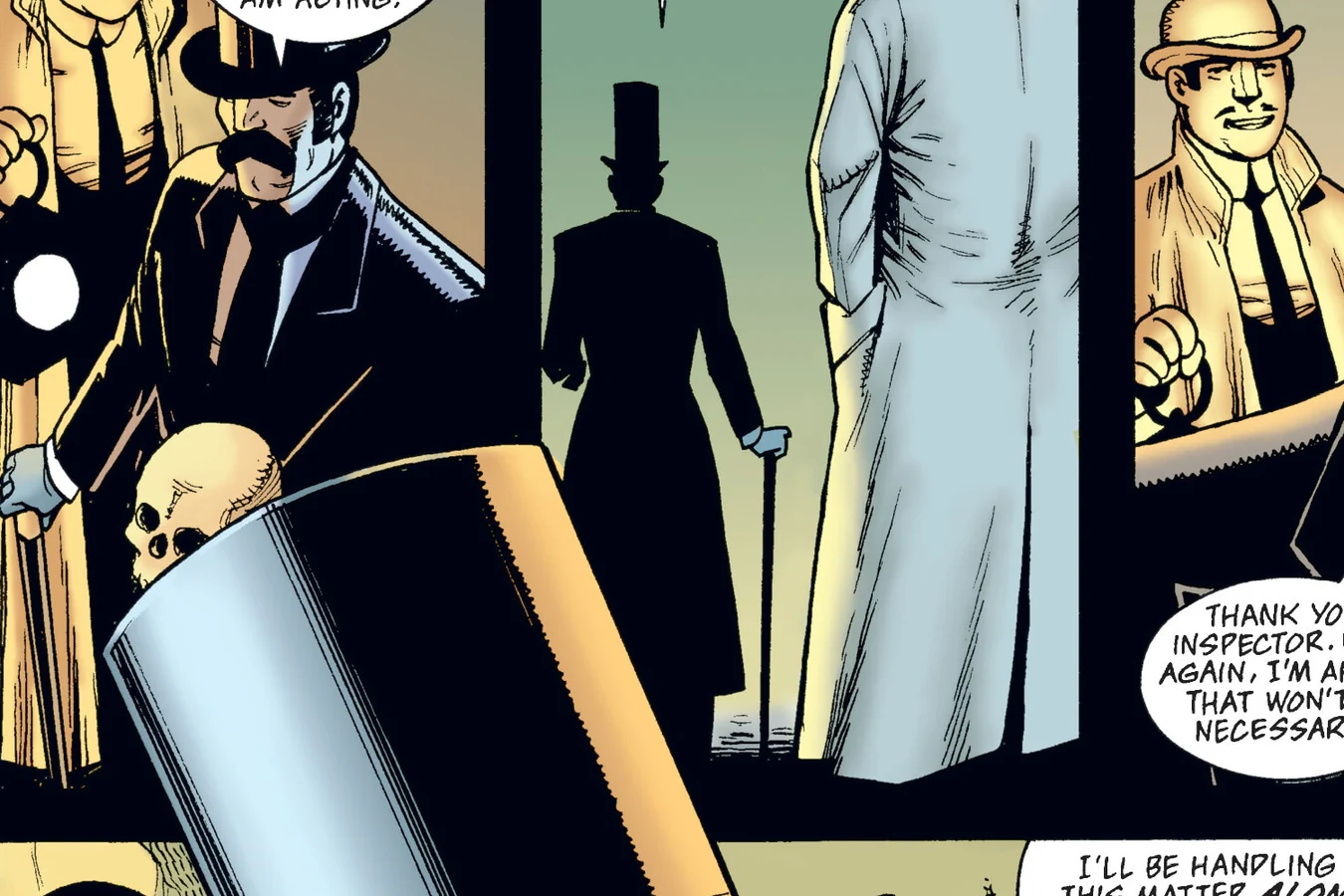
Deeper in the tunnels Lestrade's lantern lit a wall of skulls set in carved niches, with victim items piled at the base. The killer, Lestrade said, had collected all their evidence for them; the Yard had already traced a number of those items to victims at the scene of each murder. He asked whether Soames's imagined agent provocateur was also a head-hunter, then admitted unanswered questions remained and that he had sent for dynamite to blast the object open. Soames cut him off. The trophy wall was not German intrigue; it was a Yautja tally, and blasting the ship was the last thing the Club would allow.
Old Scores
Soames invoked the authority of the Diogenes Club and took the investigation as their appointed agent. He ordered Lestrade and his men to dismantle their equipment and leave the object untouched; he would call if he needed them later. When Lestrade protested, Soames told him to take it to the Commissioner at Scotland Yard if he liked — they both knew who really controlled the nation's affairs of state, and on whose ultimate authority Soames was acting. Lestrade offered men for a trap; Soames refused. He would handle the matter alone under the condition on which he had first accepted the task: he and the hunter had old scores to settle.
Before the stakeout he bought the largest-bore weapon a London gun shop stocked — a Stockton-Harris elephant gun meant for a charging bull — plus two Webley revolvers and solid-bore shells, and he put the bill to the Diogenes Club with a request for discretion. Then he went back under the city to wait where the mobile killer returned to add trophies to its tally. The creature had chosen its hiding place well: Thames waters were unpredictable, and the underground passageway to its lair stayed submerged for most of the tide. Soames wondered whether that refuge had been found by accident or design, and what manner of predator walked invisible among London's teeming prey.
Armored Hunter
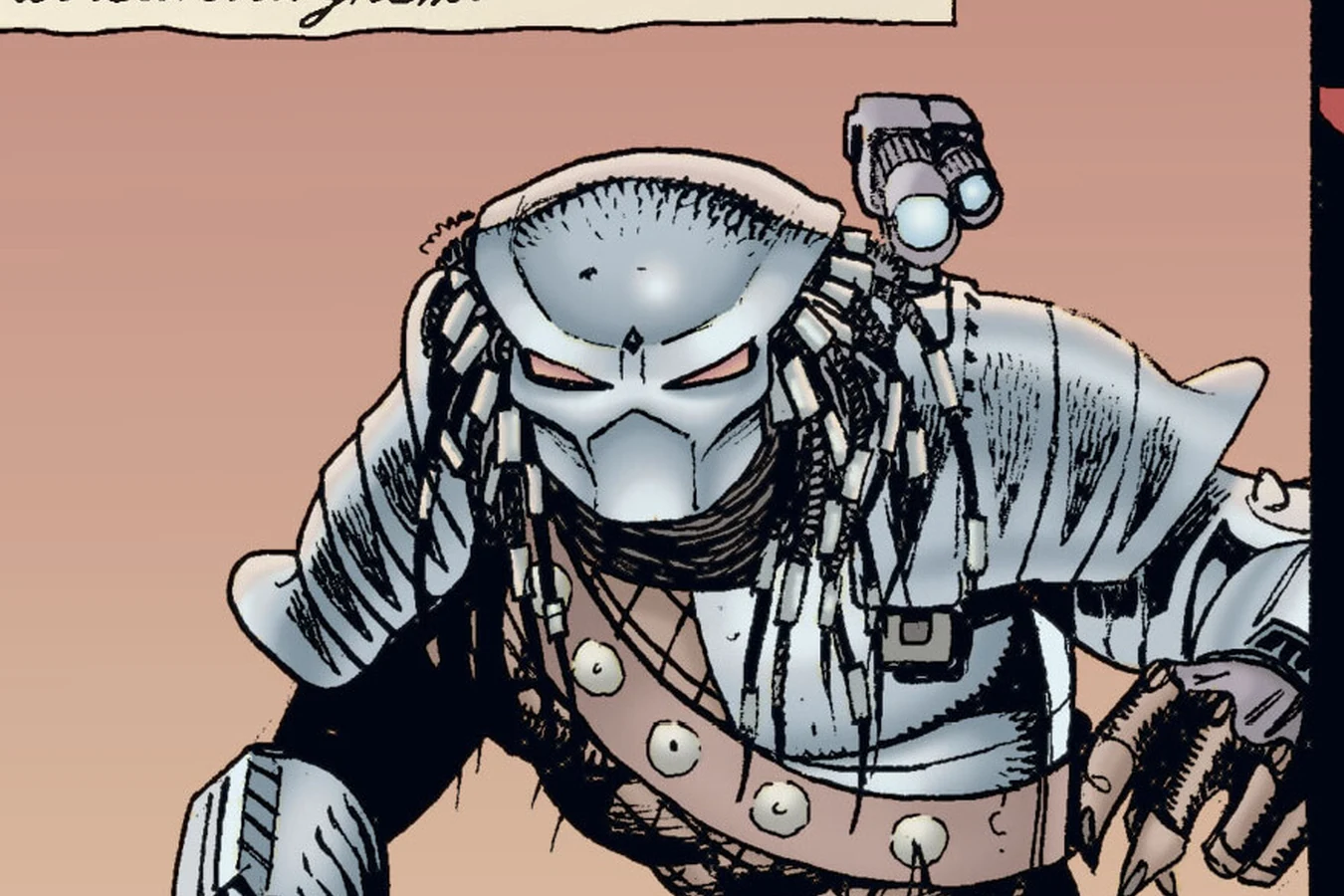
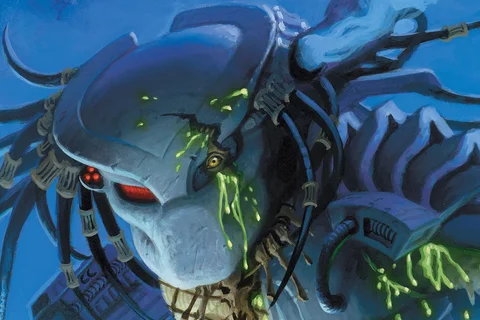
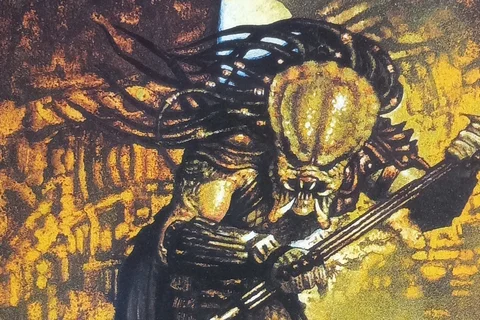
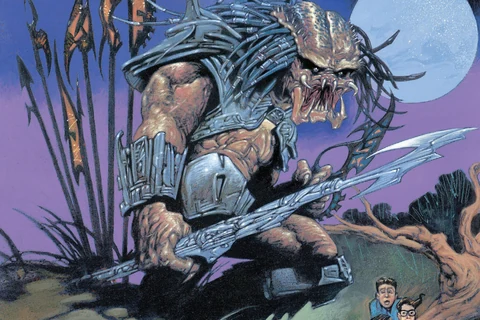
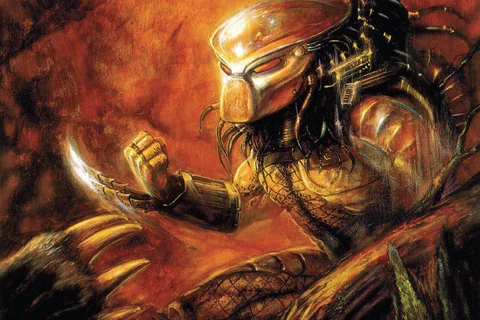
When the hunter finally stood clear of fog and cloak, it was no Spring-Heeled Jack out of the penny papers. Silver plate armor, a dual-lensed plasma caster, mesh under-suit, dreadlock rings and a necklace of trophy fangs marked a Yautja in full hunting kit. Soames's journal had already called it Rakshasa and demon; the armor made the colonial warning literal. From this point the story leaves detective work behind and becomes the duel the Club hired him to finish.
Final Fight Opener
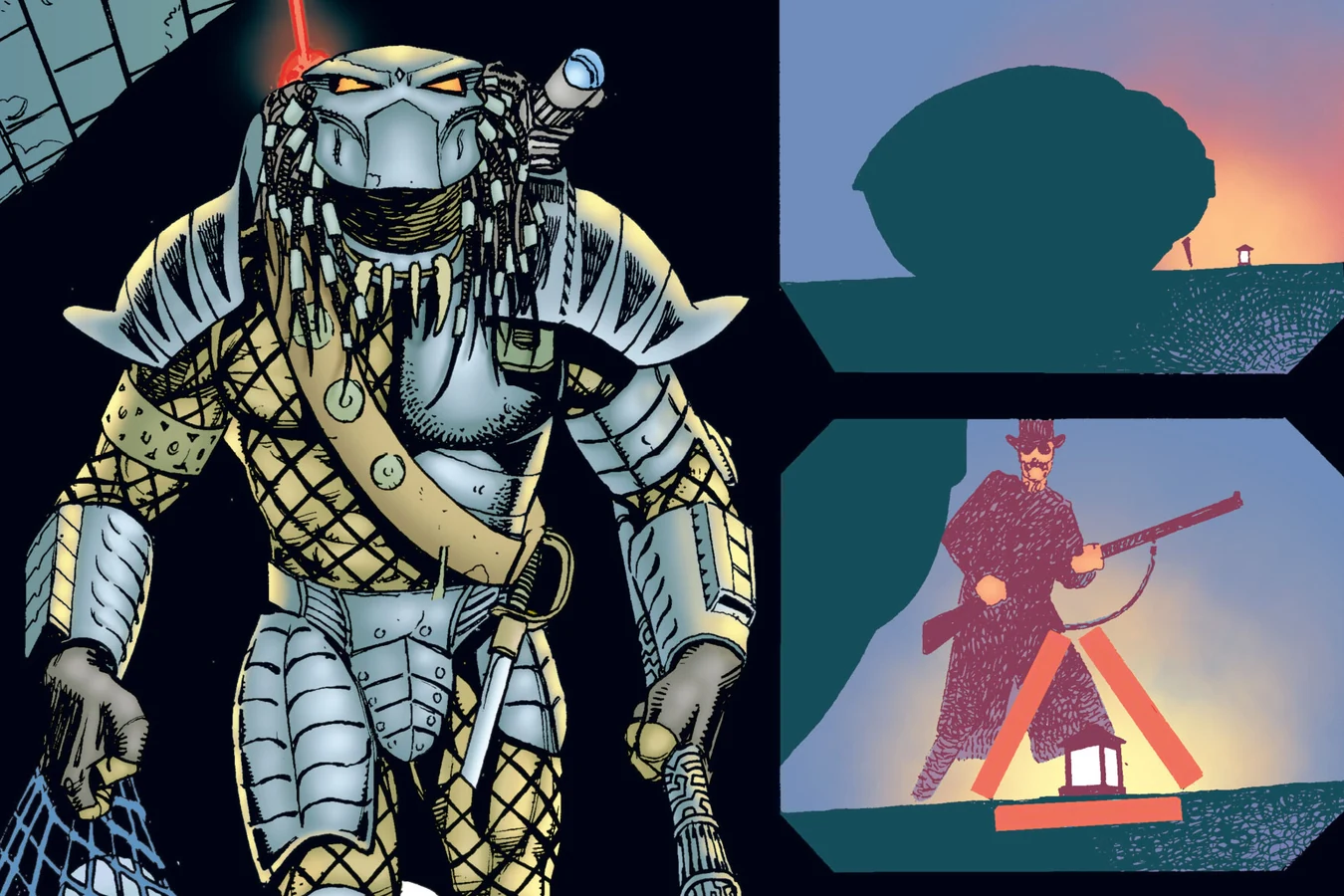
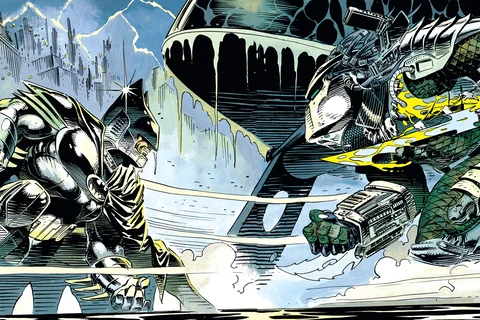
The final fight opens on the hunter's terms. In a brick tunnel the Predator waits with net and staff, shoulder cannon live and a targeting laser cutting the dark, while thermal insets lock onto Soames's top-hatted silhouette and the lantern at his feet. The Club's agent has become prey on the hunter's display; the elephant gun and Victorian coat are heat blobs in a Yautja mask. Soames still walks into the lair alone, old India debt ahead of any hope of backup. The dockside gunfight and sewer clash that follow are the same hunt continuing, not a new plot.
Sewer Standoff
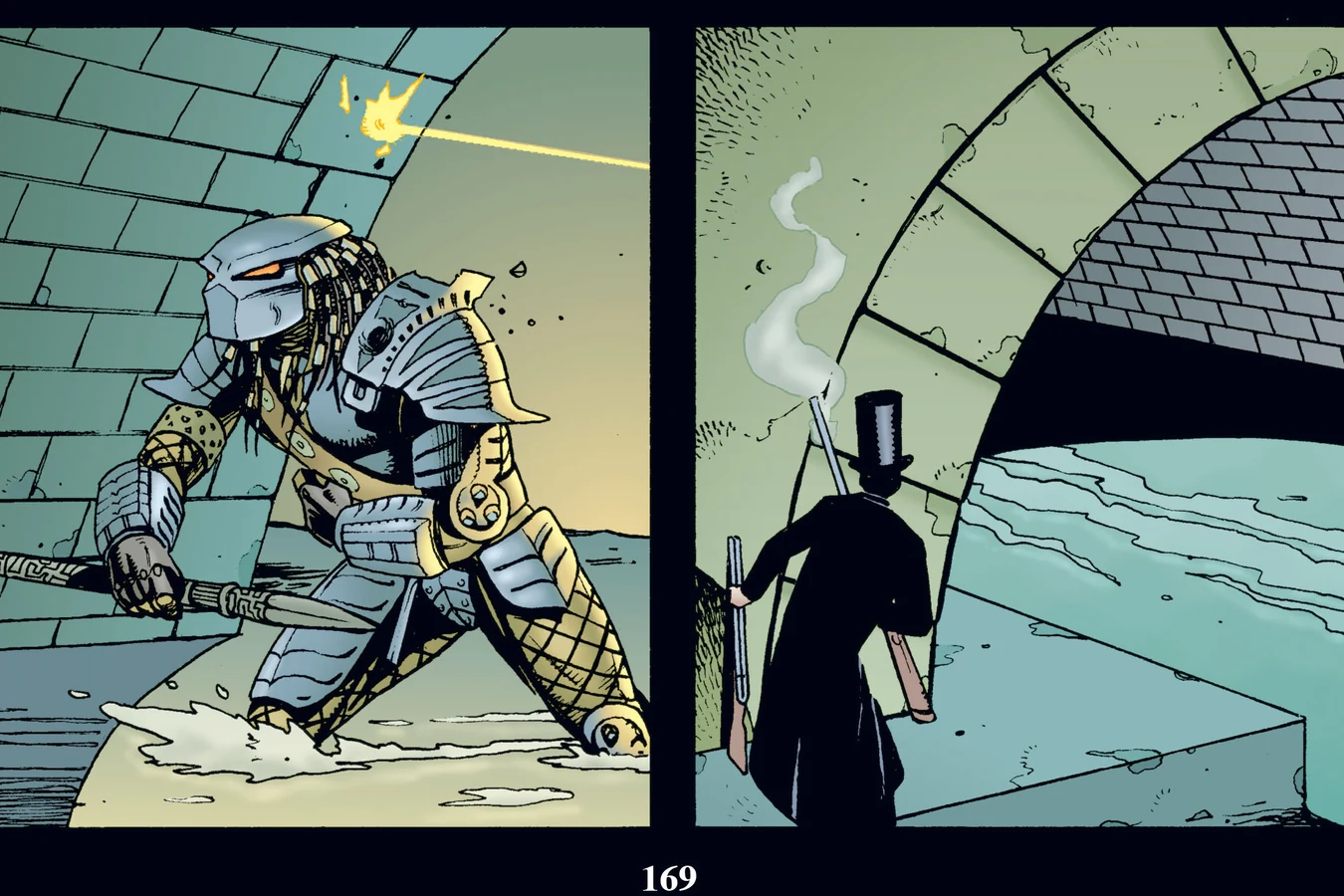
In the flooded tunnels the two close to spear range, water and brick boxing them in. Soames holds his ground with Club steel and colonial experience; the hunter tests him as hard prey rather than another East End trophy. The standoff is the hinge between the thermal stalk and the close violence that cracks the hunt open.
Surgeon's Nightmare
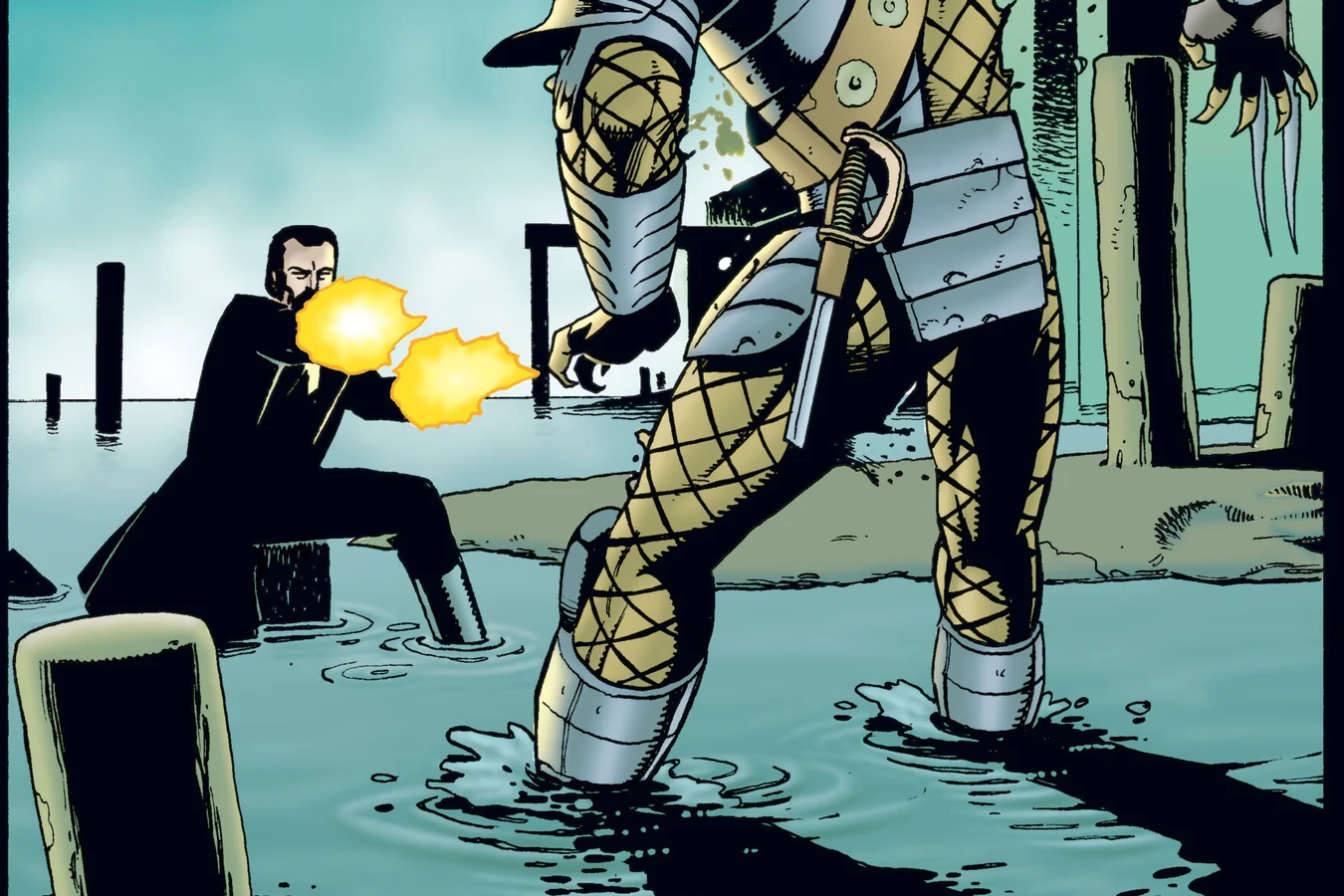
On the docks Soames brings both Webleys to bear, the Victorian gentleman's dual-pistol stand against an armored hunter that should never have been a London problem. Muzzle flash and plasma answer each other over water and timber. The elephant gun's heavy shells and the revolvers' volume buy him seconds the India party never had. What a surgeon would call a nightmare — alien metal, yellow blood, human nerve — is the work the Diogenes Club bought with carte blanche.
The Beast Roars
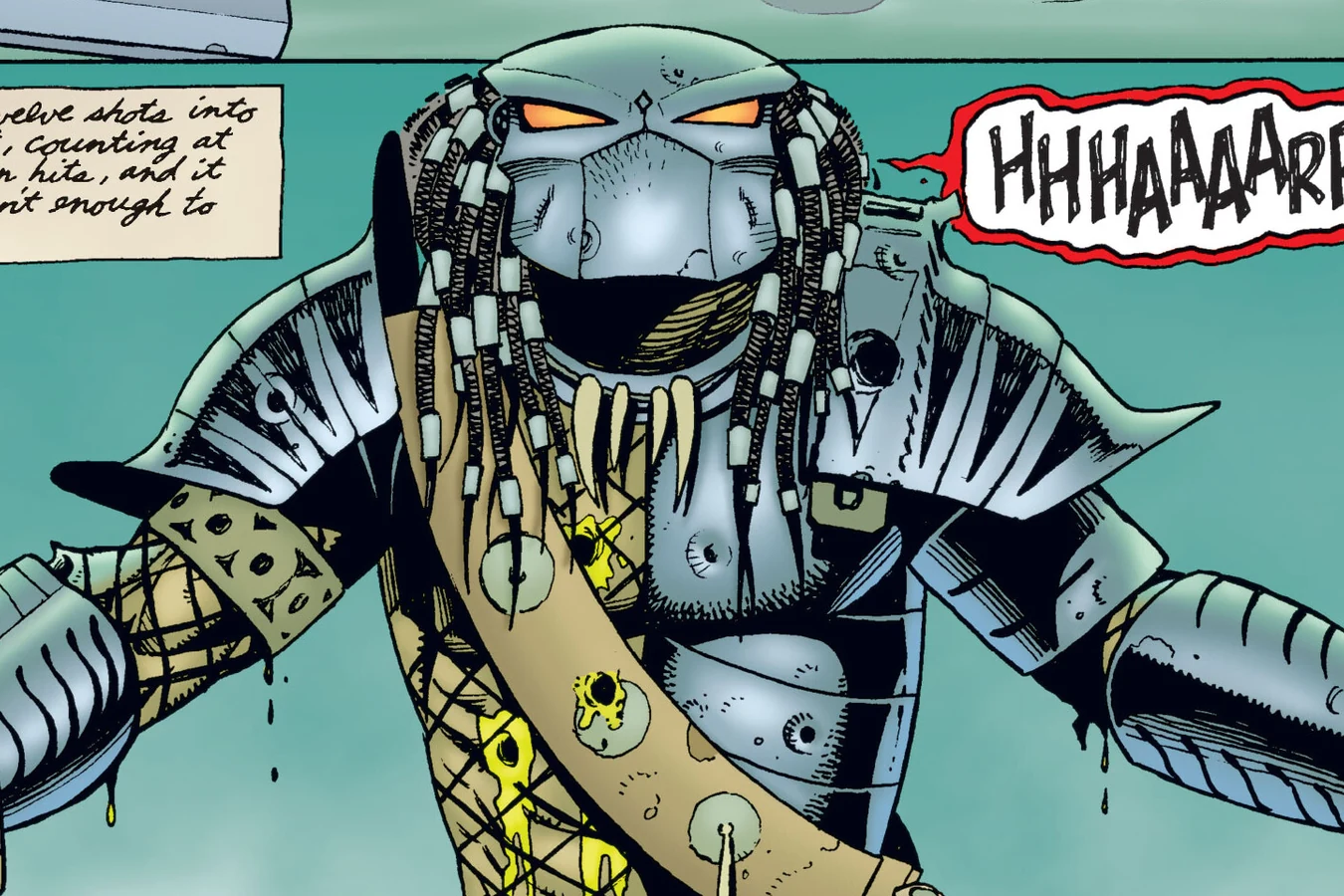
A solid hit cracks the hunt open: the Predator reels, armor breached, and the roar that follows is the Rakshasa the Brahmin named without ever seeing the mask come off. Soames's journal voice admits the Hindu warning was right and wonders what kind of fool he was to think he could defeat such a being — then closes to finish the hunt anyway. The wounded hunter is still mobile; denied the refuge of its lair it flees toward the Thames fog, where stealth and reach favor it again.
Final Hunt In London
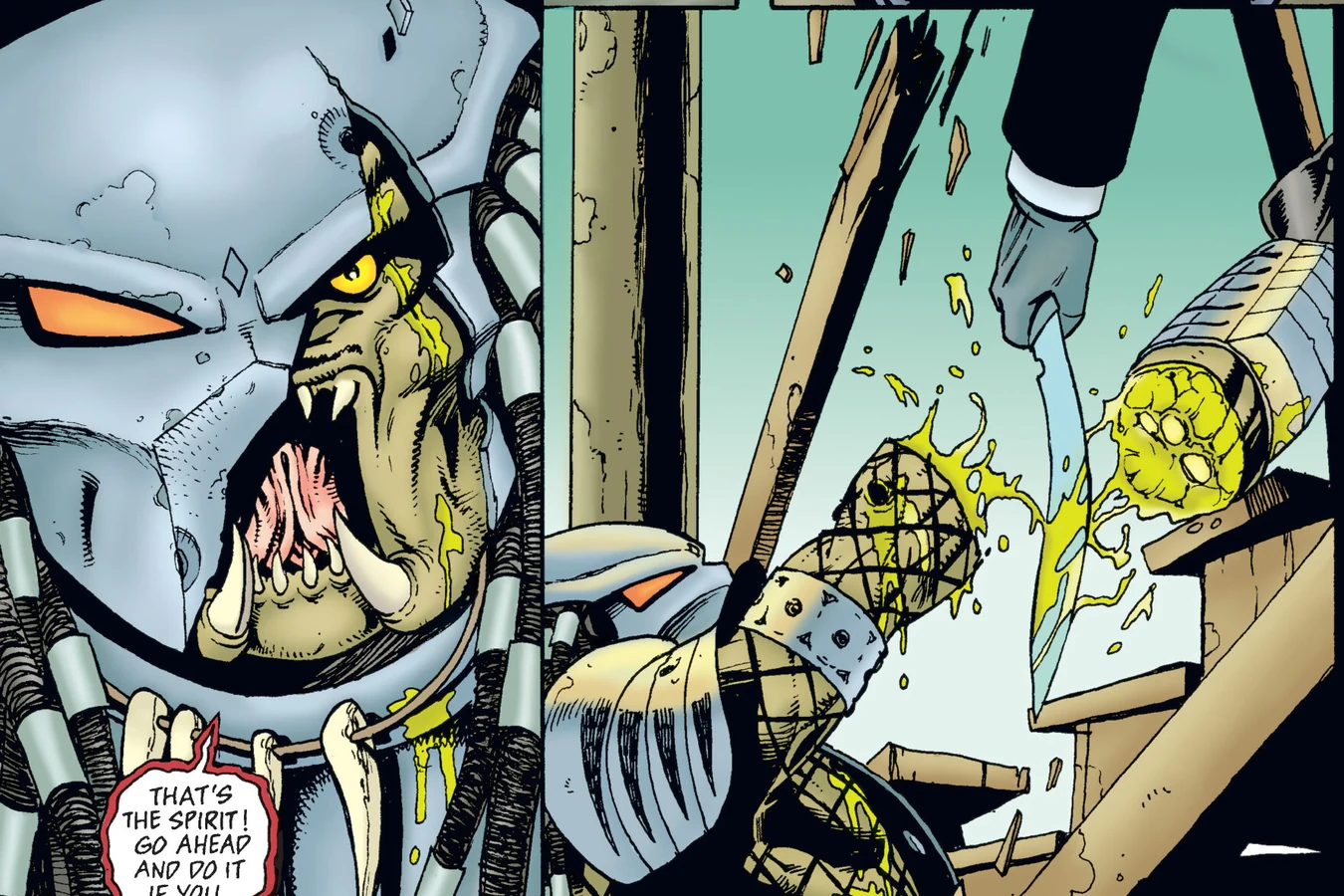
The last clash is hand-to-hand in flooded docks and debris. Soames's kukri and improvised weapons crack the hunter's bio-mask, spilling yellow blood and exposing eye and mandibles, and the fight ends with the Predator maimed and beaten. For a moment a cry in the fog sounds like Morris — the friend Soames abandoned to die in India — and the London kill finally pays that ghost. The India score is settled in Empire water under the city the Club swore to protect.
Out To Sea
In the epilogue journal Soames dumps the Predator's body to be carried out to sea and prays it will never be recovered. He also prays that he and the Diogenes Club committee will have no further business together. Club agents find his rooms empty and the journal left open on the writing desk, clearly meant for them to read. Soames has already booked from Southampton on a ship bound for the Raj; the committee tracks him that far and chooses not to telegram Suez to intercept him. He has discharged his duty admirably, Mycroft's side decides; let him be.
The creature's vessel is already safely aboard one of Her Majesty's ships, to be secretly taken out and jettisoned over the side. Scientists might in time have unlocked its secrets, but the committee weighs that advantage against the hazard and refuses. They know these creatures have been here before and that they shall come again; having defeated them once, they will not tempt fate by incurring their wrath further. The British Empire has many enemies — why risk making one more?
Characters
- Captain Edward Soames was the ex-British Army officer and Diogenes agent who recognized the Predator's kill signature, relived the India Rakshasa ambush and killed the hunter alone in London's sewers and docks.
- Mycroft Holmes spoke for the Diogenes Club committee, briefed Soames on Spring-Heeled Jack, explained that Sherlock was abroad and offered carte blanche under Crown authority.
- The Diogenes Club committee were the silhouetted Empire security patrons who recruited Soames, then later sank the Predator ship rather than study it.
- Inspector Lestrade of Scotland Yard showed Soames the East End cellar, the Underground ship and the trophy wall, then lost control of the case when Soames invoked Club authority.
- Sergeant Thackery served both the Metropolitan Police and the Diogenes Club and helped move Soames through the Underground investigation.
- The Predator was the Yautja the papers called Spring-Heeled Jack and Indian witnesses called a Rakshasa; it hunted in colonial India and Victorian London and hid its ship under the Underground.
- The Indian boy witness survived an East End attack long enough to name the killer Rakshasa.
- The Brahmin and village headmen of the India flashback warned that the "tiger" was a demon before the colonial hunt was ambushed.
Behind The Scenes
Dark Horse Comics published Predator: Nemesis as a two-issue color limited series with December 1997 and January 1998 cover dates. Issue #1 went on sale December 31, 1997, and issue #2 on January 28, 1998, each a full-color comic priced at $2.95. Gordon Rennie wrote the story, Colin MacNeil drew and colored the interiors, Gary Fields lettered it, Amy Arendts designed it and Tom Taggart painted both covers. Philip Amara edited the series with David Land as assistant editor under publisher Mike Richardson.
The book folds Sherlock Holmes's brother Mycroft and Inspector Lestrade into a Predator hunt without bringing Sherlock on-panel, and it treats the Diogenes Club as a shadow Empire security committee whose role in affairs of state could never be openly acknowledged. In Dark Horse's late-1997 line the series followed Predator: Primal and sat near Predator: Hell & Hot Water. Years later, Chris Warner tied Captain Edward Soames to Jaya Soames in Predator: Hunters, making the Victorian captain the ancestor of a modern privately funded hunter team.
Editions
Dark Horse did not issue a standalone Nemesis trade paperback in the 1990s. The two issues were collected in Predator Omnibus Vol. 4 in September 2008, alongside Predator: Primal, Predator: Homeworld, Predator: Xenogenesis, Predator: Hell Come a Walkin', Predator: Captive and Predator: Demon's Gold. After Marvel took the Predator comics license, the story returned in Predator: The Original Years Omnibus Vol. 2 in May 2024, the same volume that reprints Hell & Hot Water, Demon's Gold and the later Hunters trilogy. The Omnibus Vol. 2 printing keeps MacNeil's Victorian and India interiors in color under Taggart's issue covers.
The Rakshasa And Victorian Hunters
Nemesis is one of the clearest Dark Horse stories that lets humans name a Predator in their own folklore. Indian villagers and the East End witness call it a Rakshasa, while London papers reach for Spring-Heeled Jack, and Soames's journal holds both names against the same armored hunter. The Diogenes Club's choice to sink the ship rather than study it matches other Yautja stories in which humans who survive a hunt still refuse to invite the species back, a caution that sits beside the wider Predator honor code of hard prey and erased failures. Soames's descendant line in the Hunters books later turns that Victorian duel into a family business of hunting Predators on purpose.
Conclusion
Predator: Nemesis is a 1997-1998 two-issue Dark Horse series by Gordon Rennie and Colin MacNeil, with covers by Tom Taggart. It follows Captain Edward Soames from the Diogenes Club's silhouetted committee and Lestrade's East End crime scenes through an India Rakshasa flashback to a Predator ship under London and a final dockside kill. Soames dumps the body toward the sea, leaves for India and leaves his journal for the Club, which scuttles the ship rather than reverse-engineer it.
External Sources
- Predator: Nemesis #1 at Dark Horse Comics
- Predator: Nemesis #2 at Dark Horse Comics
- Predator: Nemesis at Xenopedia
- Predator: The Original Years Omnibus Vol. 2 at Dark Horse Comics
Tag Categories: Predator Comics