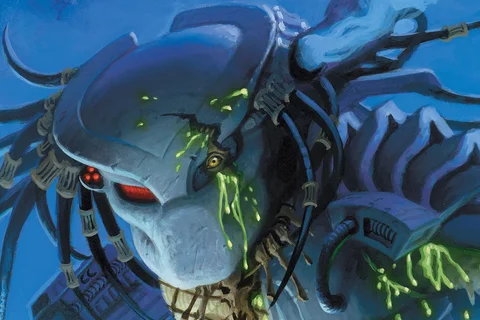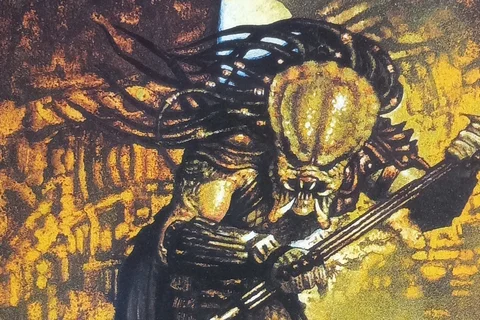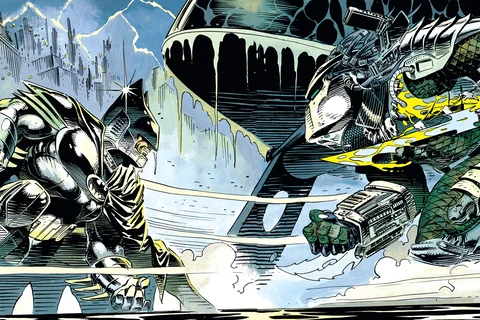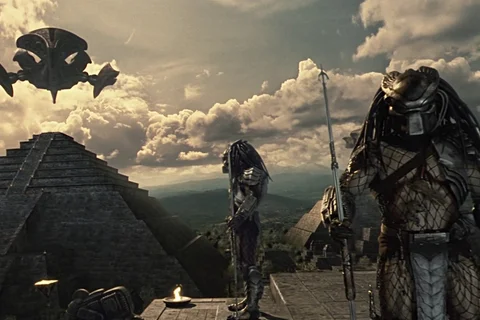

Captain Edward Soames was a British soldier and agent of the Diogenes Club who hunted a Predator through Victorian London in Predator: Nemesis. A survivor of an earlier encounter in Bengal, he recognised the killer called Spring-Heeled Jack and confronted it with firearms, a kukri and his knowledge of Indian hunting methods. His later life, revealed in Predator: Hunters, established the family tradition inherited by Jaya Soames.
Biography
Bengal In 1881
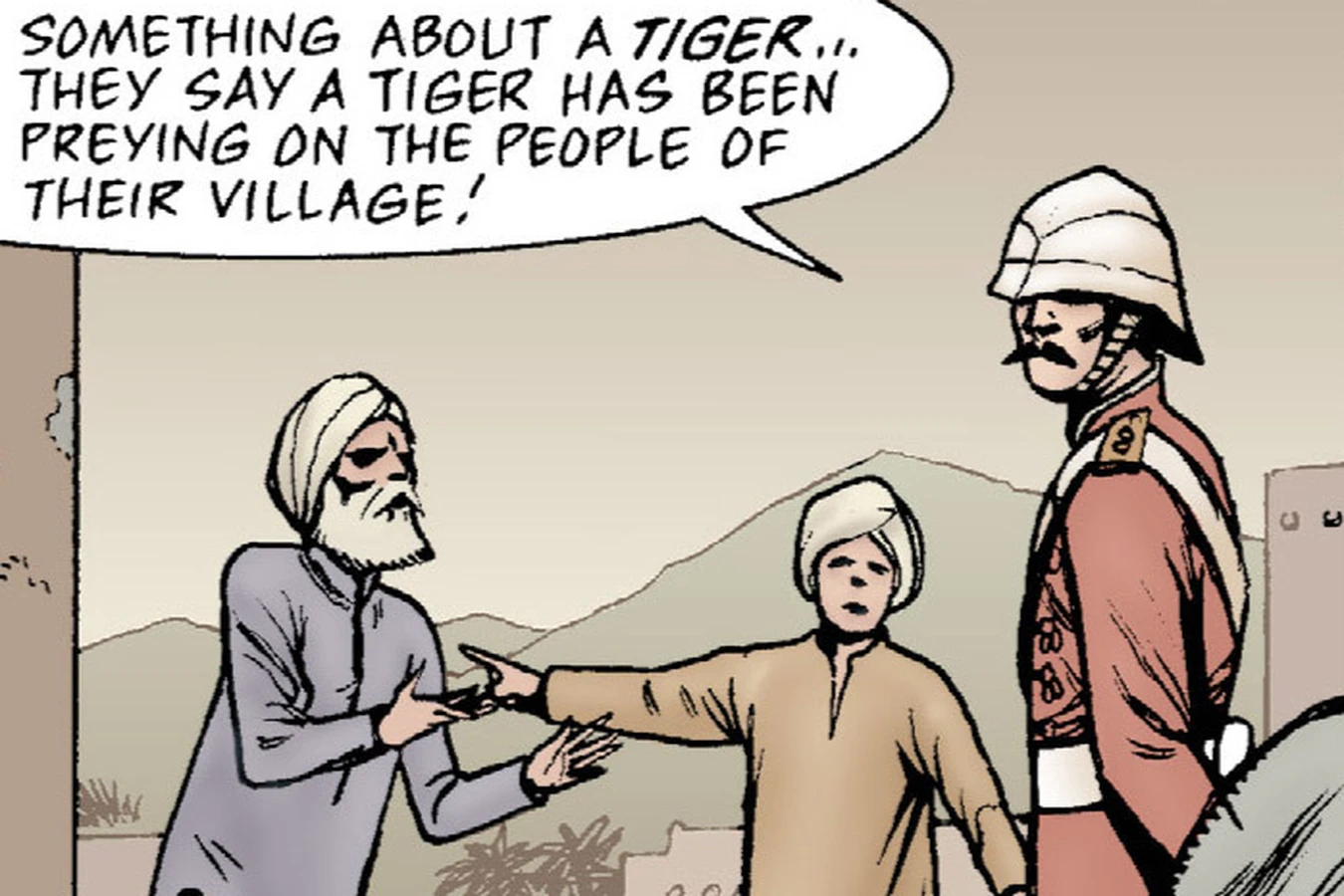
Edward Soames attended public school with Morris, and the two later graduated from the same officer class at Sandhurst. By 1881, Soames was serving in Bengal. His knowledge of the local language made him the intermediary when villagers approached the British garrison about a supposed tiger that had been killing their people. He translated their account and examined the mutilated victim they brought with them.
A Brahmin warned that the killer was a Rakshasa, a demon rather than an animal. The other officers dismissed the warning and mocked Soames for taking Indian beliefs seriously. Their expedition nevertheless encountered a creature with weapons and a cloaking device far beyond anything they understood. The hunt became an ambush, and the soldiers were overwhelmed by the attacker they had expected to pursue.
Morris And The Years Of Guilt
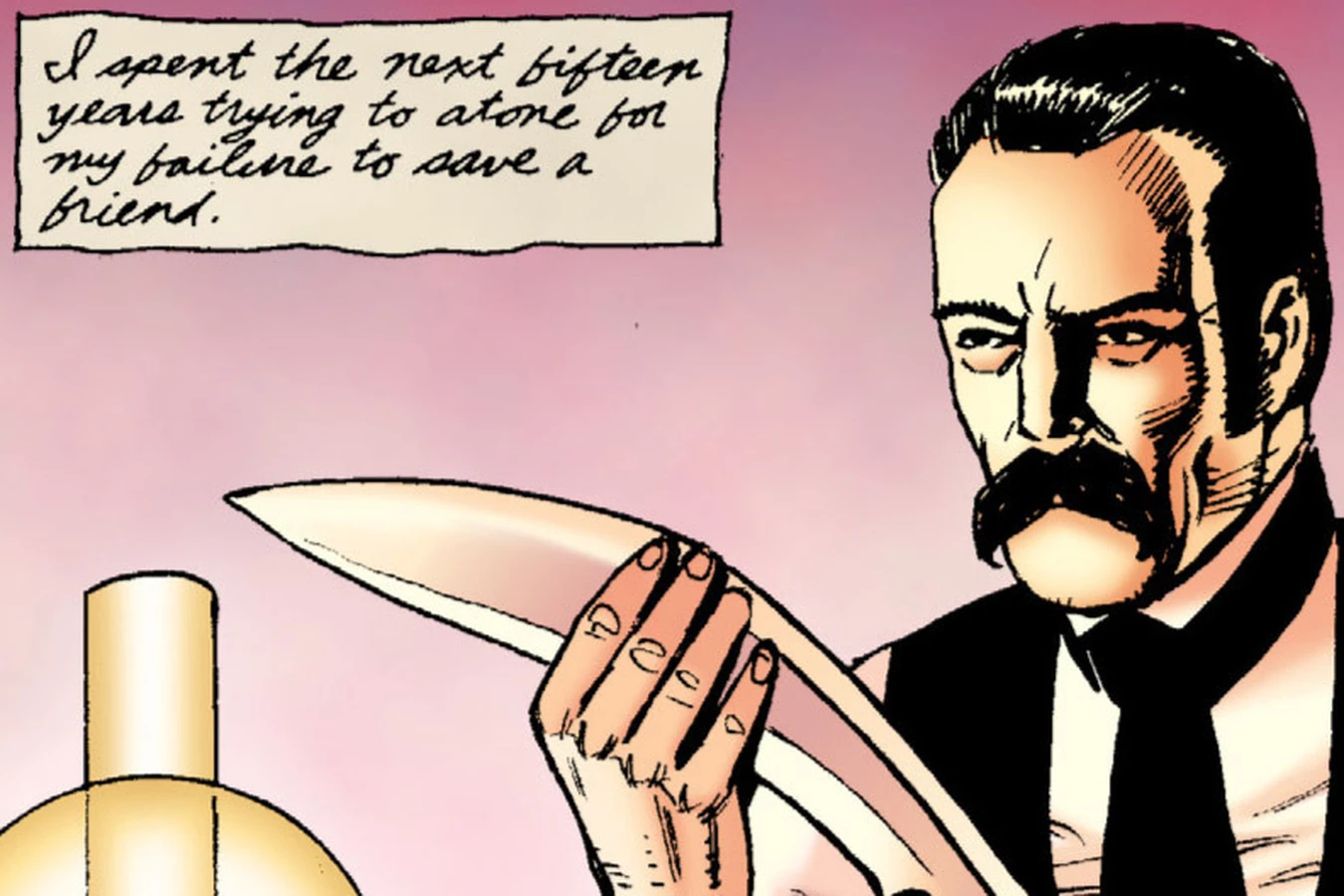
The death that haunted Soames was that of Morris, his friend of many years. As the creature seized and mutilated Morris, he called to Soames for help. Soames fled instead. His survival left him with the memory of abandoning someone who had trusted him, and the official suppression of the incident did nothing to relieve that guilt. The authorities covered up the disaster rather than admit that British troops had been defeated by such an enemy.
During the following fifteen years, Soames fought in further colonial campaigns, including service in the Khyber Pass. He received the Victoria Cross for bravery during the Madapur uprising, but regarded his medals as insufficient repayment for Morris. He eventually resigned his commission and returned to England. His reflections on karma connected his later conduct with the debt he believed his earlier actions had created.
The Diogenes Club
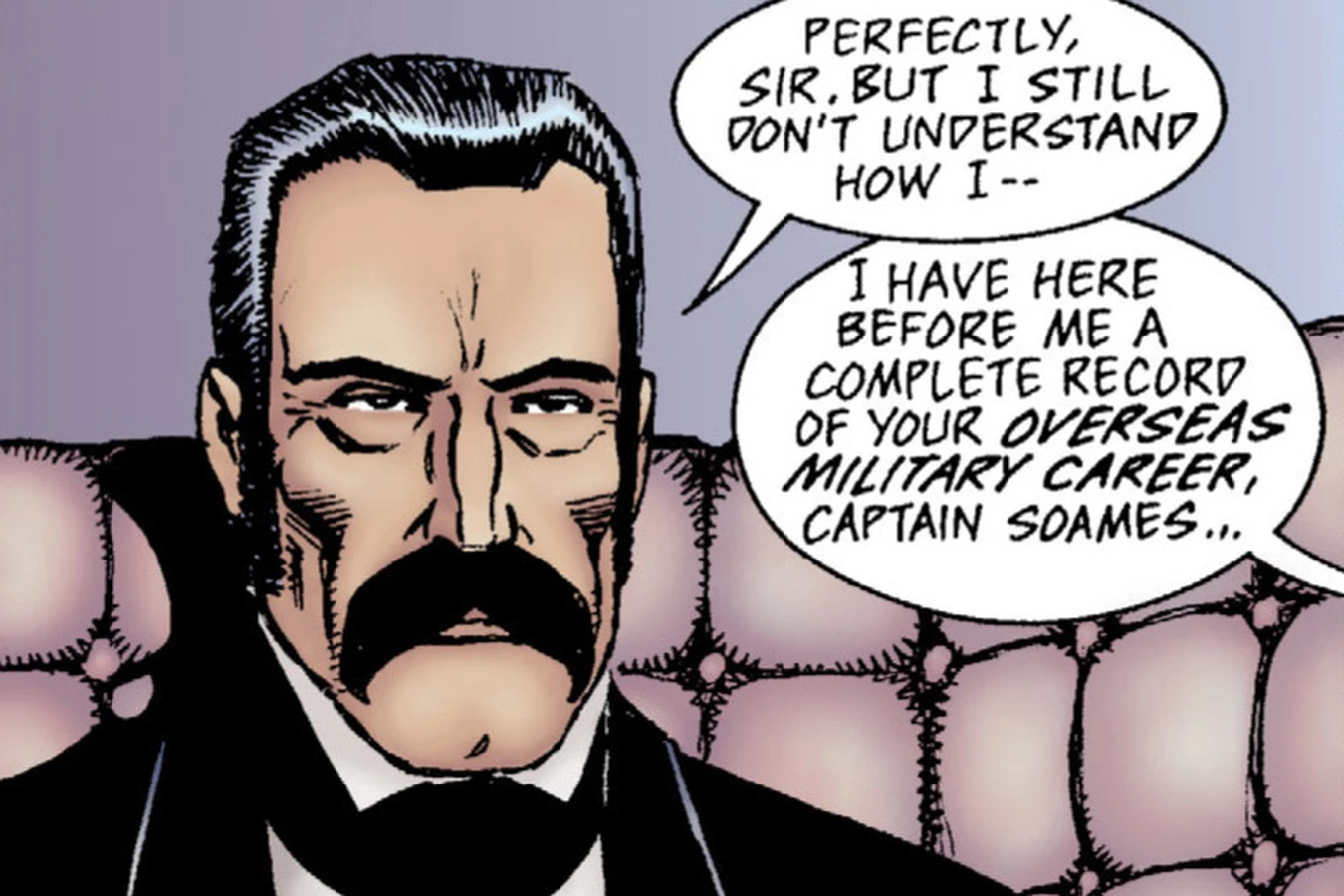
In London in 1896, Soames had been home for two weeks when a telegram summoned him to the Diogenes Club. Its committee knew his service record and the truth about the Bengal expedition. Mycroft Holmes explained that a series of East End killings, attributed by newspapers to Spring-Heeled Jack, required an agent with Soames's particular experience. Mycroft's brother Sherlock was abroad, leaving the committee to recruit the former soldier.
The Club offered extraordinary authority: no ordinary agency or servant of the Crown was to obstruct his investigation. Soames accepted the commission as a matter of imperial security, although he did not yet know everything the committee was withholding. Its knowledge of the earlier encounter also gave him a personal reason to act. He would finally have an opportunity to confront the kind of creature he had escaped in India.
The East End Investigation
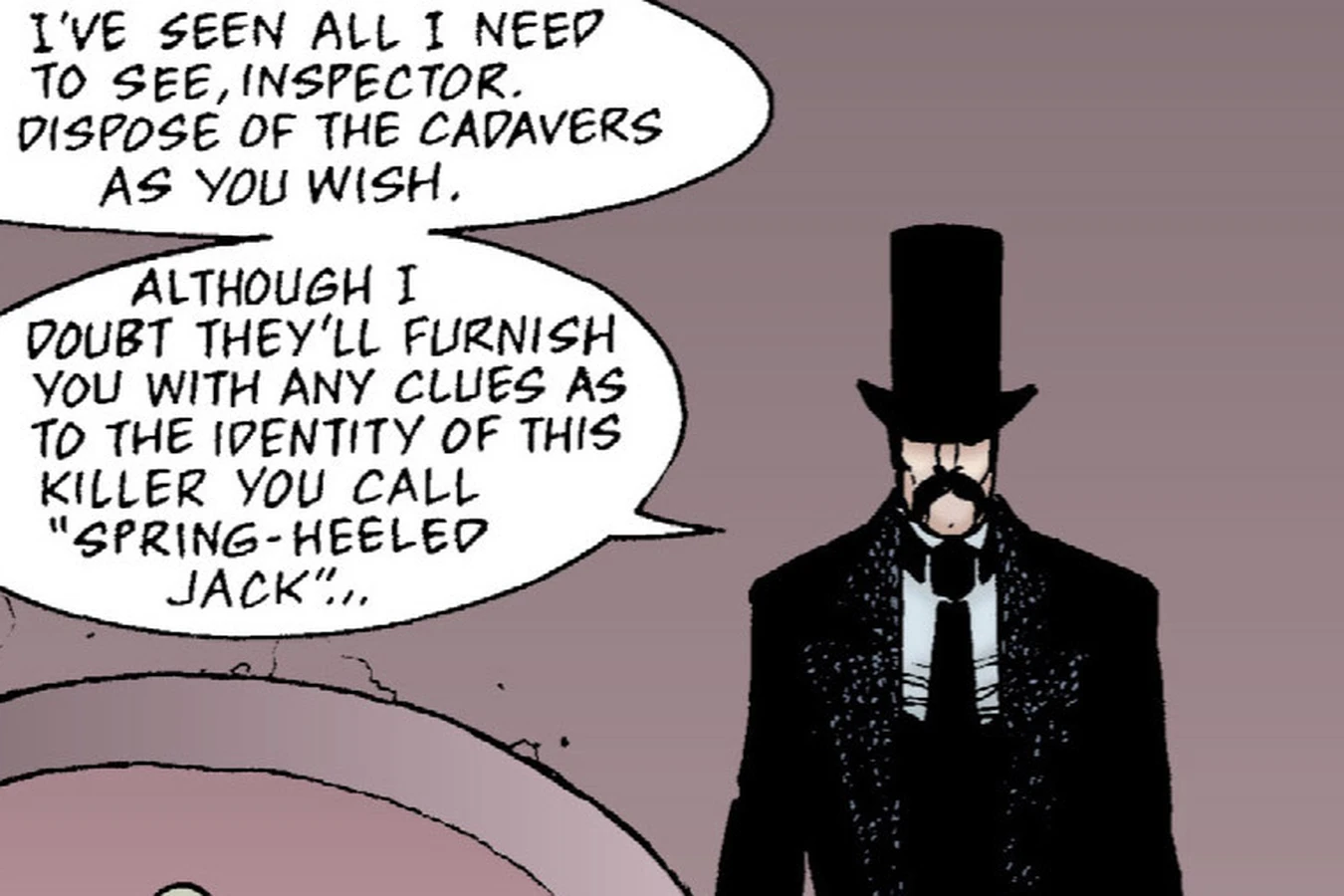
Inspector Lestrade of Scotland Yard introduced Soames to the London crime scenes. The bodies had been butchered with a precision and violence that the police struggled to explain. A severed arm still holding a kukri helped Soames recognise a pattern he had seen in India. Lestrade entertained more conventional explanations, including foreign interference, while Soames increasingly understood that they were investigating an inhuman hunter.
An Indian boy who had survived an encounter supplied another link: he repeatedly used the word Rakshasa. Soames understood the name immediately. The warning that his fellow officers had once ridiculed now described the terror spreading through London. He kept his conclusions largely to himself, carrying out the investigation under the Club's authority while preparing for a confrontation the police were not equipped to understand.
The Ship And The Trophies
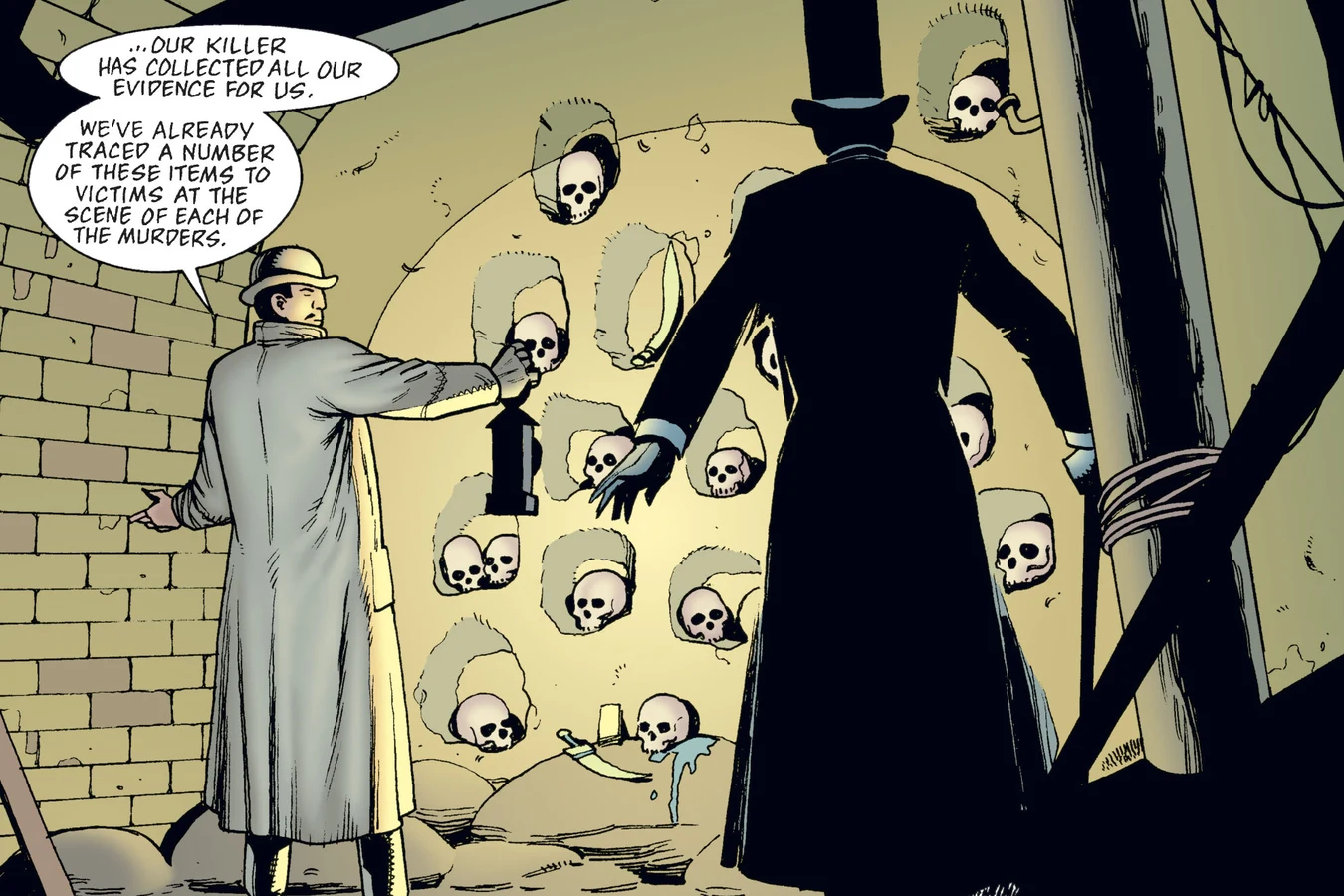
Work beneath the London Underground exposed a strange vessel. Lestrade brought Soames to the discovery with Sergeant Thackery, whose loyalties also extended to the Diogenes Club. Soames recognised that the object was a Predator spacecraft, while the police considered whether it might be some foreign power's secret machine. The surrounding tunnels concealed the killer's collection of human remains.
The trophy wall helped explain the murders as hunting rather than random slaughter. Soames took control before Lestrade could have the vessel blasted open. He ordered the police to withdraw their equipment and declined the offer of men to help lay a trap. Leaving them outside the confrontation reduced the risk of another group being destroyed as his old expedition had been.
The Hunt Through The Sewers
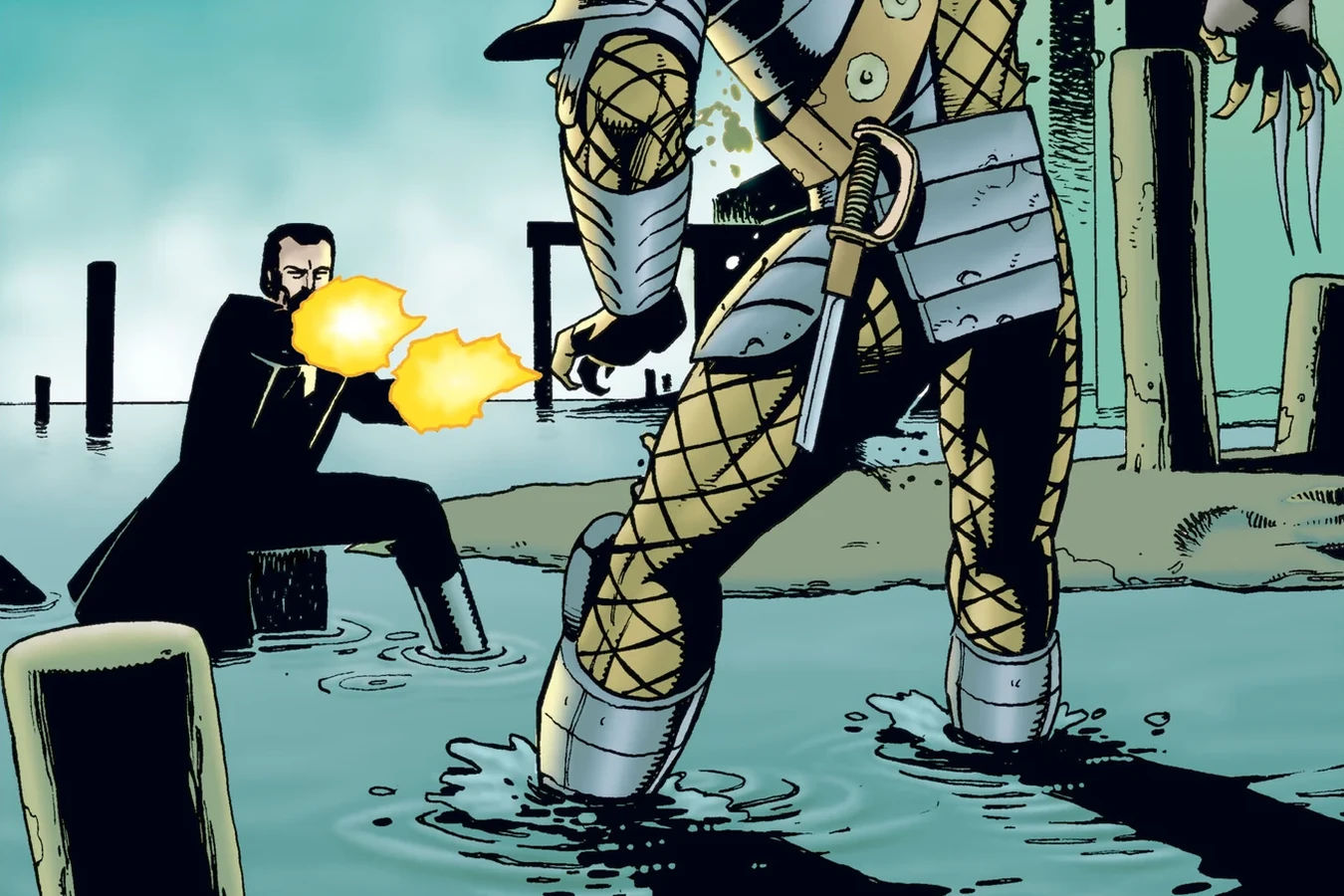
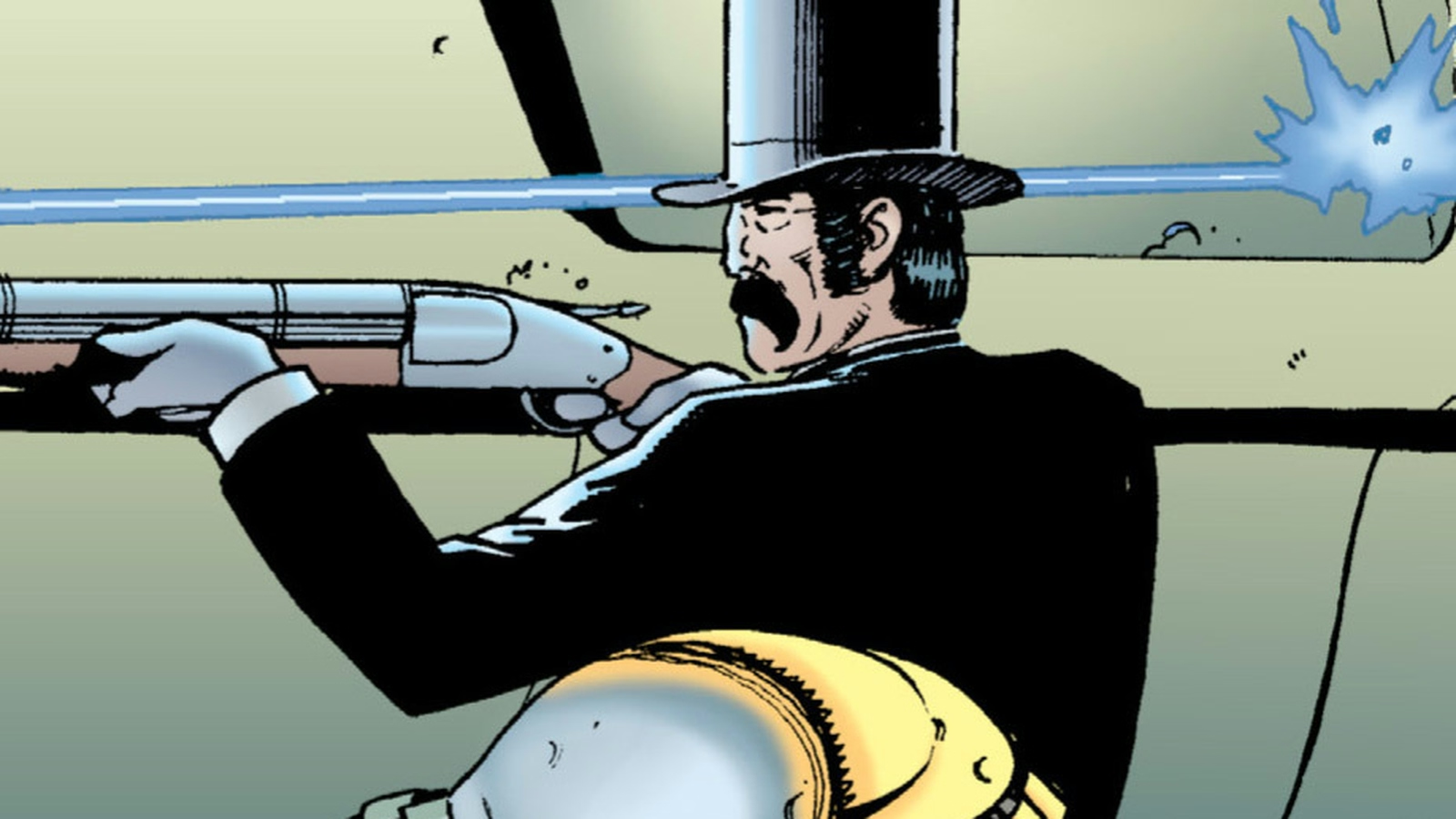
Soames purchased a Stockton-Harris elephant gun, shotguns, two Webley revolvers and ammunition through the Club's account. He wanted the largest bore available, reasoning that an ordinary weapon might not stop his quarry. Armed with those guns and his kukri, he entered the tunnels alone and confronted the Victorian Predator. The pursuit carried them from its underground refuge towards the Thames.
His fire wounded the hunter, but did not end the fight. Even after Soames emptied both revolvers and counted at least seven hits, the creature continued to advance. Its endurance forced him to abandon the hope that enough gunfire would settle the encounter. He instead drew on the hunting methods he had learned in Bengal, turning himself into bait and using the riverbank's uncertain footing against a much heavier opponent.
The Final Duel
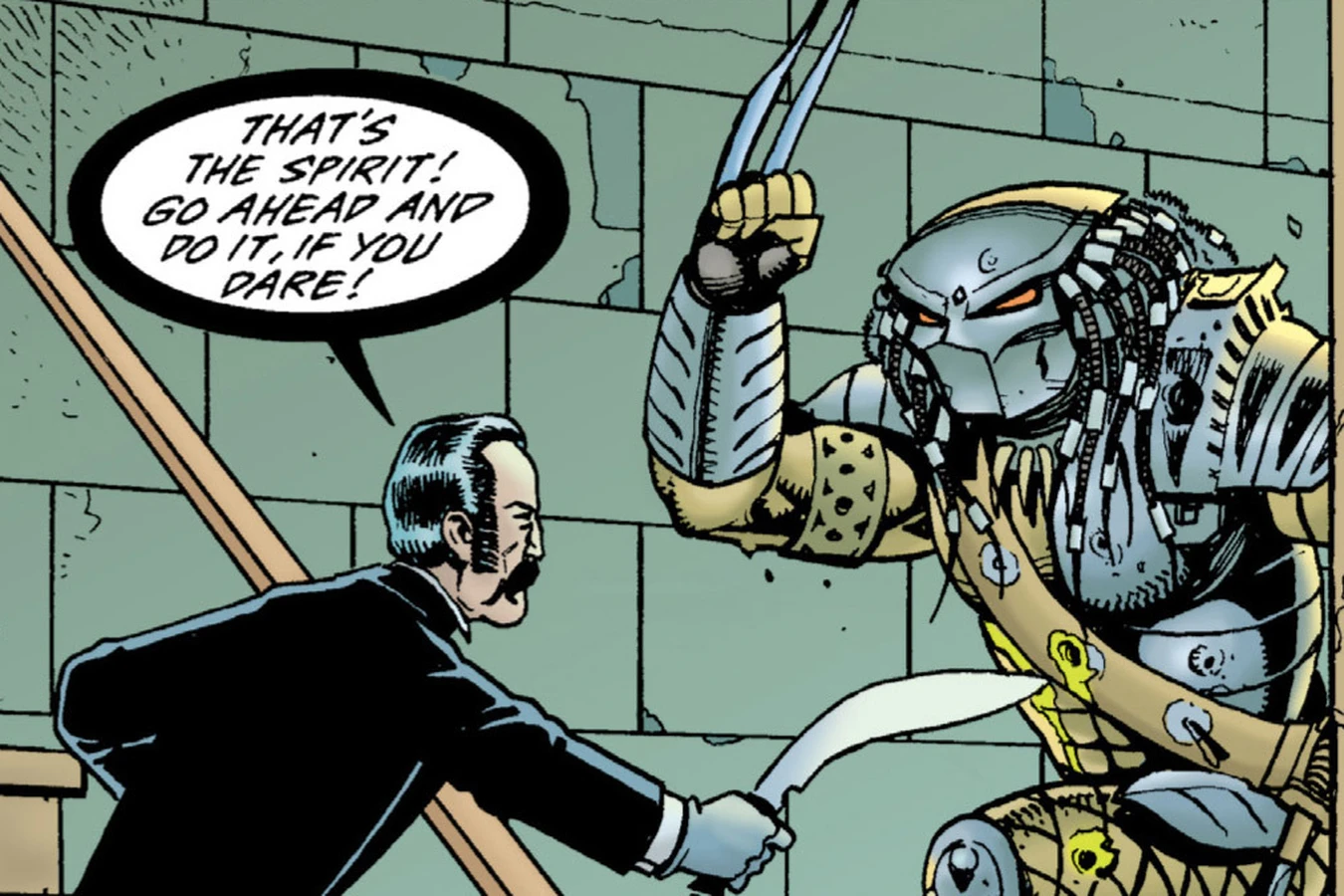
Soames led the pursuing hunter across the river mud and reached a stairway above it. His plan echoed a dangerous tiger-hunting technique: a light-footed human drew the animal towards ground that would not support its weight. He then faced the Predator at close range with his kukri. The struggle damaged its mask and left it sinking beneath the stairs, where its strength could no longer give it secure footing.
When the creature grasped the railing, Soames severed the arm that held it. He watched it disappear into the deep mud and waited almost an hour without seeing it surface. The incoming tide offered a chance that its remains would be carried out to sea. For Soames, the victory also answered the memory of Morris's cries, although his journal ended with a wish that the body would never be recovered.
Return To India
Soames left his journal open for the Diogenes Club's agents to find and departed from Southampton on a ship bound for India. The committee considered intercepting him at Suez, but decided that he had fulfilled his duty and should be left alone. It also chose to dispose of the captured alien vessel at sea rather than pursue its scientific secrets and risk further encounters.
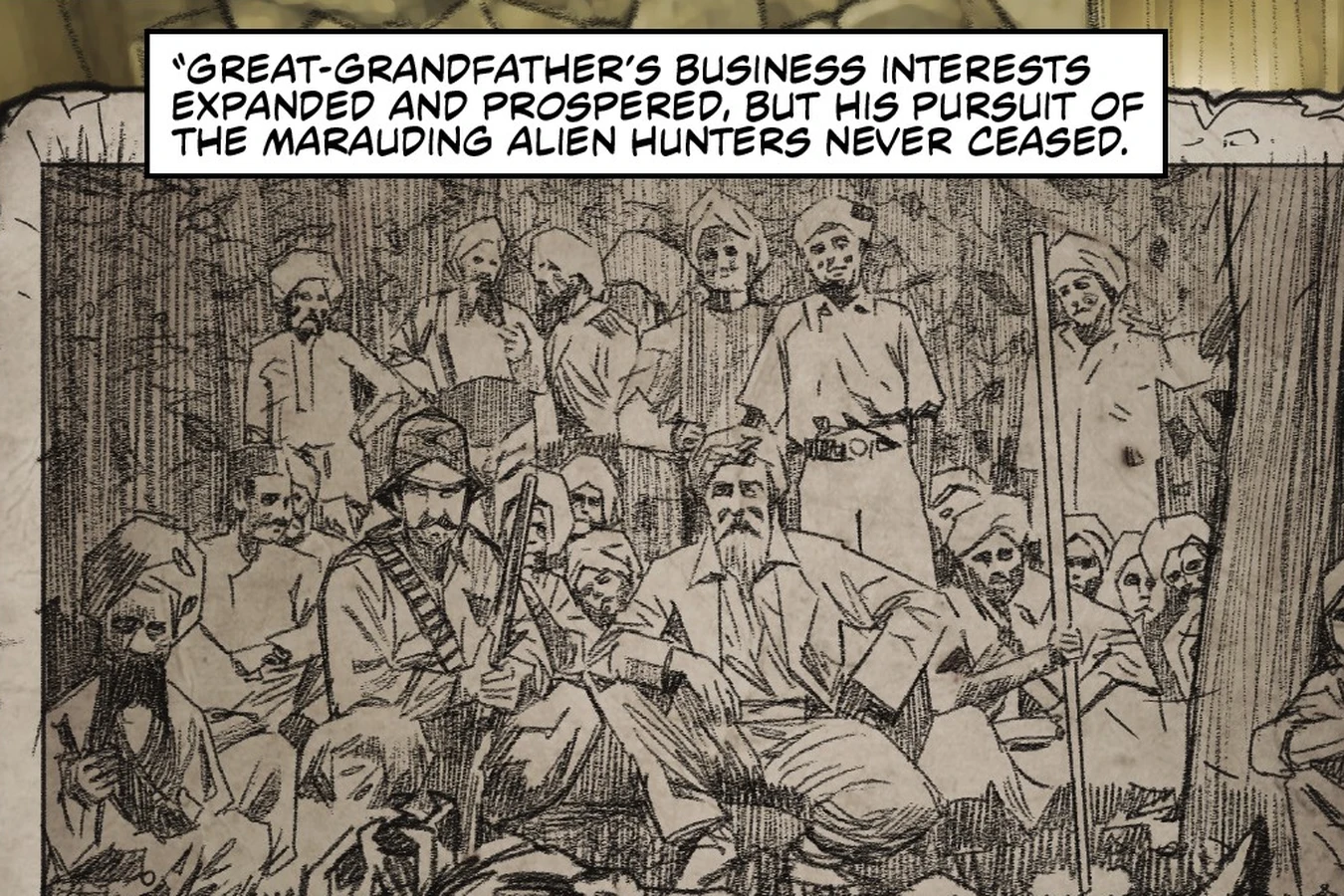
His story continued in Predator: Hunters. After returning to India, he worked for maharajas on what were described as hunts for man-killing tigers. Jaya's account and the accompanying flashback revealed that Predators were among his actual quarry. His business interests prospered, but he continued pursuing the alien hunters, turning the experience that had once driven him from the jungle into a lasting occupation.
The Soames Family Legacy
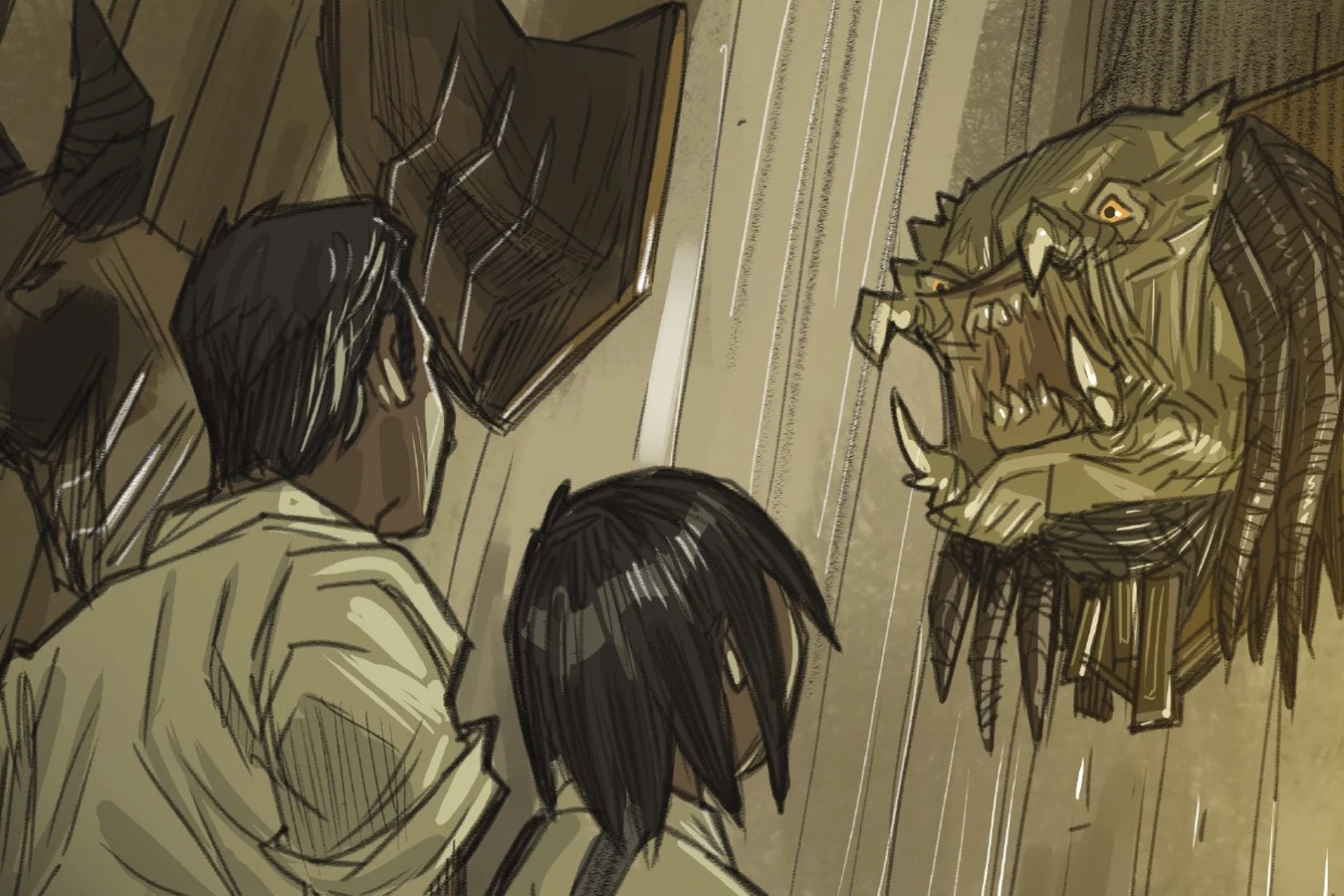
The tradition passed from Edward to his son, then to his grandson and finally to his great-granddaughter, Jaya Soames. The family preserved trophies and knowledge of the creatures across generations. By Jaya's lifetime, its resources supported a privately funded Predator-hunting team recruited from survivors of other encounters. Edward's London duel therefore became the founding episode of an organisation that continued long after his own lifetime.
The later Hunters stories also complicated that inheritance. The family fortune had benefited from discoveries involving alien technology, including non-weapon applications valuable to aerospace, microelectronics and materials development. Jaya recognised the bloodshed behind those opportunities and sought to keep the hunters' technology from being exploited further. Edward's exact death was not depicted; his later importance lay in the knowledge, wealth and family commitment that survived him.
Appearance And Equipment
Edward Soames had dark hair, blue eyes and a prominent moustache. His appearance changed with his circumstances: military uniform and a pith helmet in India, then a dark suit, overcoat, gloves and top hat in London. He remained an experienced soldier after leaving the Army, capable of handling rifles, revolvers and his kukri. His Victorian clothing concealed no special protection against the hunter's weapons; survival depended on positioning, preparation and keeping control of the pursuit.
His Stockton-Harris elephant gun was selected for stopping power, while the paired Webleys allowed him to continue firing after the initial engagement. The kukri became decisive when gunfire failed to kill the creature. Soames also drew practical lessons from local hunters: the method he adapted at the Thames relied on a pursuing animal's weight and aggression. That knowledge enabled him to defeat an opponent whose armour, weapons and physical strength exceeded his own.
Personality
Soames was formal and accustomed to military discipline, but the private account in his journal revealed persistent shame. His bravery in later campaigns did not erase his conviction that he had failed Morris. The London commission offered a chance to face that fear directly. Although he was willing to accept the Club's authority, he became increasingly determined to finish the hunt on his own terms and ultimately left England without seeking its permission.
He was more receptive to Indian knowledge and belief than the officers who mocked the villagers' warning. He spoke the local language, listened to the Brahmin and later reflected seriously on karma. His victory also depended on a technique learned in Bengal. Those qualities coexisted with his service to the British Empire: he accepted a secret commission justified by imperial security, then carried his hunting experience back to India after the London affair.
Behind The Scenes
Gordon Rennie created Soames for the two-issue Predator: Nemesis, illustrated by Colin MacNeil and published by Dark Horse Comics in 1997-1998. His journal provided the story's narration, linking its Victorian investigation with the earlier disaster in India. The involvement of Mycroft Holmes, Inspector Lestrade and the Diogenes Club placed the Predator encounter among familiar elements of Arthur Conan Doyle's detective fiction, while Sherlock remained absent from the case.
Chris Warner revisited Soames's history in the opening issue of Predator: Hunters in 2017, with artwork by Francisco Ruiz Velasco. Jaya's account extended his life beyond Nemesis and made him the ancestor of the modern hunters' leader. It showed that his departure for India had begun further encounters rather than ending his involvement with the creatures. The subsequent family history turned an isolated Victorian victory into a continuing campaign across generations.
Conclusion
Edward Soames survived his first Predator by fleeing and defeated another only after years of guilt over the friend he abandoned. His London victory depended on the knowledge he had brought back from India, and his return there began a much longer pursuit. Through his descendants, the hunt continued into Jaya's modern expeditions.
Appearances
- Predator: Nemesis #1-2 (1997-1998)
- Predator: Hunters #1 (2017; historical flashbacks)
- Predator: Hunters II (2018; family history referenced)
Tag Categories: Predator Universe Characters | Predator Hunt Survivors | Predator Lore