Predator: Strange Roux: Comic Overview

Predator: Strange Roux is a one-shot Predator comic written by Brian McDonald, penciled by Mitch Byrd and inked by Jasen Rodriguez, published by Dark Horse Comics in November 1996. It is set in the swamps of Bayou Lafourche, Louisiana, in July 1931, where a Predator stole muskrats from trappers and skinned the men it killed. Three trappers who followed its tracks were led by an old Cajun who believed the killer was the Gollywomp, a cursed man from local legend. It is one of the Dark Horse Predator comics set on Earth in the decades before the 1987 film.
Story Summary
Muskrats In Bayou Lafourche
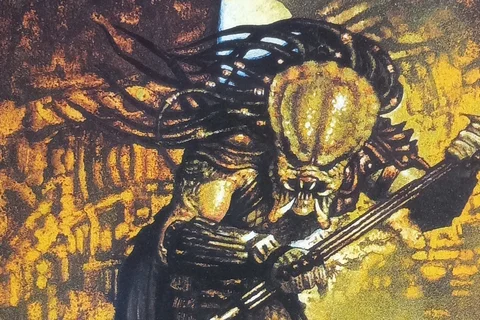
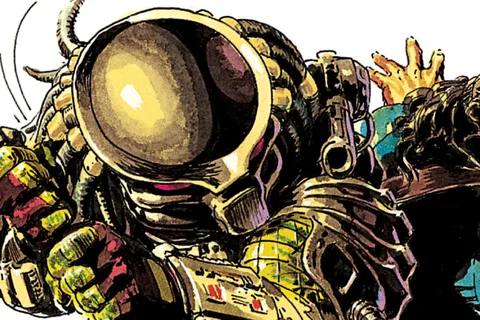
On a hot day in July 1931, a Predator walked through the Cajun country of Bayou Lafourche in Louisiana. It wore armor and a net over its body but no bio-mask, and it carried a long spear. At the edge of a stream it pulled a muskrat out of the water, along with the chain of the trap that had caught the animal. The Predator cut the muskrat open with its wrist blades, tore out the insides and ate the raw meat. When it had finished, it walked off into the trees and left the empty trap behind.
The story was narrated by a Cajun joke that ran through these opening scenes. In the joke, a mother crawfish and her baby passed a cow and then a horse, and the mother told her baby not to worry because those animals did not eat crawfish. When an old man came down the road, the mother told the baby to run, because he was a Cajun and Cajuns would eat anything. The same punchline returned at the end of the comic, after the Predator itself had been cooked.
The Empty Traps
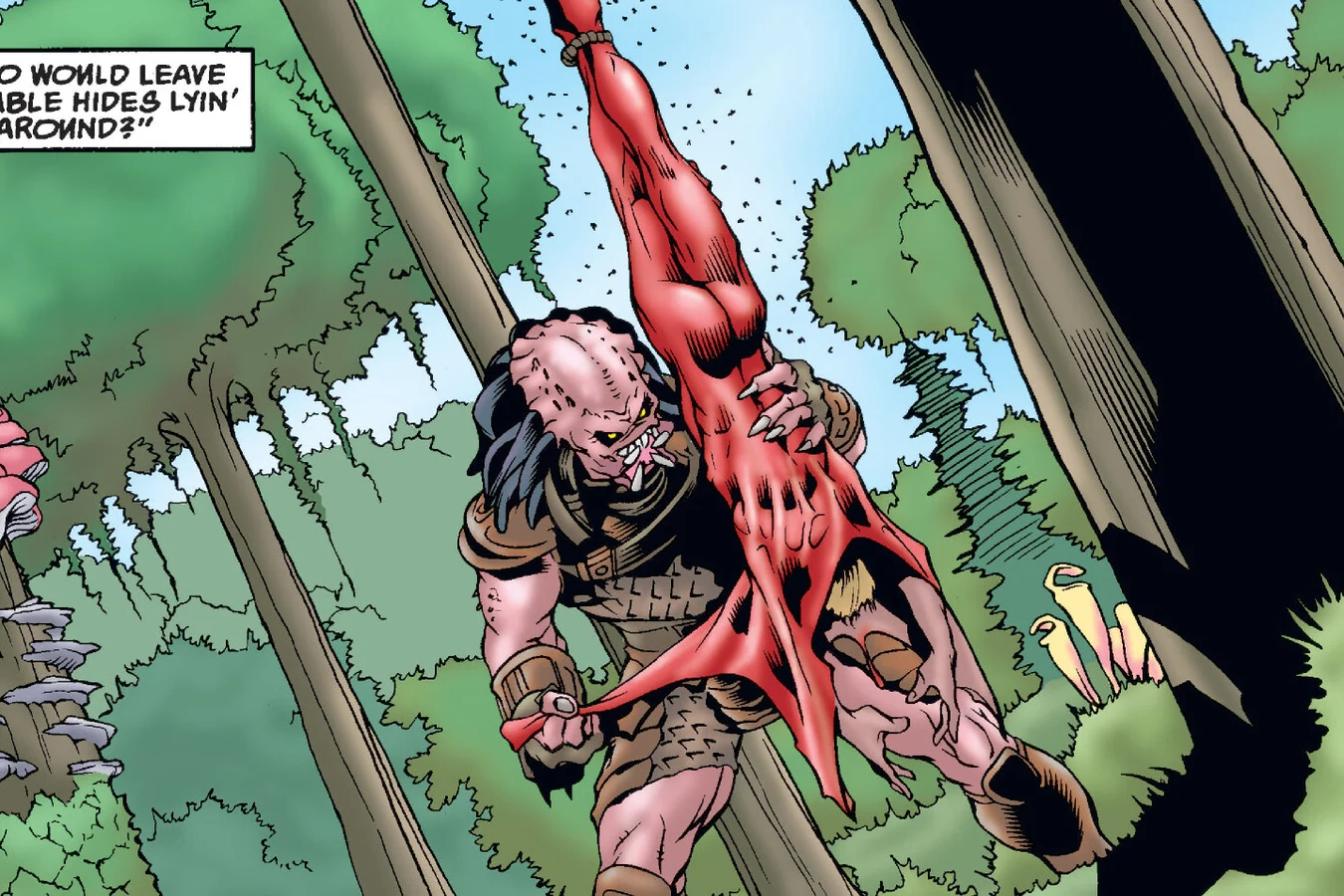
Later that day, three trappers checking their line found that a fourth trap had been emptied. The oldest of them, Mr. LeBlanc, was a heavyset local man in a brown hat, and he went with a younger man in an orange cap and a blond man with a double-barreled shotgun. The younger men blamed a hungry mink or an alligator. LeBlanc pointed out that no alligator skinned its food and decided that a man was stealing their muskrats, possibly to sell the furs. Nearby, the Predator was hanging a freshly skinned body high in a tree.
The trappers soon found a line of huge tracks in the mud, which the younger men took for the trail of a very large alligator. LeBlanc noticed that the creature had no tail and walked upright on its back legs, and he said he knew who had made the tracks but had expected him to be dead. Blood then dripped onto his head from above. Hanging over the path was a skinned human body with dead muskrats tied to it, surrounded by crows. The younger men took it for a Ku Klux Klan lynching, but LeBlanc had never known the Klan to skin anyone and blamed the Gollywomp.
The Legend Of Big John
LeBlanc explained that the Gollywomp had once been an ordinary man called Big John, who loved a woman who was in love with someone else. Big John went to a voodoo woman, who killed a chicken and worked a spell to remove his rival. Soon afterward the rival was trampled in the street when a team of carriage horses bolted, and Big John was free to court the woman he wanted. When the voodoo woman came to his house to collect her payment, however, he could not pay her, and she swore that she would punish him.
That night her magic began to turn Big John into a giant bullfrog. He went to her shack during a storm and stabbed her to death, hoping that her death would break the spell and change him back. Killing her stopped the transformation halfway, leaving him neither a man nor a frog. According to LeBlanc, he had lived in the swamp ever since, killing men and skinning them in search of a skin that would fit him so he could become a man again. The younger trappers laughed at the story, and the blond man showed off his shotgun before they followed the tracks deeper into the swamp.
The Predator's Camp
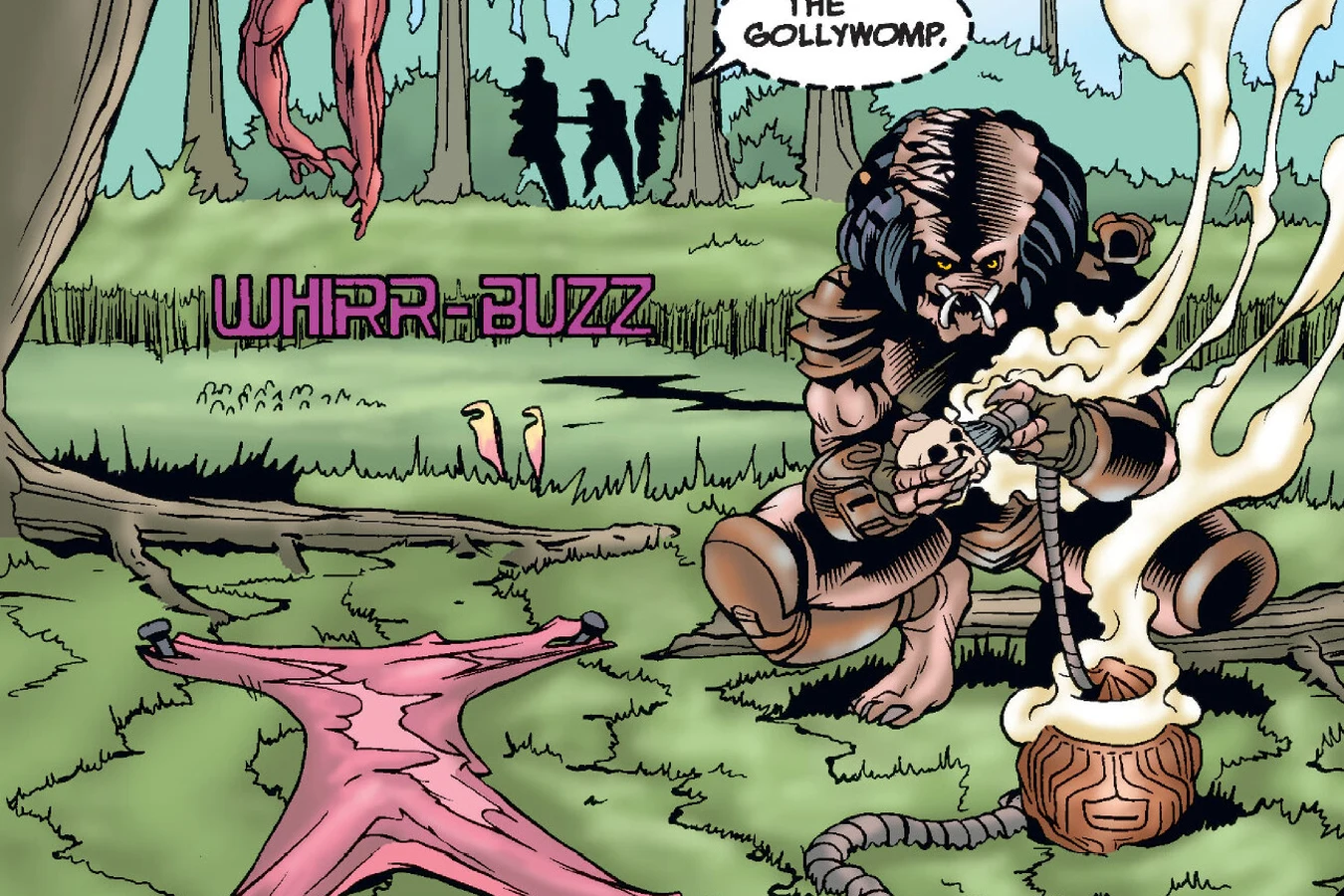
The trappers passed more bodies hanging in the trees, and LeBlanc wanted to turn back. The others crept forward until they reached a clearing where the Predator was crouched over a steaming pot, cleaning a human skull as a trophy. A human skin had been stretched out and pegged to the ground next to it. LeBlanc refused to go any further and left, while the blond trapper decided to shoot the creature. The sound of his shotgun being cocked made the Predator turn toward the men.
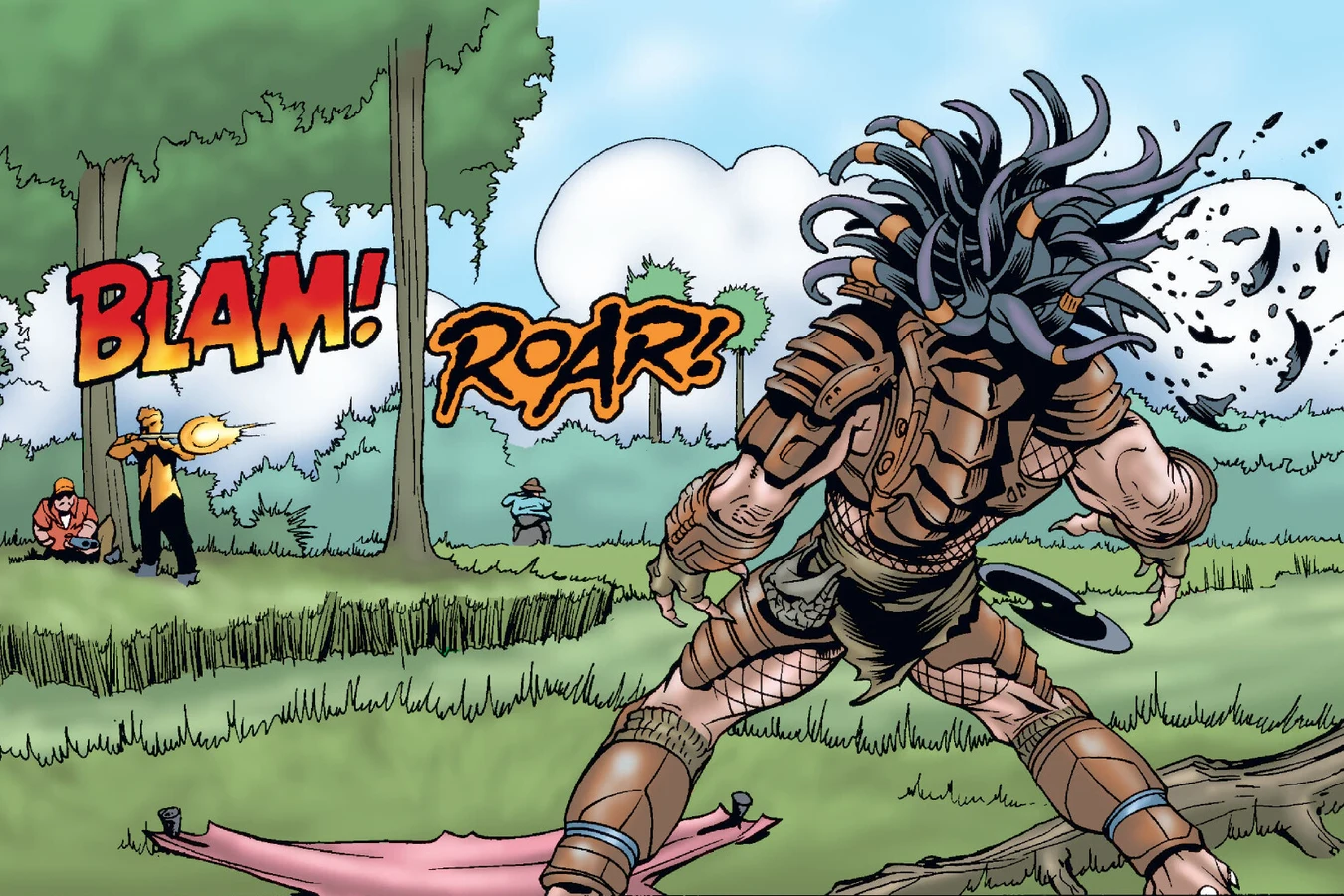
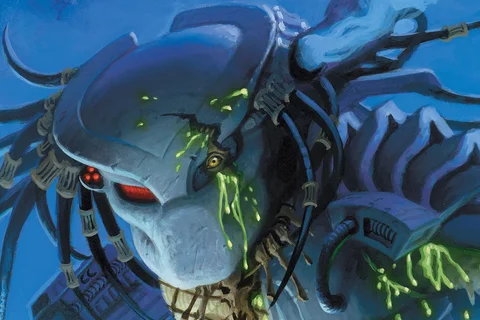
The blond man fired, and the blast tore away several of the Predator's dreadlocks and wounded the side of its head. Green Yautja blood ran down its face as it roared and raised its weapon. The Predator threw a spear across the clearing, which went through the blond trapper and pinned him to a tree. His companion in the orange cap saw him die and ran after LeBlanc, who had a head start through the trees, with the wounded and bleeding Predator following both men into the water.
Flight Through The Swamp
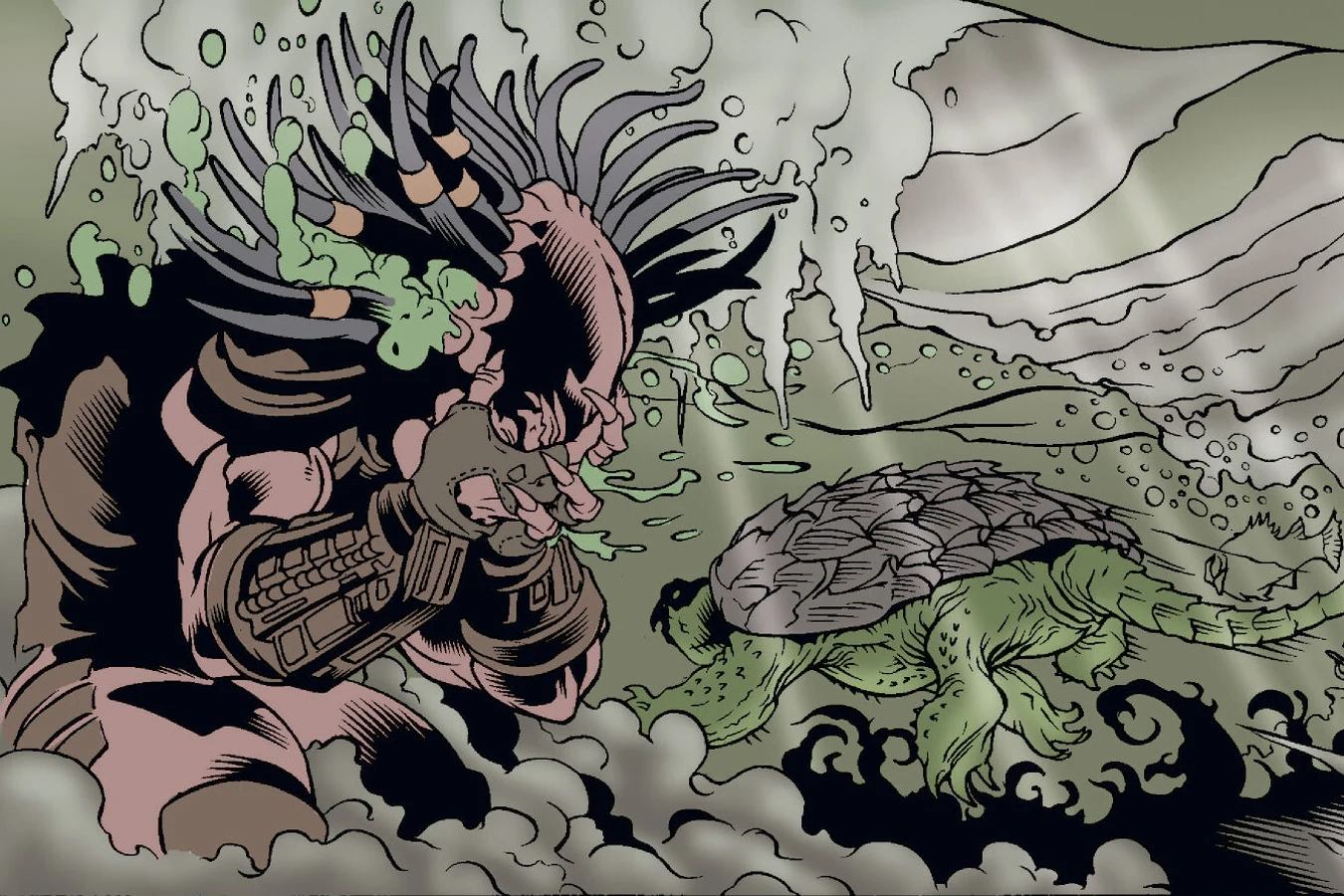
LeBlanc waded through the reeds, and the trapper in the orange cap splashed after him, calling for help, with the Predator close behind. When the creature caught up with him, the trapper turned and fired his shotgun into its face at close range. The Predator went down in the water and came back up beside a snapping turtle, its face covered in blood. LeBlanc told the trapper that he could lose the creature because he knew the swamp well, while the younger man complained that the old man was slowing him down.
Three small throwing blades struck a tree beside the two men, and the Predator then threw a smart disc that brought the trapper down in the mud. As the Predator extended its wrist blades over him, LeBlanc hit it in the head with a rock and called out that he was a bigger man with more skin. The Predator shot him through the shoulder, and he fell into the water. The trapper fired his shotgun into the Predator's face a second time, but the Predator lifted him on its blades, repeated his last words in an imitation of his voice and killed him.
The Duel At The Quicksand
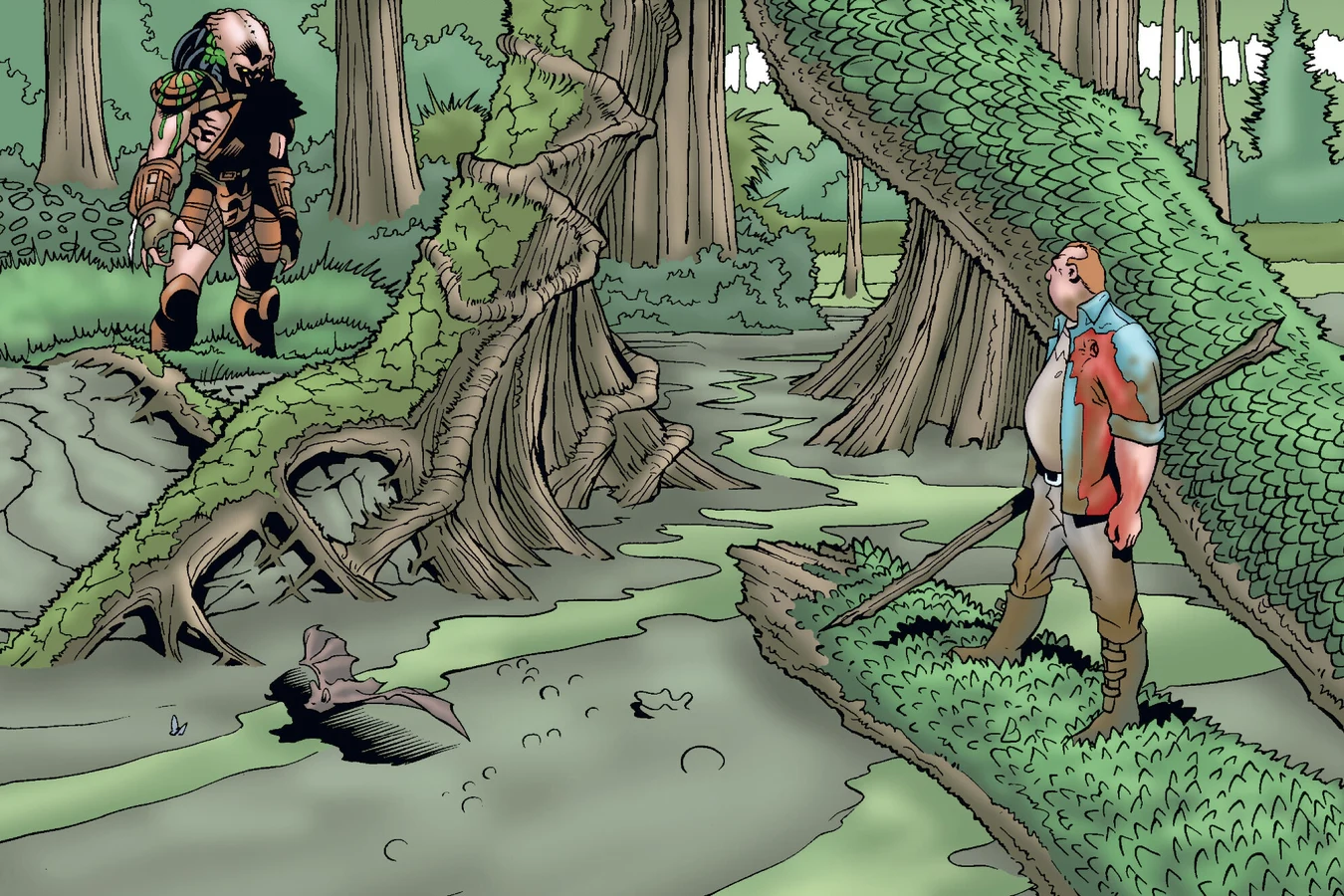
The Predator followed a trail of blood through the swamp and found LeBlanc waiting on a fallen log on the far side of a muddy creek. He was holding a long wooden stake, and his shirt was soaked with blood from the wound in his shoulder. The Predator roared and drew its wrist blades across its own arm, giving itself a wound to match his. It then took off its wrist gauntlets and armor and broke off a thick branch to use as a club, so that both of them would fight on equal terms.
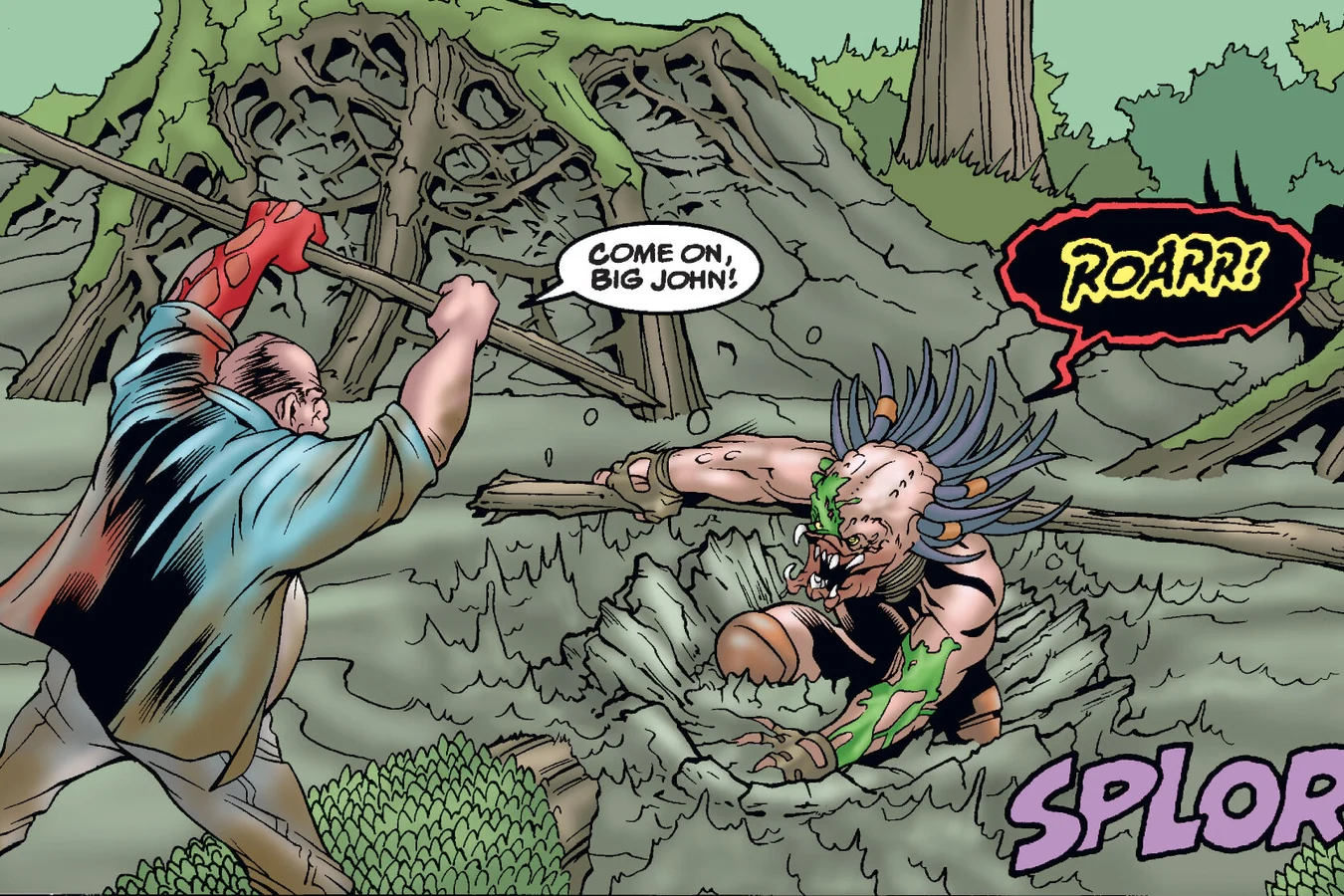
LeBlanc called the Predator Big John and dared it to come at him. When it charged, the ground of the creek bed gave way, and the Predator sank to its waist and then to its chest in quicksand. LeBlanc laughed at it from the bank, and the trapped Predator copied the sound of his laughter as it went under. When only bubbles were left on the surface, LeBlanc said that he would wait until he was sure the creature was dead and then pull the body out, because he had plans for it.
LeBlanc's Gumbo
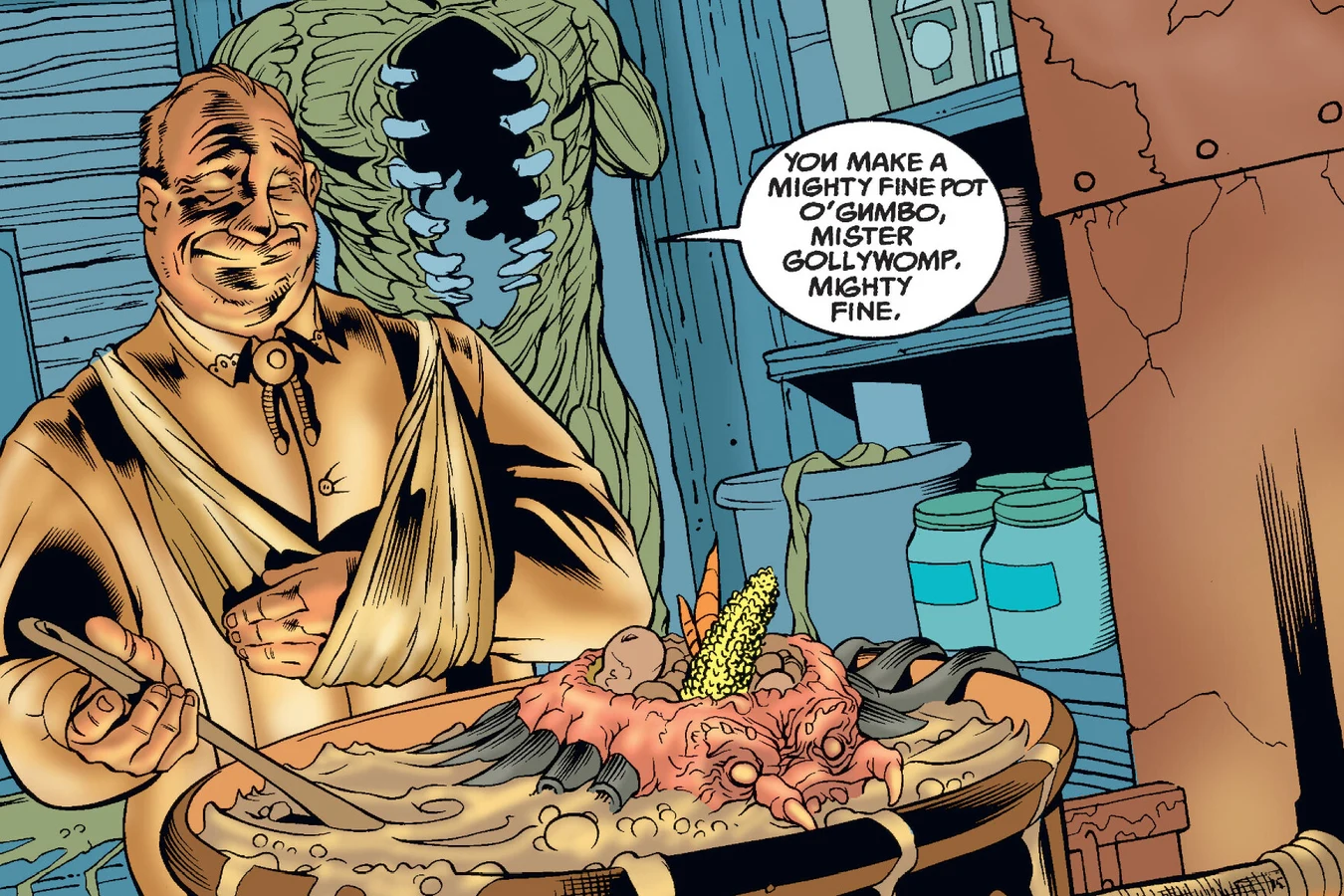
Some time later, LeBlanc stood in his shack with his arm in a sling, stirring a large pot over a fire. The Predator's head was cooking in the pot with corn and vegetables, and its headless, gutted body hung from a hook on the wall behind him. LeBlanc praised the Gollywomp for making a fine pot of gumbo. He laughed to himself and repeated the punchline of the crawfish joke from the start of the comic, about the Cajun who would eat anything, and that line closed the story.
Characters
- The Predator was a hunter who stole muskrats from traps in Bayou Lafourche, skinned the people it killed and was taken for the Gollywomp. It drowned in quicksand and was cooked by LeBlanc.
- Mr. LeBlanc was an old Cajun trapper who knew the swamp and believed the killings were the work of the Gollywomp. He survived a shot through the shoulder and lured the Predator into quicksand.
- The blond trapper carried a double-barreled shotgun and fired the first shot at the Predator. He was killed by its thrown spear.
- The trapper in the orange cap fled with LeBlanc and shot the Predator in the face twice before it killed him with its wrist blades.
- Big John was the man in LeBlanc's legend who paid a voodoo woman to kill his rival and was half turned into a bullfrog when he did not pay her.
- The voodoo woman worked the spell against Big John's rival and was stabbed to death by Big John in the same legend.
Behind The Scenes
Dark Horse Comics released Predator: Strange Roux as a one-shot with a November 1996 cover date and an on-sale date of November 6, 1996. The issue had 36 pages including covers, with a single 22-page story. Brian McDonald wrote it, Mitch Byrd penciled it, Jasen Rodriguez inked it, James Sinclair colored it with separations by Jim Johns, and Sean Konot lettered it. Scott Allie edited the issue, Harald Graham designed it and Paul Lee painted the cover.
The cover carried the A Decade of Dark Horse logo, which marked the publisher's tenth anniversary in 1996. The same year it published the four-issue A Decade of Dark Horse anthology, whose first issue included Predator: 1718. Paul Lee's painting showed a Predator's head rising out of black swamp water among cypress trees, below the red and orange title logo. The names of McDonald, Byrd and Rodriguez were printed along the bottom of the cover, and Lee received no cover credit on the front.
Reprints
Dark Horse reprinted the story in Predator Omnibus Vol. 3 in June 2008, together with Predator: Bad Blood, Predator: Kindred, Predator: Hell & Hot Water and two short stories from Dark Horse Presents. The omnibus printed Paul Lee's painting on an interior page ahead of the story. After Marvel acquired the Predator comics license, the one-shot was collected again in Predator: The Original Years Omnibus Vol. 1 in December 2022, alongside Predator: Dark River and Predator: Invaders from the Fourth Dimension. That edition reproduced the painting without the original logo, under a small title line.
The Predator In Yautja Lore
The Predator in Strange Roux hunted without a mask for the whole story and lived off the swamp, catching muskrats from traps and eating them raw, which ties it to wider Yautja eating habits. It skinned its human kills, hung their bodies in the trees and took their skulls. Its weapons were a spear, throwing blades, a smart disc and wrist blades, and it never used a shoulder cannon or a cloak. Before its final fight it wounded its own arm and set aside its gear, an act in line with the Predator honor code of facing an equal opponent on equal terms.
The hunter also mimicked human voices, copying the last words of the trapper in the orange cap and the laughter of LeBlanc in the manner of the Yautja laugh. The ending reversed the usual hunt, as a human trapped and drowned the Predator, cut off its head and cooked it. That outcome connects the comic to relations between humans and Predators and to other headless Predators. Its July 1931 date places it between the 1926 Everglades hunt and the 1936 Kenya hunt on the Predator timeline. The quicksand death also belongs with other cases of Yautja in water.
Conclusion
Predator: Strange Roux is a 1996 Dark Horse one-shot by Brian McDonald, Mitch Byrd and Jasen Rodriguez, with a painted cover by Paul Lee. It follows three trappers in Bayou Lafourche in 1931 as they tracked a Predator that was stealing muskrats and skinning people, while an old Cajun named LeBlanc blamed the local legend of the Gollywomp. The Predator killed both younger trappers and shot LeBlanc, but it drowned in quicksand after setting aside its weapons for a fair fight, and LeBlanc cooked its head in a pot of gumbo.
External Sources
- Predator: Strange Roux at Dark Horse Comics
- Predator: Strange Roux at the Grand Comics Database
- Predator Omnibus Vol. 3 at the Grand Comics Database
- Predator: The Original Years Omnibus Vol. 1 at Marvel
Tag Categories: Predator Comics