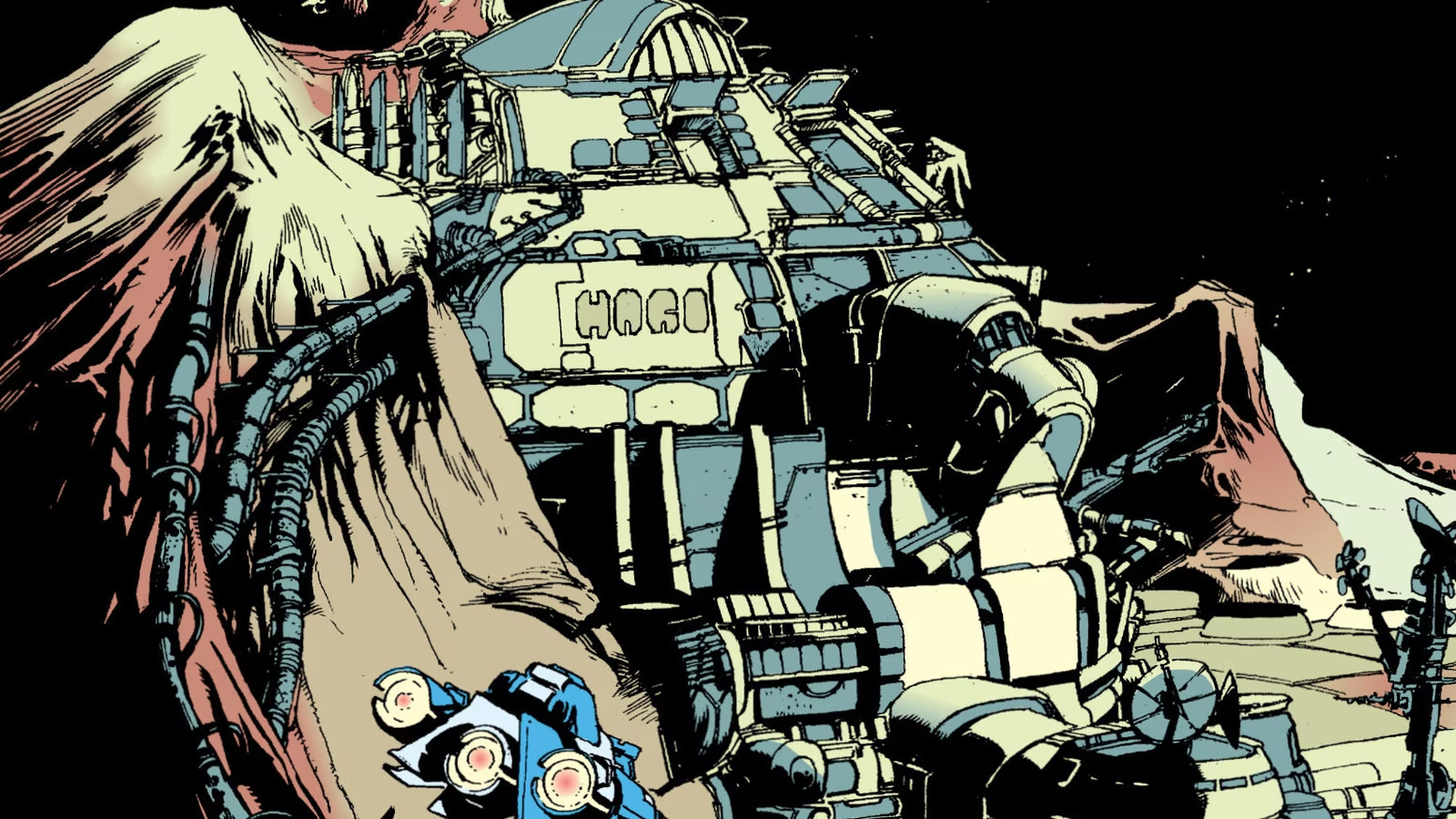

Charon Base was a Z.C.T. Corporation research facility carved into an asteroid in Dark Horse's Aliens: Rogue and Sandy Schofield's 1995 novel. Originally a government prison camp, the rock was sold after the war on Earth and placed under Professor Ernst Kleist for the secret work of Project Chimera. Kleist sealed a Xenomorph Queen and five captured Aliens into old convict tunnels, then used the hive, the labs, and a platoon of Colonial Marines to breed a male Xenomorph King. The King broke loose and fought the Queen, and Kleist's sound cannon went critical, destroying the base as the transport Caliban escaped.
Design And Location
In Sandy Schofield's novel, Charon Base was little more than a large hunk of solid rock in an elliptical orbit around a class-three yellow star. The government had first used it as a prison camp for the most dangerous criminals from Earth, and their work was to cut more tunnels whether those tunnels were needed or not. It took over two thousand convicts fifty years to hack thousands of kilometers of passages out of the rock, in places fifteen or twenty levels deep. Most of the prisoners died on that make-work job, and the novel says their mummified remains were still in bunks carved into the cold stone walls.
After the Alien invasion of Earth and its recapture, the government stopped shipping prisoners that far, so the Z.C.T. Corporation bought the base and started Project Chimera. A section of the old tunnels was sealed off for a hive. Another small section near the surface was upgraded to high living standards for scientists and a platoon of government Marines. The rest of the tunnels were left largely forgotten. The novel also describes Hangar Twelve and an observation lounge the Professor built five hundred meters up a stairway, a view that saw so little use he closed its bar after six months.
Research Facilities
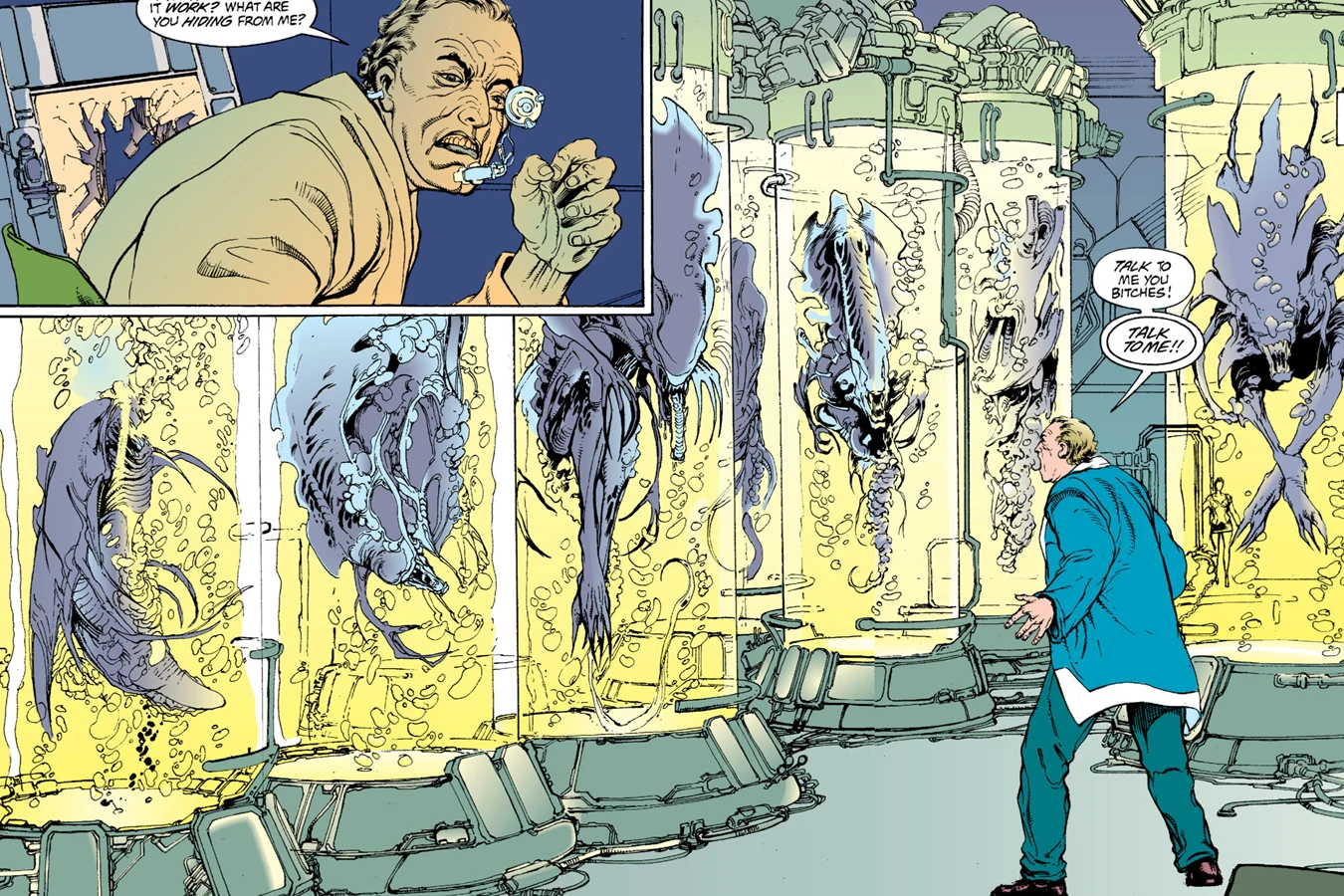
Kleist was put in charge of finding as many ways as possible to make a profit from the Aliens, from acid blood to royal jelly and everything else the species could yield. Project Chimera tried to shape that yield into a controllable creature. In both the comic and the novel he kept tanks of failed, gene-spliced queens in the labs, the result of attempts to grow a tame queen from docile animal hosts. The novel adds that passive-DNA splicing with sheep, llamas, and cattle failed, and that dummy clone torsos were the cover story while live human heads on shelves kept floating bodies accepted as living hosts.
The breakthrough was a queen-sized male grown from Alien DNA, concentrated human male hormone, and tissue from the Grant spy, named John Kray in the comic and John Cray in the novel. Kleist first treated the creature as a tame control animal, then as a king, and in the novel as a prototype for a Z.C.T. bio-weapons arsenal. The novel says that when the base was first converted, the Professor also built three private tunnels known only to himself, Larson, and Grace, running from a hidden door in his inner office to the hangar deck, the hive center, and the private lab.
The Hive
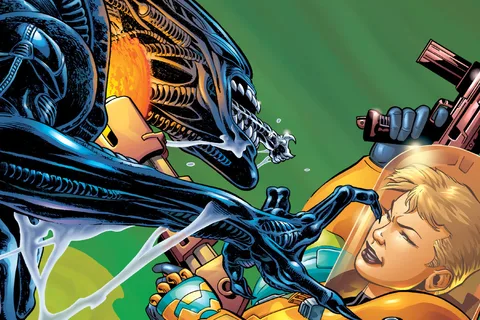
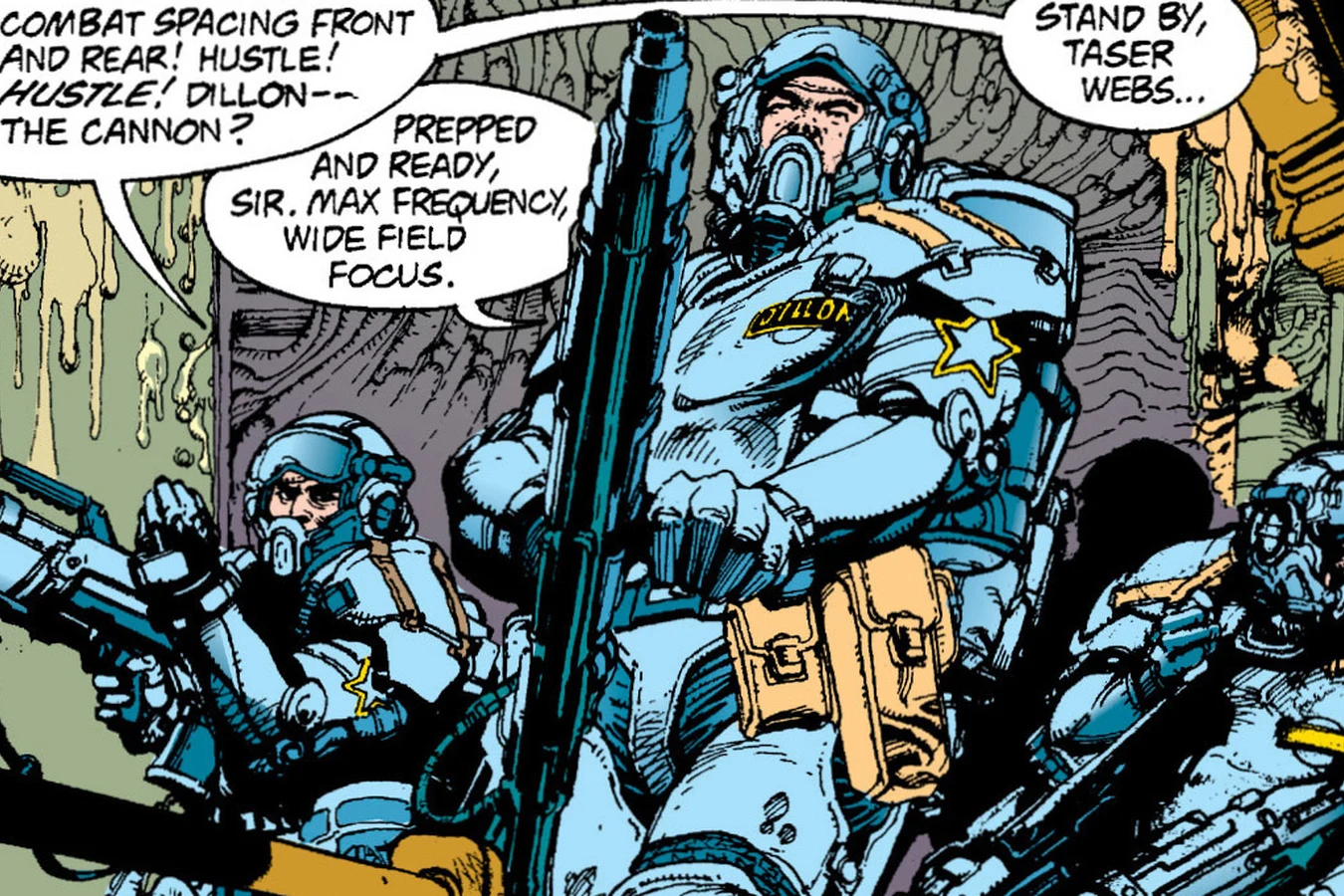
A section of the old tunnels was sealed from the rest of the base, and five captured Aliens and one Queen were let loose to form a hive. An airlock divided the human corridors, lined in wood and metal and even carpeted in the novel, from the hot, rotting passage beyond. Sergeant Reuben Green's Marines went in after live Warriors with Taser Webs slung and Kramer rifles held in reserve, depending on a bulky Sound Cannon that often failed. The hive smell, one of Green's memories in the book, was worse than any description he had heard during the war.
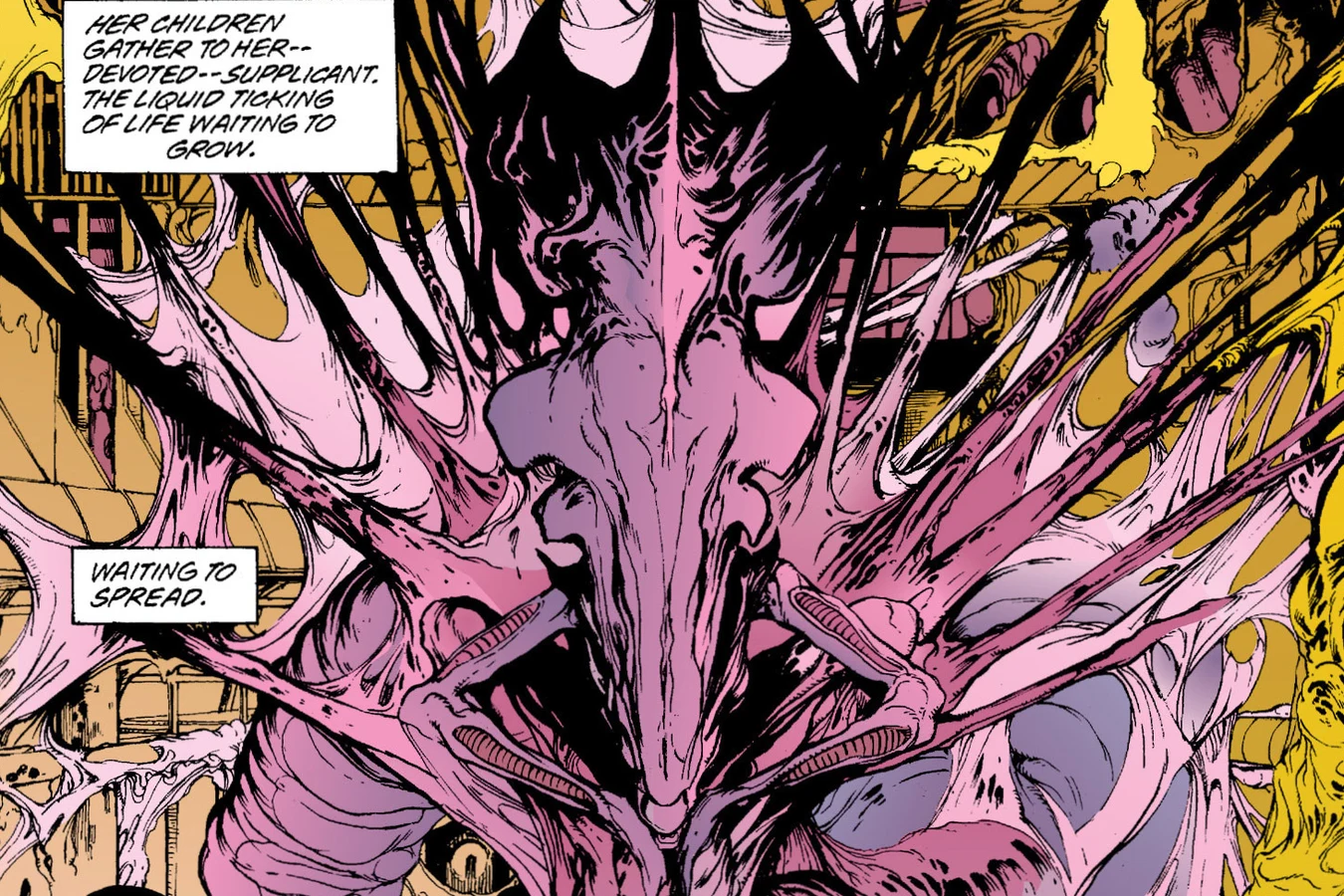
Kleist walked those tunnels as if they already belonged to him, calling the Aliens his good children in the comic, and he kept a personal disruptor at hand. The Queen held a central chamber, later the scene of the fight with the King. In the novel, a secret tunnel opened onto a balcony over a huge room near the hive center, and the Professor was surprised to find no inner cadre left to protect her, only torn bodies of large male Aliens on the way in. The contained brood is one of the largest recorded hives, even though it was never a homeworld nest.
Security And Support
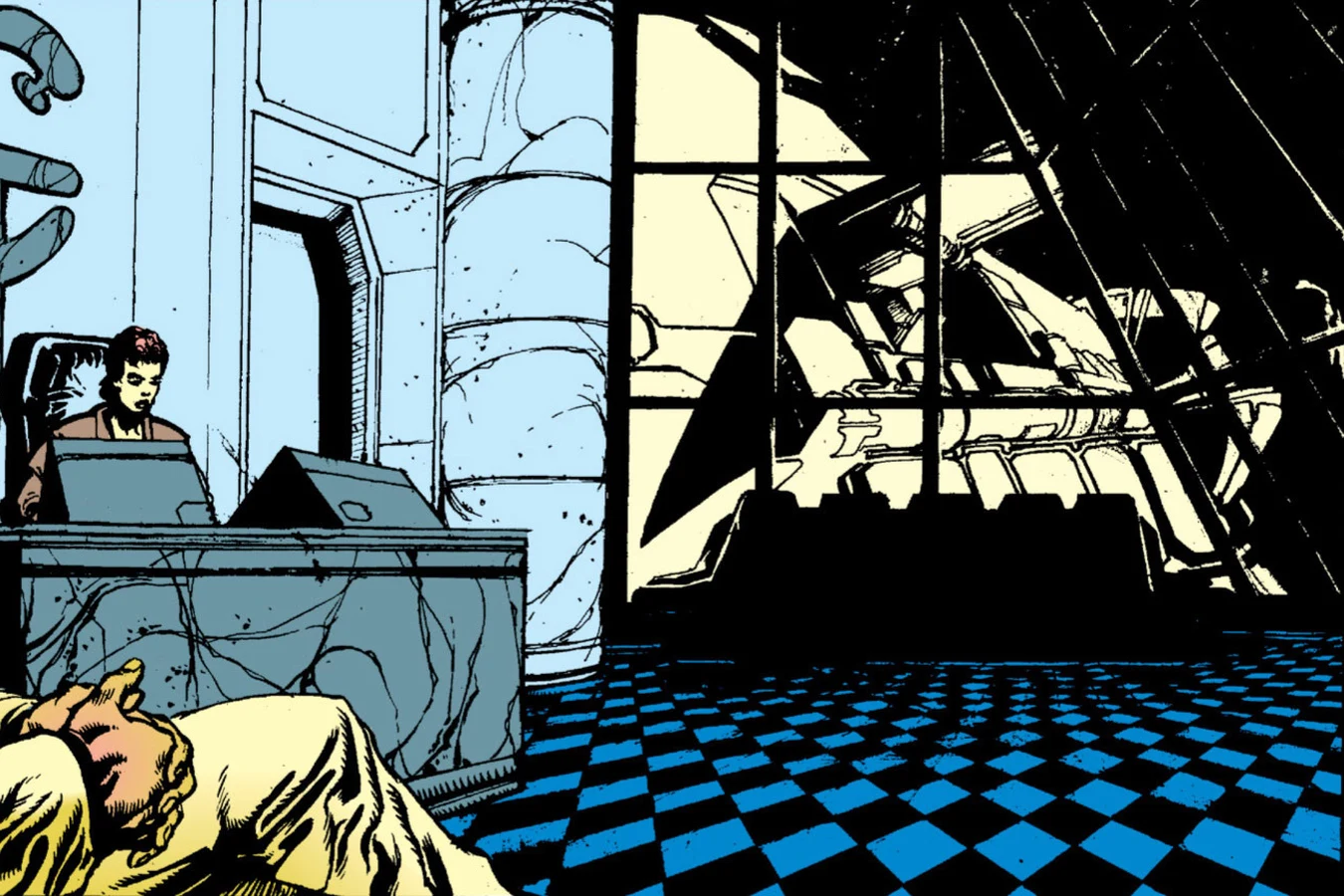
Kleist's office was built around a corporation-grade wall of fifty-meter-square monitors, with a desk four meters long from which he could reach thousands of hidden cameras and microphones. In the novel he spent hours watching the fifteen hundred people under his command, and no one on the base sneezed, whispered, or made love without him knowing. Larson, tall, thin, and the chief of security, often worked that board at the Professor's left. Two years into the story's present, flight controller Hank told Captain Joyce Palmer that the security force numbered over a hundred men, far more than the Marines still on the rock.
The novel puts the headcount in clear terms. Two years earlier there had been over fifteen hundred people on the station, civilians, scientists, and hired hands, including forty Marines. By the time the Caliban docked, Hank doubted a count would break fourteen hundred, and only twenty Marines were left, with people disappearing as accidents or without explanation. The Sound Cannon, a larger version of a pocket dog whistle in the book, could freeze an Alien's nervous system, often for no more than sixty seconds, and could go critical and wreck the station, which is what finally destroyed Charon Base in both versions of the story.
Command And Personnel
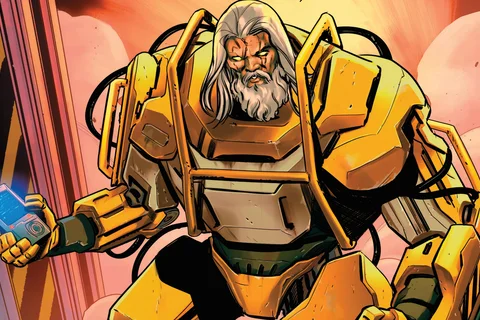
Professor Ernst Kleist directed the base for Z.C.T., and the novel's opening history paragraph once calls him John Kleist, while a holographic message from Gordy Squaza, the second most powerful man in the corporation, addresses him as Ernst. Grace ran his outer office, and in the novel she is an android who could wear full armor and carry a Kramer into the hive. Larson ran security. In the comic, Larson's second was Bergren, later killed at the west airlock, and a recorded message from a Z.C.T. official named DeSouza, rather than Squaza, warned Kleist that Project Chimera had drawn the wrong kind of attention.
Sergeant Reuben Green led the Marine squad that still hunted in the hive, with names such as Dillon, McPhillips, Boone, and Choi among those who went through the airlock. Captain Joyce Palmer commanded the commercial transport Caliban, with copilot Jason Deegan, and her passenger was the Grant Corporation spy. The comic and the novel disagree on who lived long enough to leave. In the issues, Palmer, Deegan, Kray, and Green reached the ship. In the book, Cray died in the labs, Hank stayed in the fight and left with Palmer, and Green was joined by McPhillips, Dillon, and Young.
Operational History
The Caliban Arrives
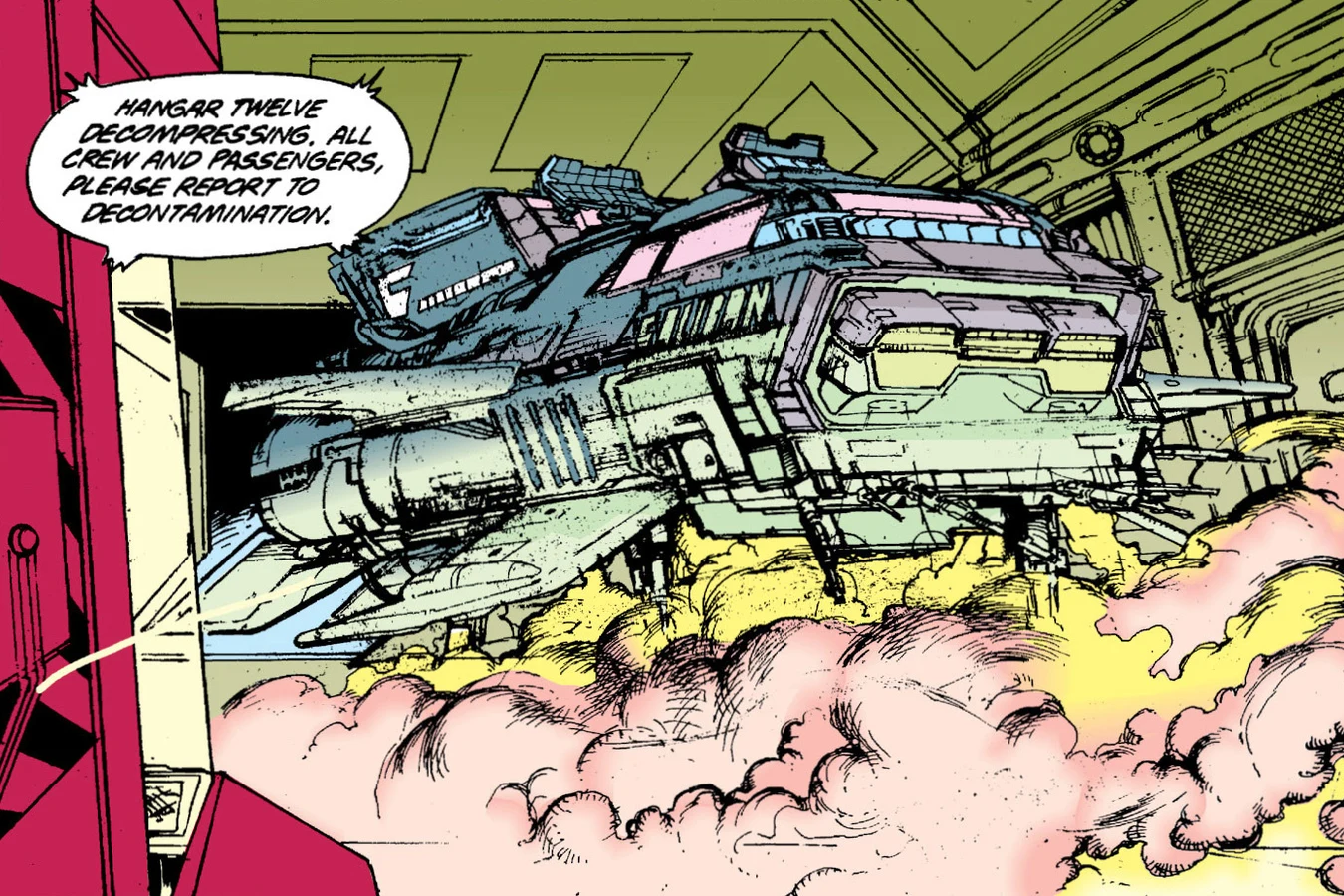
The Caliban called Charon Base flight control for clearance and was directed into Hangar Twelve, a squat load of metal docking at an outpost carved into rock and ice. Captain Joyce Palmer kept Deegan on a short leash as they tucked the transport in, an eighty thousand ton load of metal in the novel, and walked the crew through decontamination. Kleist was waiting on the deck with tight courtesy to welcome the passenger introduced as Mr. Kray, who would not discuss a brief he said was classified on a need-to-know basis. The pilots, he told them, did not need to know.
In a private briefing, the sources split on the name of Kleist's contact but agree on the warning. The comic plays a recorded message from a Z.C.T. official named DeSouza. The novel uses a hologram from Gordy Squaza that took seven months to arrive. Project Chimera had drawn attention from the Grant Corporation, B.M.I. Affairs, and a new Asian-Chinese consortium, a recent update had been intercepted and decoded, and Kleist was told to cease transmissions. The company had sent the spy to collect disc copies of everything on the base.
The King Breaks Loose
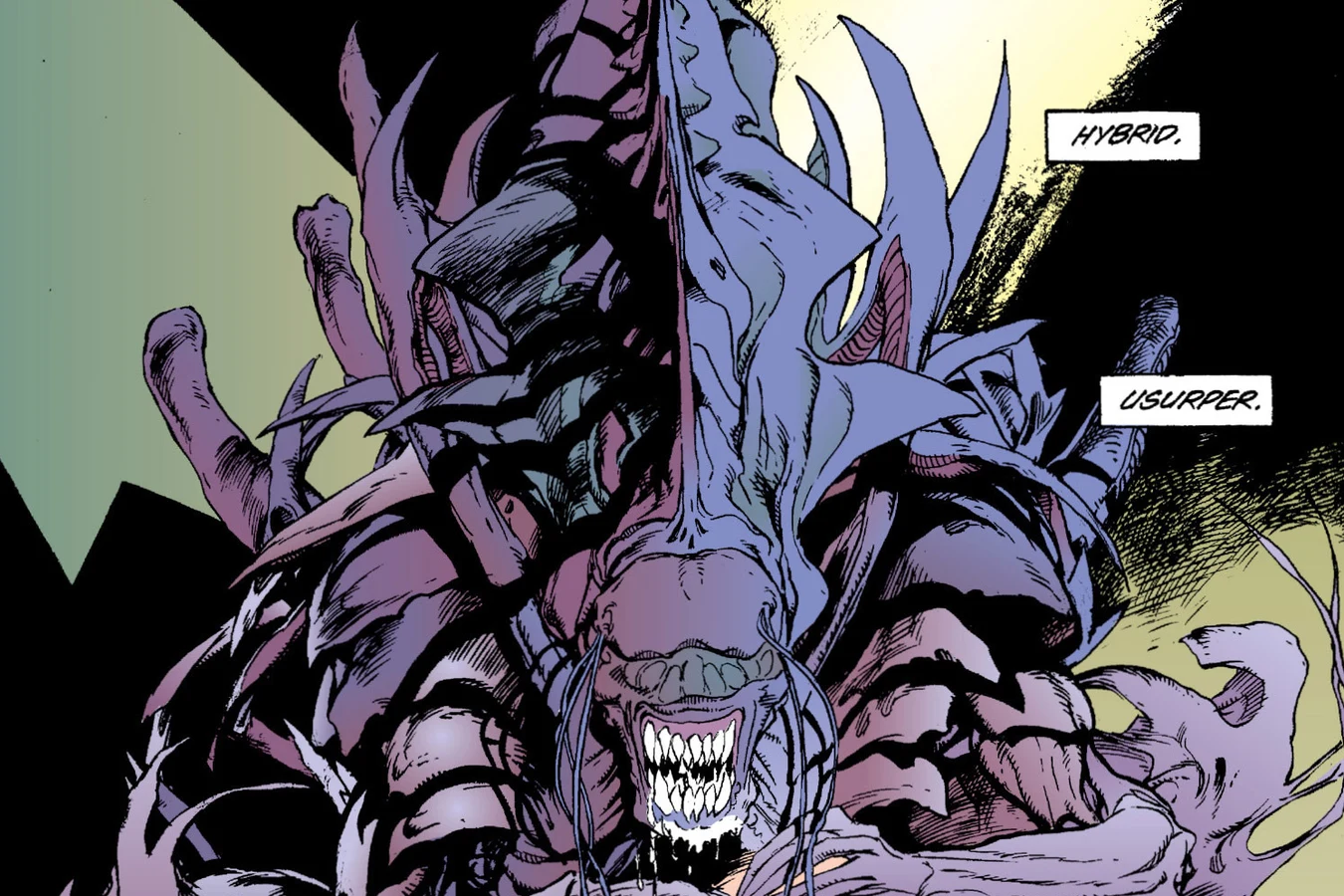
Kleist unveiled his Chimera creation in the labs, a huge male Alien King he hoped to command. The creature was not tame. It tore through adult Xenomorphs, smashed out of confinement, and opened a path into the hive, while security opened fire in the corridors as the outbreak overran the facility. In the comic, Kleist dumped Green's remaining Marines into the hive with blank ammunition, and almost all of them died there, with only the sergeant getting out. In the novel the platoon cut through unused prison tunnels, lost Lynch on a second blast, and later joined a civilian revolt the comic never staged.
The Queen met the King in her chamber, and she won the fight by speed, taking his arm and cutting his carapace before finishing him. Kleist stayed to watch, and in the comic he was caught in her grip as he taunted her and turned the large Sound Cannon on her as the warnings climbed and the device went critical. The novel changes that death. The Queen cut off his right arm, the severed arm still held the cannon, the impact jammed the trigger, and the weapon went critical beside him. The blast caught both creatures and opened a short window for the people still moving toward the hangar.
Destruction Of Charon Base
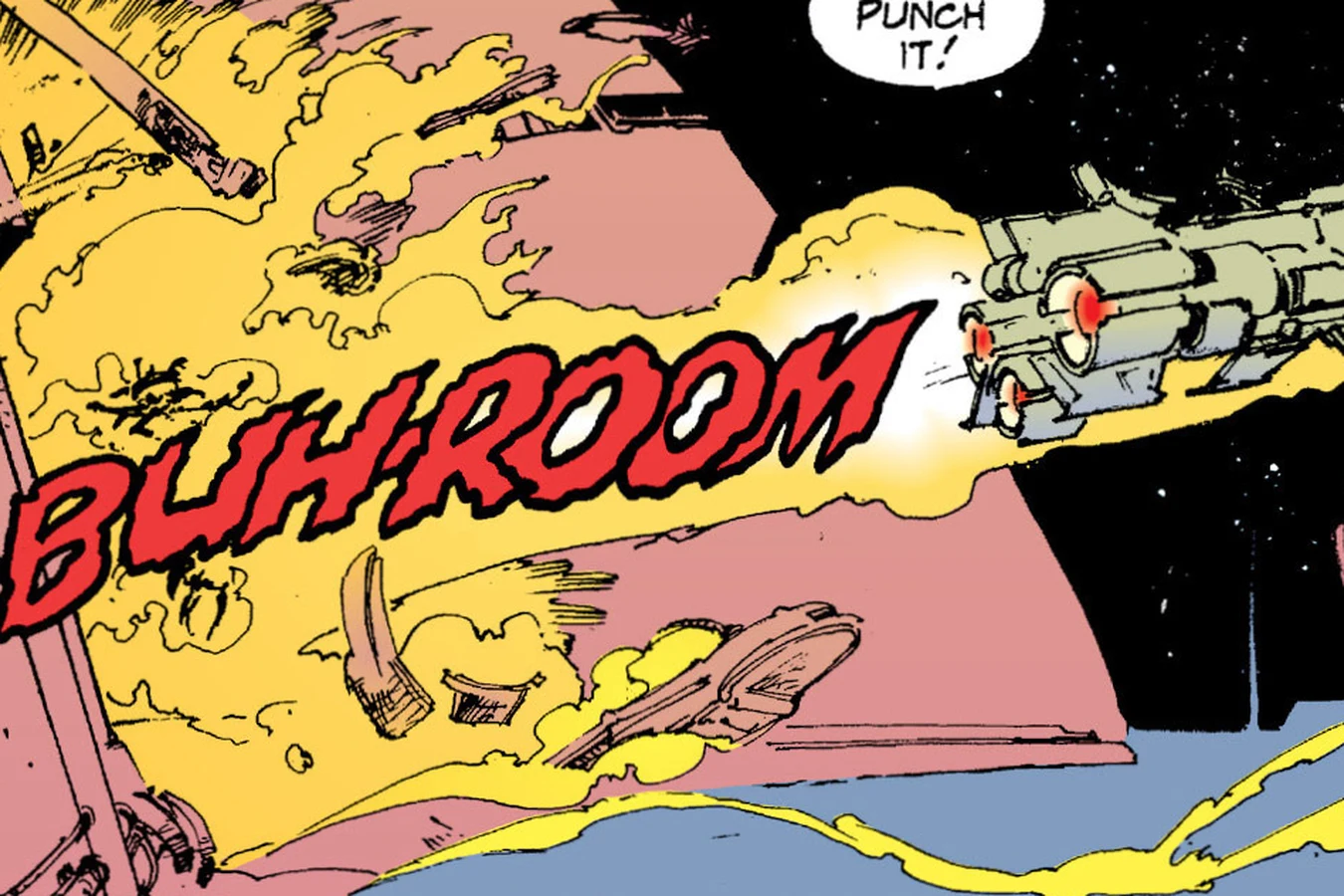
The Caliban cleared the bay on raw thrust as the hangar blew behind it. In the comic, Palmer, Deegan, Kray, and Green were the ones who made it through the doors, and they held orbit for three days, watching the wreck and listening for anyone left alive, picking up only static. In the novel the flash wrecked containment, collapsed tunnels, and blew the hangar doors into space, and neither the Queen nor the King left the rock. Palmer later thought of fourteen hundred people dead, even as she and Hank lived, and of a nightmare that, for the moment, was over.
In a closing log, Captain Palmer set course for Earth and, in the comic, a rendezvous with Moreno Station in eight months. She did not dress the failure up as a win. Mankind's prized intellect, she said, had become conceit, a habit of putting on technology and calling it omnipotence. They could not control the creatures, and they could not call them evil, yet they still allowed men like Kleist to assume power. The novel ends on the same note, with humans still placing men like the Professor in power. This is Captain Palmer of the Caliban, signing off.
Behind The Scenes
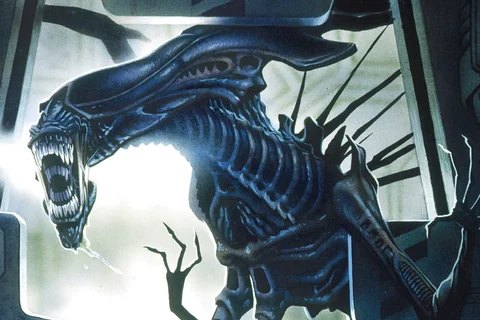
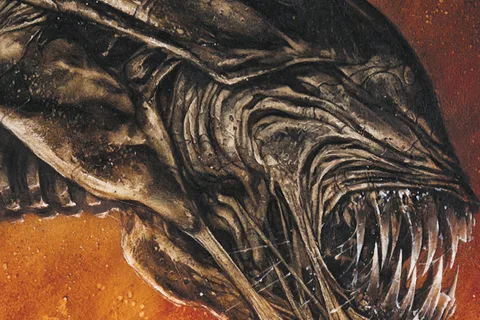
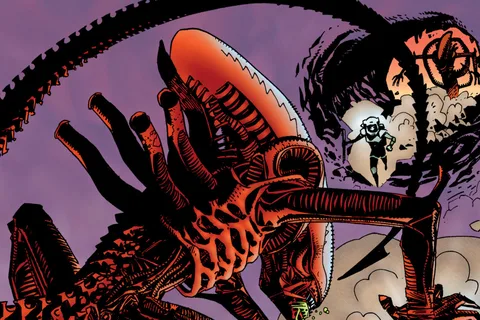
Ian Edginton and Will Simpson introduced Charon Base in Aliens: Rogue #1-4, published by Dark Horse from April to July 1993, with a painted title illustration by John Bolton. The comic is the first appearance of the base, the King, and Kleist as director. Sandy Schofield's 1995 Bantam novel, a house name used by Dean Wesley Smith and Kristine Kathryn Rusch, was adapted from that series and dedicated to Steve Perry. The novel supplies the prison history, the fifteen hundred headcount, and the private tunnels, and it often calls the installation a station as well as a base.
The two versions also part ways on the evacuation and on Kleist's later life. The issues leave Kray alive on the Caliban. The book kills Cray in the labs with a Warrior's inner jaw. Kitchen worker Andy Carrier finds living heads and wakes as one of them in the novel, while the comic's Paulie Finn has his throat cut when he is found. After the fall of Charon Base, Kleist returned in Aliens: Colonial Marines as the Father of the Bug-Men. One history paragraph in the novel names the director John Kleist, and Squaza's hologram addresses him as Ernst, the name used in the comic and on these pages.
The first version of AvP Central, released in 2001 in Estonian, was called Charon Base.
Conclusion
Charon Base began as a prison and ended as a wreck, a corporate laboratory that treated a hive as raw material and a sound weapon as a safeguard. Kleist's cameras, secret tunnels, and Project Chimera let him run the rock as if it were his alone, until the King he had built turned on the Queen and the cannon he trusted went critical. The Caliban left with only a handful of survivors, and the people still on the asteroid did not answer. What remained of the base was fire, debris, and a prison rock that had finally spent its experiments.
Appearances
- Aliens: Rogue #1-4 (April-July 1993).
- Aliens: Rogue (1995 novel).
Tag Categories: Alien Universe Space Stations | Colonial Marine Lore | Alien Lore