Alien vs. Predator: Jaguar (1994): Lore & Game Overview

Alien vs. Predator, often called AvP Jaguar or Alien vs. Predator: Jaguar, is a first-person shooter developed by Rebellion Developments and published by Atari Corporation for the Atari Jaguar. Released in October 1994, it was Rebellion's first work in the crossover franchise and one of the earliest licensed shooters to let players hunt as a Predator, crawl as a Xenomorph, and survive as a Colonial Marine in the same package. The story unfolds aboard the doomed USS Golgotha training station after a Xenomorph outbreak, a Space Jockey Boneship, and a Predator vessel all arrive during the same incident. It still ranks highly on our best Predator games list and remains an important footnote in the best Alien games timeline as the first Alien-based FPS on a home console.
Game Overview
Alien vs. Predator plays like a Jaguar-era hybrid of Wolfenstein 3D and Doom, with texture-mapped corridors, sprite-based enemies, and digitized character art built from sculpted models and live reference photography. The Golgotha base spans five interconnected sublevels linked by elevators and air ducts, and each of the three campaigns reuses that same layout from a different angle. The Marine and Predator scenarios offer a surprisingly open structure from the start, while the Alien campaign follows a more linear vent-to-vent path toward the docked Predator ship.
Rebellion leaned heavily on film atmosphere rather than cinematic cutscenes. Computer terminals, motion trackers, audio oscilloscopes, and species-specific HUDs stayed readable even within the Jaguar's technical limits. The result was one of the platform's most ambitious cartridges and a blueprint for ideas Rebellion would revisit in Aliens vs. Predator: Classic five years later.
Plot Summary
Every campaign begins with the same prologue. The USS Golgotha, a Weyland-Yutani-built Colonial Marine training station, detected a Predator ship and a Space Jockey Boneship docking with the facility. Civilians and recruits were evacuated while Marines took defensive positions, but the outbreak spread before the base could be sealed. From that shared disaster, the three playable stories diverged.
As Private Lance J. Lewis, the player began in the brig on sublevel 3 without weapons, security clearance, or a motion tracker. Lewis scavenged gear from fallen Marines, recovered keycards, fought through Alien-infested ducts, and eventually reached the command center to activate Golgotha's self-destruct sequence. His escape route led through the territory of the Golgotha Queen, one of the earliest Colonial Marine versus Queen fights in franchise gaming, before he fled in an escape pod.
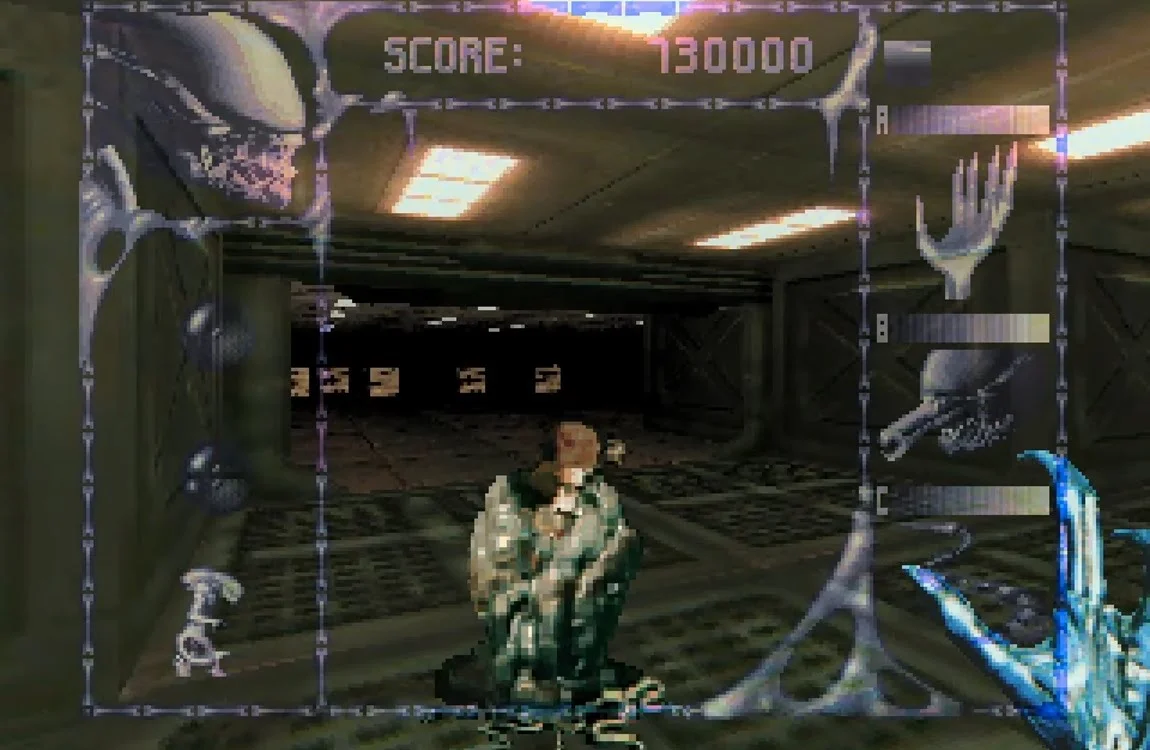
As the playable Xenomorph, the objective was to reach the Predator ship on sublevel 1 and free the captive Alien Queen held aboard it. Because the Alien could not use elevators, the campaign forced a crawl through maintenance vents while Marines and Predators hunted the intruder. The species survived by cocooning Marines, turning captured hosts into extra lives rather than relying on Facehuggers.
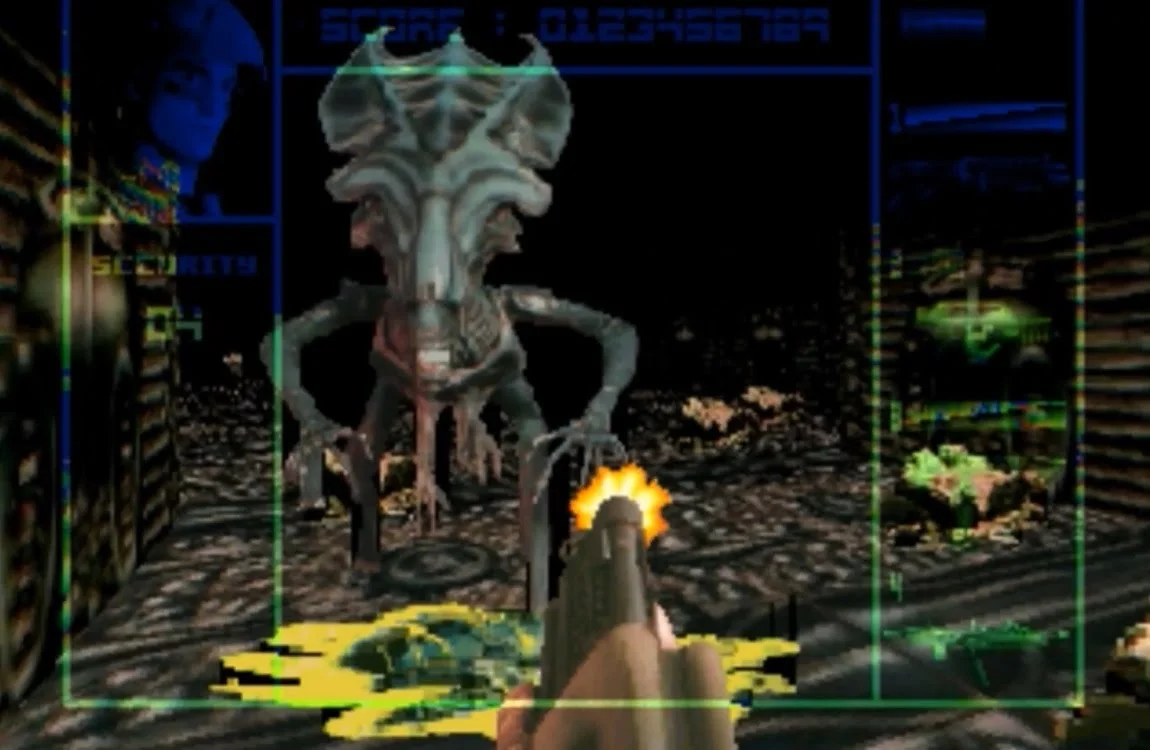
As the Predator, the hunter answered Golgotha's distress call as a ritual hunt rather than a military rescue. The campaign's goal was to kill the Golgotha Queen and claim her skull as a trophy. Along the way the Yautja unlocked wristblades, the combi-stick, the smart disc, and the plasmacaster through an honor-based scoring system that punished invisible kills.
Key Characters
Jaguar's cast is small but memorable, centered on one Marine protagonist, one Queen, and two playable extraterrestrial hunters.
- Private Lance J. Lewis - The playable Colonial Marine who escaped Golgotha after activating the base self-destruct.
- The Golgotha Queen - The Xenomorph monarch guarding Lewis's exit route and the Predator's trophy target.
- The Playable Alien - A Warrior-class Xenomorph fighting through vents to rescue its Queen from the Predator ship.
- The Playable Predator - An uninitiated Yautja hunter who treated the outbreak as a rite-of-passage hunt.
- Dan McNamee and Sean Patten - Atari level designers who shaped Golgotha's layout alongside Lewis, who also wrote terminal text.
USS Golgotha And Camp Golgotha
The game's manual framed the incident as a tactical simulation of the fall of Camp Golgotha, a Colonial Marine training base overrun by Xenomorphs. In practice the setting is the five-deck space station USS Golgotha, mixing barracks, medical labs, a training maze, command centers, and docking bays for both the Boneship and the Predator vessel. That compact but non-linear layout made Golgotha one of the most important game-original AvP locations in expanded lore.
Designers built each sublevel on graph paper so all three campaigns could share corridors, elevators, terminals, and item placement without feeling identical. The Marine campaign received the most narrative attention, with security-card gating, computer logs, and a slow shift from unarmed prisoner to heavily armed survivor. The Predator could roam much of the station immediately, while the Alien had to treat vents as its only highway between decks.
The Three Campaigns
Each scenario emphasized a different survival kit on the same battlefield. Lewis played like a stripped-down Aliens shooter, scavenging a shotgun, pulse rifle, flamethrower, and smartgun while managing limited ammo and medical kits he had to use on the spot. The Alien campaign turned speed and melee brutality into the main tools, with cocooning as both a lore nod and a respawn system. The Predator campaign delivered cloaking, multiple vision modes, trophy hunting, and the franchise's first fully playable first-person Yautja experience.
The campaigns never intersected directly in gameplay, but they told the same disaster from three species perspectives decades before Monolith pushed that idea further in Aliens vs. Predator 2. Lewis fled upward through the station, the Alien descended through vents toward the Queen, and the Predator hunted downward for the skull that would complete the ritual.
Xenomorphs, Predators, And Marine Gear
Enemy Xenomorphs included Warriors, Facehuggers, eggs, and the Golgotha Queen herself. Killing Aliens at close range was dangerous because acidic blood sprayed the player and left harmful pools on the floor, forcing Marines to fight from range or in open rooms. The Alien player instead relied on claws, tail strikes, and headbites, with no healing beyond cocooned extra lives.
Predator opposition and playable gear drew from the core Predator weapons lineup: wristblades, the combi-stick, the smart disc, and the shoulder plasmacaster. Unlike later AvP shooters, cloaked Predators remained invisible to Xenomorphs, while Marines could still detect a nearby hunter if the player closed distance carelessly. Honor points rewarded visible melee and ranged kills, making stealth kills a tactical trade-off rather than a free advantage.
Lewis carried standard Colonial Marine weapons, a motion tracker recovered from a fallen squadmate, and security cards that doubled as health-restore permissions at computer terminals. The motion tracker and terminal logs gave the Marine campaign a slower, more survival-focused rhythm than the Predator's open hunt or the Alien's vent crawl.
Gameplay And Features
Alien vs. Predator stood out on the Jaguar for species asymmetry rather than multiplayer spectacle. The Alien's cocoon system let players encase up to three Marines through specific attack combinations, with mature cocoons acting as respawn points after death. That mechanic became one of the game's most cited features in later eggmorphing and cocooning discussions even though no Facehugger was involved.
The Predator's honor economy, cloaking, and five infrared filters made the Yautja campaign the technical showcase. Critics and fans still praise it as the first game to capture Predator vision, trophy logic, and weapon progression in first person, even if Golgotha's maze-like corridors felt cramped for long hunts. Marines faced randomized item placement on reload, manual save-anywhere progress, and enemy respawns that kept repeated attempts tense.
The game also pushed the Jaguar hard enough that frame rate dips became one of its most common criticisms. Acid pools, low-light corridors, and dense sprite encounters could slow combat to a crawl, but the atmosphere and three playable species kept the cartridge among the platform's best-regarded exclusives.
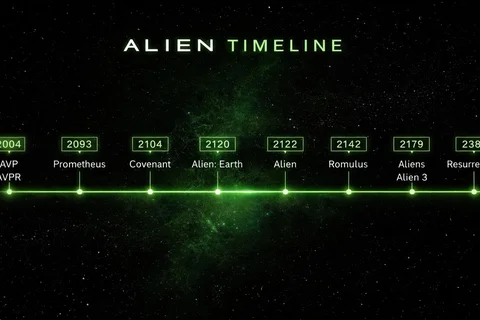
Alien Timeline Placement
Alien vs. Predator is generally treated as expanded-universe material framed as a classified Colonial Marine simulation of the Golgotha incident. The Boneship reference, Weyland-Yutani ownership of the station, and ritual Predator hunt all fit the loose crossover continuity used by later AvP comics and games rather than the core Alien films. No film or major comic storyline acknowledges USS Golgotha directly, but Lance J. Lewis and the Golgotha Queen became recurring references in game-lore articles.
Because the base self-destructed and both alien ships were destroyed, the incident reads as a contained training-station disaster with no lasting impact on Ripley's timeline. That optional status did not stop Golgotha, cocooning, honor points, and the first Predator POV from influencing how later titles approached three-species design.
Development
Alien vs. Predator began life as an Atari Lynx port of Activision's Super Nintendo game before producer James Hampton pushed for a first-person redesign worthy of the license. When Atari shifted focus to the Jaguar, Rebellion secured the contract in 1993 and rebuilt the project using design work from Images Software's suspended Lynx version. Programmers Andrew Whittaker and Mike Beaton, artists Stuart Wilson and Toby Harrison-Banfield, and writers Chris Hudak and Lance J. Lewis finished the game after an extended production cycle that outlasted Atari's original schedule.
The team watched the Alien and Predator films repeatedly, photographed models and bathroom-tile textures, and scanned stop-motion sprite frames to squeeze film fidelity out of the Jaguar cartridge. Atari eventually increased the ROM budget so Fox could approve additional Queen animation frames, and Hampton brought level designers from QA into full production roles to keep Golgotha non-linear across all three campaigns. Planned features such as LAN play, a grenade launcher, and an Alien jump attack were cut when time ran out.
Release And Reception
Alien vs. Predator launched in October 1994 for the Atari Jaguar in North America, the United Kingdom, and Germany. Contemporary reviews praised the three playable species, oppressive atmosphere, and ambitious presentation, while criticism focused on repetitive maze combat, awkward controls, acid-pool frustration, and frame-rate drops. Many Jaguar specialists still consider it one of the console's essential titles.
The cartridge has become difficult and expensive to find on original hardware, but emulators preserve it well enough that the game remains accessible to modern fans. Its reputation rests less on mainstream sales than on historical importance: it proved Rebellion could handle the license and gave Predator fans their first true first-person hunt years before PC rivals caught up.
Legacy
Rebellion's 1994 Jaguar cartridge was the first home-console Alien FPS and the first three-species hunt in one box, aboard the USS Golgotha. Unreleased Jaguar CD notes later fed the 1999 PC game. The Marine and Predator campaigns still feel like a prototype for Classic: cramped, ammo-tight, and built around cloaking, vision modes, and scavenged USCM guns. AvP 2010 kept the three-campaign split on a different planet.
External Sources
Tag Categories: Alien Games | Alien Vs Predator Games | Predator Games | Alien Merchandise