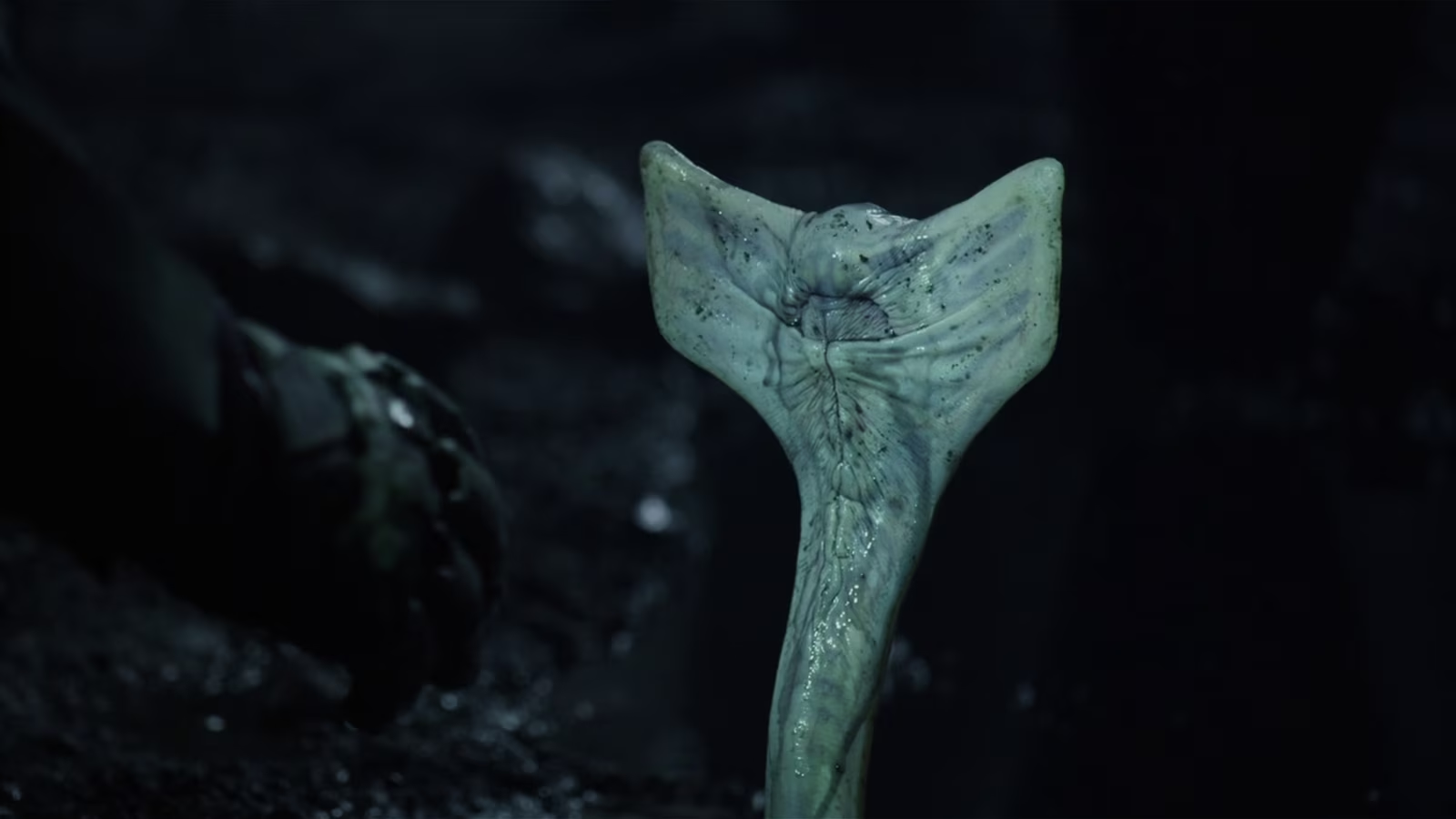

The Hammerpede, also known as the Xenocobra, was a hostile worm-like organism encountered on LV-223 in Prometheus. It originated when ordinary worms inside the Engineer structure were exposed to Chemical A0-3959X.91-15, better known as the black liquid. The Hammerpede appeared inside the Engineer temple on LV-223 after the Prometheus expedition disturbed the ampule room. The black liquid leaked into the ground and affected the small worm-like lifeforms already present in the soil. These harmless creatures rapidly transformed into pale, serpentine predators with acid blood, regenerative abilities, and enough strength to break human bones. Here is a full overview of the Hammerpede, including its biology, role in Prometheus, behind-the-scenes design, practical effects, and place in Alien lore.
Hammerpede Biology
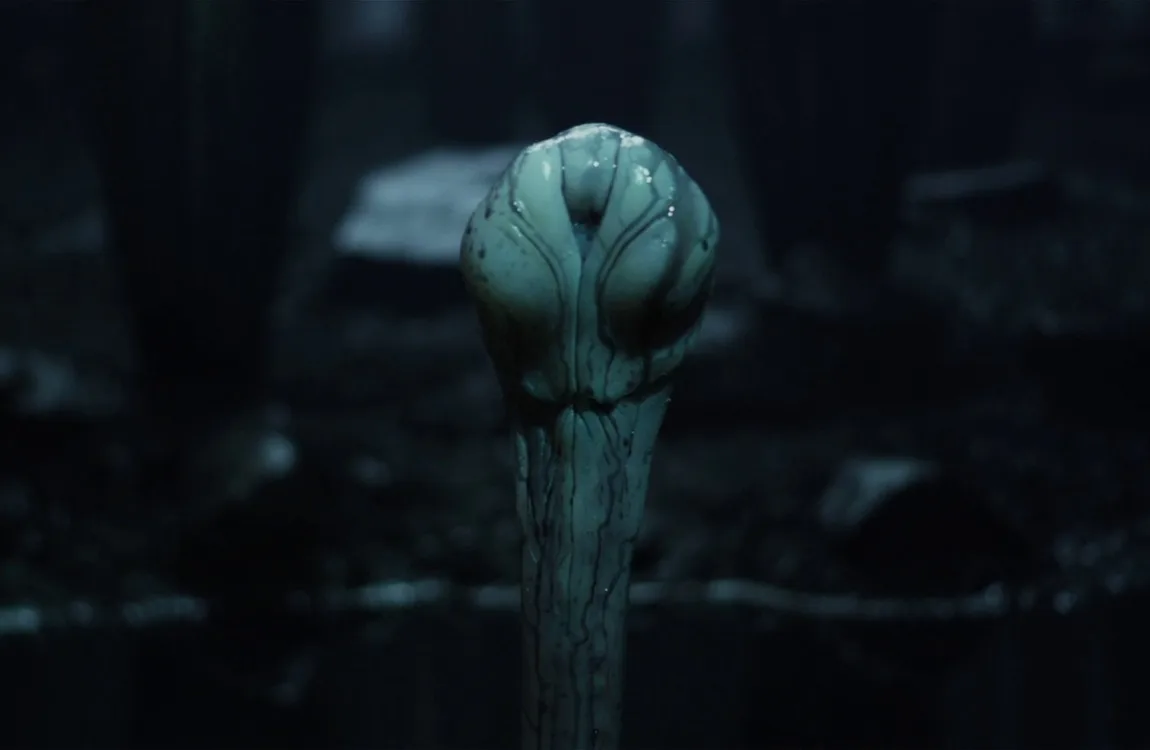
The Hammerpede had a vermiform body and moved by slithering like a snake. Some specimens reached about 1.2 meters in length, although larger individuals were less mobile. Its pale translucent skin revealed internal structures beneath the surface, including muscle-like layers and vein-like details. The creature had no visible eyes, so its method of detecting prey remains unclear. It may have sensed heat, vibration, movement, or chemical cues in a way similar to other black liquid mutations. Its head could open into a toothed maw, giving the smooth creature a sudden and disturbing predatory appearance.
Acid Blood and Regeneration
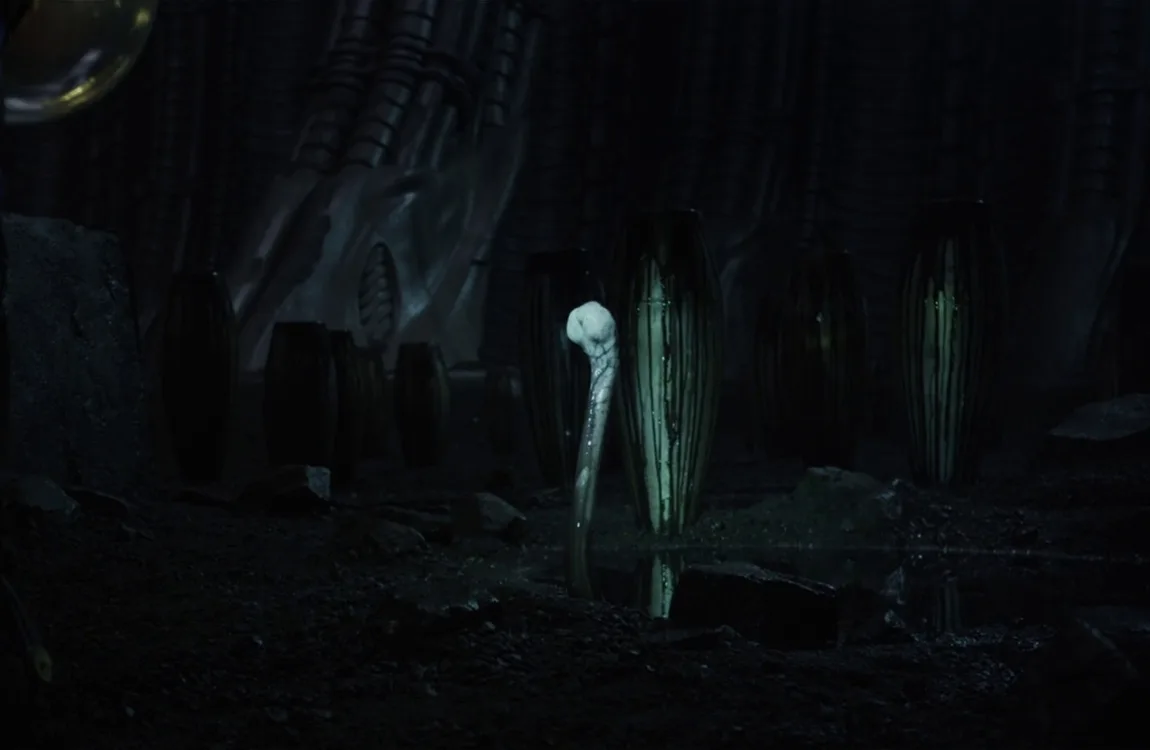
Like the Xenomorph, the Hammerpede possessed acidic blood. This made even injuring the creature extremely dangerous in close quarters. When Fifield cut the Hammerpede, its blood burned through his helmet and exposed him to the contaminated environment of the Engineer structure. The Hammerpede also had powerful regenerative abilities. Its severed head reformed almost immediately, showing that black liquid mutation had given it far more durability than an ordinary worm. However, the creature was not invincible. Fire and crushing force remained effective ways to damage or destroy a Hammerpede.
Attack on Millburn
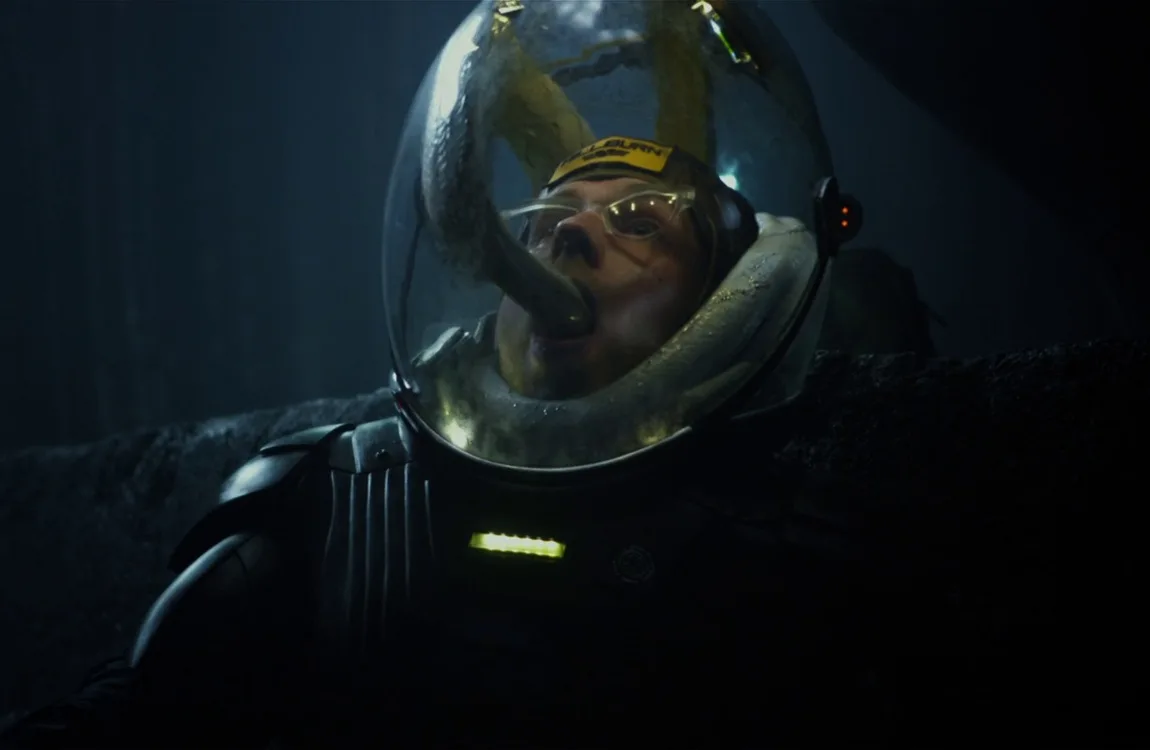
The Hammerpede's main scene in Prometheus occurred after Millburn and Fifield became stranded inside the Engineer structure. Millburn treated the creature with curiosity instead of caution, mistaking its raised cobra-like posture for something less dangerous. The Hammerpede suddenly wrapped around his arm and tightened with enough force to break bones. Fifield tried to help by cutting the creature, but this only exposed him to its acid blood. The Hammerpede then slipped into Millburn's suit and forced itself down his throat. The attack resembled the Facehugger stage of the Xenomorph life cycle, although the film never confirmed whether the Hammerpede implanted anything, consumed him from inside, or simply killed him by suffocation.
A Proto-Facehugger Creature
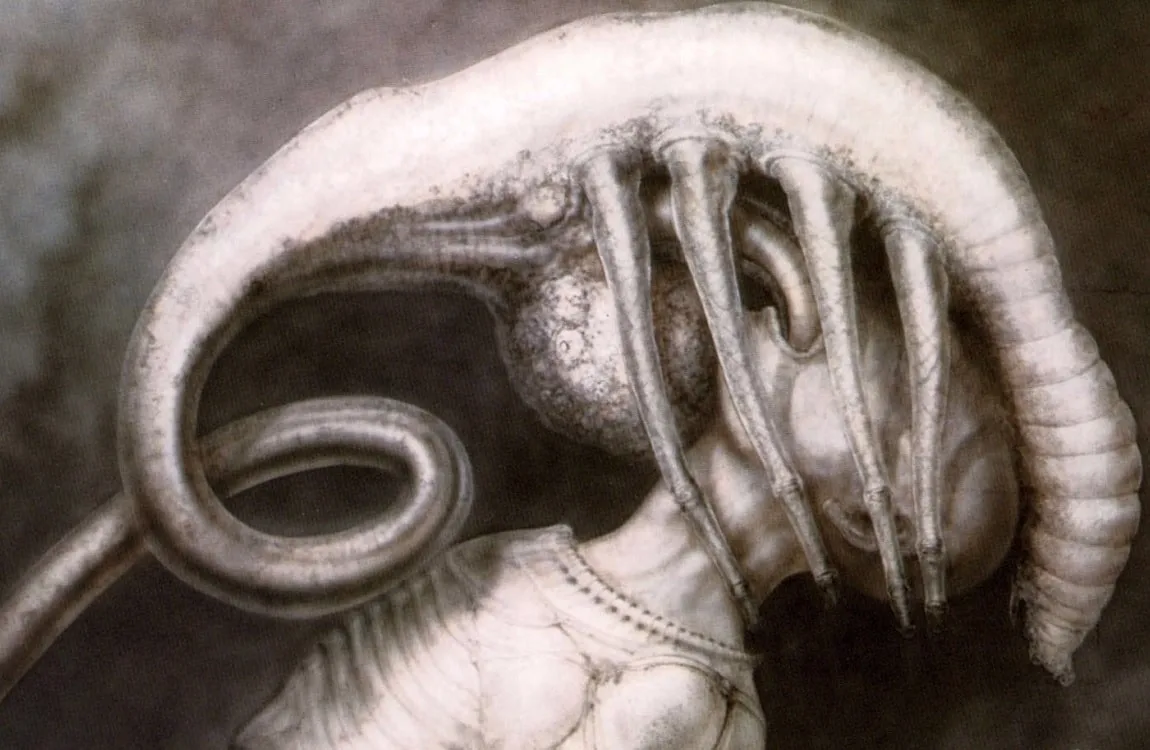
The Hammerpede can be viewed as an early or related expression of the same biological ideas that later defined the Xenomorph. It was born from the black liquid, displayed extreme hostility, carried acid blood, and attacked by entering a human mouth. These traits connected it to other pathogen-created organisms, including the Trilobite, the Neomorph, and the Xenomorph. However, the Hammerpede was not shown producing a Chestburster or creating a new organism through Millburn. Its true reproductive purpose therefore remains uncertain. It may have been a failed or primitive parasitic form, a predator that fed from inside its prey, or simply a violent mutation with no stable life cycle.
Behind the Scenes
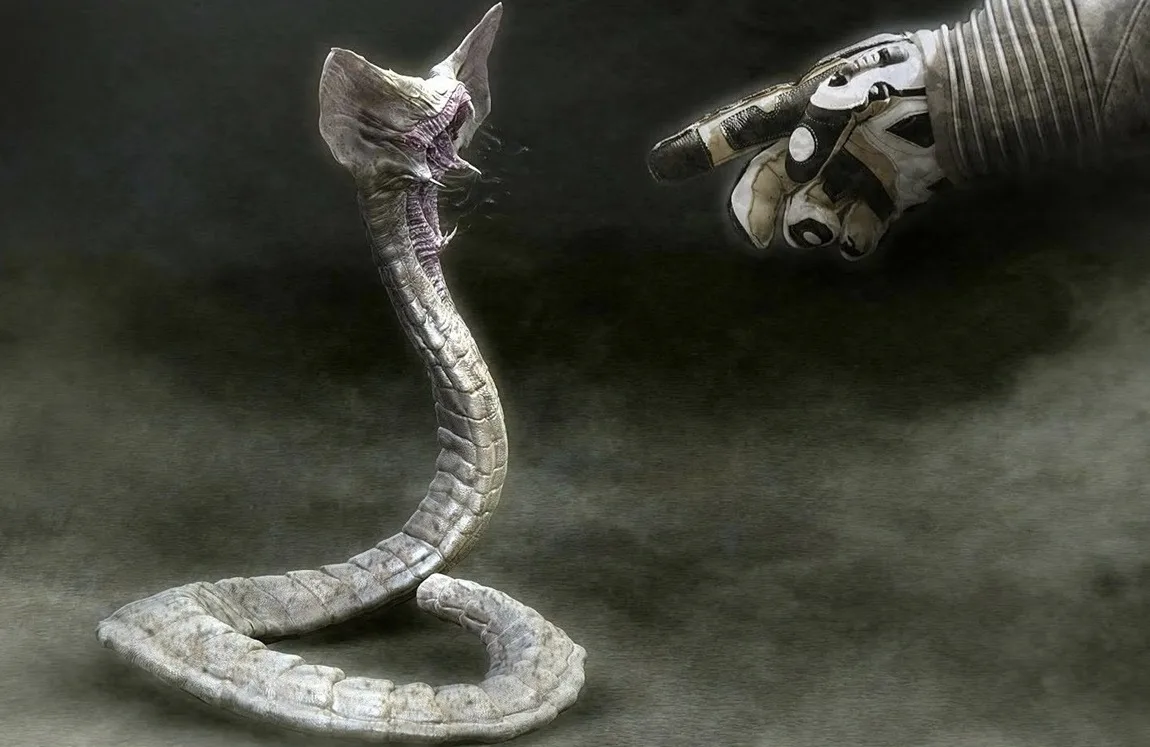
The Hammerpede went through several design stages during the production of Prometheus. In Jon Spaihts' original script, Alien: Engineers, the creature was described as more centipede-like while still keeping the broad flattened head seen in the final film. Carlos Huante originally conceived the creature as a Facehugger precursor with many small gripping limbs. This early design helped inspire the production nickname Hammerpede, which combined the hammer-like shape of the head with the centipede influence. As the design developed, the creature lost its many arthropod-like limbs and became smoother, cleaner, and more worm-like. Martin Rezard digitally realized the final design, which drew inspiration from translucent deep-sea animals with visible internal anatomy beneath the skin.
Other Appearances
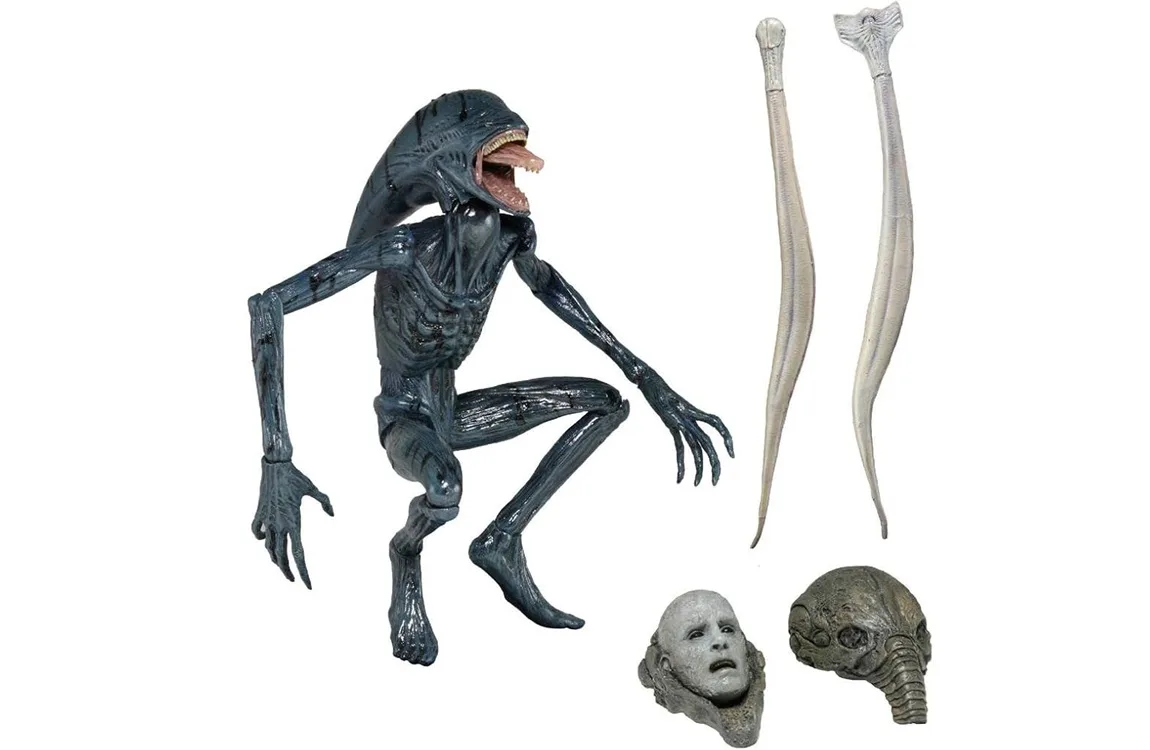
The Hammerpede's main appearance was in Prometheus. It later appeared in Alien: The Roleplaying Game - Building Better Worlds, which helped place the creature among the wider group of black liquid mutations connected to the Engineers. The creature also appeared in collectible merchandise, including NECA's Prometheus figure line alongside the Deacon. Although it does not have as many appearances as the Xenomorph, Facehugger, or Neomorph, the Hammerpede remains important because it showed how quickly the pathogen could transform simple native life into a deadly organism. Its presence on LV-223 also helped bridge Prometheus with the broader Alien life cycle by presenting a creature that shared traits with both snakes and Facehuggers.
Conclusion
The Hammerpede was one of the most memorable creatures introduced in Prometheus. Created when worms on LV-223 were exposed to the black liquid, it combined a simple vermiform body with acid blood, rapid regeneration, and violent predatory behavior. Its attack on Millburn showed how dangerous even a small black liquid mutation could become within minutes. While the Hammerpede was not confirmed to be a true Facehugger, its mouth-invasion attack and pathogen-based origin made it an important proto-Xenomorph creature. In the larger Alien universe, the Hammerpede stands as a disturbing example of the black liquid's ability to reshape ordinary life into something hostile, parasitic, and almost impossible to predict.
Appearances
- Prometheus (2012)
Tag Categories: Alien Lore | Prometheus Lore | Xenomorphs From The Movies | Pathogen Creatures