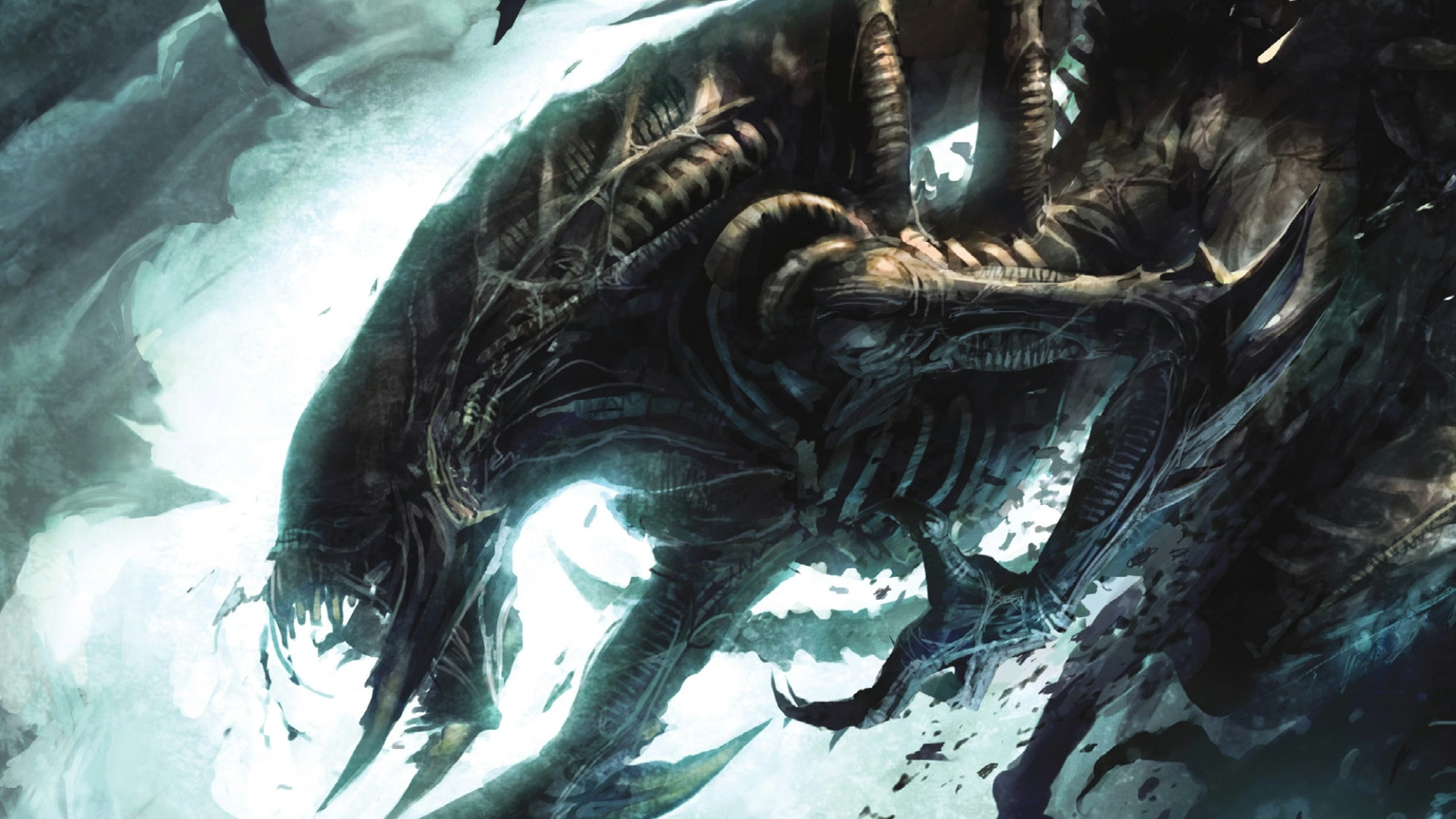

The Tusked Xenomorph was a distinctive alien variant encountered on Chione in Aliens: More Than Human. Its curved jaw projections and plated head distinguished it from the creatures previously studied by David Sereda. The same design later appeared as the Killer Predators' attack animal, controlled through artificial pheromones until a Queen turned the creatures against their handlers. The name describes a breed rather than a single individual.
Appearance And Tusks
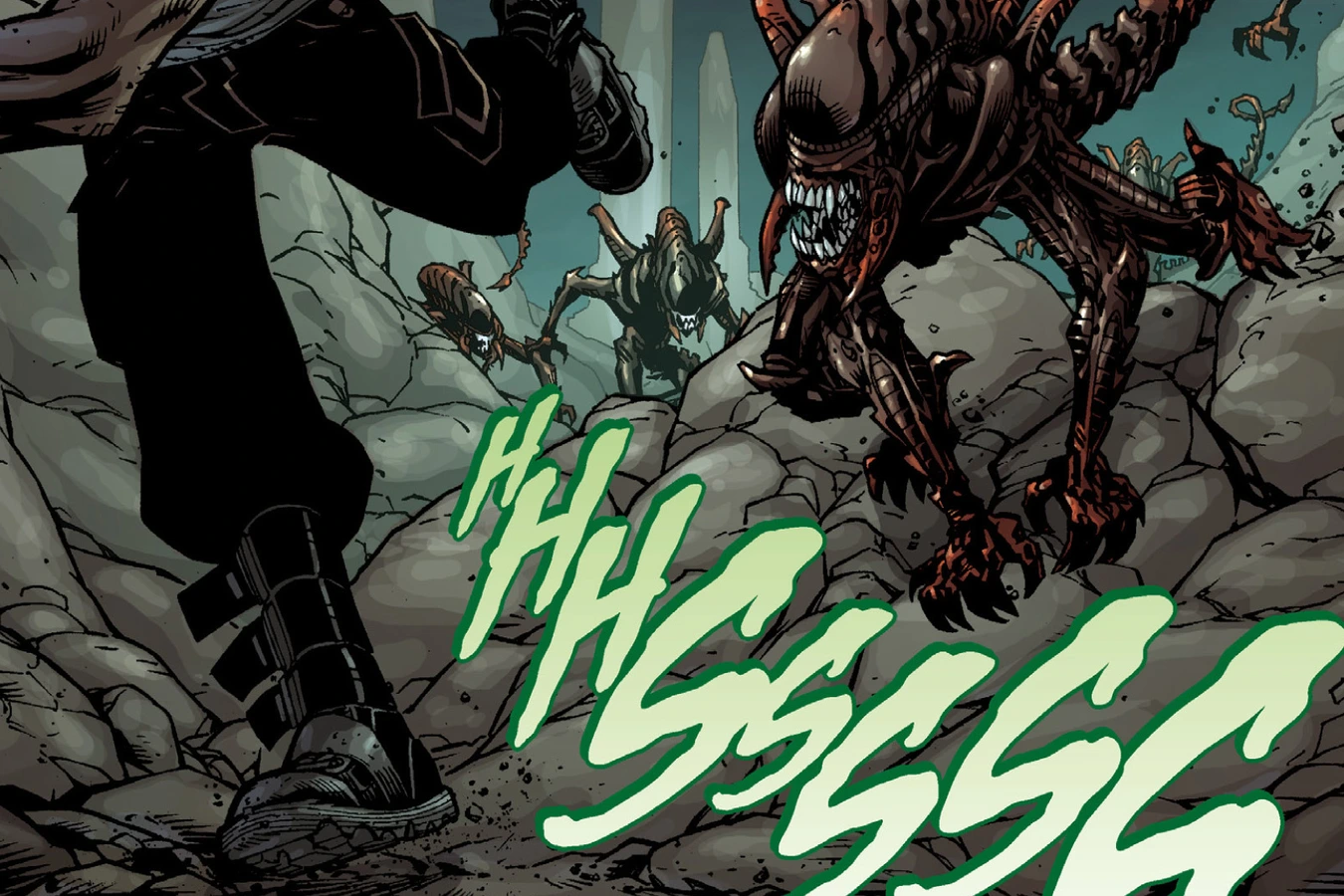
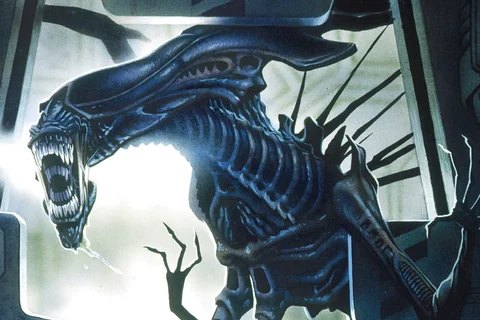
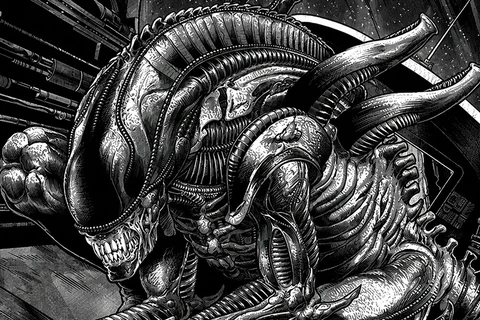
The Tusked Xenomorph retained the long skull, ribbed body, clawed limbs and tail associated with other adult aliens. Its most distinctive features were the curved projections beside its mouth. These extended outward and downward, framing the teeth rather than replacing them. The head also had pronounced plates and angular surfaces, giving it a different outline from the smooth dome or exposed ridges of more familiar adults.
The creatures on Chione had dark bodies with reddish-brown colouring around the head and limbs. Three World War continued that design, making the jaw projections especially useful for distinguishing the Killers' animals during crowded battles. The tusks did not remove the creature's ordinary teeth and inner jaw. One attacked Sereda through the neck, while another used its projecting inner mouth against a human survivor.
History
The Infestation On Chione
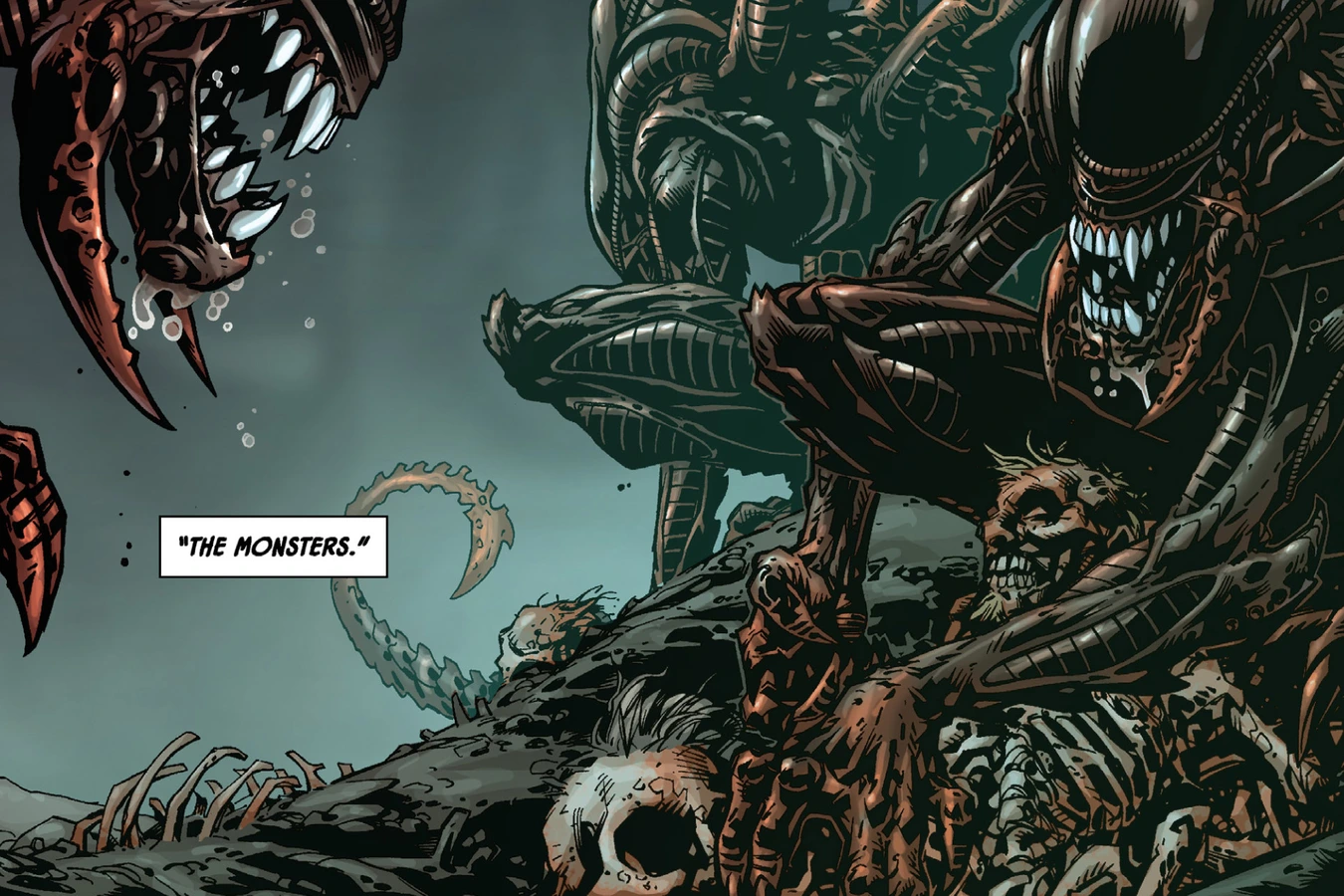
The first major encounter occurred on Chione, where prospectors had discovered a vast alien city. They brought eggs into their settlement, and the resulting infections destroyed the community. Survivors retreated into the surrounding passages as the adult creatures hunted them. The ruins contained human remains and extensive alien activity, but the story did not identify the city's original builders or establish that Chione was the species' evolutionary birthplace.
Sereda arrived with the Vidar scientific expedition and survived the prospectors' attempt to murder his party. While preparing to escape, he received a distress call from Andrea Keats. He followed her signal into the necropolis and encountered creatures whose appearance differed from those documented on Earth. He considered them a distinct subspecies or phenotype, an observation based on their anatomy rather than a completed genetic investigation.
Hunting Sereda And The Survivors
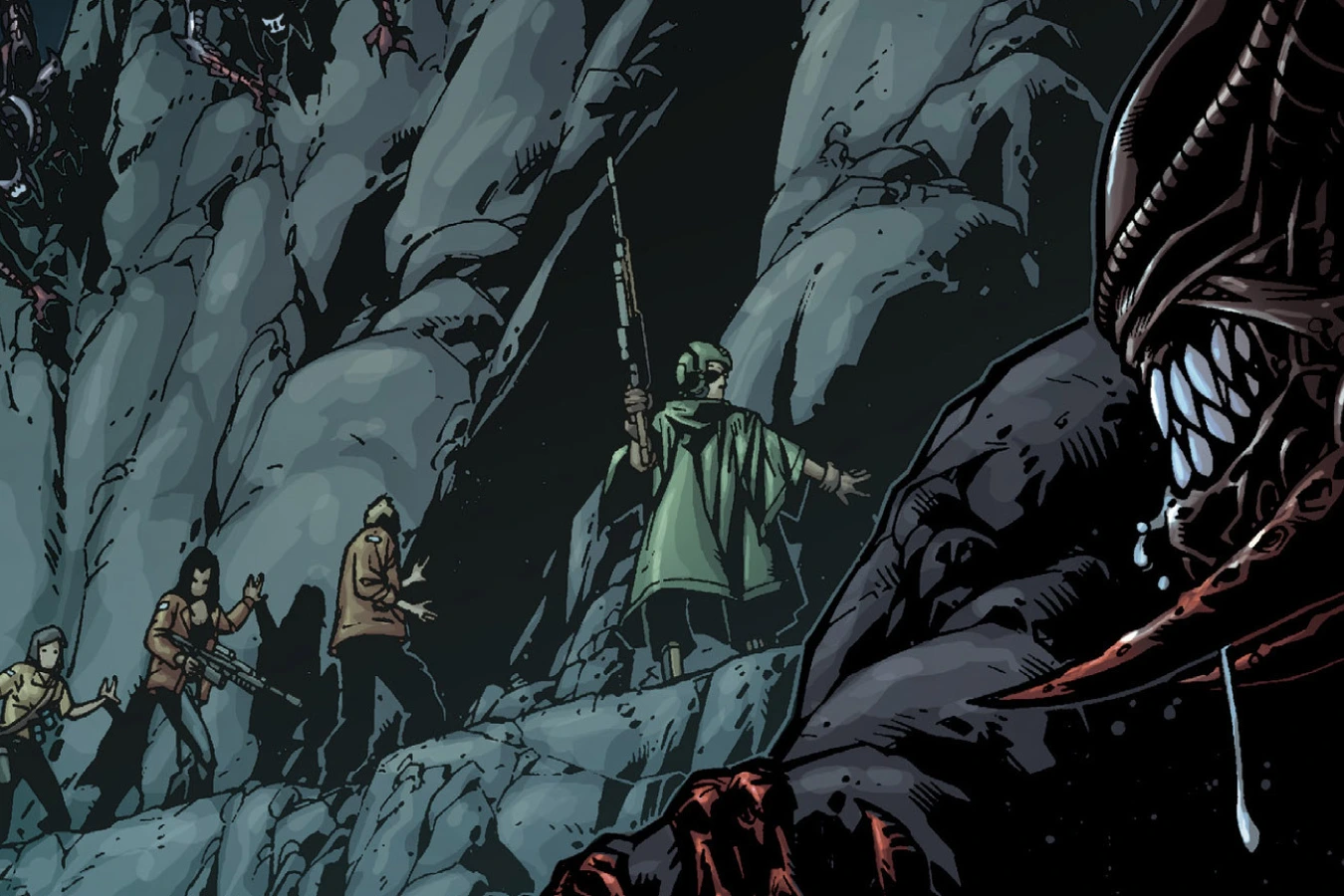
The creatures attacked along the canyon routes and inside the maze, approaching from surrounding walls and passages. Sereda's weapons killed individual attackers, but spending his ammunition did not clear the city. Even after the prospectors recognised the android they had shot, their shared need to escape forced them to cooperate. The aliens continued pursuing the combined group without distinguishing between the original colonists and the later expedition.
Their attacks demonstrated familiar dangers beneath the unusual exterior. A close strike severely damaged Sereda's neck, and alien acid killed Gary during the retreat. Andrea had already died from an emerging Chestburster by the time help reached her. Sereda and two women eventually escaped aboard the Vidar, leaving the infestation behind. The story did not show the Chione population being exterminated or brought under human control.
The Killers' Attack Animals
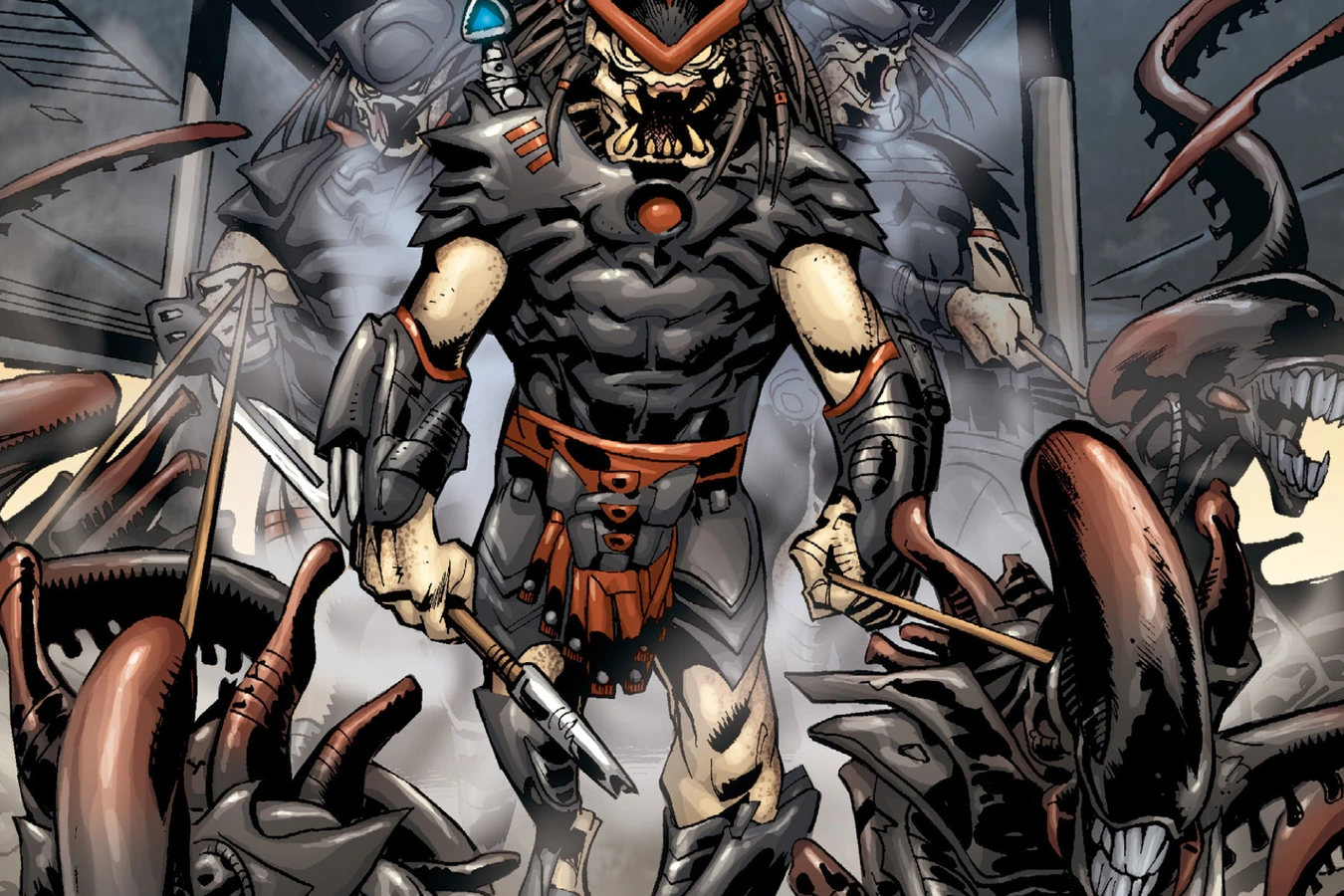
In Aliens vs. Predator: Three World War, the breed appeared alongside the Killer Predator Clan. The renegade hunters used the creatures to attack human settlements and overwhelm opponents. Instead of releasing aliens as independent quarry, they directed them as part of their own fighting force, departing from the practices of traditional Yautja hunters.
The comparison with Predator hunting dogs described their tactical role, not a change into a domesticated species. The creatures remained lethal Xenomorphs, while the Killers depended on a chemical system to keep them obedient. The comic did not establish that these animals had been transported directly from Chione, or that a specific Predator host had produced their tusks.
The Battle On Caparis VII
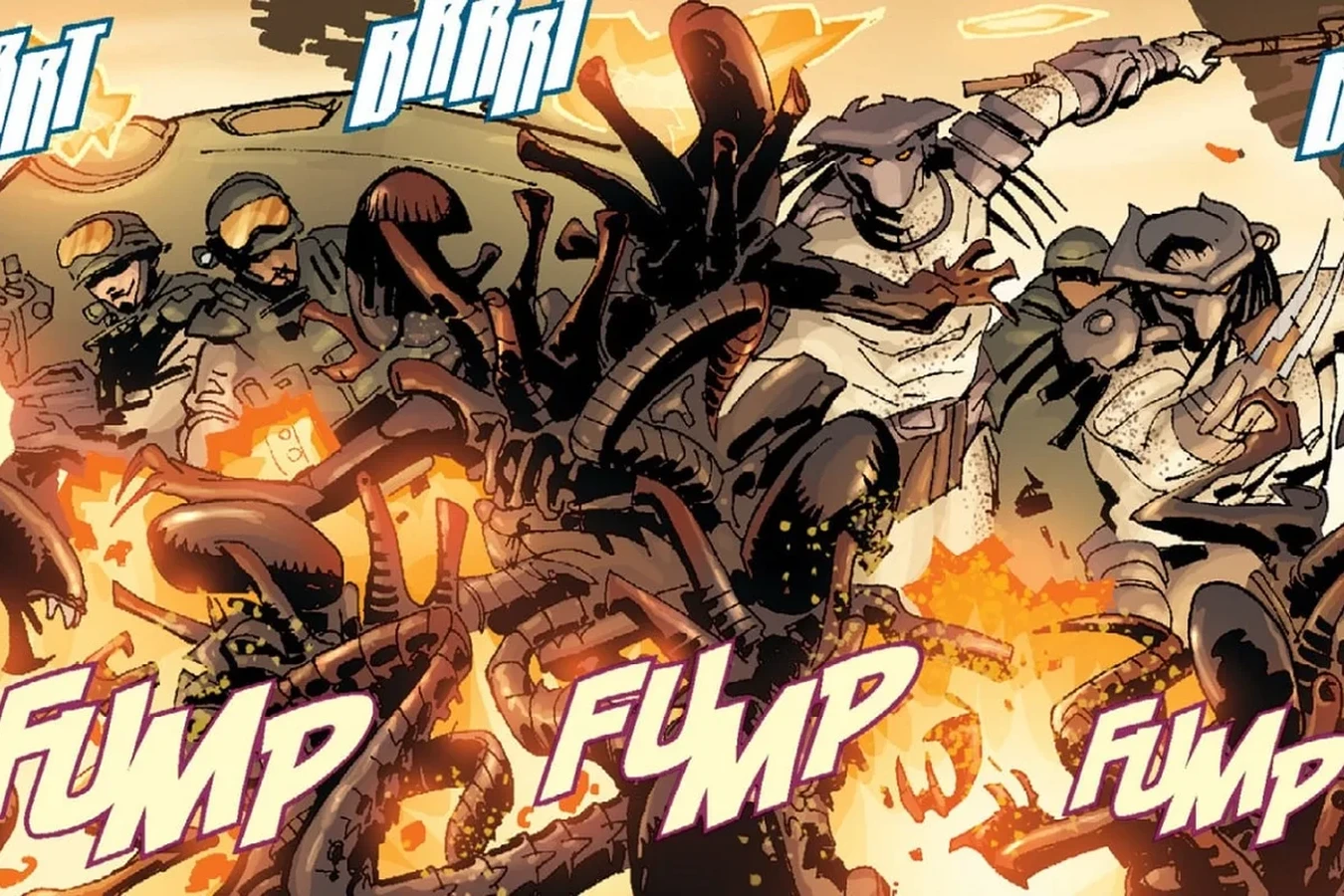
Machiko Noguchi helped unite traditional Hunters with the Colonial Marines against the Killers. Their combined fleet attacked Caparis VII during the Three World War. On the ground, the Xenomorphs confronted the landing force alongside their handlers, forcing the allies into close fighting despite their ships and supporting weapons.
Marines used firearms while Hunters met the attackers with their own blades and equipment. The aliens' numbers and ability to close the distance made the beachhead costly. Sereda fought with the Marines, suffered serious injuries and was taken into the enemy base. His capture allowed him to investigate the system sustaining the army, turning a casualty of the assault into the source of the alliance's most useful intelligence.
Pheromones And The Ryushi Queen
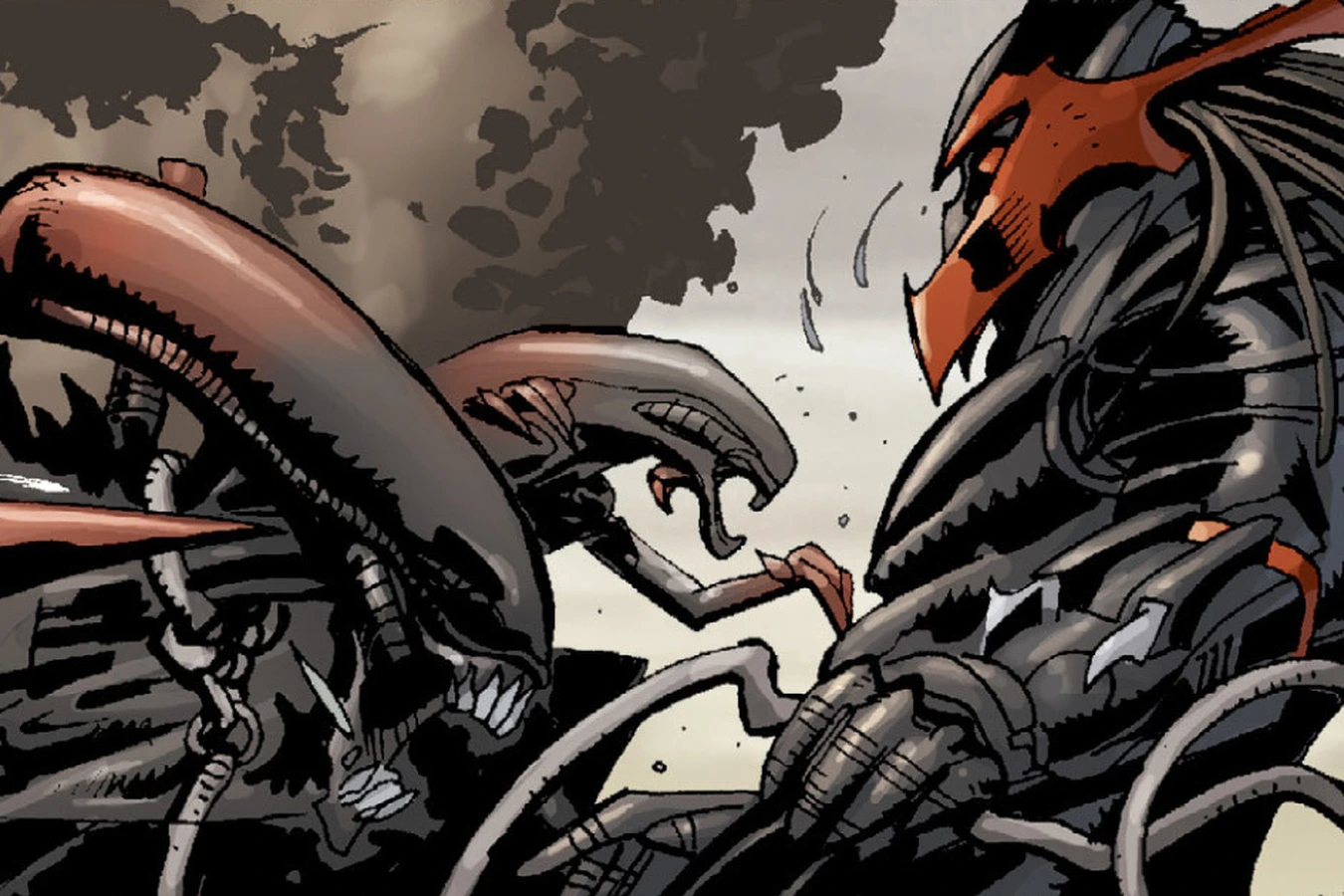
Inside the base, Sereda found an egg stockpile and detected artificial pheromones with his surviving olfactory analysers. He recognised a mixture with a calming or sedative effect and connected it to the creatures' obedience. The breeding chamber lacked a Queen, a crucial omission: a living Queen's signals could compete with the chemicals used to direct the army.
The allies had captured a Queen on Ryushi and brought her into the operation. Once exposed to her influence, the Tusked Xenomorphs turned against the Killers. The Queen accepted creatures of the unusual appearance, showing that their differences did not prevent them from responding to her. The Caparis VII force was defeated, although the discovery of another Killer base left further breeding operations possible.
Life Cycle And Hosts
The Chione outbreak followed the familiar sequence of eggs, infected people and emerging young. These creatures therefore belonged within the established Xenomorph life cycle, despite their adult anatomy. The young already carried tusk-like jaw projections at the Chestburster stage, before reaching adult size. Their existence did not require a Predator host: the infestation spread among human colonists. Neither story supplied a complete genetic explanation for the phenotype or identified an animal whose traits accounted for the tusks.
That distinction matters when comparing them with Predaliens. A Predalien inherits features from a Yautja host, whereas the name Tusked Xenomorph describes this population's visible characteristics. Tusks alone do not establish Predator ancestry. Sereda's description allowed for a subspecies or phenotype without settling how the differences arose, and the Killers' use of the creatures did not itself prove that they had engineered them.
Behaviour And Vulnerabilities
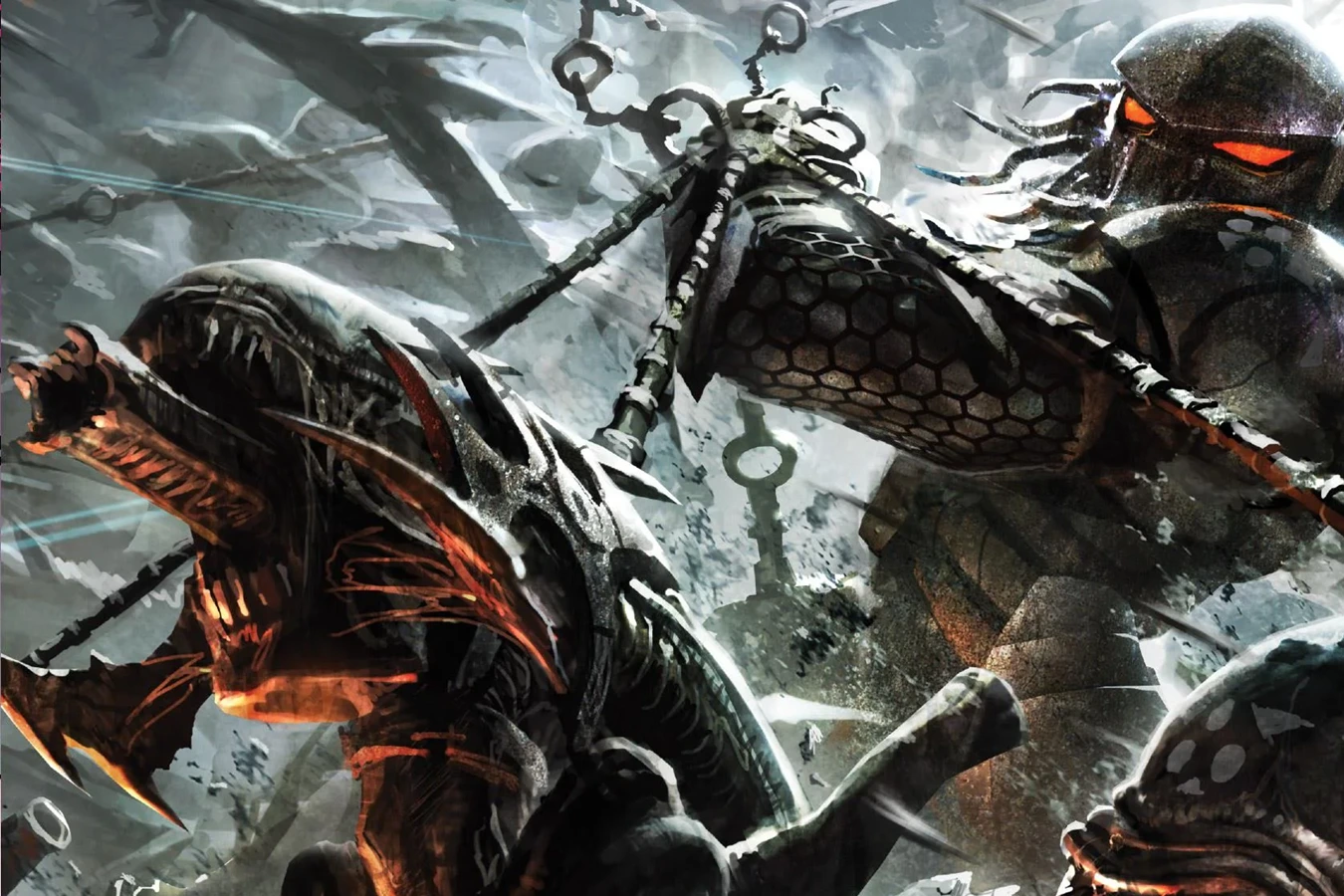
On Chione, the creatures hunted through enclosed passages, attacked isolated people and surrounded armed survivors. On Caparis VII, they operated in larger numbers under external direction. The contrast showed how the same kind of alien could threaten a small group in a maze or support an organised military assault. Neither setting established superior intelligence or greater physical strength than every other adult Xenomorph.
Gunfire and explosives could kill them, while their acidic blood made close combat dangerous even after a successful hit. The decisive weakness of the Killer army was its control arrangement: a Queen could override the artificial signals and redirect the creatures. This was a failure of the handlers' control system, rather than evidence that the animals had become loyal companions.
Behind The Scenes
The design appeared in the 2009 More Than Human series written by John Arcudi, with principal artwork by Zach Howard. The creatures' reddish colouring and unusual jaw projections distinguished the Chione encounter from earlier stories set around the infestation of Earth. Sereda carried that connection into the later crossover as a returning character who had already survived contact with this kind of alien.
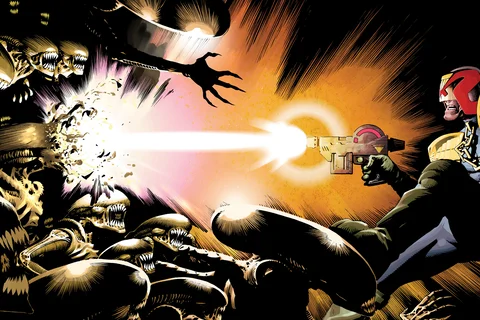
Randy Stradley and Rick Leonardi continued the creatures' role in the 2010 Three World War series. Its cover imagery also paired Xenomorphs with the armoured Killers, advertising the clan's use of aliens as weapons. The painted More Than Human cover used here provides a particularly clear view of the curved tusks, while the Three World War illustrations show their deployment in groups.
Merchandise
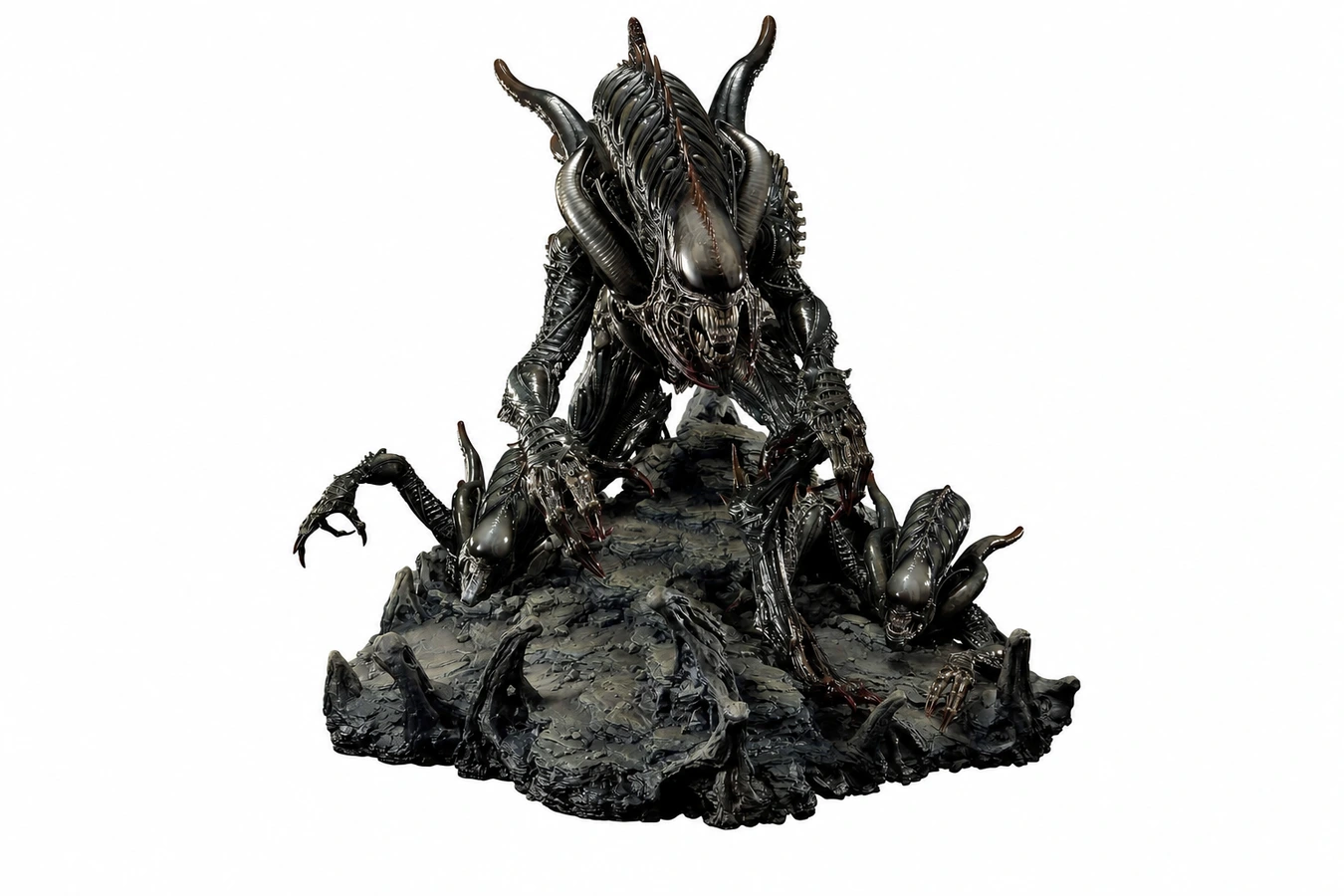
Prime 1 Studio produced a Tusked Alien statue in its Premium Masterline collection, drawing on the creatures from Three World War. The diorama grouped three aliens on a rocky base, with a large central creature flanked by two lower pack members. Its sculpt emphasised the plated skulls, ribbed bodies and curved tusks that distinguished the comic design. The manufacturer listed the display at approximately 60 cm high, 65 cm wide and 92 cm deep; the Bonus Version also included a separate Chestburster on a stand.
Eaglemoss also released the creature as issue 40 of its Alien & Predator Figurine Collection. That smaller individual figurine offered a different presentation from Prime 1 Studio's multi-creature diorama. Both releases brought a design originating in the comics into Alien collectibles, rather than reproducing one of the familiar film Warriors.
Conclusion
The Tusked Xenomorph combined a recognisable alien life cycle with a distinctive plated head and curved jaw projections. Chione established it as a dangerous population encountered by Sereda; Three World War made it the main weapon of a renegade Predator force. The army's turn towards the Ryushi Queen showed the limits of the Killers' chemical control without resolving the breed's deeper origins.
Appearances
- Aliens: More Than Human (2009)
- Aliens vs. Predator: Three World War (2010)
Tag Categories: Xenomorphs From The Comics | Xenomorph Appearance | Xenomorph Behavior | Alien Lore | Avp Lore