Dune is Denis Villeneuve's 2021 film adaptation of the first part of Frank Herbert's 1965 novel. The opening title calls it Dune: Part One. Paul Atreides traveled from Caladan to Arrakis when the Emperor transferred control of the spice planet to his father. The Harkonnens and the Emperor turned that grant into a trap, leaving Paul and Lady Jessica to seek help from the Fremen. The production account draws on executive producer Tanya Lapointe's The Art and Soul of Dune.
Plot Summary
Chani and the End of Harkonnen Rule
Chani opened the film by describing Harkonnen occupation from the perspective of the Fremen. The occupiers took spice from Arrakis and answered resistance with violence. When they withdrew on the Emperor's orders, she had little reason to think the arriving Atreides would give her people a say over their own planet. She asked who their next oppressors would be as the Harkonnen forces departed.
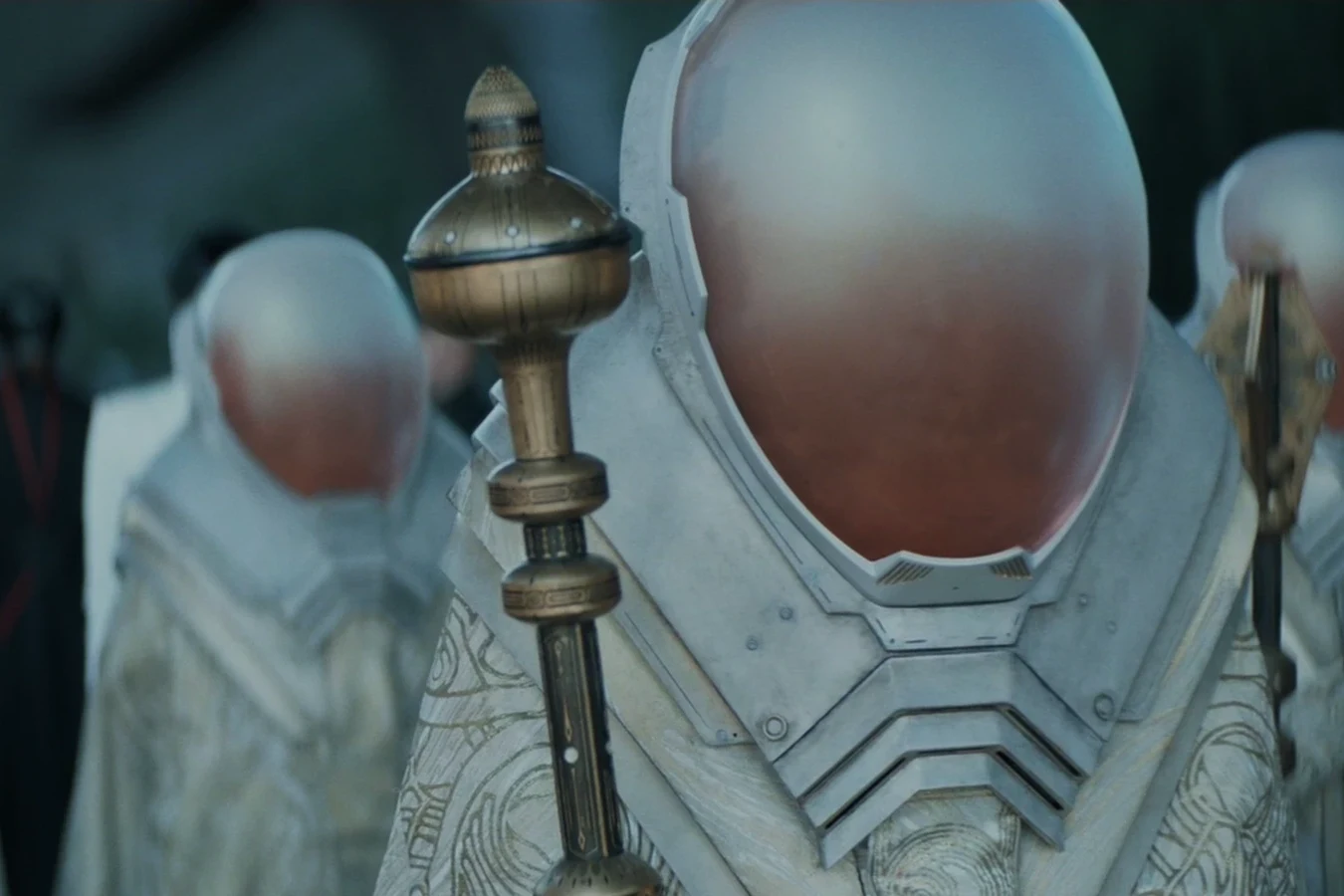
On Caladan, Duke Leto accepted the imperial order to take over Arrakis. The grant gave his house control of a resource essential to interstellar travel. It also removed the Atreides from the world where their soldiers and institutions were strongest. Leto suspected the Emperor's motives and saw an alliance with the Fremen as a way to survive the transfer. The ceremony took place before an imperial delegation, with a Guild representative present.
Leto Prepares Paul for Arrakis
Before the household left, Leto spoke with Paul among the graves of the Atreides. Paul doubted that he wanted the role expected of him. Leto told him how he had grown into leadership himself and assured him that their relationship did not depend on Paul becoming Duke. The conversation gave Paul a different answer to his uncertainty from the one he received in his combat lessons. His father could see that accepting the title and wanting it were separate matters.
Leto explained why Duncan Idaho was being sent ahead. The Emperor feared the support the Duke had gathered, and the Harkonnens knew how to run the spice economy they were leaving behind. If the Atreides could make an agreement with the people who lived beyond the cities, they would have soldiers and local knowledge that neither opponent could readily take away. Leto had to attempt that alliance before the Emperor's plans reached their conclusion.
Paul and the Gom Jabbar
Paul Atreides had been trained to fight by Gurney Halleck and Duncan Idaho and taught Bene Gesserit disciplines by his mother, Lady Jessica. He dreamed of a young woman on Arrakis whom he had never met. Duncan was leaving ahead of the household to contact the Fremen, and Paul wanted to go with him, partly to see whether the dreams pointed to something real. At breakfast, Jessica had him practice using the Voice to make her pass him a glass.
The Reverend Mother Mohiam tested Paul by putting his hand in a box that caused intense pain. A poisoned needle at his neck made withdrawal fatal. Jessica had been ordered to bear a daughter for the Bene Gesserit breeding program, and the test let Mohiam judge what kind of control the unexpected son had over his instincts. Paul kept his hand in the box until she ended the test. Mohiam had Jessica wait outside, where she repeated the Litany Against Fear.
Arrival at Arrakeen
The Atreides took up residence in Arrakeen, inside the rock barrier that sheltered the city from the deep desert. People along the landing route called out to Paul in the language of a prophecy the Bene Gesserit had helped spread. Jessica understood why the prophecy might protect them. Paul could already see that it invited the local population to read his actions according to someone else's plan. One of the names they called him was Lisan al-Gaib, a title Paul asked Jessica to explain.
The household's immediate problems included worn-out spice equipment and evidence that the Harkonnens could still reach them. A hunter-seeker entered Paul's room and forced him to stay still until he could seize it. Jessica separately dealt with Shadout Mapes, who tested her knowledge of Fremen beliefs through the gift of a crysknife. In both encounters, the newcomers' safety depended on knowing what the other person expected to see. Mapes's reaction to Jessica's description of the blade showed how much she read into the encounter.
The Palm Trees and the Cost of Water
Paul saw a gardener tending twenty date palms near the Residency. The gardener explained that each took enough water to support five people. Paul suggested removing them and learned that the trees were considered sacred. It was the first time he saw water weighed against something the people of Arrakis believed was worth preserving even when they needed it themselves.
For the Atreides, the Residency was a new administrative center. Those who had been there under the Harkonnens already knew where money and water went and what visitors expected to get from them. The gardener could give Paul a measure for judging a city whose riches appeared enormous from offworld. The same water that sustained a ceremonial row of palms could have supported a hundred people elsewhere in Arrakeen.
Stilgar and the Harvester Rescue
Duncan returned with news of the Fremen and brought Stilgar to meet the Duke. Stilgar's offer of moisture was nearly mistaken for an insult. Once Duncan explained the gesture, Leto accepted that cooperation would require him to learn local obligations and leave Fremen communities room to govern themselves. Stilgar asked the Duke to stay out of the desert, where his people lived.
Liet Kynes accompanied Leto, Paul and Gurney on an inspection of spice harvesting. When a worm approached and the carryall failed, Leto ordered the escort craft to drop weight so they could take the harvester crew aboard. Paul stepped into the dust, where the spice intensified his visions and left him slow to react to the danger. The evacuation gave Kynes direct evidence of what Leto valued and showed Paul how easily a vision could overwhelm him in a crisis. Gurney pulled Paul away from the crawler before the worm swallowed it.
Piter Recruits the Sardaukar
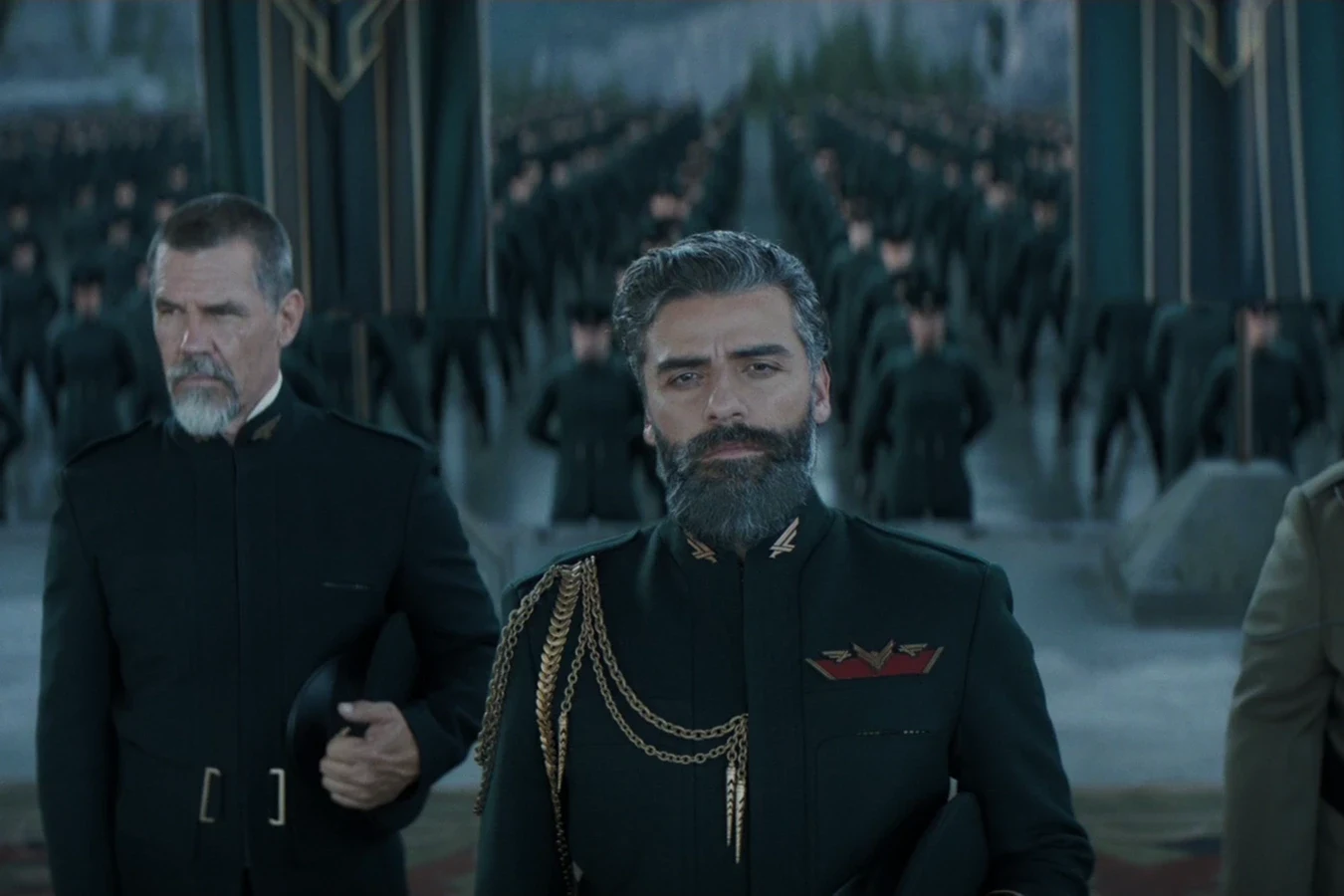
Piter de Vries visited Salusa Secundus to arrange the Emperor's contribution to the assault. A military ceremony continued on the field around him while he spoke to the Sardaukar commander. The commander understood that the mission was the Emperor's order and accepted it even though the men would be fighting beside the Harkonnens in a private feud.
The scene clarified why Leto's preparations could not account for the force about to hit Arrakeen. He had trained good troops and could make life difficult for a returning Harkonnen army. The enemy was bringing imperial soldiers whose involvement would ordinarily have made the Emperor answer to the Great Houses. Concealing their role let the Emperor use them and still leave the Harkonnens to take public responsibility for the attack.
The Fall of House Atreides
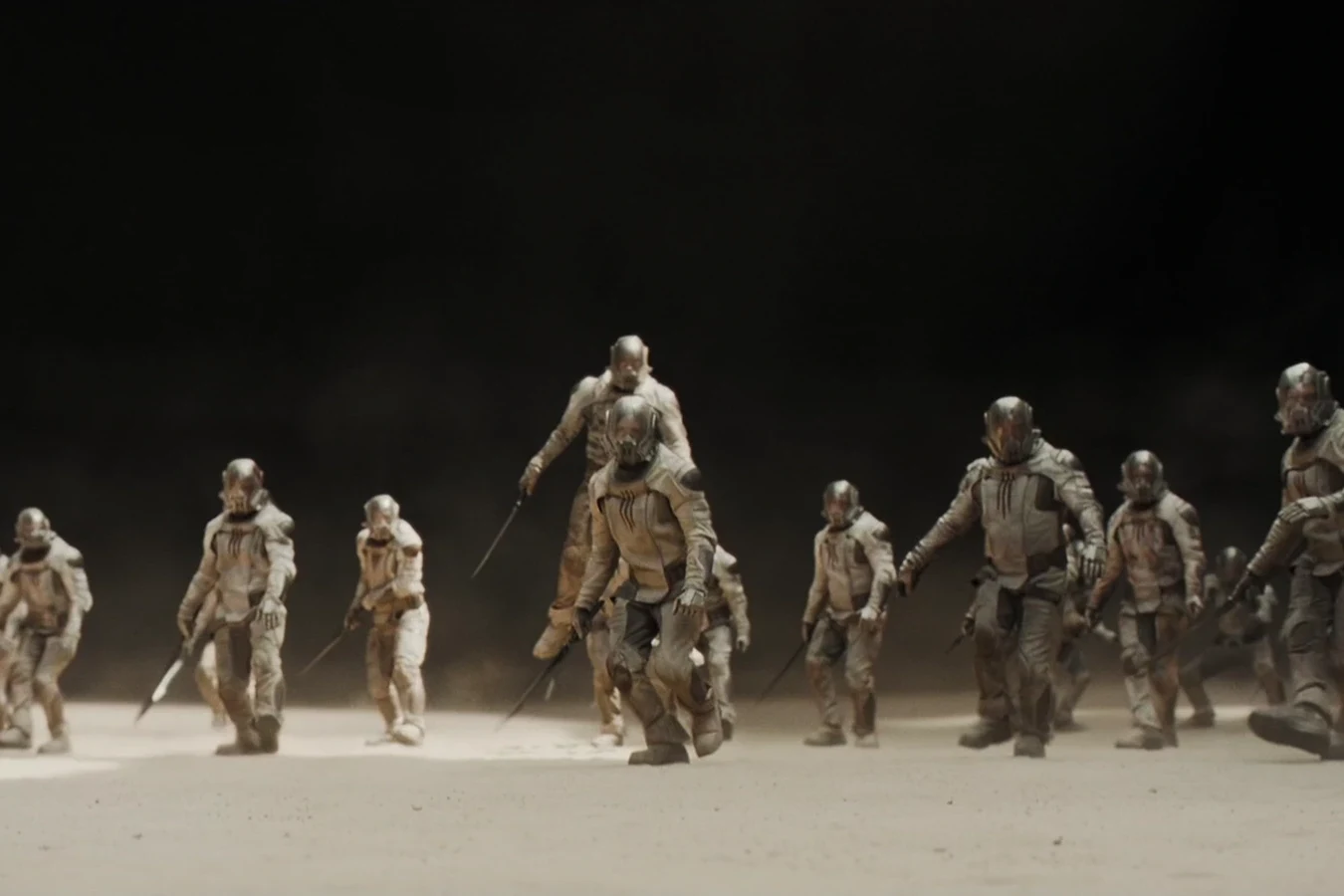
Dr. Yueh disabled the defenses and incapacitated Leto. The Harkonnens had used his wife Wanna to force his cooperation, and the physician arranged his own attempt at revenge. He replaced one of Leto's teeth with a poison capsule for use when the Baron came close. Yueh also left Paul and Jessica equipment they might use if they escaped. He told the Duke that he could get close to the Baron only by delivering him.
The Harkonnens attacked Arrakeen with Sardaukar support. Their ships struck the Atreides fleet at its berths while ground troops broke through the palace. Duncan fought his way out and Gurney disappeared in the fighting. Leto crushed the poison tooth during the confrontation, killing Piter and others nearby. The Baron rose out of the gas and survived. The fighting reached the landing field before the Atreides could mount an organized defense.
Paul and Jessica Escape
Their captors took Paul and Jessica into the desert in an ornithopter. Jessica used the Voice to turn the men against one another and get free. They escaped with the desert kit Yueh had left, then took shelter in a stilltent. The stilltent recycled water, giving them a way to spend the night away from the patrols. Paul's first attempt at the Voice failed, and Jessica signaled for him to try again.
Paul also realized that Jessica was pregnant with Leto's daughter before she told him. His ability to see what she had kept to herself made it harder to dismiss the changes he had experienced since the harvester rescue. Alone in the desert, they had to keep moving with a household far smaller than the one that had landed at Arrakeen. The kit and tent had come from a household already preparing for the possibility of being stranded on Arrakis.
The Stilltent and the Holy War
In the stilltent, Paul reacted to spice that had collected in the equipment. His vision showed armies fighting under the Atreides banner in his name. Arrakeen had just fallen, but the people he saw in the vision had already carried a different war far beyond the recovery of the city. It was the first time Paul had to face the possibility that surviving might set events in motion that he would spend the rest of his life trying to stop.
At dawn they learned from the kit that Yueh had smuggled out the Duke's signet ring. The physician was dead and the ring could do nothing for Leto, but Paul could use it to identify himself as head of his house if he found allies. He and Jessica then went out from their shelter to be picked up by Duncan, who had survived the assault and still recognized Paul's claim.
Duncan's Last Stand and Kynes's Death
Duncan and Kynes brought the fugitives to an abandoned ecological testing station. It contained evidence of the work once carried out to understand and change Arrakis. Paul sought Kynes's support and considered taking the truth about the Sardaukar to the Great Houses. The Emperor's involvement made the destruction of the Atreides a threat that other houses might recognize as their own. He even considered offering the Emperor a marriage alliance with one of his daughters.
Sardaukar reached the station. Duncan held them off while Paul and Jessica escaped, and Kynes drew pursuers away. Wounded in the desert, she called a sandworm with rhythmic blows against the sand. It swallowed her and the soldiers around her. Paul and Jessica survived a sandstorm in an ornithopter, then continued on foot with the instructions and equipment they had acquired. They stopped fighting the storm and let its currents carry the aircraft until they could escape it.
Jamis in the Storm and the Sandwalk
As the storm battered their ornithopter, Paul saw Jamis in a vision teaching him to accept forces he could not control. He stopped fighting the currents, and the craft carried them through. The advice proved useful before Paul knew the person who gave it. When he met Jamis later, the vision made the man look familiar without telling Paul how their real encounter would end.
After leaving the aircraft, Paul and Jessica tried the sandwalk, interrupting their steps to avoid a regular rhythm. They still attracted a worm near the rocks. A thumper drew it away, giving them time to reach shelter and notice that someone else was close enough to intervene. The crossing showed why a few instructions in a filmbook or kit could get them started but could not substitute for people who knew the desert.
The Duel with Jamis
The fugitives met Stilgar's Fremen in the rocks. Stilgar accepted the value of Jessica's fighting skills, but Jamis challenged her claim to a place among them and Paul fought as her champion. Chani lent Paul a crysknife. He had seen Jamis as a guide in a vision, and had to learn that an encounter could take a different course from the one he had seen. She warned Paul that Jamis was an experienced fighter, even as she gave him the blade.
Paul repeatedly gave Jamis opportunities to yield, which the Fremen took for hesitation in a fight that had to end in death. Paul killed him and chose to go with Stilgar rather than leave Arrakis. In the closing journey he saw a Fremen riding a worm. It was his first clear look at how much the people around him could do with the creature that had destroyed the harvester. Jessica wanted them taken offworld, but Paul told Stilgar his father had come to make an alliance.
Main Cast and Characters
- Timothée Chalamet as Paul Atreides. The ducal heir trained by the Atreides household and the Bene Gesserit began seeing possible futures as his exposure to spice increased.
- Rebecca Ferguson as Lady Jessica. Paul's mother trained him in the Voice and tested her own Bene Gesserit preparation against the realities of Fremen life.
- Oscar Isaac as Duke Leto Atreides. The Duke accepted Arrakis while seeking the allies he would need to keep his house alive.
- Zendaya as Chani. The Fremen fighter spoke about the occupation in the opening and later lent Paul a crysknife for his fight with Jamis.
- Jason Momoa as Duncan Idaho. Leto's swordmaster made contact with the Fremen and held off Sardaukar at the ecological station.
- Josh Brolin as Gurney Halleck. The Atreides weapons master trained Paul and fought during the surprise attack.
- Stellan Skarsgård as Baron Vladimir Harkonnen. The Baron planned to reclaim Arrakis and survived Duke Leto's attempt to poison him.
- Dave Bautista as Glossu Rabban. The Baron's nephew helped carry out the attack that restored Harkonnen rule.
- Javier Bardem as Stilgar. The Fremen leader negotiated with Leto and later brought Paul and Jessica into his group.
- Sharon Duncan-Brewster as Dr. Liet Kynes. The imperial ecologist judged the new rulers by their actions and helped the Atreides fugitives reach the testing station.
- Chang Chen as Dr. Wellington Yueh. The household physician betrayed the Duke under coercion and gave him a way to strike at the Baron.
- Charlotte Rampling as Reverend Mother Gaius Helen Mohiam. The Emperor's Truthsayer tested Paul and confronted Jessica over the Sisterhood's breeding program.
- Stephen McKinley Henderson as Thufir Hawat. The Atreides Mentat advised the Duke and investigated threats to the household.
- David Dastmalchian as Piter de Vries. The Harkonnen Mentat helped arrange Sardaukar support and died in Leto's poison attack.
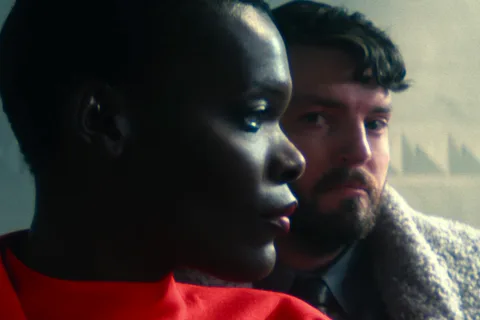
- Babs Olusanmokun as Jamis. The Fremen fighter challenged Jessica's entry into Stilgar's group, forcing Paul to fight for her.
- Golda Rosheuvel as Shadout Mapes. The Arrakeen housekeeper tested Jessica's knowledge of Fremen customs and offered her a crysknife.
Development and Production
Splitting Herbert's Novel
Legendary reached its agreement with the Herbert estate in 2016. Villeneuve worked on the screenplay with Eric Roth and Jon Spaihts, dividing the novel across two films. Part One charted the Atreides transfer from Caladan, the collapse of the household and Paul's first acceptance among Stilgar's people. The later fight for control of Arrakis belonged to Part Two.
Villeneuve and his co-writers introduced the setting through things the characters had to learn or use. Paul had to encounter spice, stillsuits and the ecological testing station in circumstances where each mattered to the outcome of a scene. Chani's opening also gave Fremen resistance a point of view before the Emperor's order arrived on Caladan. The audience could see what the change of rulers looked like to the people already living with its consequences.
Budapest, Norway and the Desert Shoot
Principal photography began on March 18, 2019. Lapointe describes the production building more than 45 sets across five soundstages, with an outdoor area serving multiple sequences. The filmmakers returned to Budapest after Blade Runner 2049, where they could work again with local crews familiar with Villeneuve's approach. Paul's room on Caladan was among the earliest interiors filmed.
Norway provided the coastal landscape for Caladan. Wadi Rum in Jordan and locations in Abu Dhabi supplied different desert surfaces and horizons for Arrakis. The crew set up camps to support large numbers of people away from existing facilities. Lapointe recounts that at one location they had only a few hours late in the day when enough of the terrain was in shade, so the schedule had to follow the light.
The Arrakeen Residency and Giedi Prime
Production designer Patrice Vermette used mass and shadow to define Arrakeen. A city enduring fierce daylight and sandstorms needed sheltered openings and structures that looked as if they could stand against the climate. The Residency's broad corridors and stairways made the new Atreides quarters feel defensible and impersonal, and the sandworm fresco gave Paul a local image of the creature before he encountered it for himself.
On Giedi Prime, Vermette drew on an entirely different idea of a planet. The book describes cultivated land displaced by construction, and the Baron's chambers drew on the shapes of a whale's ribs and skeleton. The resulting forms gave the Harkonnens an environment as closely associated with their rule as Caladan's coast was with the Atreides. Even the Harkonnen frigate had an animal reference, with its textured shell taking cues from an armadillo.
Greig Fraser's Light and Sand Screens
Cinematographer Greig Fraser and Vermette worked with the way light would enter a set as part of its design. The Arrakeen aircraft bay was made between soundstages and covered overhead, with an opening that admitted sunlight along one side. In interiors, LED lighting let Fraser vary color and brightness while keeping the image close to the concept art.
Sand-colored screens served as replacement backgrounds on some sets. Their color gave surfaces and performers a reflection consistent with the environment. The visual effects team could extend the set afterward while keeping the light caught by the cameras on the actors. Lapointe identifies the Sardaukar ritual on Salusa Secundus as an exception where the production used conventional chroma screens.
The Voice and the Gom Jabbar
Lapointe describes how Charlotte Rampling delivered Mohiam's commands on set without playback or electronic assistance. Her performance gave the other actors a concrete sound and timing to respond to. Villeneuve wanted the power to sound ancient and disturbing, an effect that had to register even for a viewer who had never heard of the Bene Gesserit.
The sound team used that performance as the starting point in postproduction. Echoes and deeper voices could suggest an order arriving through more than one register. For Paul's early lessons, the effect also had to leave room for uncertainty. Jessica could tell him to try again, and the sound could communicate the difference between a command he struggled to place and one that took hold.
The Desert Kit and Its Props
The Fremkit gave Paul and Jessica tools to use when they were stranded. The props team treated the kit's instruments as working objects. Lapointe describes a paracompass made with a translucent green liquid core and a mechanism that could open and close on camera. The design gave Paul something he could handle while the audience followed what he was trying to do.
For the Fremen monocular, the team carried over the oil lens Herbert had described and used a spice-colored tint. Props built on that scale complemented the large aircraft and palace sets. A person crossing the desert had to work with what could be carried, and the tools told the audience how the Fremen had adapted to conditions the Atreides were encountering for the first time.
Building the Ornithopters
Concept artist George Hull worked on aircraft that could suggest animal flight and still have the weight of military hardware. The elongated body and folding wings made the Atreides craft recognizable as ornithopters from a distance. Villeneuve wanted them to look equipped for rough landings and desert service. Harkonnen aircraft received heavier shapes suited to their owners' broader fleet design.
The crew built full-size fuselages so actors could climb into a real cockpit and cameras could register sunlight on its surfaces. The large builds were flown to Jordan and Budapest aboard an Antonov An-124. Lapointe records that dismantling them for shipping would have compromised their structure. Digital animation could supply flight and wing motion while retaining the layout and textures established by the practical craft.
Designing the Spice Harvester
Early spice harvester designs included a machine shaped like a hand pushing across the sand. The final tracked factory took cues from NASA crawler-transporters. George Hull made the factory taller at Villeneuve's direction and worked out where it would collect, filter and store the spice, including areas that the camera would never show.
The machines had already seen service under the Harkonnens. Their worn surfaces and the disabled harvesters on Arrakis conveyed what the new rulers had inherited. When the rescue began, Leto was risking the few aircraft he had on hand, and the harvester's size made the loss of a single machine visible as a significant industrial setback.
Stillsuits and Fremen Movement
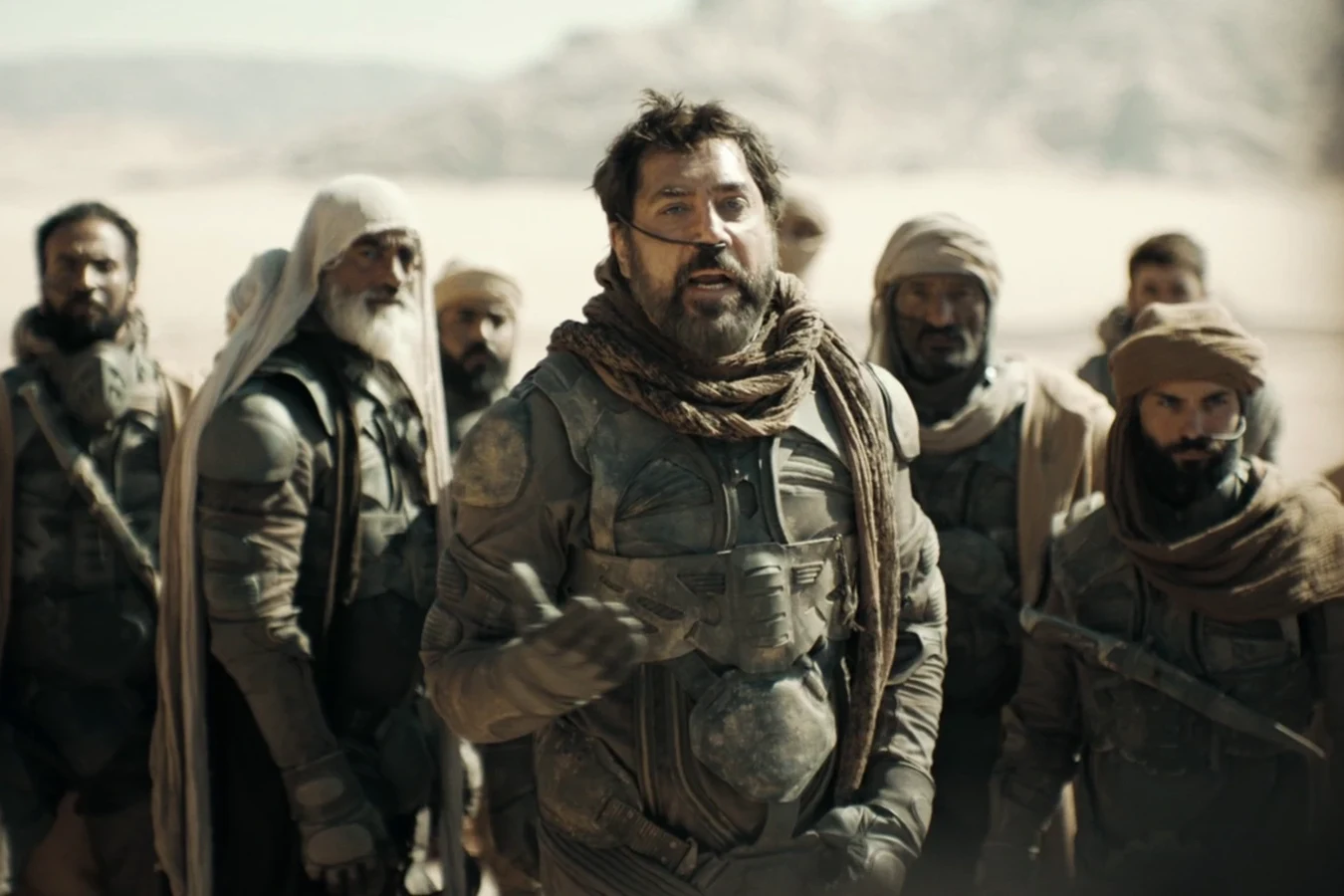
Jacqueline West and Bob Morgan led the costume design. The stillsuits had to suggest a plausible way to recover bodily moisture, so early designs worked out where pockets and tubing would sit. Actors also had to walk, fight and endure desert heat in them. The book describes individual suits taking weeks to make, with water-recovery details communicated through the layers and attachments visible on the body.
Choreographer Benjamin Millepied helped develop the sandwalk. The irregular step pattern needed to look like a practice someone could learn and repeat, even though the characters used it to avoid giving worms a regular rhythm to follow. Stilgar's movement across the desert showed the technique before Paul and Jessica had to rely on it themselves.
Sandworms and Practical Effects
Early sandworm sketches drew on whales and sharks for the sense of a large body moving largely unseen through a medium. Vermette's team explored wrinkled, thick skin and ways for the maw to feed on material in the sand. This work let the creatures be designed around how they moved and ate. Their appearance also had to support a change in perspective, from a threat to an industrial harvest to an animal the Fremen revered and rode.
The production filmed parts of the attacks in Jordan using practical devices to pass vibrations through the sand. The crew could give the actors real ground movement and let the visual effects team establish the size of the worm outside the practical set. The same principle supported smaller details, from an approaching disturbance to the displacement of sand when the creature came through the surface.
Chakobsa and the Fremen
Linguist David J. Peterson developed the film's Chakobsa from the fragments and names Herbert had used. Lapointe describes how he examined the novel's examples, built a sound system and grammar, and translated dialogue from the script. The production could use the language in conversation and add written material to props or designs where a scene called for it.
The spoken language helped present the Fremen as people with their own institutions and habits of speech by the time the Atreides arrived. Herbert's terminology and the vocabulary developed for the films can be explored in the Dune language translator, which labels the source of each entry.
Music and Sound
Hans Zimmer gave the score a vocabulary of voices, percussion and unusual instrumental textures. He could bring the Fremen into Paul's dreams in sound before Paul had a clear idea of who the people in them were. The Atreides arrival also gave the audience a ceremonial sound inside the story itself, with bagpipes accompanying the troops off the ship.
Sound designers Mark Mangini and Theo Green had to establish the scale of a worm before the viewer saw its full body. The changes in the surrounding sand, the distance from the disturbance and the approaching weight were all things the audience could hear. The Voice used sound to register a different kind of force, turning a familiar human voice into something that affected the listener before they could decide how to respond.
Release and Reception
Dune premiered at the Venice Film Festival on September 3, 2021. Warner Bros. opened the film in the United States on October 22, with a simultaneous HBO Max release there. That release reached home audiences while the theatrical presentation offered the large-format image and sound Villeneuve and his crew had planned for.
The film won six Academy Awards for cinematography, film editing, production design, original score, sound and visual effects. The group of wins reflected how much of the story depended on the cooperation of those departments. The visual scale of the desert, for instance, was built from photography, practical effects and digital work, then given weight and distance through sound.
The Novel, Comics and Later Films
The 2021 film shares its source with the Abrams Dune graphic novel, which adapts all of Frank Herbert's first novel across three volumes. The Marvel Dune comic follows David Lynch's 1984 film. The Legendary movie graphic novel, written by Lilah Sturges, adapts Villeneuve's first film and has its own visual treatment of the same sequence of events.
Dune: Part Two carries on from Paul and Jessica's entry into the Fremen community. The Dune Messiah novel starts twelve years into Paul's reign and follows the consequences of the jihad he feared in Part One. The Children of Dune novel moves on to his heirs and to the ecological changes Kynes hoped would transform Arrakis.
Sources
- Tanya Lapointe, The Art and Soul of Dune
- Dune at Legendary
- Dune at the Venice Film Festival
- The 94th Academy Awards
- Warner Bros. theatrical poster via Dune News Net
- Dune (2021) dialogue transcript
Tag Categories: Dune Lore | Dune Movies