Alien vs. Predator: Arcade (1994): Full Game Overview

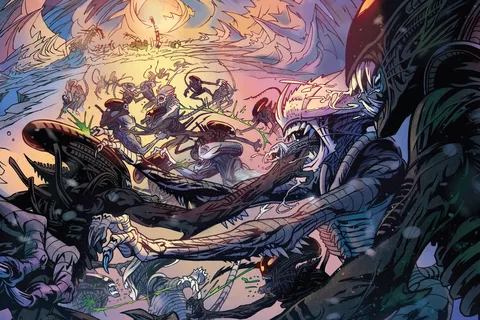
Alien vs. Predator, often called AvP Arcade or Aliens vs. Predator Arcade, is a side-scrolling beat 'em up developed and published by Capcom for the CPS-2 arcade platform. Released in 1994, it let up to three players choose from four characters and fight through seven stages of Xenomorph swarms, rogue Marines, and boss encounters in the overrun city of San Drad, California. The roster paired cybernetically enhanced Colonial Marine heroes with two playable Predators, making it one of the franchise's most famous Predator-human team-ups and one of the loudest examples of Xenomorphs on Earth in expanded lore. It still ranks high on our best Alien games and best Predator games lists as a short but explosive arcade classic.
Game Overview
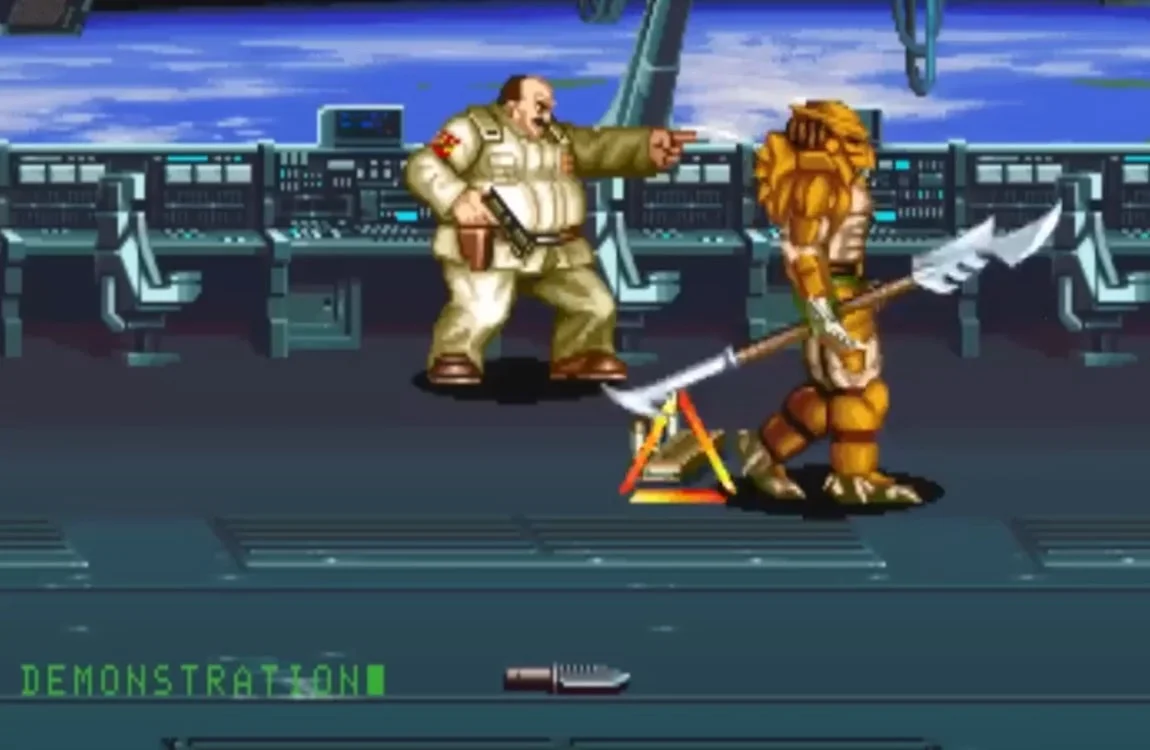
Alien vs. Predator plays like a Capcom Final Fight-style brawler with run-and-gun shooting layered on top. Each character carries a firearm plus a melee option, from Lieutenant Linn Kurosawa's katana to the Predator Hunter's bladed staff and the Predator Warrior's extendable spear. Major Dutch Schaefer instead relied on a cybernetic arm rigged like a smartgun, giving the Marine side a heavy-weapons rig straight out of the Aliens (1986) aesthetic.
The game was built for spectacle rather than length. Stages moved from burning city streets and sewers to moving APC assaults, hive interiors, Weyland-Yutani labs, and a military ship in orbit. Enemy counts were enormous even by arcade standards, with variant Xenomorphs, infected humans, corporate troops, and multiple boss fights packed into a single credit rush.
Plot Summary
San Drad fell in roughly seventy-two hours after Xenomorphs escaped from a secret Weyland-Yutani bio-weapons project hidden inside the city. Major Dutch Schaefer and Lieutenant Linn Kurosawa, both cybernetically rebuilt Marines abandoned by their command, were cornered by a drone swarm before two Yautja hunters intervened. The Hunter and Warrior Predators offered a temporary alliance, and the four heroes cut their way toward the hive at the center of the outbreak.
After the first Alien Queen Mother fell in the city, the team learned that renegade General Bush had been breeding Xenomorphs for the corporation aboard a lifting military ship. The group boarded the vessel, survived a rematch with the Queen after Bush was killed, and programmed the ship to crash back into San Drad. The resulting explosion wiped out the remaining Xenomorph threat on Earth, after which the Warrior Predator broke off a wristblade for Dutch and Linn before both hunters returned to space.
Key Characters
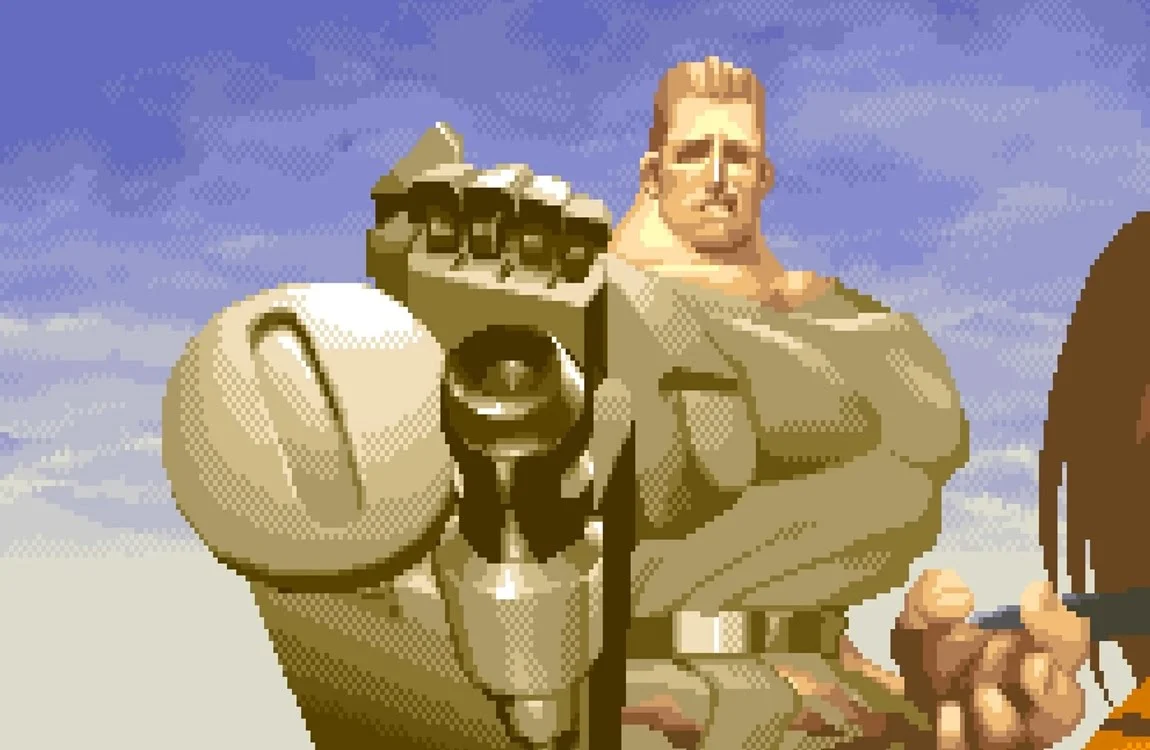
AvP Arcade is driven by its four playable fighters and a handful of memorable villains rather than a large supporting cast.
- Major Dutch Schaefer - A cyborg Marine based on the hero of Predator, rebuilt with a smartgun arm after the Second Alien War.
- Lieutenant Linn Kurosawa - A katana-wielding cybernetic Marine and leader of the 13th USCM Corps detachment in San Drad.
- Predator Hunter - A younger Yautja fighter armed with a bladed staff and standard Predator gear.
- Predator Warrior - A veteran hunter who wielded an extendable spear and gifted his wristblades to the Marines at the ending.
- General Bush - The corrupt Weyland-Yutani-linked officer behind the San Drad breeding program.
- The Mad Predator - A blue-skinned bad-blood Yautja boss infected with a Predalien chestburster.
- The San Drad Queen Mother - The first Queen boss, attached to her egg sack in the city hive.
San Drad And The Seven Stages
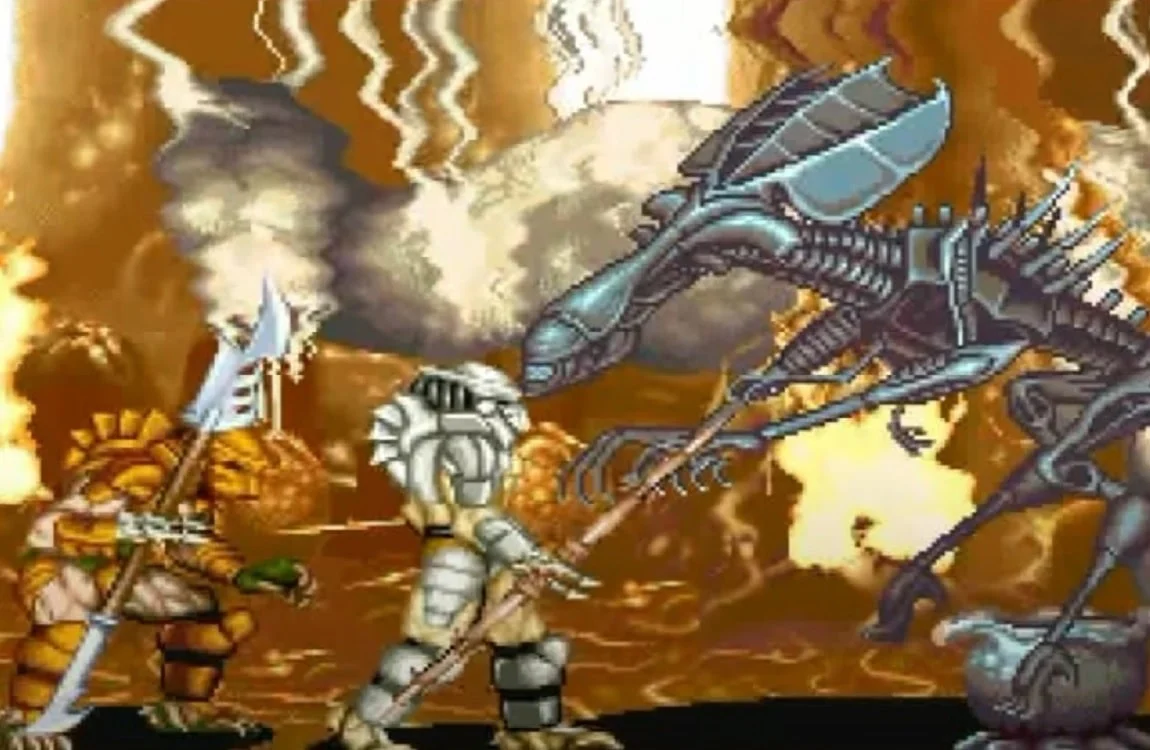
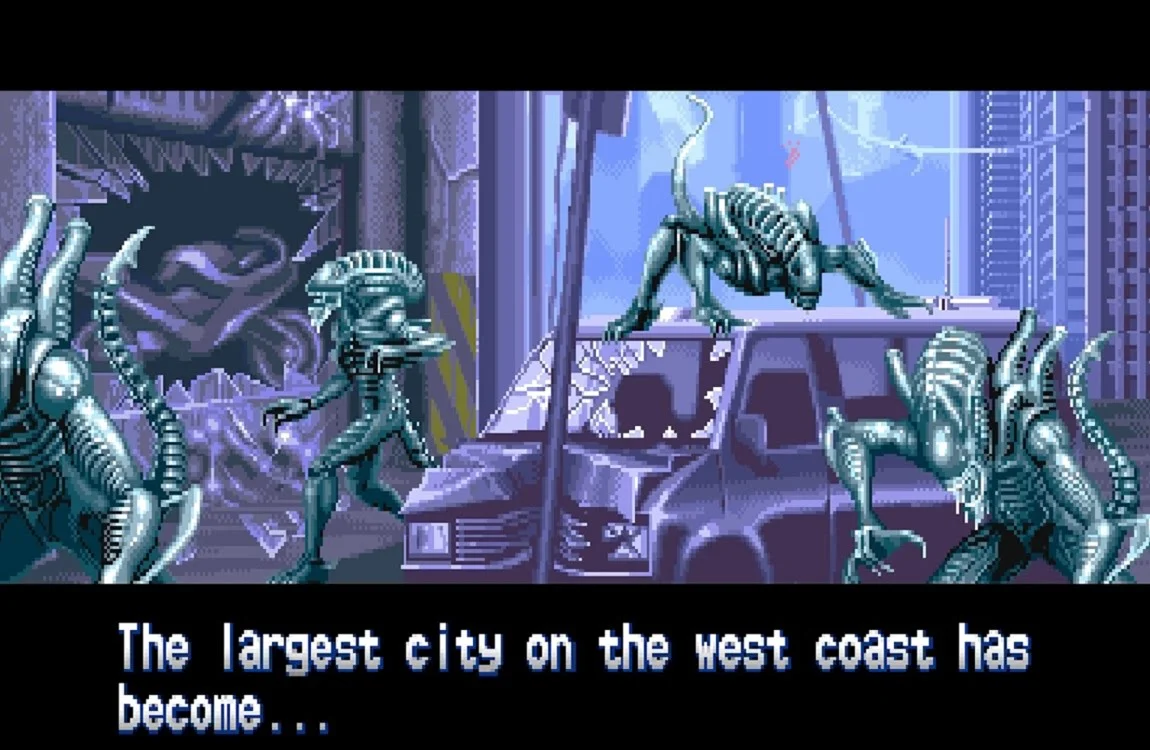
Capcom structured the campaign around seven rounds that escalated from street fighting to orbital extermination. City of Despair opened the hunt in the burning streets, War in the Underpass pushed the team through sewers, and Forced Assault turned into a moving APC gauntlet before Assault on a Queen brought the first direct Queen Mother fight. Secrets exposed the crashed transport and corporate bio-weapons program, Nightmare in the Lab culminated in the Mad Predator battle inside Weyland-Yutani facilities, and Hunt's End finished aboard General Bush's ship with the second Queen encounter.
San Drad itself became one of the most important Earth locations in crossover game lore. The city combined West Coast urban sprawl with a hidden corporate hive, an atmosphere-processor-like research tower, and a final ship crash that destroyed much of the surrounding region in the ending. That scale made the arcade game one of the most dramatic Earth infestation stories in the franchise even though later canon rarely acknowledged it.
Xenomorphs, Bosses, And Enemies
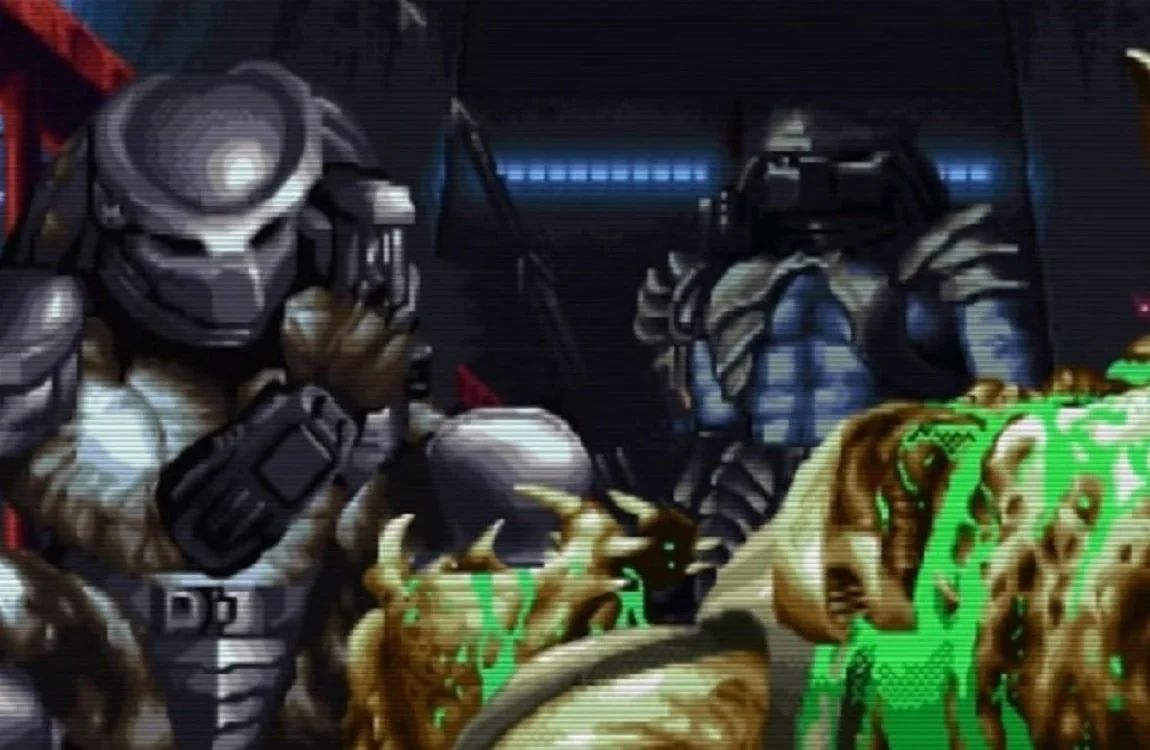
The enemy roster was one of the game's biggest draws. Standard drones mixed with stage-specific bosses such as the armored Chrysalis, the fast Razor Claws, and the agile Arachnoid, while later levels added infected humans, corporate soldiers, and a military power loader. Razor Claws later carried the same XX121B tag as the Biodrone. Capcom also threw in colorful variant Xenomorphs that later inspired NECA figures and years of fan debate over which strains counted as official lore.
Boss highlights included the first Queen Mother in the hive, the melee-only Mad Predator in the laboratory stage, General Bush aboard his escaping ship, and the second Queen fight that closed the campaign. The Mad Predator's defeat revealed a short-lived Predalien chestburster, one of the earliest hybrid moments in licensed game fiction. The twin Queen battles also made AvP Arcade a major entry in any overview of Predator versus Queen fights and Xenomorph types from the games.
Gameplay And Features
Alien vs. Predator used a three-button layout for attack, jump, and shoot across an eight-directional joystick. Cabinets supported two or three simultaneous players depending on the model, with each run letting the group pick up to three fighters from the four-character roster. Health, ammo, and weapon pickups appeared constantly, including pulse rifles and smartguns that Predators could wield as readily as the Marines.
That weapon-sharing loop became one of the game's signature sights. Seeing a Predator pick up Colonial Marine firepower was rare in licensed fiction before this title, and it later became a recurring reference point in articles on Predators using human weapons. Melee combos, dash attacks, and screen-filling special moves kept the action closer to Capcom's beat 'em up lineage than to the slower survival tone of later AvP shooters such as Alien vs. Predator: Jaguar or Classic.
Alien Timeline Placement
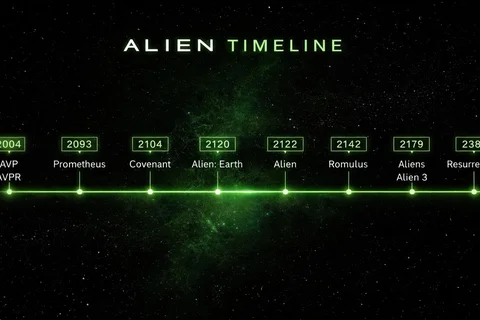
Alien vs. Predator is generally treated as expanded-universe material set in a near-future Earth timeline where Weyland-Yutani openly experiments with Xenomorph bio-weapons inside a major American city. Dutch's cyborg reconstruction, Linn's futuristic Marine corps, and the complete annihilation of San Drad sit far outside the core Alien films, which never depicted an infestation of that size reaching the mainland United States. The story therefore occupies the same optional game-and-comic space as many other crossover adventures.
Even so, San Drad, General Bush, the Mad Predator, and the Hunter-Warrior team-up became some of the most cited arcade-era elements in later lore articles. The ending's massive explosion and the Predators' ambiguous farewell also fed long-running fan speculation about whether Earth could survive another open hunt.
Development
Capcom developed Alien vs. Predator under license from Twentieth Century Fox during the same period as other high-profile CPS-2 brawlers. The project leaned on the Final Fight and Cadillacs and Dinosaurs formula, swapping street punks for Xenomorph hordes and adding gun combat to suit the license. Character designs pushed the cast toward exaggerated action-hero proportions, especially Dutch's bulk and Linn's anime-influenced martial-artist look.
The game shipped in Japanese arcades in May 1994 and reached other territories shortly afterward, sharing release year buzz with Rebellion's Jaguar shooter but targeting a completely different arcade audience. Capcom later reused the property sparingly compared with its Street Fighter or Marvel licenses, leaving the 1994 cabinet as the definitive version of this particular crossover experiment.
Release And Reception
Alien vs. Predator became a cult favorite in arcades and remains one of the most sought-after Capcom licensed cabinets among collectors. Critics and players praised the character roster, co-op chaos, enemy variety, and boss fights, while the main criticism was simply brevity: even skilled teams could clear the entire game quickly on a single credit. MAME preservation and occasional re-releases kept it accessible long after original cabinets became rare.
Capcom brought the game back through the Capcom Home Arcade device in October 2019, giving modern players another way to experience the San Drad campaign without hunting down original hardware. NECA later produced action figures based on several arcade-exclusive Xenomorph and Predator designs, extending the game's visual influence into merchandise years after the cabinet's heyday.
Legacy
Capcom's 1994 cabinet remains the loud Predator-human beat 'em up: cyborg Dutch, Linn Kurosawa, and two Yautja clearing San Drad, with Predators picking up pulse rifles. It is a different game from Activision's SNES hunt the year before. No sequel followed.
External Sources
Tag Categories: Alien Games | Alien Vs Predator Games | Predator Games | Alien Merchandise