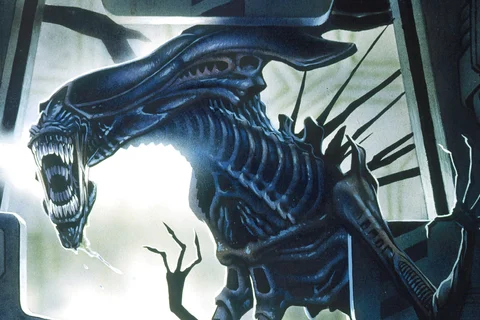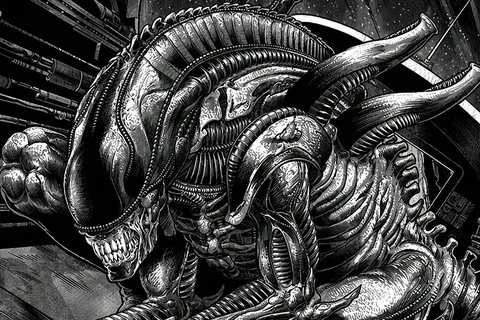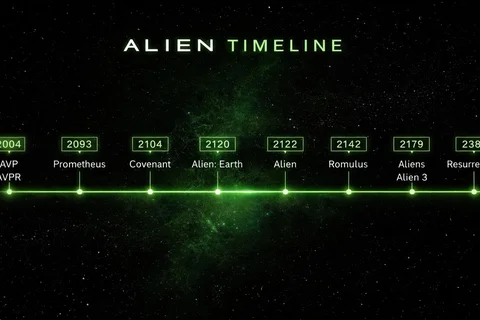

Alien: Romulus did not introduce just one new Alien, but an entire chain of creatures and mutations tied to the secret experiments on board the Renaissance Station. The film connected the original Xenomorph from Alien to new Facehugger swarms, an intermediate cocoon stage, full-grown warriors, the Scorched Xenomorph, the Black Goo Pathogen, and finally the Offspring. Below is a full guide to the Romulus creatures and how they fit into the wider Xenomorph lore.
Romulus Xenomorphs
The creatures in Alien: Romulus were not a completely separate species from the classic Alien, but descendants and mutations tied back to the original Nostromo Xenomorph. Weyland-Yutani recovered Big Chap after the events of Alien, studied its biology aboard the Renaissance Station, and then used what it learned to mass-produce new organisms in the hidden Romulus lab. This led to a full infestation that included classic-style adult Aliens, a newly shown cocoon stage, engineered Facehuggers, and hybrid life tied to the pathogen research.
Xenomorph Space Cocoon
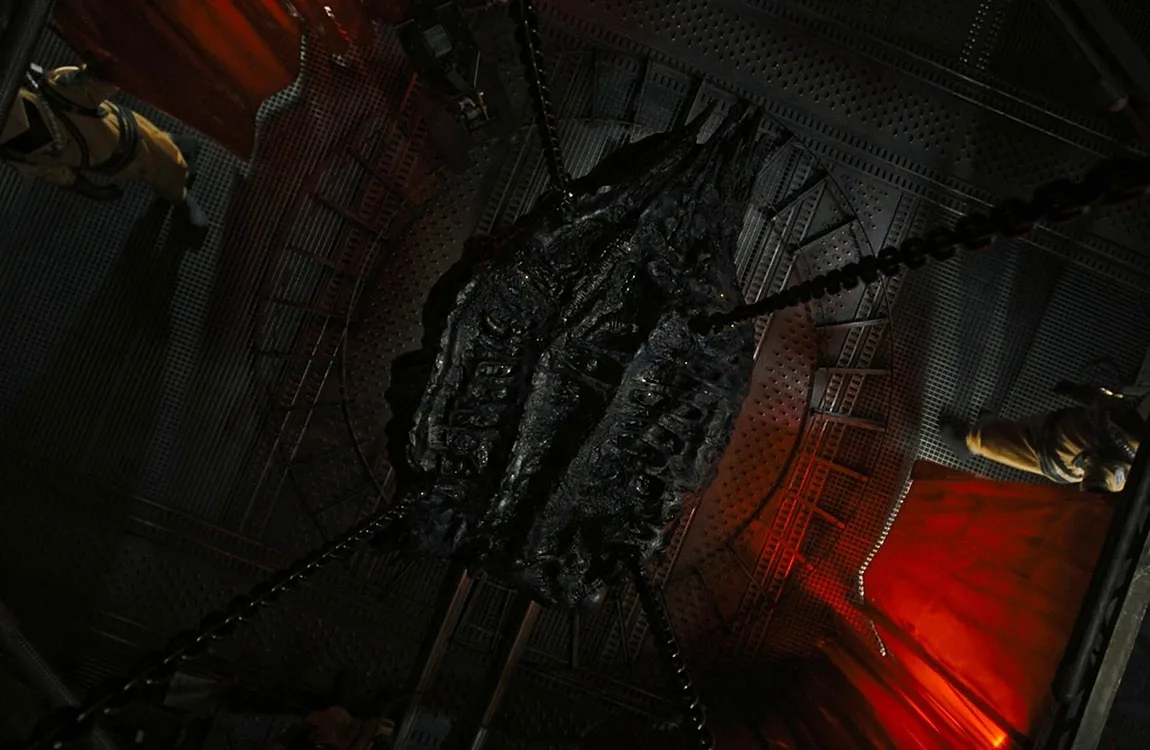
The story of the Romulus creatures began with Big Chap, the original Xenomorph from Alien that attacked the crew of the Nostromo. Rather than dying after Ellen Ripley blasted it out of the Narcissus shuttle airlock, the creature somehow survived in deep space. Big Chap protected itself by forming a thick biomechanical cocoon around its body, similar to the resin structures Xenomorphs use to build nests and hives. This shell preserved the Alien in the vacuum of space and allowed it to drift near the wreckage of the USCSS Nostromo for years.
Big Chap
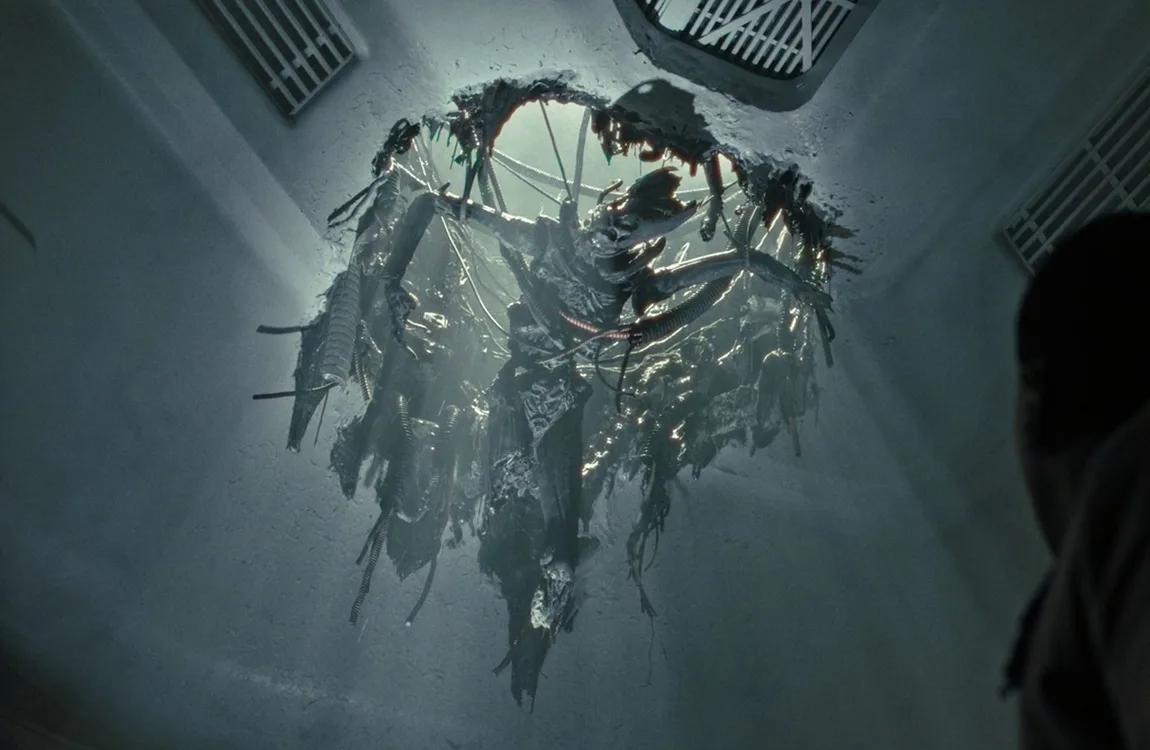
Weyland-Yutani eventually recovered the cocooned creature and transported it to the Renaissance Station for secret research. Because Big Chap was a pure specimen directly linked to the Nostromo incident, it became the biological source behind the Romulus infestation. The company used its DNA and tissue to study the Alien species, produce Facehuggers, and recreate parts of the Xenomorph lifecycle inside the Romulus lab. Predictably, Big Chap later woke up and wreaked havoc on the station, as detailed in the Alien: Romulus prequel comic published by Marvel Comics.
Xenomorph Cocoon
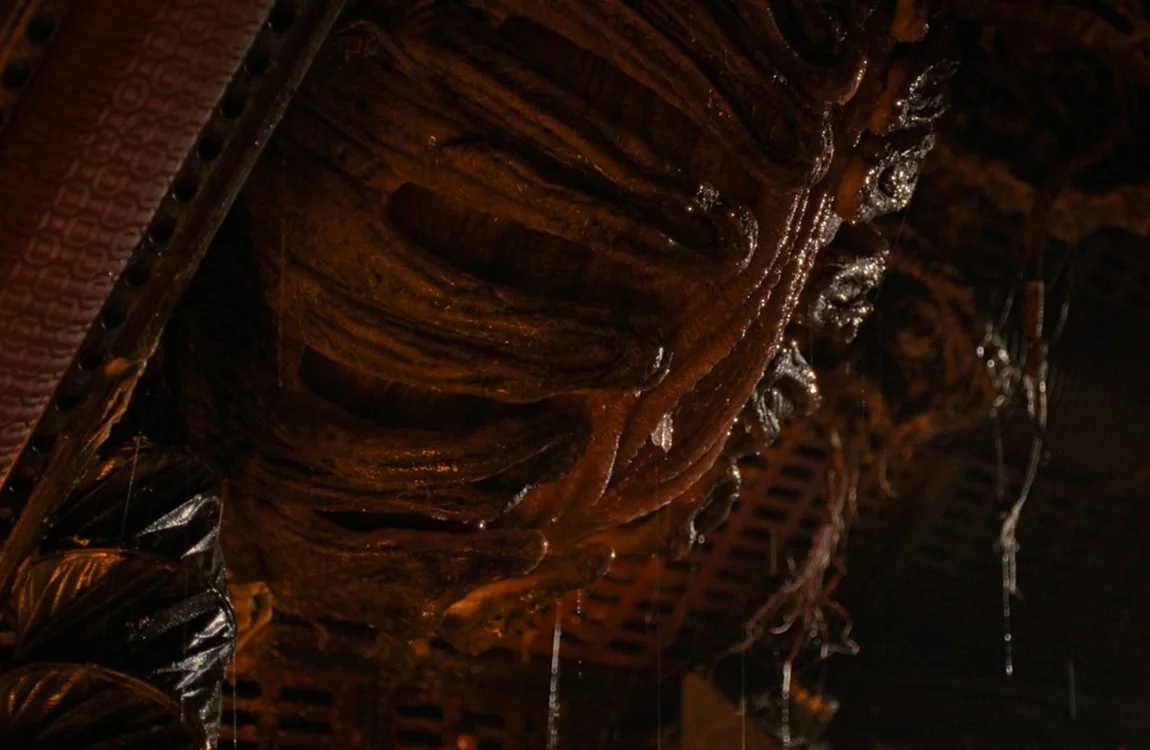
One of the most interesting additions in Alien: Romulus was the intermediate cocoon stage between the chestburster and the fully grown adult. Rather than growing directly into a warrior off-screen, the Romulus Alien enclosed itself in a cocoon-like shell and emerged from it after further development. This was a major new detail for the movie canon, because previous films generally implied that the chestburster grew rapidly into an adult without showing such a distinct metamorphosis. The cocoon stage made the Romulus lifecycle feel closer to an insect metamorphosis while still preserving the familiar Alien stages.
Romulus Warriors
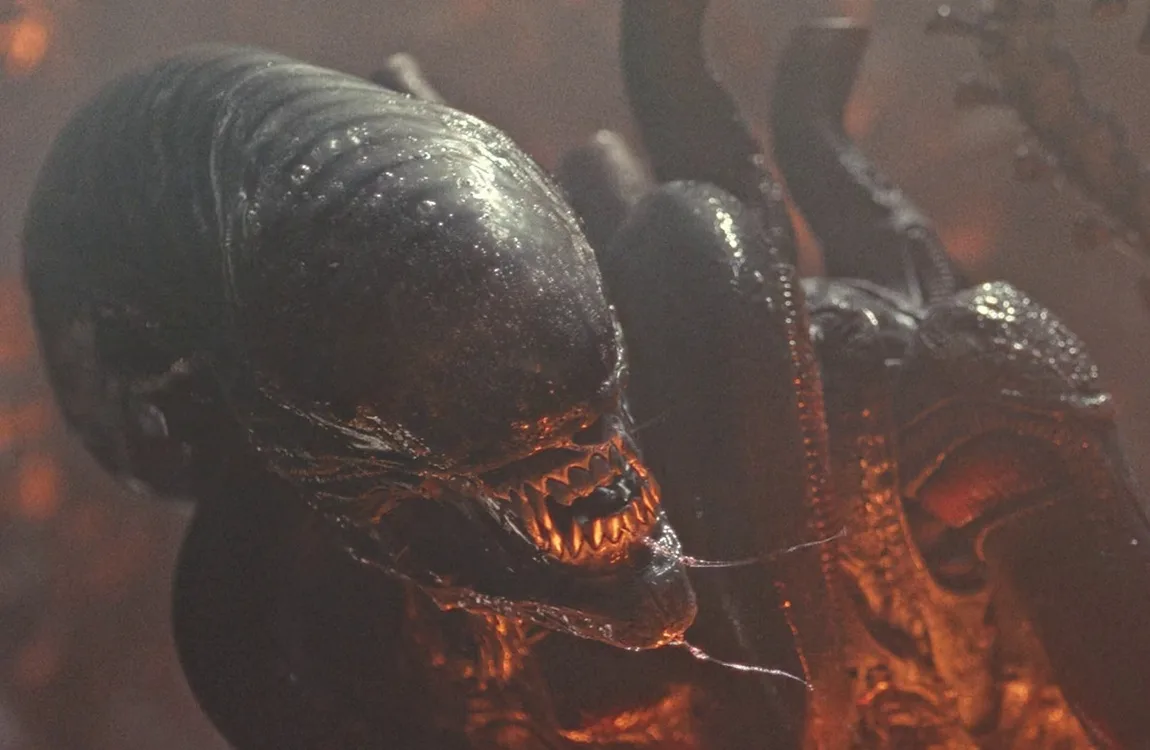
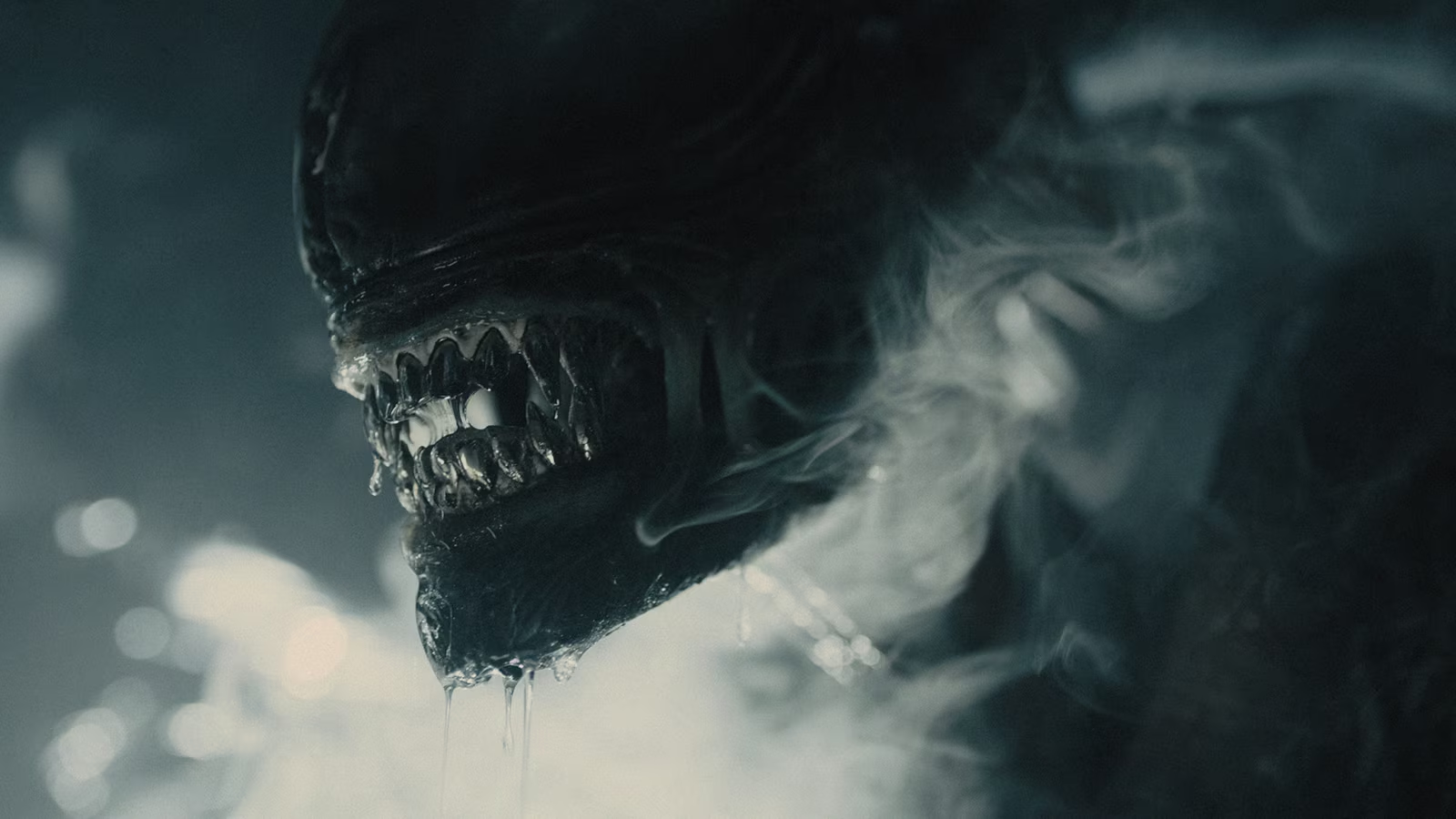
The adult Aliens aboard the Renaissance Station were essentially Romulus Warriors, descendants of the original Alien strain recreated through Weyland-Yutani experimentation. They were very close in appearance to the classic Xenomorph Warrior and especially to Big Chap, with smooth domed heads, biomechanical facial structure, and the familiar inner jaw. In contrast to some later film designs, these Romulus warriors leaned back toward the original H.R. Giger look instead of the more animalistic or heavily ridged variations. The Romulus warriors were also extremely effective hunters inside the narrow corridors of the station. They used the same combination of stealth, speed, tail strikes, and head bites as the classic movie Aliens.
Scorched Xenomorph
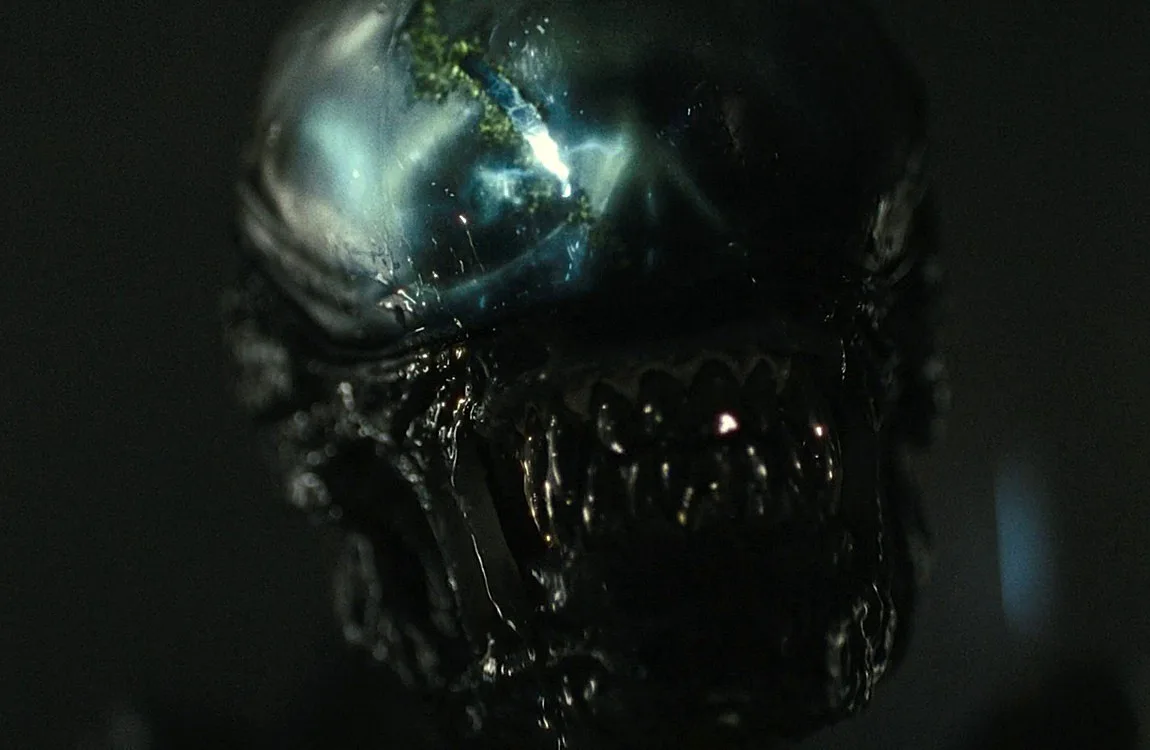
The Scorched Xenomorph was the main adult Alien in the film, hunting Rain Carradine and the survivors aboard the Renaissance Station. It was born from Navarro after a Facehugger attack and was one of the station's artificial descendants of Big Chap. Unlike a normal Xenomorph, it had silver-grey skin and heavy scars across its body. These burns came from its early growth stage, when Bjorn found it inside a cocoon aboard the Corbelan IV and attacked it with a shock baton. The young Alien killed Bjorn with its tail, while acid blood and electricity scarred its body. After maturing, the creature stalked the crew through the station, dragged victims to the nest, and killed Tyler with its inner jaw. It was finally shot dead by Andy during Rain's escape.
Romulus Facehuggers
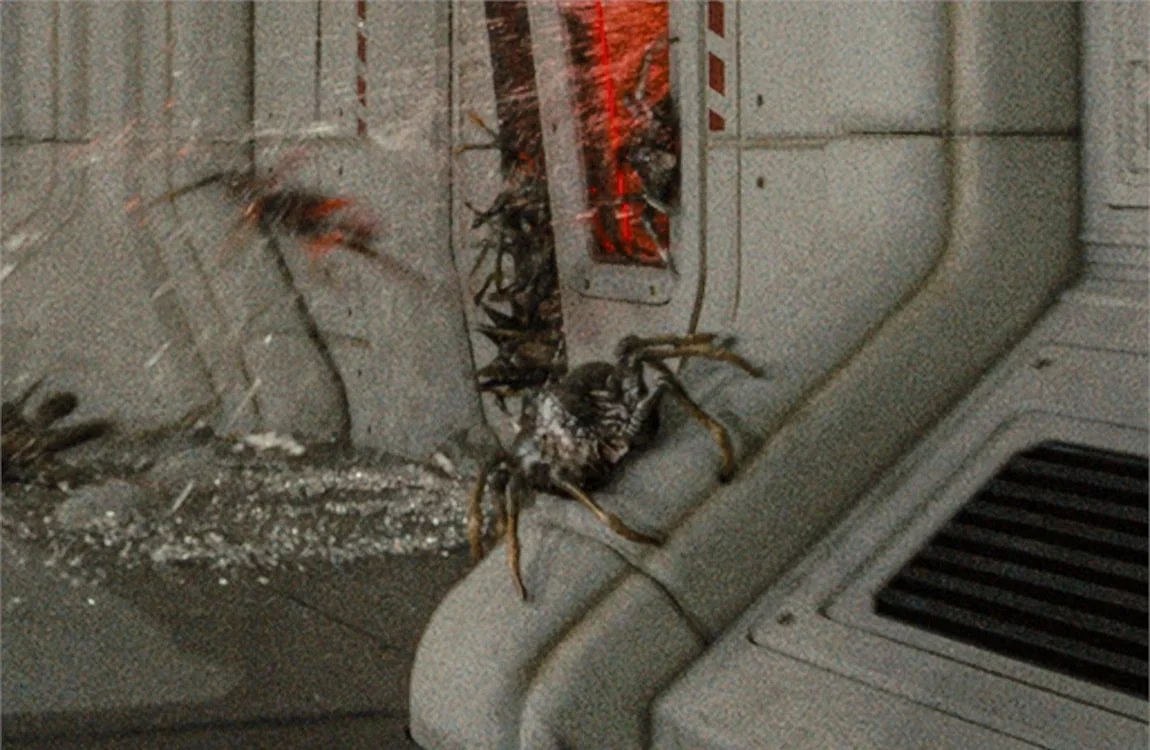
In addition to the adult Xenomorphs, Alien: Romulus introduced a new swarm of engineered Facehuggers. Rather than being laid naturally by an Alien Queen, these Facehuggers were "3D printed" on the station using Big Chap's recovered biology. This made them part of a manufactured infestation rather than a normal hive cycle, which was one of the movie's biggest changes to the familiar Alien formula. The Romulus Facehuggers were darker in color than the classic versions and had especially unsettling hand-like fingers tipped with human-looking nails. They attacked in groups, rapidly overwhelming targets once containment broke down.
Black Goo Pathogen
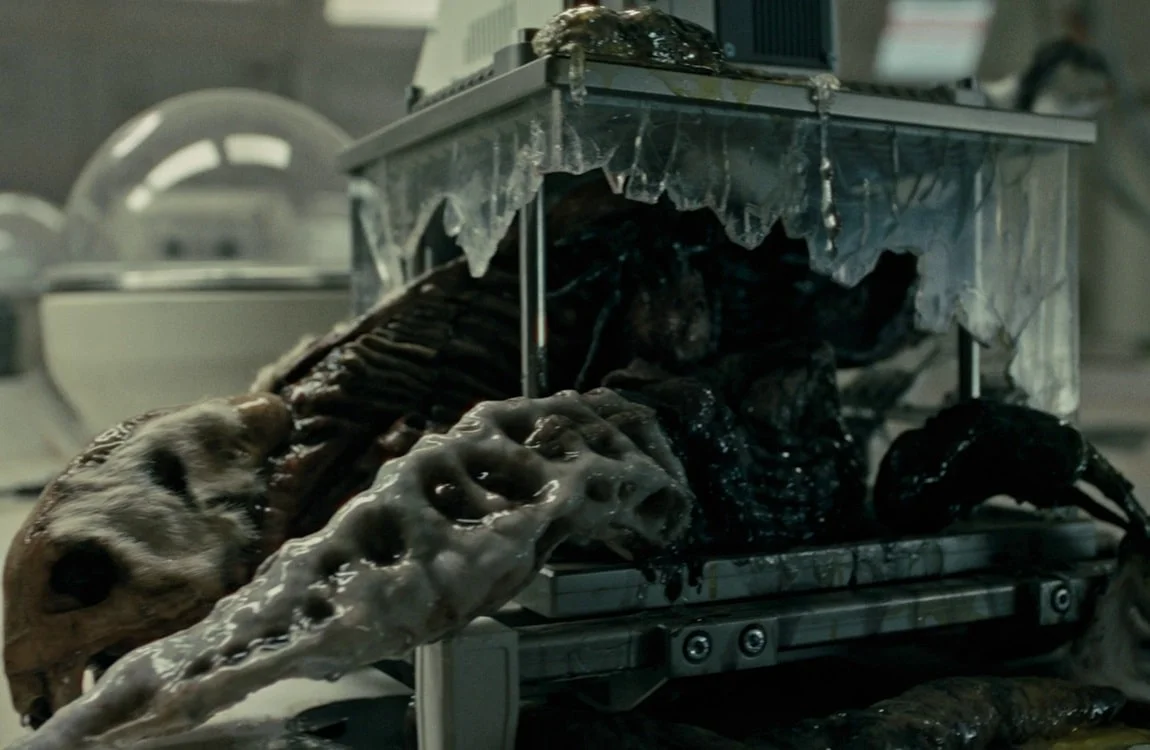
The Black Goo Pathogen was not a Xenomorph itself, but it was a crucial part of the film's experiments. Weyland-Yutani researched the mutagen aboard the station and showed that it could alter life in unpredictable ways, including mutating a lab rat into a grotesque new organism. This confirmed that the company was not only interested in recreating the Alien lifecycle, but also in weaponizing and controlling the broader Engineer-derived pathogen technology. In Romulus, the black goo functioned as the unstable bridge between the classic Alien biology and the film's more experimental horror. It expanded the story beyond simple Facehugger implantation and connected the movie back to Prometheus and Alien: Covenant.
Offspring
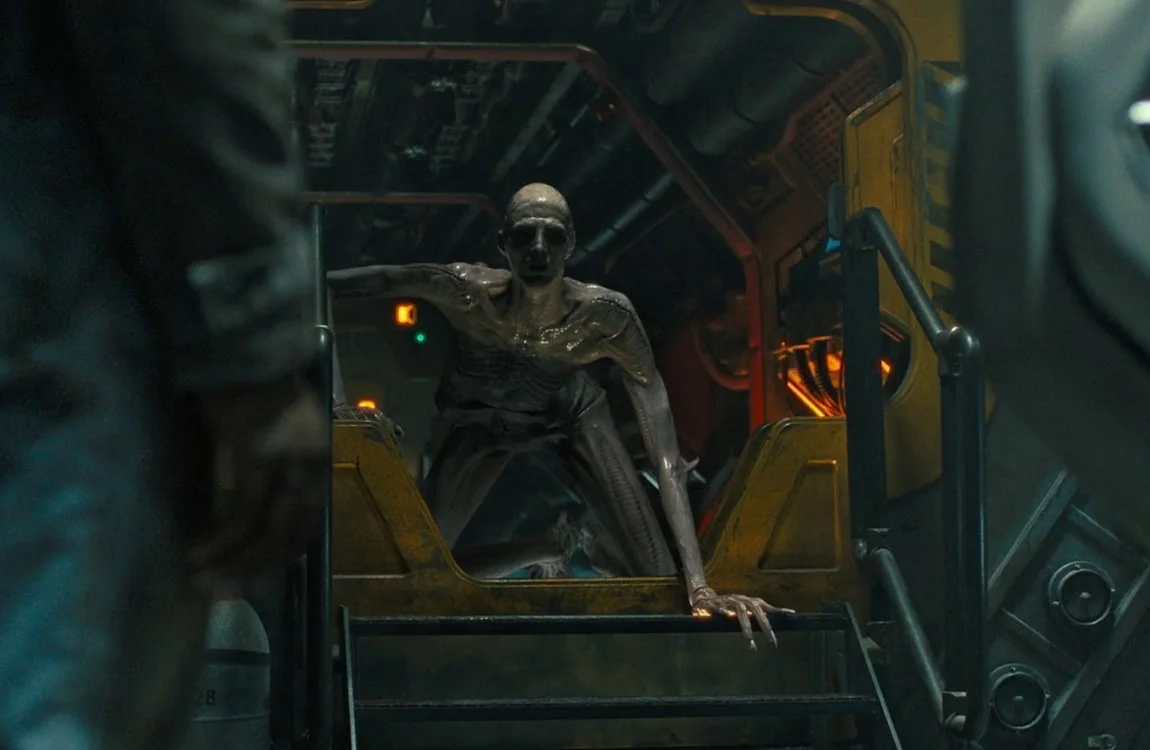
The Offspring was the film's final and most disturbing mutation, but it was not a standard Xenomorph. Born from a pregnant human female infected with the black goo, it combined human, Engineer, and Alien-like traits into a pale humanoid creature that rapidly evolved after birth. In visual terms, it felt closer to the Newborn from Alien: Resurrection than to a regular warrior. Although the Offspring eventually developed more familiar Alien features such as a tail and dorsal tubes, it represented a separate mutation rather than another Romulus warrior.
Behind The Scenes
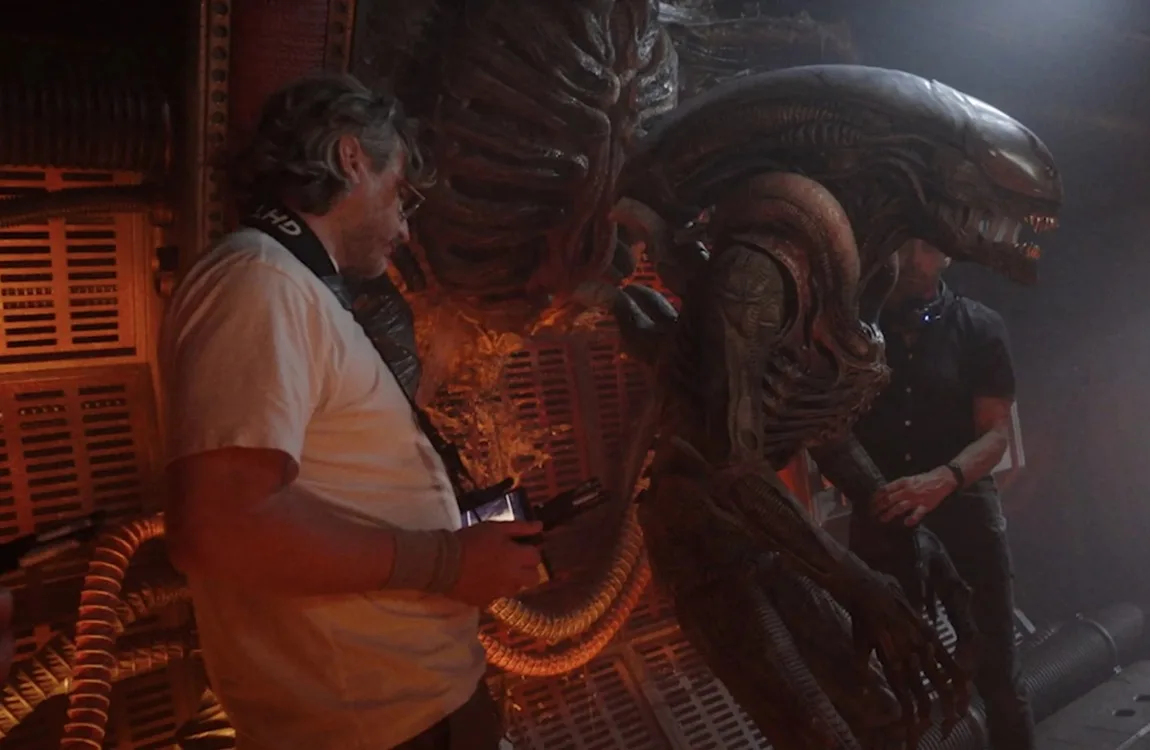
Behind the scenes, director Fede Alvarez deliberately pushed Alien: Romulus back toward the look and feel of the original two films. The production relied heavily on practical effects, animatronics, suits, and physical creature work instead of building the monsters entirely through CGI. That approach was one of the main reasons the Romulus Aliens looked more tactile, wet, and biomechanical than some later entries in the franchise. Alvarez also drew obvious inspiration from H.R. Giger's original Alien design while keeping the creatures mobile and threatening in a modern horror film. The result was a set of Xenomorphs that looked familiar to longtime fans but still had enough fresh details to stand apart, especially in the cocoon stage, the Facehugger swarm, and the Offspring's final form.
Conclusion
Alien: Romulus expanded the Alien lifecycle without abandoning the classic Xenomorph design. Big Chap's survival in space led to Weyland-Yutani experiments that produced new Facehuggers, an intermediate cocoon stage, Romulus warriors, the Scorched Xenomorph, black goo mutations, and finally the Offspring. Rather than introducing one completely new breed of Alien, the film showed how the original species could be copied, manipulated, and twisted into multiple new horrors.
Tag Categories: Xenomorphs From The Movies | Alien Romulus Lore | Alien Lore