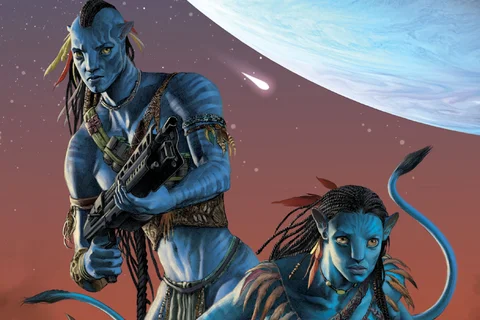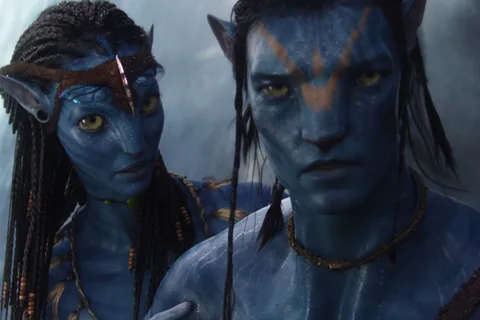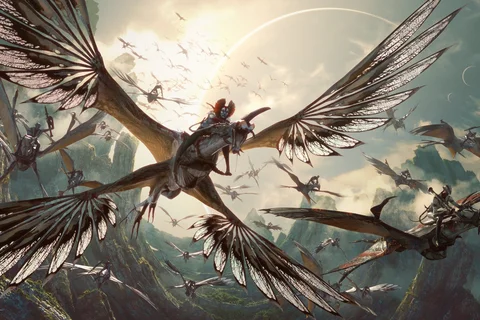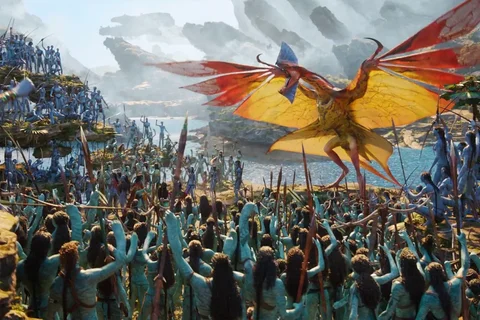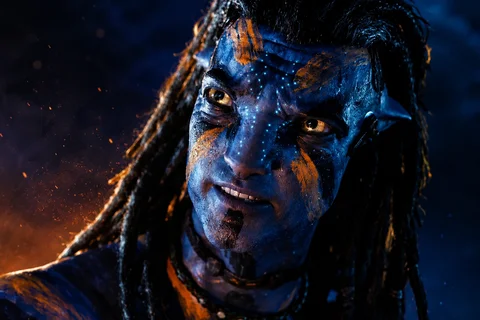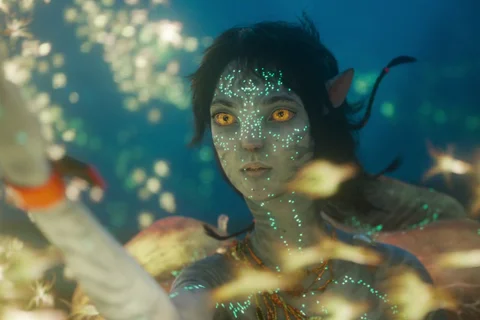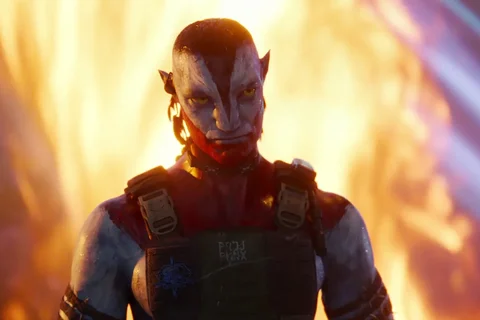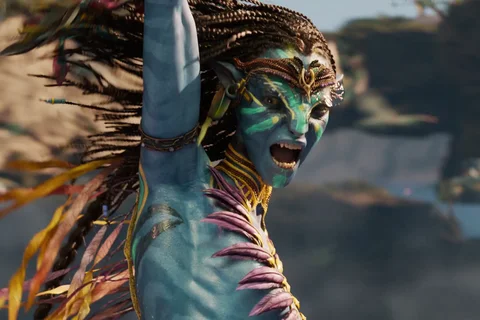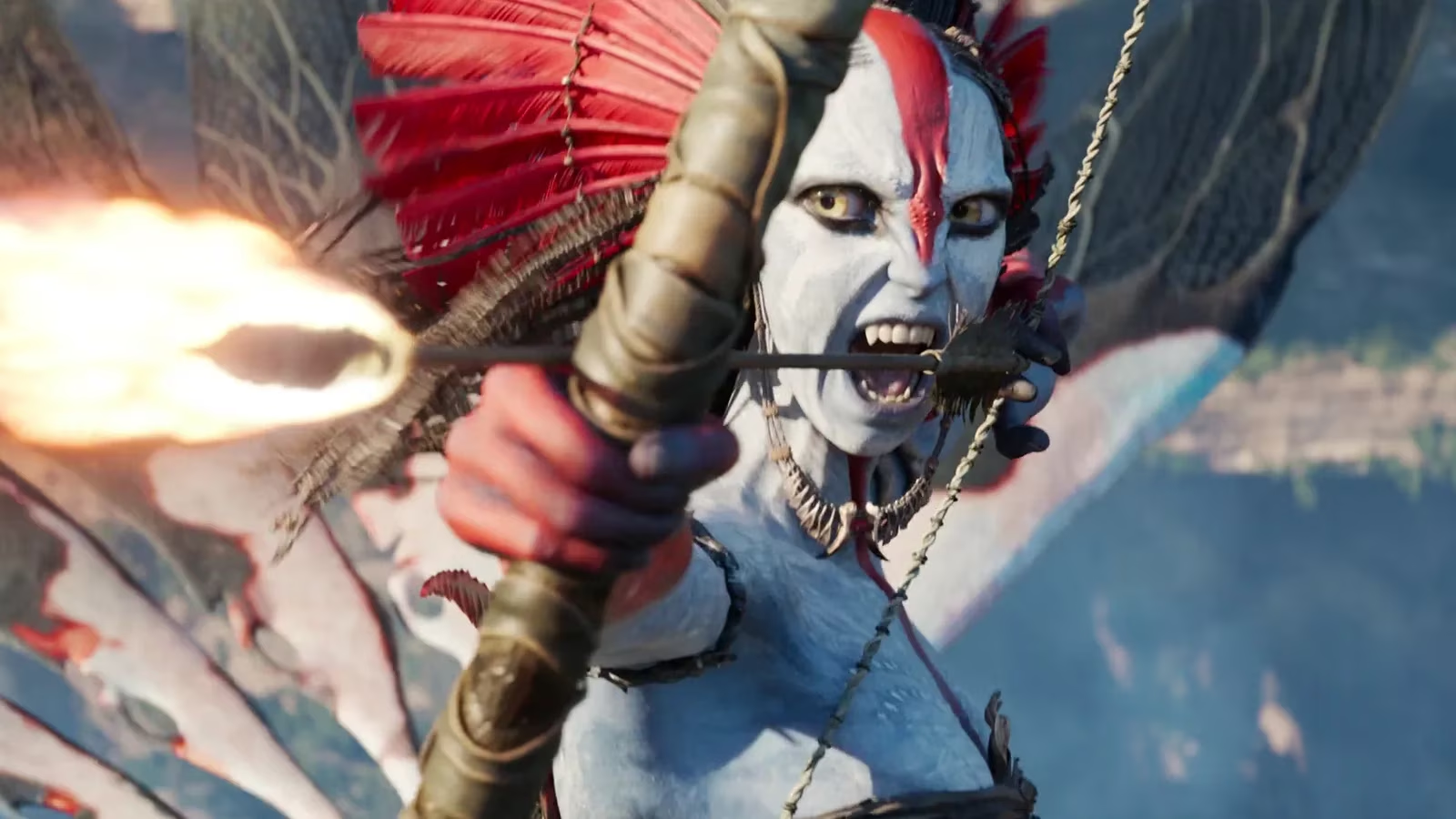

Varang is a female Na'vi leader from Avatar: Fire and Ash. She commanded the Mangkwan clan, also known as the Ash People, and became one of the most dangerous new figures in Pandora's expanding war. Unlike the forest and reef leaders introduced earlier in the series, Varang represented a more militant and destructive side of Na'vi clan life. Her story is tied to volcanic territory, fire-based tactics, rejection of Eywa, and an alliance with Recom Colonel Miles Quaritch and the RDA.
Who Is Varang?
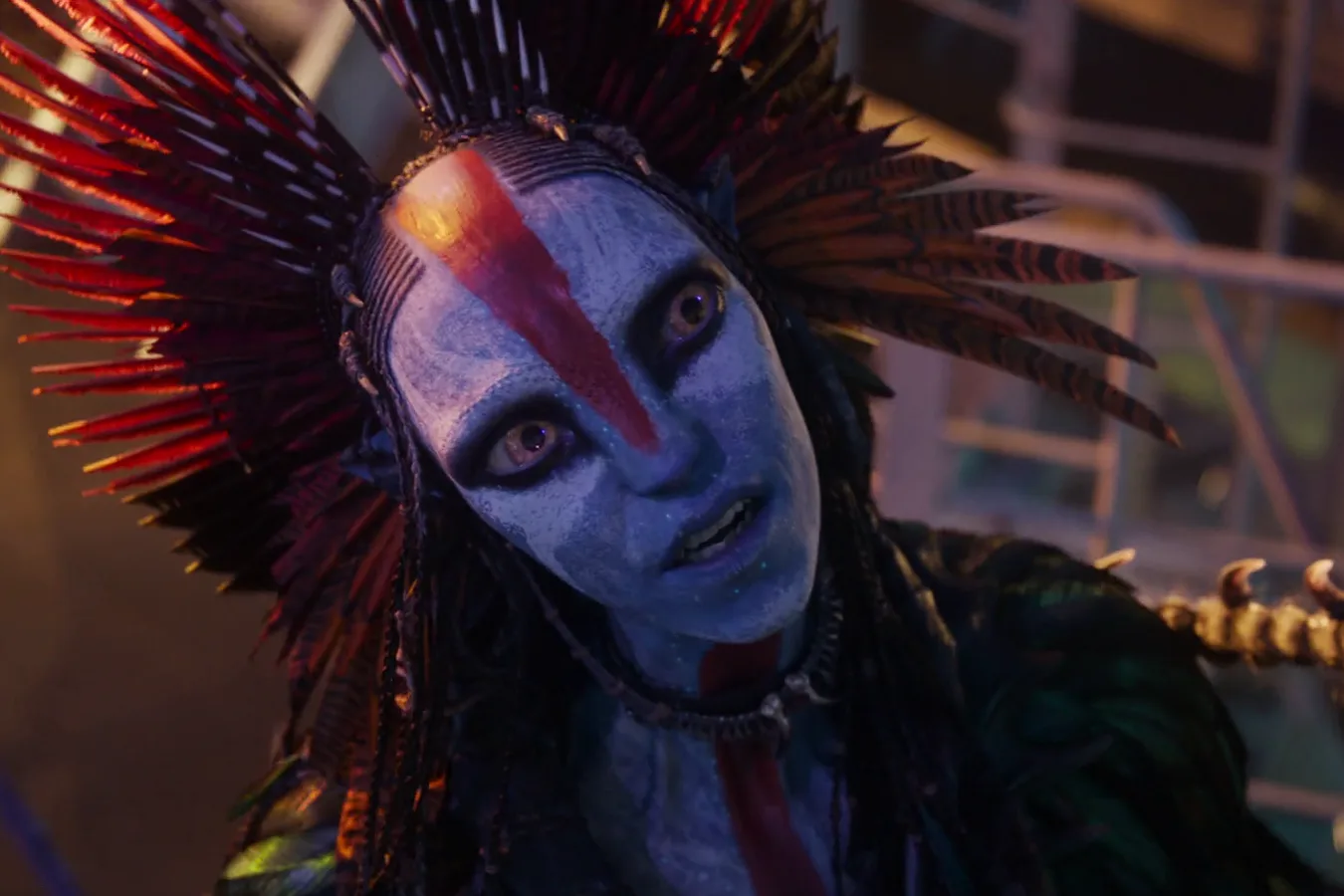
Varang was the matriarch of the Mangkwan, a volcanic Na'vi type known as the Ash People. She was both olo'eykte and tsahik of her clan, combining political, military, and ritual authority in one role. She was one of the major new Na'vi characters introduced after Avatar: The Way of Water, entering the story as an enemy of the Sully family and their allies. While Neytiri, Mo'at, and Ronal showed female Na'vi power through hunting, family, healing, and spiritual authority, Varang's power was more openly political and military. She led through force, fear, and the survival logic of a harsher region of Pandora.
Varang also made the Avatar universe less morally simple. Earlier films focused heavily on the RDA as the outside invader and the Na'vi as defenders of Pandora. Varang complicated that pattern by showing that Na'vi cultures could disagree violently with one another, reject shared beliefs, and even cooperate with human military forces when it served their interests. By the end of Avatar: Fire and Ash, she was still alive and remained one of the unresolved threats left for Pandora's future.
Background And Rise To Power
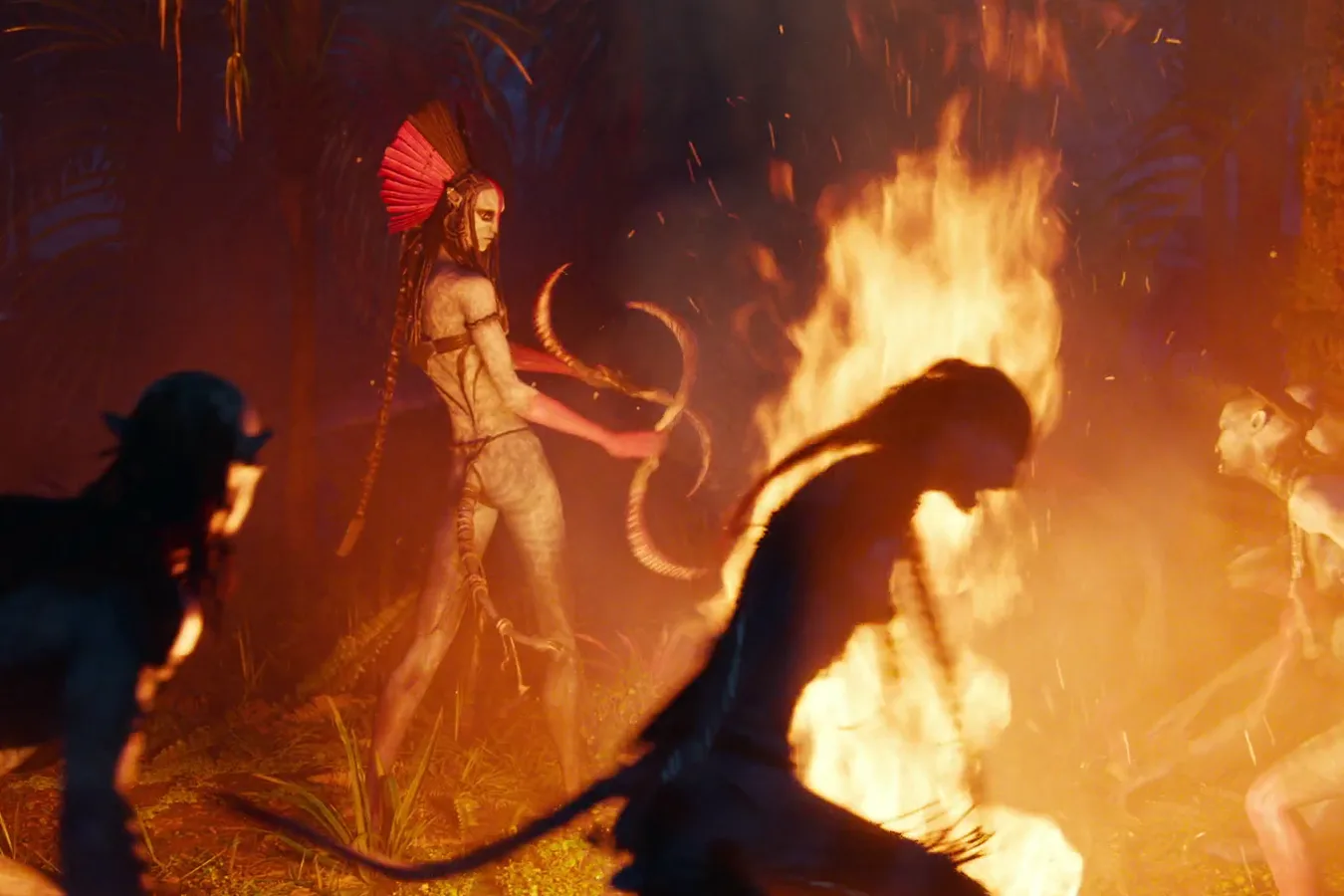
Varang's break with Eywa started long before the main conflict of Avatar: Fire and Ash. In childhood, she survived the volcanic destruction of the Mangkwan Hometree, a catastrophe that killed many of her people and took the life of her mother, the clan's tsahik. The survivors were left hungry, displaced, and bitter toward the Great Balance they had been taught to trust. Varang came out of that trauma seeing Eywa not as a motherly protector, but as a powerless presence that had failed the Mangkwan at their worst moment.
As she grew older, Varang claimed the tsahik role for herself and displaced the older sister who had once seemed destined for it. By fifteen, she had also taken political control, poisoning her father, the olo'eyktan, because she judged him too afraid and passive to protect the clan. Her rule redirected the Mangkwan away from Eywa, the Three Laws of Eywa, and the customs that still guided most Na'vi societies. The spiritual knowledge normally associated with healing and balance became, in Varang's hands, a system of intimidation built on toxins, hallucinogens, forced tsaheylu, pain, and ritual performance.
Leader Of The Ash People
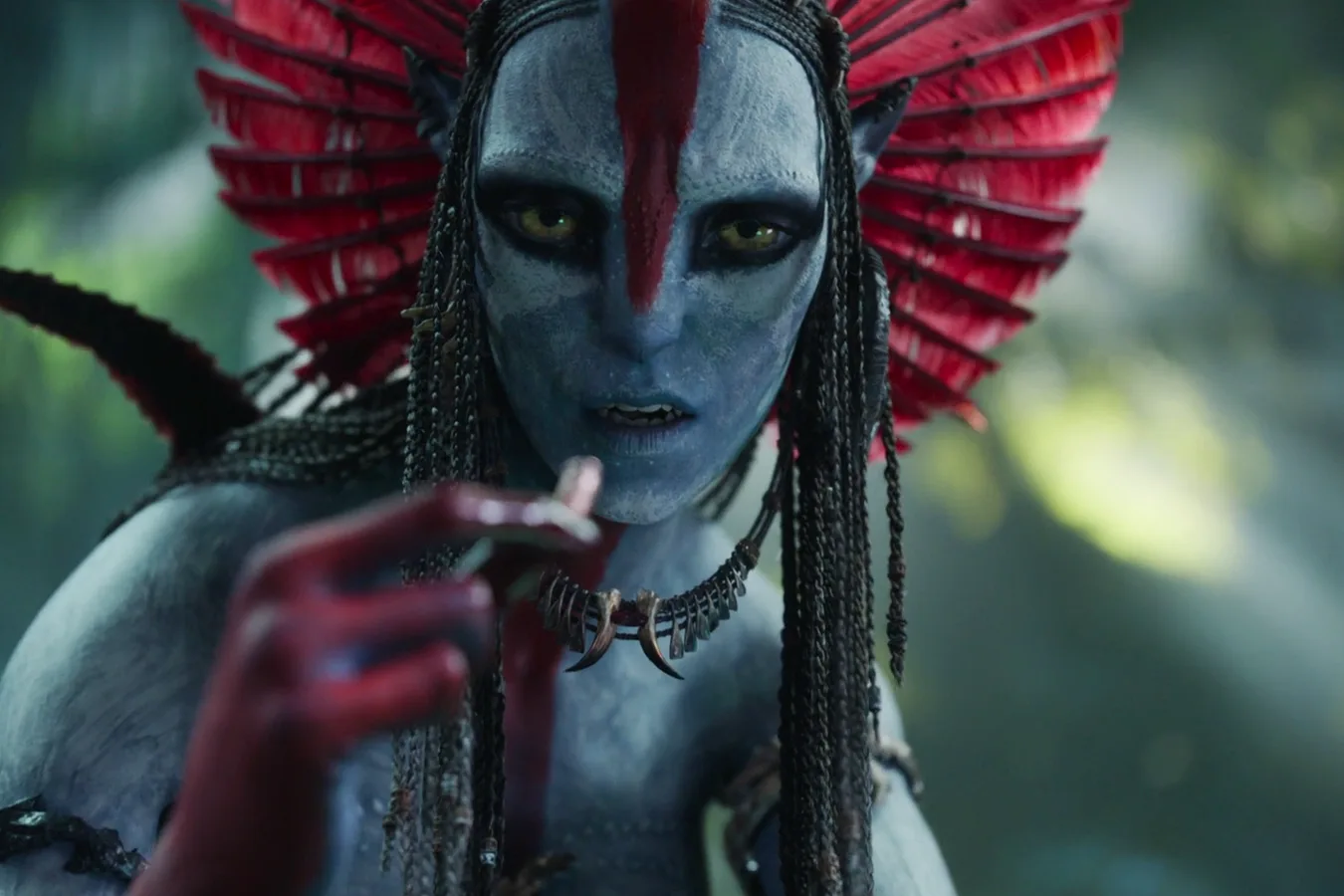
The Mangkwan live in volcanic territory shaped by ash, heat, fire, and unstable terrain. Their environment separates them visually and culturally from the forest Omatikaya and reef Metkayina clans. The Ash People are associated with harsher coloration, ash-like markings, smaller eyes, and survival traditions that reflect life in a scorched landscape. Their clan identity is built around endurance, aggression, and the use of fire as both a practical tool and a weapon. Varang turned that identity into a religion of fire, treating flame as the pure force that saved her people when Eywa did not.
Varang's leadership reflected that world. She was not presented as a tsahik-style healer or a ceremonial figure who balanced a male olo'eyktan. Instead, she held direct authority over Mangkwan warriors, rituals, and military decisions, making her a female Na'vi leader defined by command, violence, and strategic ambition.
Battle At The Airships
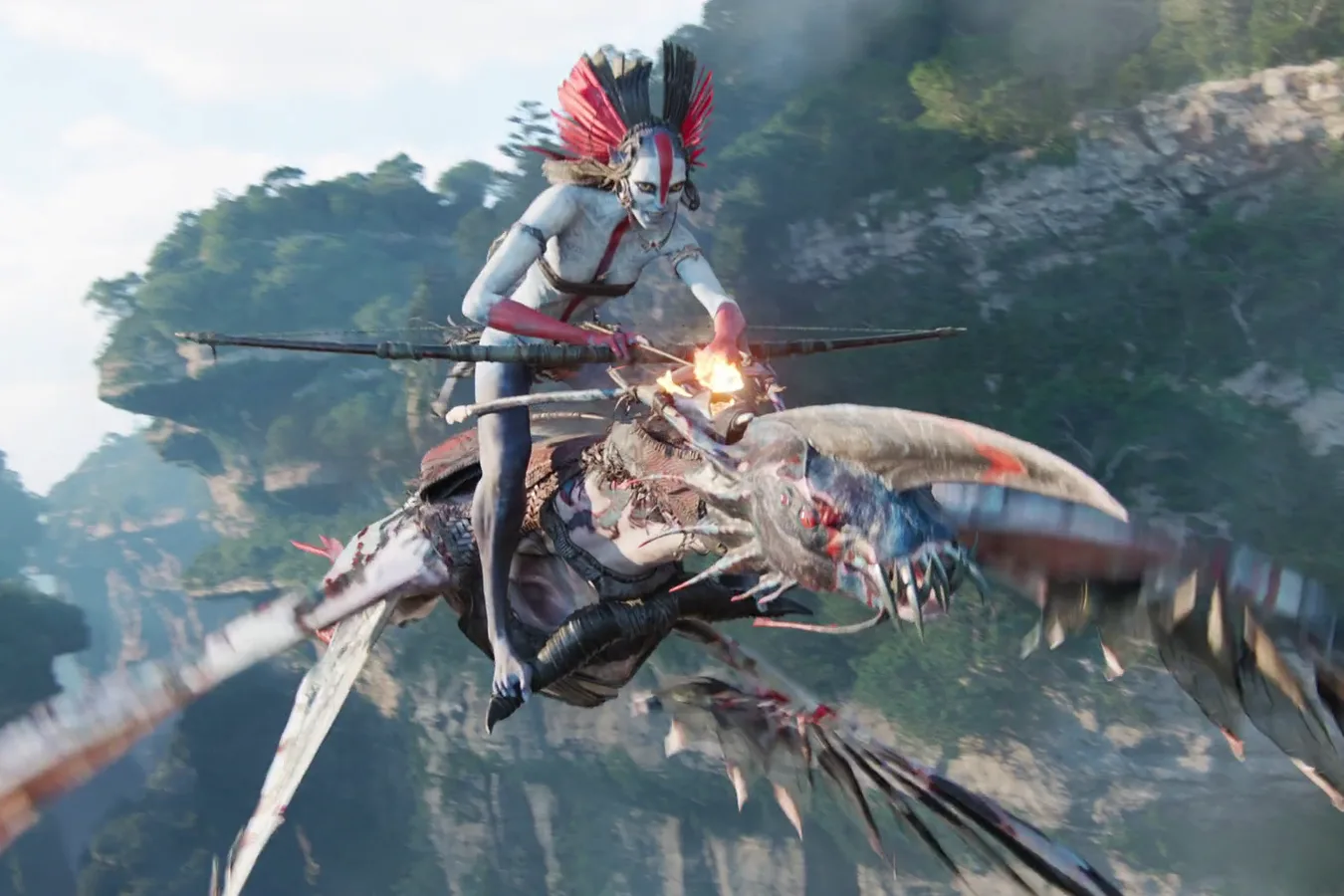
In Avatar: Fire and Ash, Varang entered the main plot through the attack on the Tlalim convoy carrying Spider Socorro and the Sully family. The Mangkwan descended on the airship caravan as raiders, combining military aggression with the practical goal of taking supplies. In the chaos, Varang wounded Neytiri with an arrow through the torso and then saw Jake Sully using an assault rifle against her warriors. She countered by ordering one of her riders into the medusoid Jake was firing from, turning the fight into a burning crash.
Afterward, Varang's warriors searched the wreckage for anything useful and treated surviving Na'vi with deliberate cruelty. The severed queues left behind made the raid feel especially brutal, since cutting a queue was one of the deepest violations a Na'vi could suffer. The Sully children and Spider escaped into the rainforest, but the Mangkwan continued tracking them. Lo'ak killed several attackers with a human rifle, and Varang's later inspection of the bodies, including the bullet she cut out with her knife, turned the weapon into an object of fascination for her.
Capture Of The Sully Children
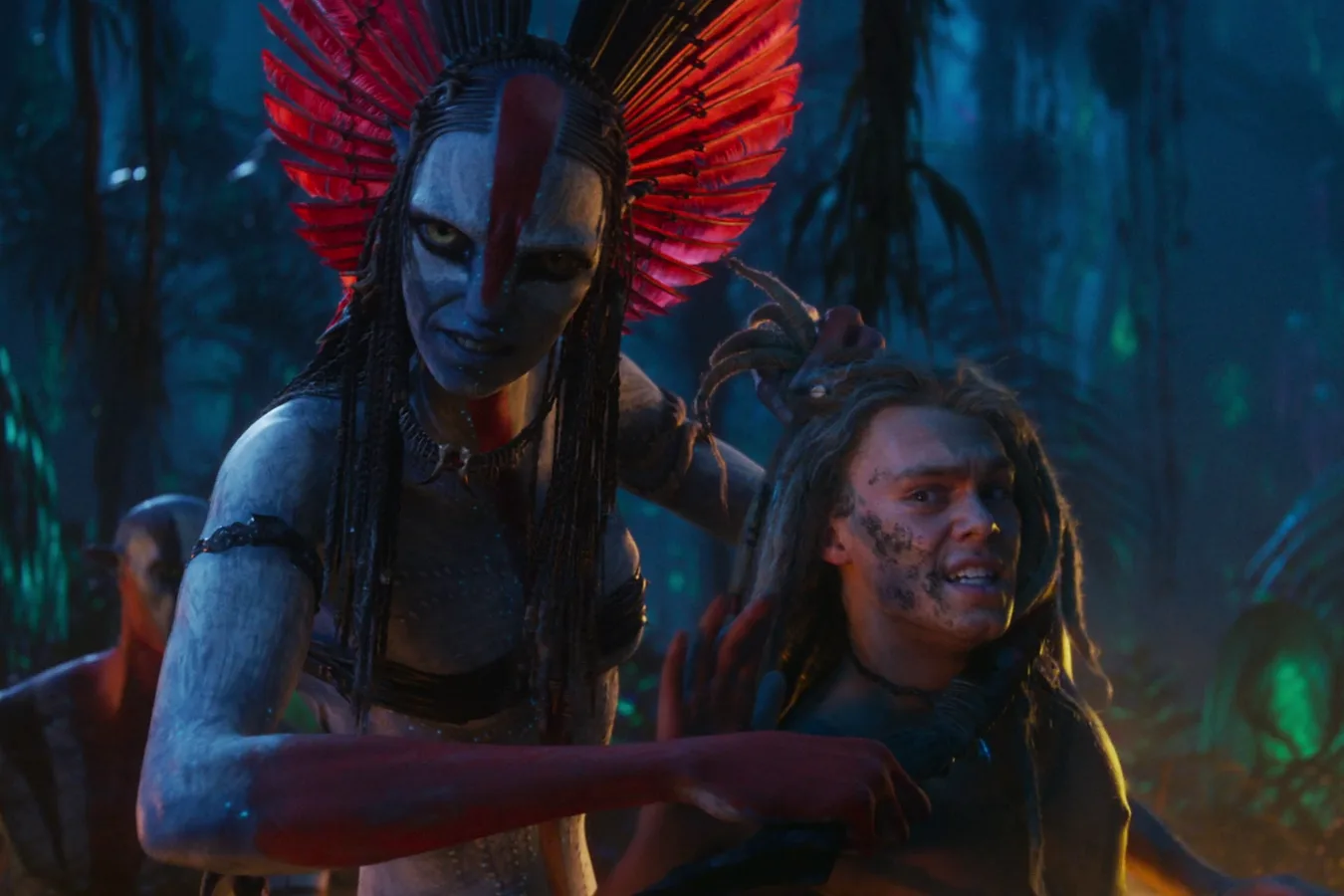
The Mangkwan caught up with the children not long after Kiri saved Spider and his body changed enough for him to breathe Pandora's air without an exopack. Spider's survival unsettled Varang, and Kiri's claim that Eywa was responsible only made her angrier. Varang answered that faith with cruelty, holding Spider at knifepoint as she challenged whether Eywa would intervene if she cut him. Her attention then shifted to the rifle: she demanded that Lo'ak teach her the weapon, described its sound as thunder, and pushed the scene toward Tuk's execution before Jake and Quaritch interrupted.
Jake and Quaritch briefly reversed the balance of power when Quaritch put Varang at gunpoint. She made the Mangkwan stand down, but the concession was temporary: Varang deceived Quaritch and used forced tsaheylu to attack him through the queue. His resistance impressed her enough that the confrontation became another test, ending with her forcing him to demonstrate the rifle. Before the planned sacrifice, Varang staged a ritual dance and used one of her drug-like mixtures on a Mangkwan, sending the victim into a violent collapse. Kiri broke the scene open by connecting with the forest floor and turning nearby plant life against the guards, giving Jake, Quaritch, and the children their escape. Varang later searched from above, but the group stayed beyond her reach. From that point, Kiri was no longer just a captive to Varang; she was proof that Eywa's power could oppose her directly.
Alliance With Quaritch
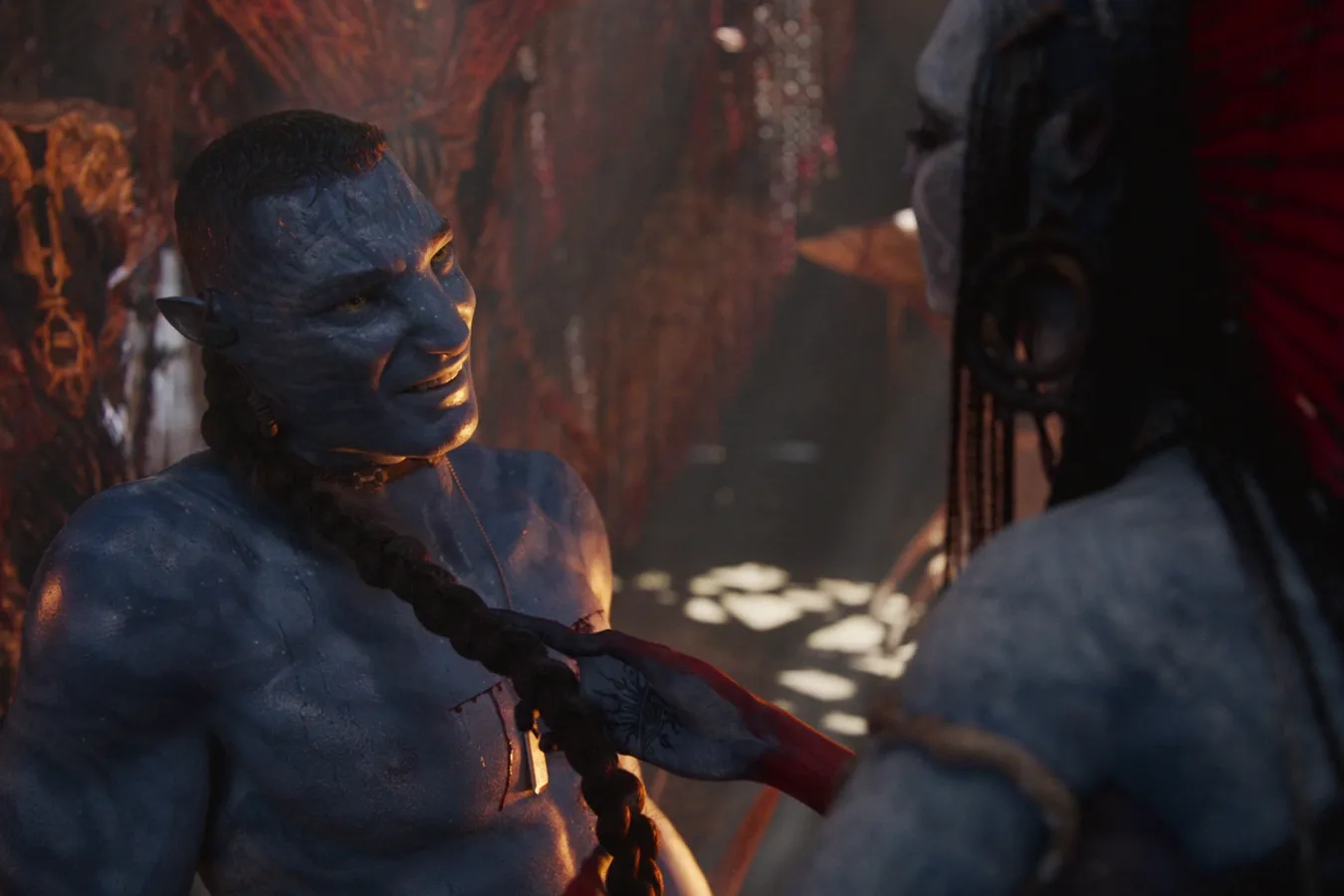
Varang's relationship with Colonel Miles Quaritch became one of the clearest examples of how pragmatic her worldview was. After the forest escape, Quaritch went to the Ash Village hoping to turn the Mangkwan into RDA allies. Varang captured him again, but the encounter changed when Quaritch used a hidden Lyle Wainfleet to shoot one of her people on command. Instead of treating the trick only as an insult, Varang recognized the value of that kind of ruthless strategy and brought Quaritch into her yurt.
Inside, she used hallucinogenic powder to test him, framing the ordeal as a way to "see" his soul. Her first instinct was domination, but Quaritch understood that Varang respected strength more than submission. He offered the Mangkwan firearms, flamethrowers, and a path to carry their war beyond their own volcanic territory. Varang accepted because the bargain turned her anti-Eywa ideology into something with real military reach.
Their partnership also turned romantic and physically intimate, making Quaritch her mate as well as her military partner. It was not a soft or traditional bond; it rested on violence, ambition, mutual advantage, and a shared hatred of Jake Sully's side of the war. Quaritch gained Pandoran fighters who knew the land, while Varang gained human weapons and a route into the RDA's war machine. The alliance eventually carried the Mangkwan into Bridgehead, where General Frances Ardmore accepted their usefulness without ever seeming comfortable with them.
Awa'atlu And Bridgehead
Once the alliance was in place, Quaritch and the Mangkwan seized Spider near Awa'atlu. Their next move targeted the Metkayina village, where Quaritch used Spider to force Jake into the open. Varang wanted the confrontation to become a wider act of destruction and pushed Quaritch to burn the village, but Jake limited the damage by surrendering himself. That choice took Jake to Bridgehead and positioned Varang inside the RDA stronghold as Quaritch's volatile Pandoran ally.
Bridgehead also sharpened Varang's personal conflict with Neytiri. Disguised as a Mangkwan, Neytiri slipped into Varang's tent while she slept and threatened her queue unless Varang led her to Jake. Quaritch's arrival broke the standoff, but Neytiri escaped, leaving Varang furious and openly demanding her death. That hostility carried into the final battle, where Varang later turned Tuk and Neytiri into hostages.
Weapons And Fighting Style
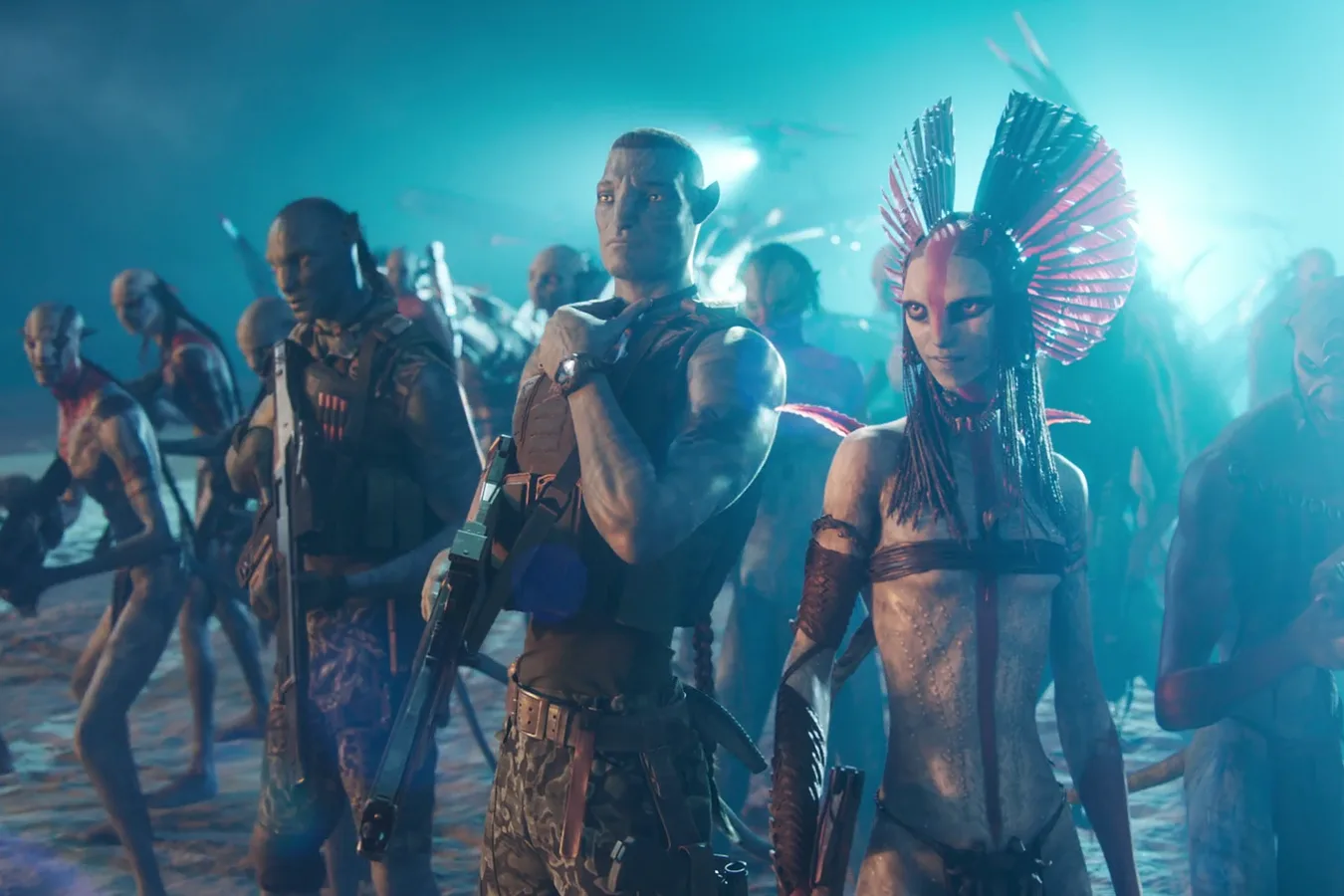
Varang and the Mangkwan are strongly associated with fire. Their attacks involved burning ships, scorched terrain, and eventually human-supplied flamethrowers. This set them apart from traditional Na'vi weapons such as bows, knives, spears, and slings. Fire turned their warfare into intimidation as much as direct combat, making the Ash People feel more destructive than most Na'vi groups seen before.
Varang's first contact with human guns came from Lo'ak's captured rifle, which she treated almost like a sacred discovery because of its thunderous sound and destructive force. Quaritch later turned that curiosity into training, showing her how to handle RDA weapons and eventually a flamethrower. When she used the flamethrower, she was ecstatic rather than horrified, burning tents and laughing at the destructive power of the weapon. For Varang, RDA technology did not corrupt her existing worldview; it confirmed it.
Her personal arsenal also included more traditional tools of violence. She used arrows, blades, toxins, ritual powders, and forced tsaheylu to hurt or control others. Her ability to weaponize the queue was especially disturbing because tsaheylu was normally a sacred bond of connection and trust. Varang turned it into a method of interrogation, torture, and psychological domination, which was why other Na'vi treated her practices as a perversion of the tsahik role.
Varang And Eywa
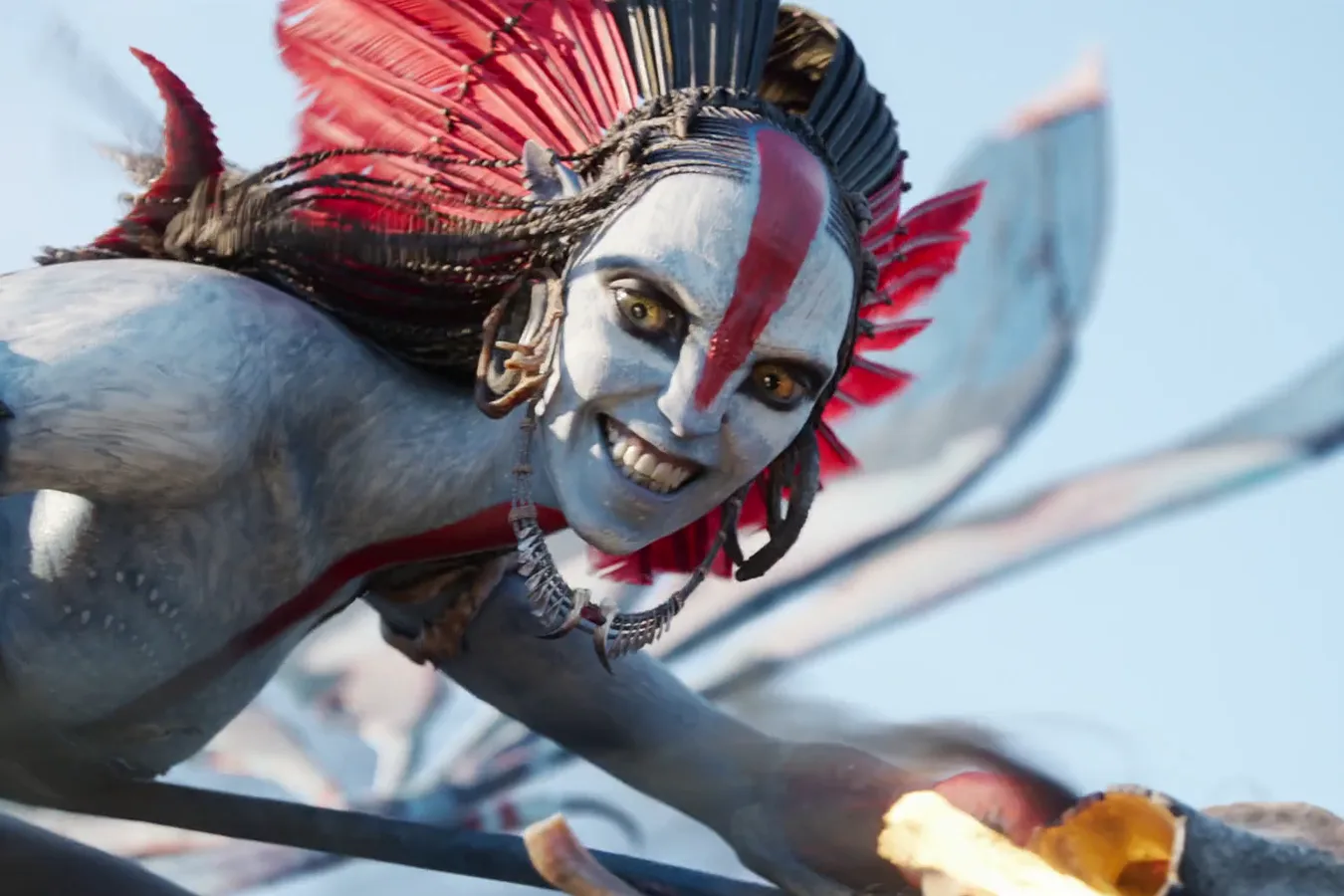
One of the sharpest differences between Varang's clan and other Na'vi groups was their relationship with Eywa. The Mangkwan rejected Eywa, placing them outside the spiritual foundation shared by many Pandoran cultures. For clans like the Omatikaya and Metkayina, Eywa was more than belief; she was the living network tying ancestors, animals, sacred places, and ecological balance together. Varang interpreted that same network as weakness because it had not stopped the disaster that destroyed her home.
That rejection explained why Varang could embrace choices most Na'vi would treat as unthinkable. An RDA alliance, burned settlements, and human weapons all matched a worldview built around dominance rather than harmony. She was still Na'vi, but she stood as a radical contrast to the clans Jake Sully had tried to unite. By framing Eywa as a weak mother for weak children, Varang taught the Mangkwan to despise the spiritual order that many other Na'vi still honored.
Kiri became the strongest answer to Varang's anti-Eywa worldview. She saved Spider, weaponized plant life during the escape, and later overpowered Varang in the final battle, forcing Varang to face evidence that Eywa was not powerless. Their conflict therefore worked as more than a physical rivalry. Kiri embodied the living network Varang had denied, while Varang showed how grief could harden into a religion of fire and revenge.
Battle At The Reef
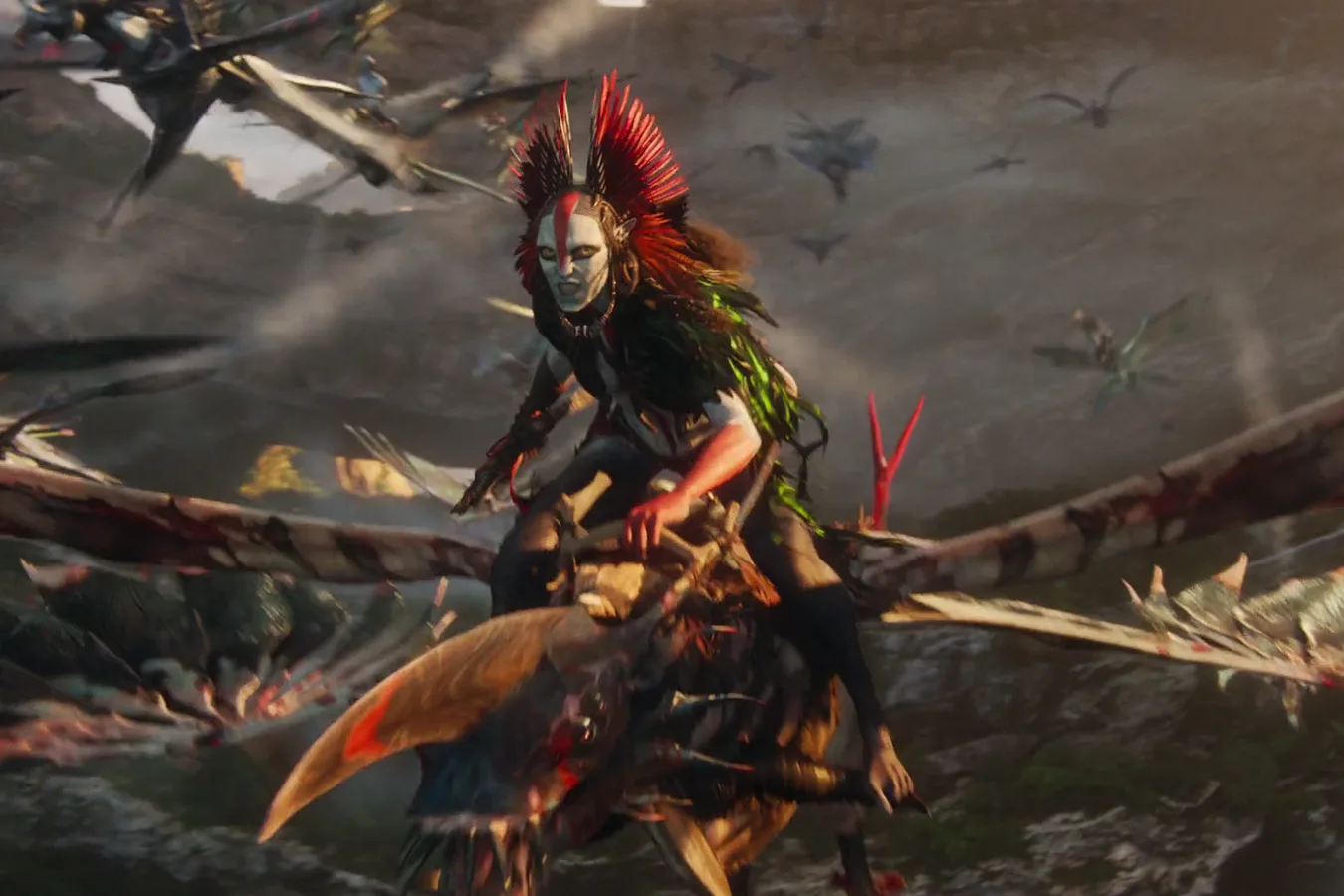
During the Battle at the Cove of the Ancestors, Varang fought beside Quaritch and the Mangkwan and became part of the hostage crisis aboard the RDA Factory Ship as it was dragged toward the Flux Devil. She used forced tsaheylu to torture Neytiri, trying to hold power over the hostages even as the larger battle fell apart. Lo'ak boarded the ship with a sniper rifle and killed several Mangkwan while trying to reach Varang, until she returned fire.
When Neytiri and Tuk tried to escape, Varang moved to kill Neytiri, only for Kiri to step in. Kiri used her own prehensile queue to restrain Varang and confronted her with a power Varang had not expected. The moment frightened Varang because it made Eywa's reach feel personal, immediate, and impossible for her to dismiss.
Final Fate Of Varang
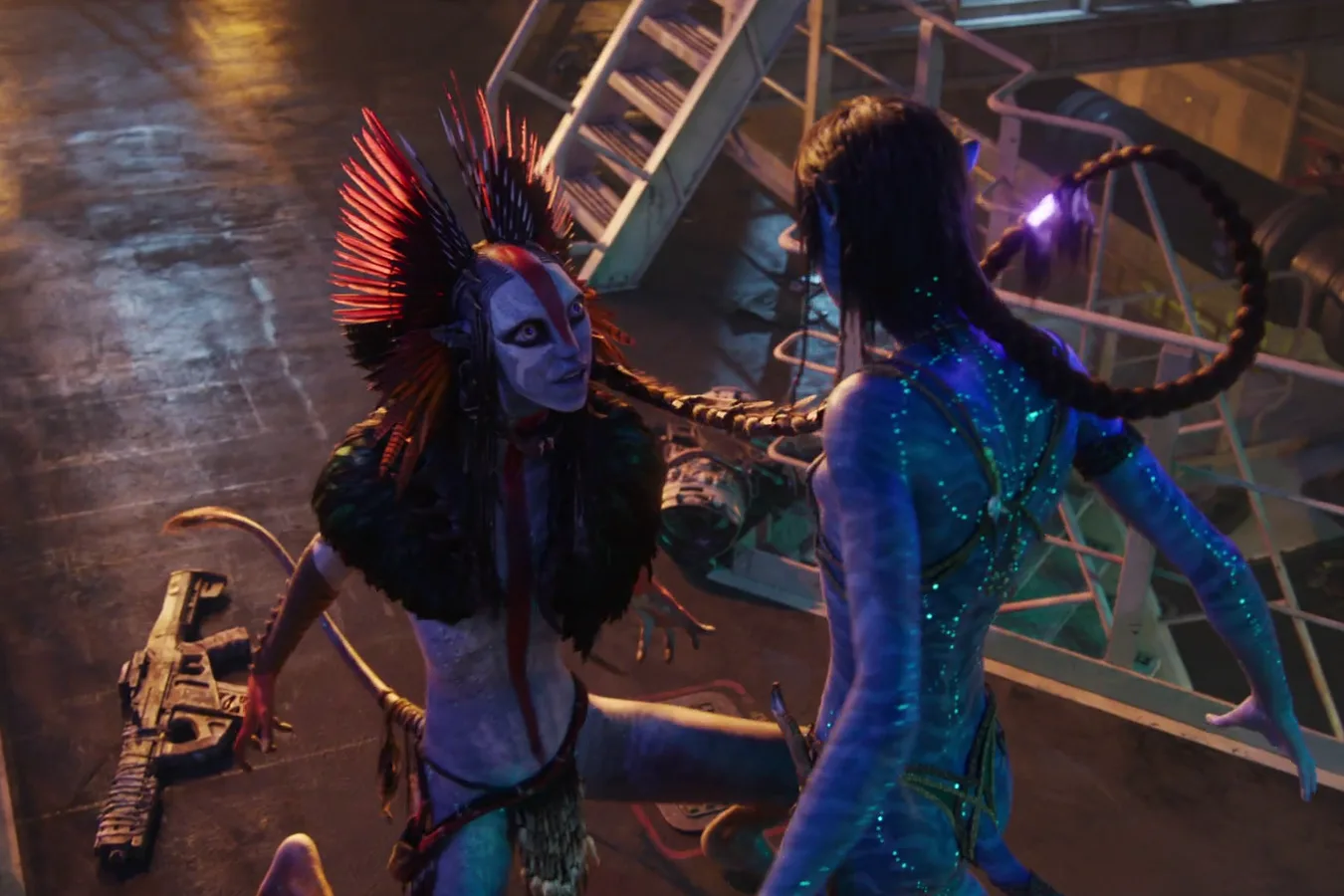
Varang survived Avatar: Fire and Ash, though the story left her with humiliation rather than victory. The last clear image of her was not a warrior's death, but a shaken retreat. She scrambled away from Kiri in fear, leaving her alive while denying her any clean triumph. Because she remained connected to the Ash Village and the Mangkwan afterward, her fate was best understood as survival after defeat. That ending left room for her return, especially while her war against Eywa and her bond with Quaritch remained unresolved.
Behind The Scenes
Oona Chaplin booked Varang after a meeting James Cameron called mesmerizing, beating three movie-star finalists. She is Charlie Chaplin's granddaughter and Eugene O'Neill's great-granddaughter, and she already had Game of Thrones and Black Mirror behind her, but the Avatar job sat eight years between a 2017 table read on the volume and the finished film. Cameron put his full body into the audition scene instead of watching from a chair, then stayed in the work the same way on set at Manhattan Beach Studios.
After the table read the cast spent a week in Hawaii. Chaplin went to the lava fields while the child actors worked in the jungle, then came back for six weeks of parkour, archery, martial arts, Kali sticks, and movement design. She spent thousands of hours on the S-shaped buugeng blades, even brushing her teeth with one in her hand, and costume designer Deborah L. Scott wrapped a tight band across her chest so Varang would not move from the heart the way Zoe Saldana's Neytiri does. Her movement then started from the hips, the same slow push she had watched in the lava.
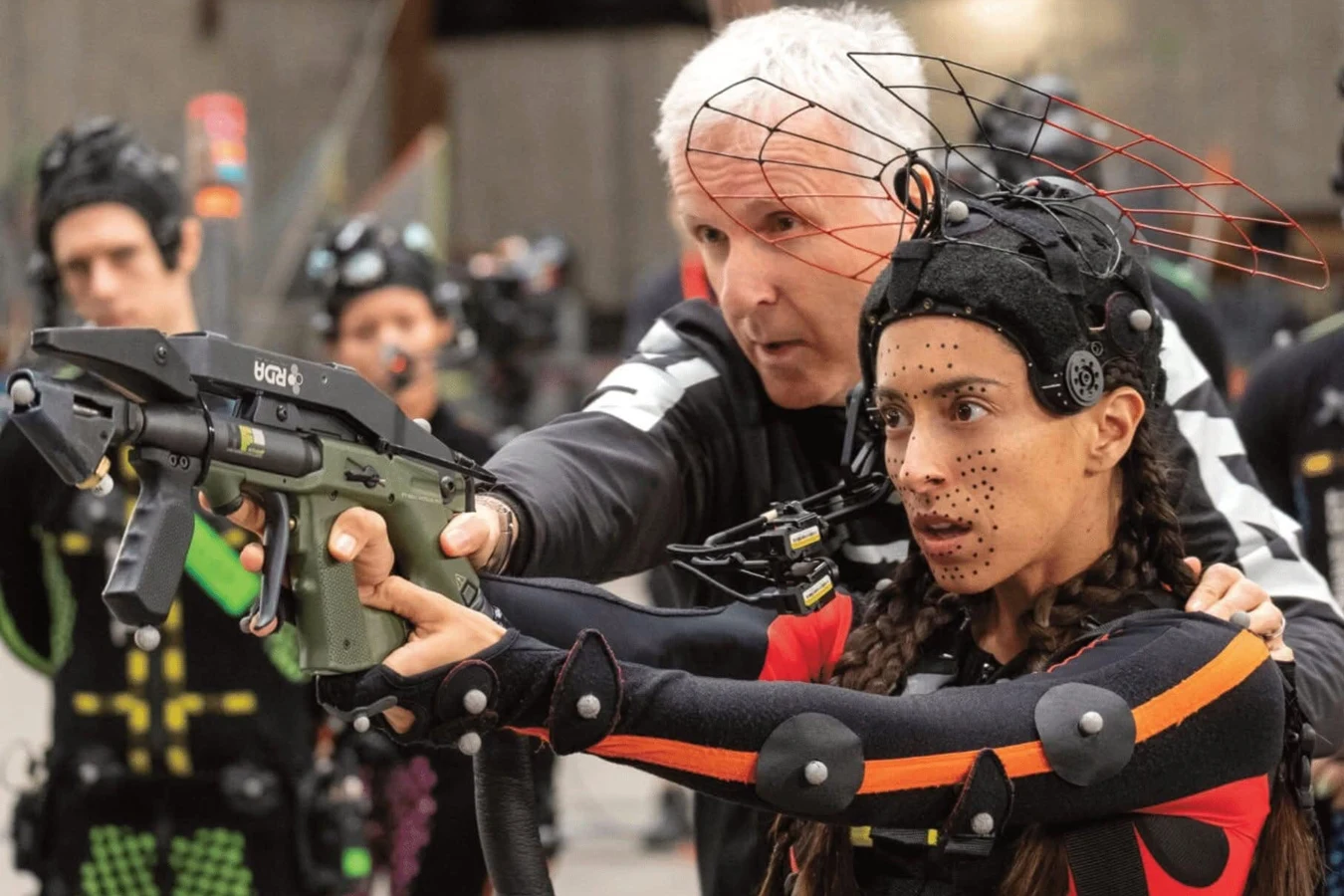
Performance capture used a marker suit, facial dots, and a helmet camera, with a red wireframe crest on her head so other actors could see the extra Na'vi height. Cameron stayed in the scene for rifle work with an RDA prop, and Chaplin also trained to fight and to fly the Nightwraith on the same back-to-back shoot that captured The Way of Water.
Merchandise
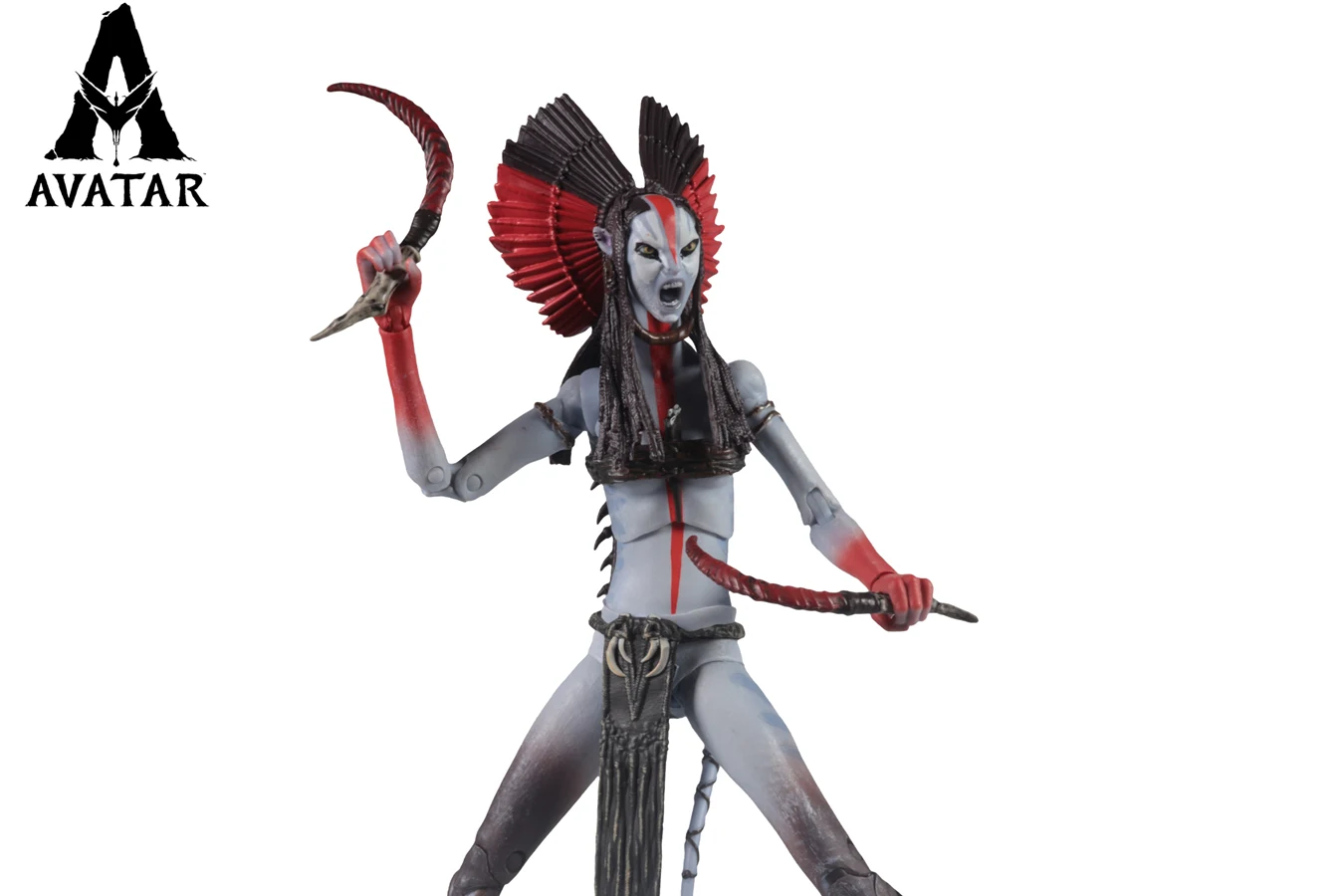
McFarlane Toys put Varang in the 2025 Fire and Ash Collector Edition wave as a 7-inch Ultra Articulation figure, item 16313, with about 22 moving parts, blacklight-reactive markings, and Fire and Ash window-box packaging. The Mangkwan Leader sculpt wears the red-and-black fan headdress, tusk-belt loincloth, and red face-and-limb paint, and the stock pose packs a pair of curved red blades. The box also includes an alternate head, four extra hands, four handheld accessories, and a display base. She had no 2009 Mattel wave, so this was the first mass-market Varang figure, shipping in November 2025 beside McFarlane's other Fire and Ash Collector Edition releases.
Funko followed with Pop! Movies Varang #1978, item 88080, a Funko Shop Royalty exclusive limited to 3,500 pieces. The vinyl stands about 4.7 inches, ships in a UV hard protector with Funko's QR authentication sticker, and reached shops in December 2025.
Conclusion
Varang was one of the most important new characters introduced in Avatar: Fire and Ash because she changed what Na'vi conflict could look like. She was not a human invader, but a Pandoran leader shaped by fire, ash, survival, and ambition. Her story began with the volcanic destruction of the Mangkwan Hometree, grew through her violent takeover of the clan, and escalated when she turned the Ash People into RDA-backed enemies of Jake Sully's allies. Through the Mangkwan, her alliance with Quaritch, her torture of Neytiri, and her defeat by Kiri, Varang added a darker political edge to Avatar lore and made Pandora feel more divided, dangerous, and alive.
Appearances
- Avatar: Fire and Ash (2025)
Tag Categories: Avatar Characters | Avatar Lore