
Although the creature in Alien had eye sockets under the transparent dome, the most common Xenomorphs don't have eyes. The Alien sequels, games, and novelizations have given us a glimpse of that vision, including the fisheye lens view, echolocation-like night vision, enemy auras, and a full-sphere mix of heat, vibration, scent, and emotion as color. That mix is one of the stranger parts of Xenomorph anatomy.
Xenomorph Eyes
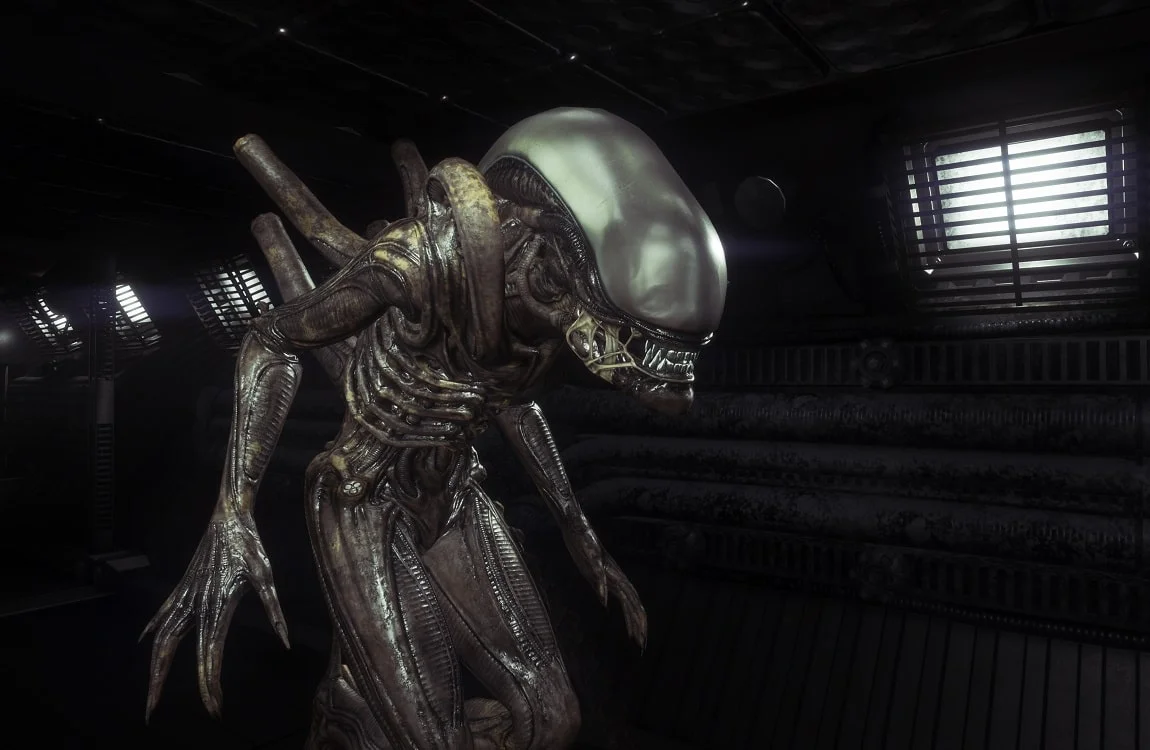
When H.R. Giger designed the Xenomorph for the first Alien movie (nicknamed Big Chap), he set a mockup human skull under the semi-transparent dome of the Alien's head. The skull is somewhat visible in some scenes and is better seen in some of the behind-the-scenes photographs with the dome temporarily missing. This skull was removed in later sequels, but the Newborn from Alien: Resurrection had eyes due to its traits from the human-DNA mix. The skull later returned in the Alien: Isolation video game, which very faithfully recreated Big Chap, and on screen again in Alien: Romulus. So the Xenomorphs had no eyes, but some of the first versions did have eye sockets, which probably did not directly aid with their vision.
Xenomorph Runner Vision on Fury 161

The first glimpse of seeing through the eyes of the Xenomorph happened in Alien 3, with the Runner Alien on Fury 161. In the last act of the movie, we saw the fisheye lens of the incredibly fast Dragon, who was massacring the prisoners in the narrow corridors of the leadworks. The vision was a bit distorted and sometimes upside down, as the Xenomorph clung to the ceilings and walls. Otherwise, it was in full color and no other effects were added. It is also notable that the runner could sense the Queen Alien inside Ripley, either through pheromones, smell, or some kind of special vision.
360-Degree Vision On The Auriga
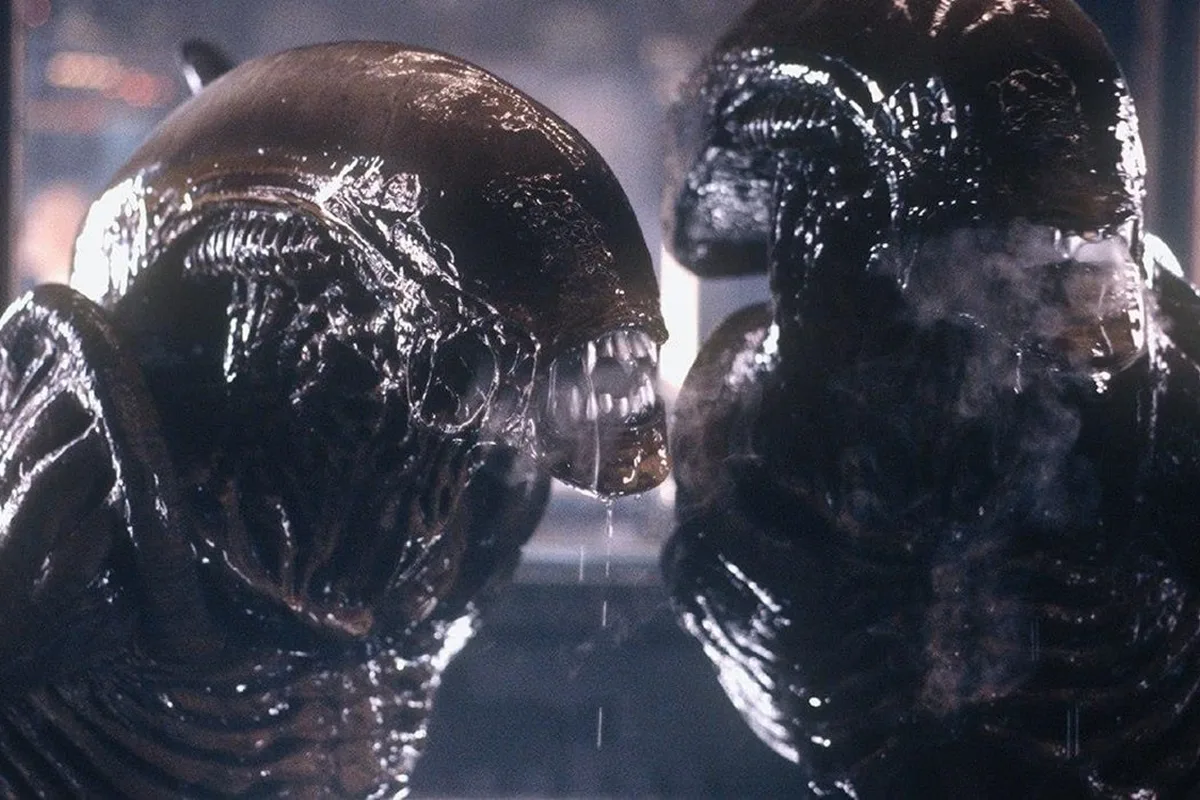
A. C. Crispin's Alien: Resurrection novelization described cloned Warriors on the USM Auriga as eyeless. Sensors in the tubular head provided a full 360 degrees of heat, vibration, sound, scent, and movement, sharper than human sight or hearing. From behind observation glass, a Warrior could read Gediman's name on a lab coat, the Fail-safe label next to the nitrogen jets, and a door sign printed in six other languages. It also detected the color of exhaled breath through the port, the chemistry of red blood through pale veins, and a host's muscle mass. Emotions registered as colors, including pride, fear, and pain. The Queen used the same senses, with no described process of learning them.
Protomorph Vision on the USCSS Covenant
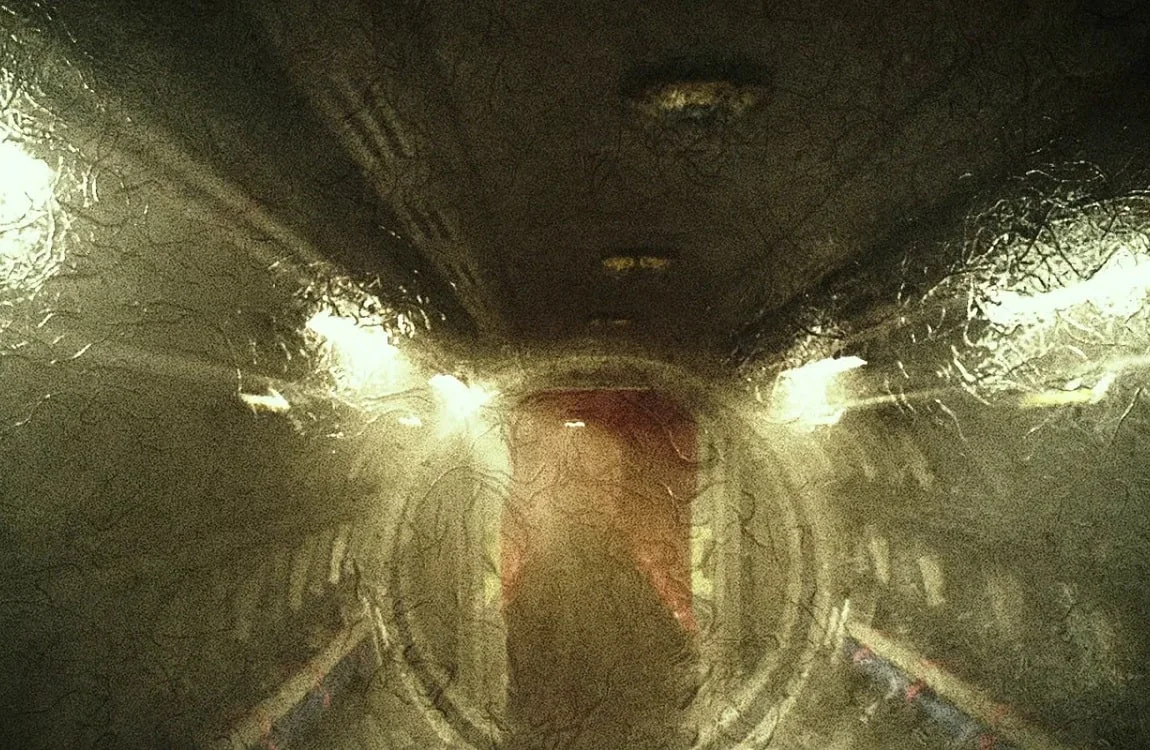
The Protomorph born on the USCSS Covenant used a film point-of-view shot of Xenomorph vision. This was more fancifully done than the runner from Alien 3 - the Protomorph still had a fisheye lens but seemed to be viewing things from inside a womb. The vision was covered by a membrane filled with tiny veins or worms, that pulsated with movement. The membrane also seemed to change color, but this can be explained by the lighting on the Covenant reacting to the alerts on the ship.
Xenomorph Drone Echolocation Vision

The first Aliens vs. Predator FPS video game introduced several new vision modes for all 3 species. For the Alien, the echolocation vision became its main way to see in the dark. When switching to this vision, the world became black and white, with the addition of the blue health bar on the bottom. This is similar to the vision mode of the bioraptors from the movie Pitch Black, who also had no eyes but were able to sense their surroundings through sound bouncing back to their bodies. The echolocation vision returned in the sequel to the game but was omitted in the third game.
Aura of Enemies
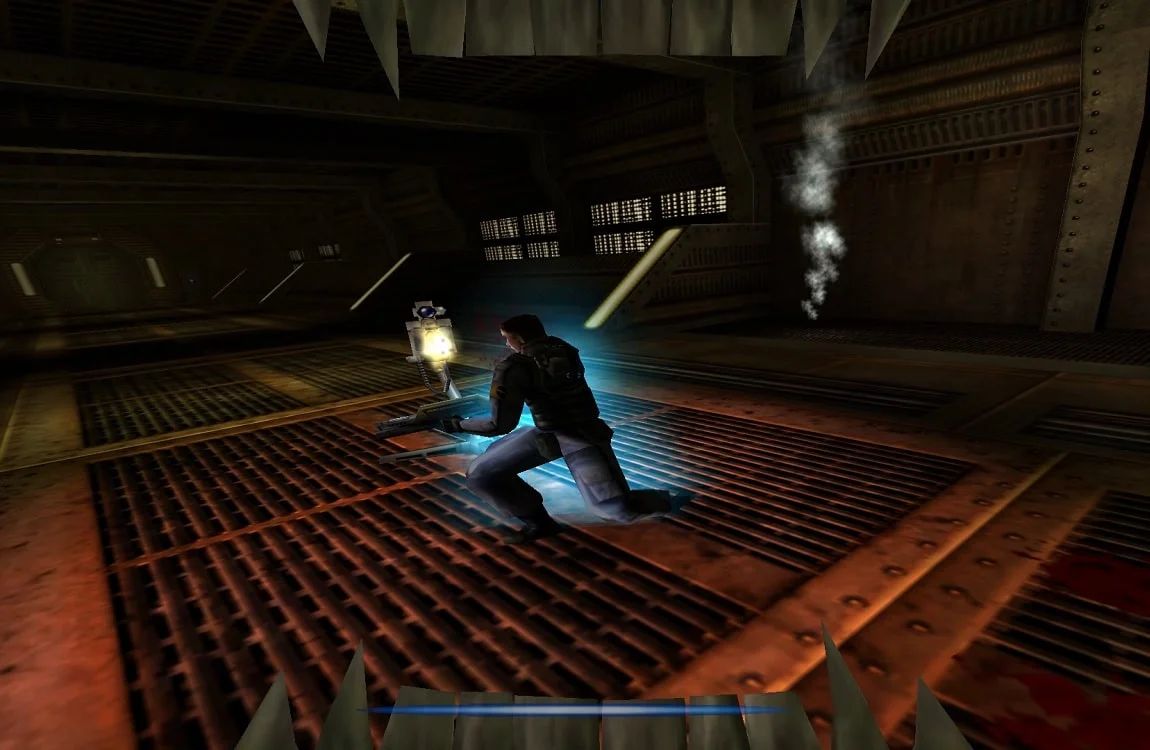
The normal vision of the Alien species in the three Aliens vs. Predator games had the ability to see a glowing aura of their enemies, even partially through the walls. The humans appeared in blue, Predators in green, and other Xenomorphs colored red. This can be explained by the different species giving out different pheromones. When the Alien centered their vision on the head of a target enemy, the game switched to the vision of the inner jaws, and the outer jaws appeared on the screen. This raises the possibility that maybe the Xenomorphs can actually see through their inner mouths.
The "Paradiso" Vision
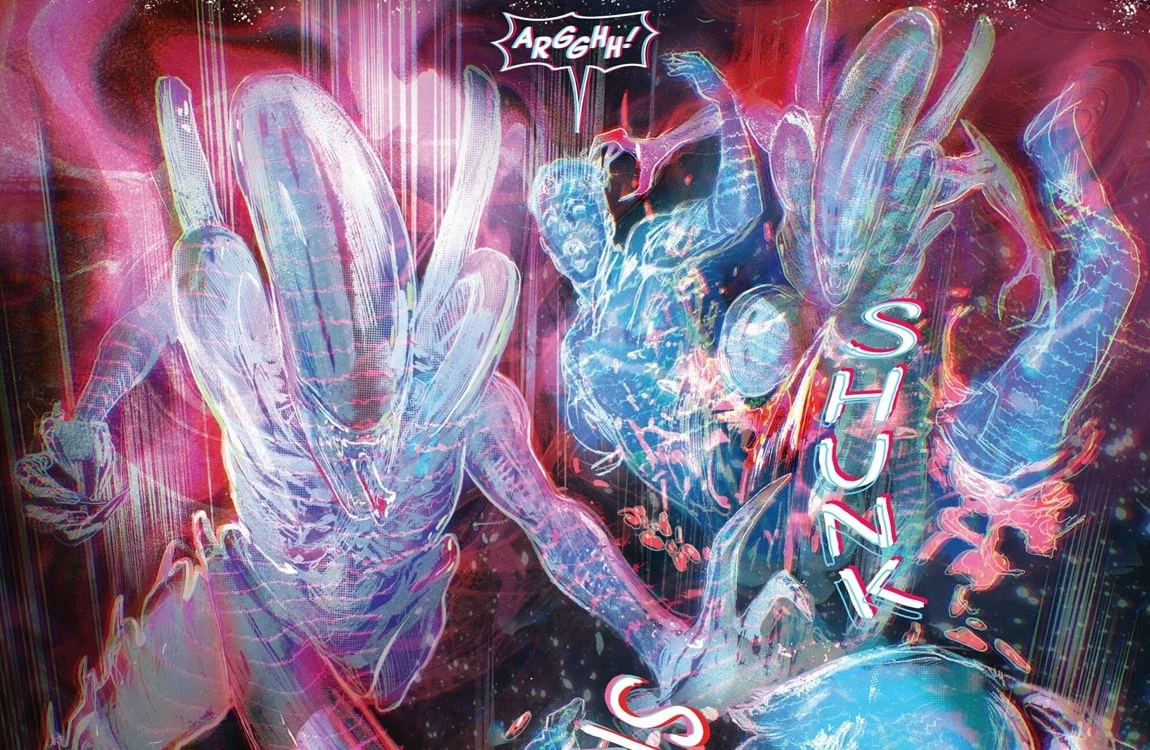
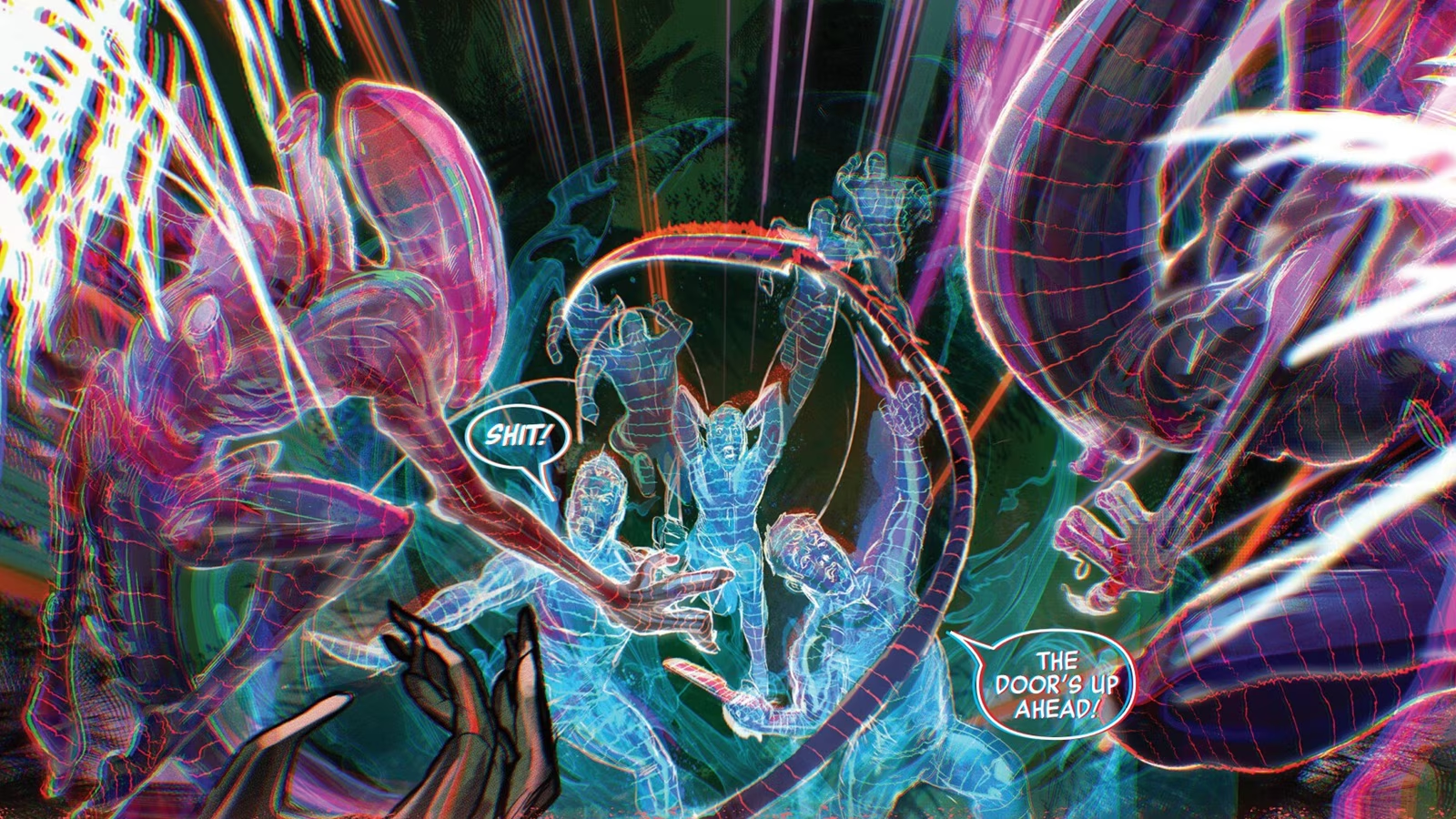
A unique Xenomorph vision is shown in the Alien: Paradiso comic series, released by Marvel. In the story, Xenomorphs infest the "Paradiso" gambling resort, and a conflict occurs between Colonial Marshals and the hyper-wealthy criminals visiting the resort. The vision is somewhat similar to the echolocation vision seen previously, but with much more color. Fellow Xenomorphs are shown as pink, while humans have a bluish essence. Everything seems translucent, like something seen on the world of Pandora at night. The vision emphasizes that sounds emit circular waves, indicating that this vision is sound-based.
Conclusion
While Xenomorphs lack conventional eyes, the franchise has shown that they are far from blind. Through a mix of sound-based perception, environmental awareness, and other senses we still do not fully understand, they are able to hunt with deadly efficiency. On the Auriga, cloned Warriors even read human labels and saw emotion as color. However, some Xenomorph hybrids such as the Newborn have evolved human-like eyes, but this has not given them any kind of advantage.
Tag Categories: Xenomorph Behavior | Xenomorph Appearance | Alien Lore