James Cameron's Avatar: The Game (2009): Full Overview

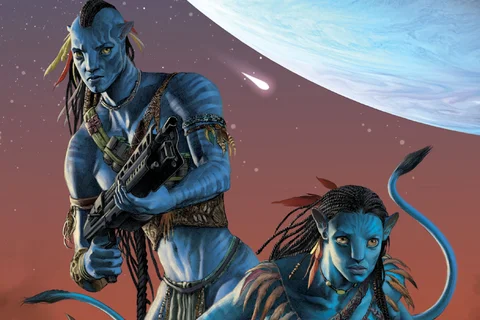
James Cameron's Avatar: The Game is a third-person action-adventure video game published by Ubisoft in 2009. Set on Pandora before the events of Avatar (2009), the game followed RDA soldier Able Ryder as he became involved in the growing conflict between human colonists and the Na'vi. The story allowed players to side with either the RDA or the Na'vi, creating two different campaign paths and an alternate version of events that differed from the film's continuity.
Game Overview
James Cameron's Avatar: The Game was released alongside the first Avatar film and served as a companion piece that expanded the setting of Pandora through its own original story. Rather than retelling Jake Sully's journey, it focused on a separate protagonist and a military frontier environment where tensions between the RDA and the Na'vi were already escalating. This gave the game more direct emphasis on combat, vehicles, and faction warfare than the film itself.
The game combined shooting, exploration, riding, and vehicular combat across jungle environments, military compounds, and contested wilderness areas. Players could use both human weapons and equipment or Na'vi tools and creatures depending on their chosen faction path. That structure made the game one of the earliest attempts to expand the Avatar universe beyond the film through an interactive story.
Plot Summary
The story took place before the events of Avatar (2009) and followed Corporal Able Ryder, a communications specialist assigned to the RDA on Pandora. After arriving on the moon, Ryder became involved in operations around Hell's Gate and the surrounding wilderness as tensions continued to rise between human expansion efforts and the native Na'vi population. Early missions introduced him to the dangers of Pandora's wildlife, the goals of the RDA, and the growing unrest among local Na'vi clans.
Ryder was later ordered to work with an avatar body program, allowing him to travel more freely across Pandora and interact with the Na'vi. Through this role, he came into closer contact with their culture and began to see the conflict from a different perspective. At the same time, the RDA intensified its efforts to secure territory and resources, placing Ryder in the middle of a larger political and military struggle.
The game's story eventually split into two campaign paths. Players could remain loyal to the RDA and support human colonization through military force, or they could side with the Na'vi and resist the destruction of Pandora's ecosystems and sacred land. Each route led to different missions, allies, and outcomes, making the story more of an alternate continuity than a strict prequel to the film.
Because of that branching structure, James Cameron's Avatar: The Game did not fit neatly into the canon later established by the films and expanded media. Instead, it worked as an early franchise adaptation that borrowed core ideas from Avatar while presenting its own version of the Pandora conflict. Its value to the wider setting came less from strict continuity and more from how it visualized RDA operations, Na'vi resistance, and the broader environment of Pandora during the first era of the franchise.
Main Characters
The game centered on an original cast created specifically for its branching story. Some characters represented the military and scientific arms of the RDA, while others reflected the player's growing connection to the Na'vi and the larger world of Pandora.
- Able Ryder (Matt Nolan) - RDA communications specialist and the main protagonist whose loyalty determined the direction of the story.
- Rodeo (Nolan North) - Fellow RDA soldier and one of Ryder's closest allies during the early stages of the campaign.
- Dr. Harper (Gwendoline Yeo) - Scientist connected to the avatar program and human research operations on Pandora.
- Commander Falco (Dwight Schultz) - Senior RDA officer who represented the corporation's military authority on Pandora.
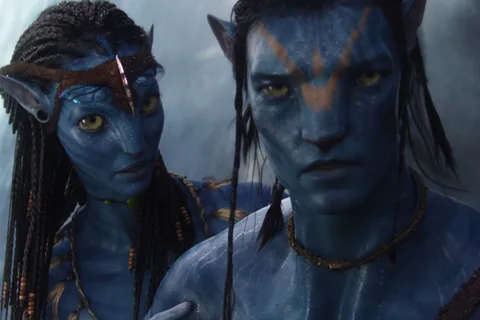
- Vah'nya (Cree Summer) - Na'vi ally who helped guide Ryder toward understanding Na'vi culture and the wider conflict.
- Tanjala (April Stewart) - Na'vi resistance figure involved in defending Pandora's land from RDA expansion.
RDA And Na'vi Paths
One of the game's defining features was its faction split. After progressing through the story, players chose whether Ryder would remain with the RDA or join the Na'vi. This decision changed the structure of the later campaign, including the missions, weapons, and final outcome.
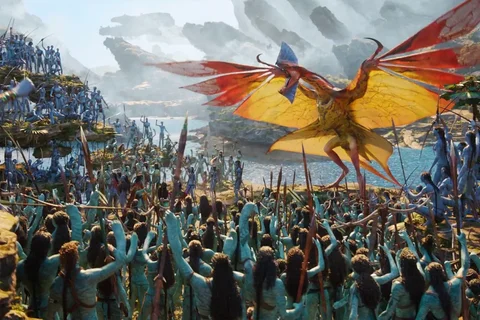
The RDA route emphasized heavy weapons, armored vehicles, and military assaults in support of human expansion. The Na'vi route shifted focus toward defending Pandora, using more organic tactics, and fighting against the corporation's exploitation of the environment. This design reflected one of Avatar's central themes, namely the conflict between industrial colonization and ecological balance.
Gameplay And Features
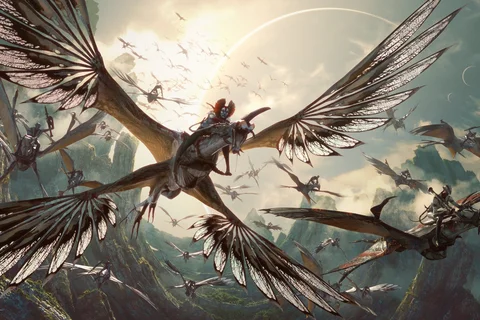
James Cameron's Avatar: The Game combined third-person shooting with traversal, creature riding, and vehicle-based combat. Human sections gave players access to firearms, explosives, mechs, and armed transports, while Na'vi gameplay emphasized speed, agility, bows, and mounted combat. Pandora's wildlife also played a major role in the game, both as a threat and as part of the world-building.
The game was released across multiple platforms, including PlayStation 3, Xbox 360, Wii, Nintendo DS, PSP, and Windows PC. Different versions varied in presentation and features, but the core concept remained the same. Ubisoft also promoted the title as a technical showcase for 3D visuals during the period surrounding the film's release.
Avatar Timeline Placement
On the Avatar timeline, James Cameron's Avatar: The Game is set in 2154, shortly before the events of Avatar (2009). Its story unfolded during the period when the RDA was expanding operations on Pandora and tensions with the Na'vi were approaching open war. This placed the game in the same general timeframe as Jake Sully's arrival, although the game's branching narrative followed a separate protagonist and a different sequence of events.
Because players could choose between an RDA path and a Na'vi path, the game did not align cleanly with the continuity later reinforced by the films. It is best understood as a companion story set around 2154 rather than as a strictly canon account of Pandora during that year.
Development
James Cameron's Avatar: The Game was developed by Ubisoft Montreal and published by Ubisoft as part of the larger multimedia launch surrounding Avatar in 2009. The project was created in collaboration with James Cameron's production team and was intended to expand the world of Pandora beyond the film itself. Rather than adapting the movie scene by scene, the developers built an original storyline that explored the conflict from a different angle and gave players direct control over which side of that conflict to support.
The game was also promoted for its support of stereoscopic 3D during a period when Avatar was helping popularize 3D entertainment more broadly. Its release across several platforms meant the experience varied depending on hardware, but the title remained one of the first major Avatar tie-in products outside the film.
Release And Reception
James Cameron's Avatar: The Game was released in December 2009 to coincide with the theatrical release of Avatar. Reception was mixed, with praise generally directed toward the setting, creature designs, and connection to Pandora, while criticism often focused on repetitive mission design and uneven execution across platforms. Even so, the game gained attention as an early attempt to turn the Avatar universe into an interactive franchise beyond cinema.
Legacy
Ubisoft's 2009 tie-in let RDA soldier Able Ryder side with the RDA or the Na'vi on Pandora in 2154. Those endings do not match later film continuity. Avatar: Frontiers Of Pandora later left Jake's war and moved the games to the Western Frontier.
External Sources
Tag Categories: Avatar Games